Hot
Tibetan Buddhist Jewelry: Empowerment, Protection & Wellness
In a world that moves at lightning speed, you may find yourself seeking more than material possessions. There is a deep, collective craving for meaning, comfort, and a genuine connection to something greater than the daily grind.
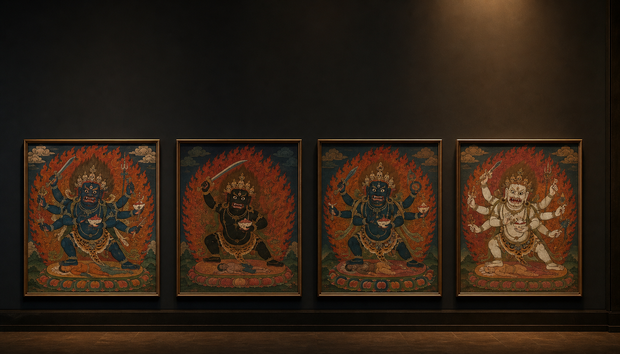
This profound search is why Tibetan Buddhist jewelry, once a niche tradition from the Himalayan plateau, is now cherished and adored across countless cultures. From focus-supporting bracelets worn in California yoga studios to intricate Thangka pendants admired in the streets of London, these are not mere accessories.
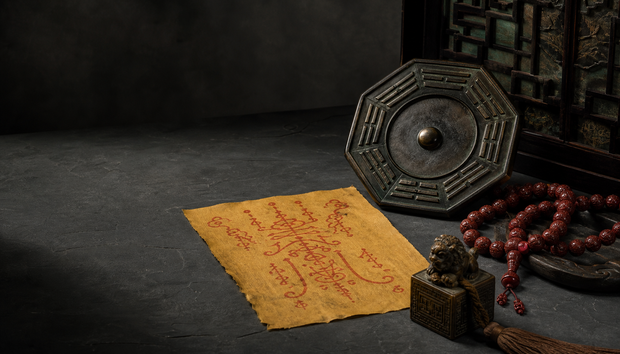
They are personal talismans, sacred tools infused with millennia of history, intention, and profound spiritual presence.
The global rise of mindfulness, meditation, and holistic healing has created a powerful desire for artifacts that support your emotional and spiritual balance. A quick look at Google Trends reveals surging searches for terms like "spiritual jewelry," "healing crystals," and "meditation beads." On social platforms like TikTok, hashtags such as #crystals and #fengshui have billions of views, reflecting a universal appetite for adornments that carry deep meaning and purpose.
Each piece of Tibetan jewelry tells a story, acting as a bridge between traditional teachings and your modern life. It offers a tangible reminder of your inner strength, your capacity for compassion, and your journey toward peace.
Explore our Tibetan Jewelry Collection and discover how each unique piece can become a partner in your quest for spiritual empowerment and calming presence.

The Ancient Roots: A Journey into the History of Tibetan Jewelry
To truly appreciate the power of Tibetan jewelry, you must journey back in time to the majestic, windswept landscapes of the Himalayas. Long before Buddhism arrived, the region was home to the shamanic Bon tradition, which held a deep reverence for nature.
Stones, metals, and animal bones were not only materials; they were vessels of potent natural presence. This ancient belief system laid the foundation for a culture that saw jewelry as a vital link between the human and spirit worlds.
When Buddhism traveled from India to Tibet in the 7th century, it didn't erase these indigenous beliefs. Instead, it merged with them, creating the unique and profound practice of Tibetan Vajrayana Buddhism. This synthesis is vividly reflected in the jewelry.
The materials chosen were, and still are, deeply symbolic. Turquoise, with its sky-blue and green hues, was considered a "sky stone," believed to hold the essence of the heavens. It was worn for protection, health, and to ensure a safe journey, both physically and spiritually.
Bright red coral, sourced from ancient sea beds high in the mountains, symbolized the life force, blood, and vitality. It was thought to ward off evil and promote strength.
For the nomadic peoples of Tibet, jewelry was a practical and essential part of life. It was a portable form of wealth, a public display of social status, and, most importantly, a collection of powerful amulets.
A woman might wear her entire family's fortune in the form of silver, turquoise, and coral beads woven into her hair or worn as a heavy belt. These pieces were passed down through generations, accumulating the presence and stories of their wearers.
Dzi beads, etched agate stones of mysterious origin, were among the most prized possessions, considered to be gifts from the gods and offering immense protection to whoever wore them. This rich history of purpose, protection, and sacred meaning is the very soul embedded in every piece of authentic Tibetan jewelry today.
More Than Adornment: The Spiritual Technology of Sacred Jewelry
A piece of authentic Tibetan jewelry is far more than a beautiful object; it is a piece of spiritual technology designed to work with your energy field. The core of its power lies in the concepts of intention and blessing.
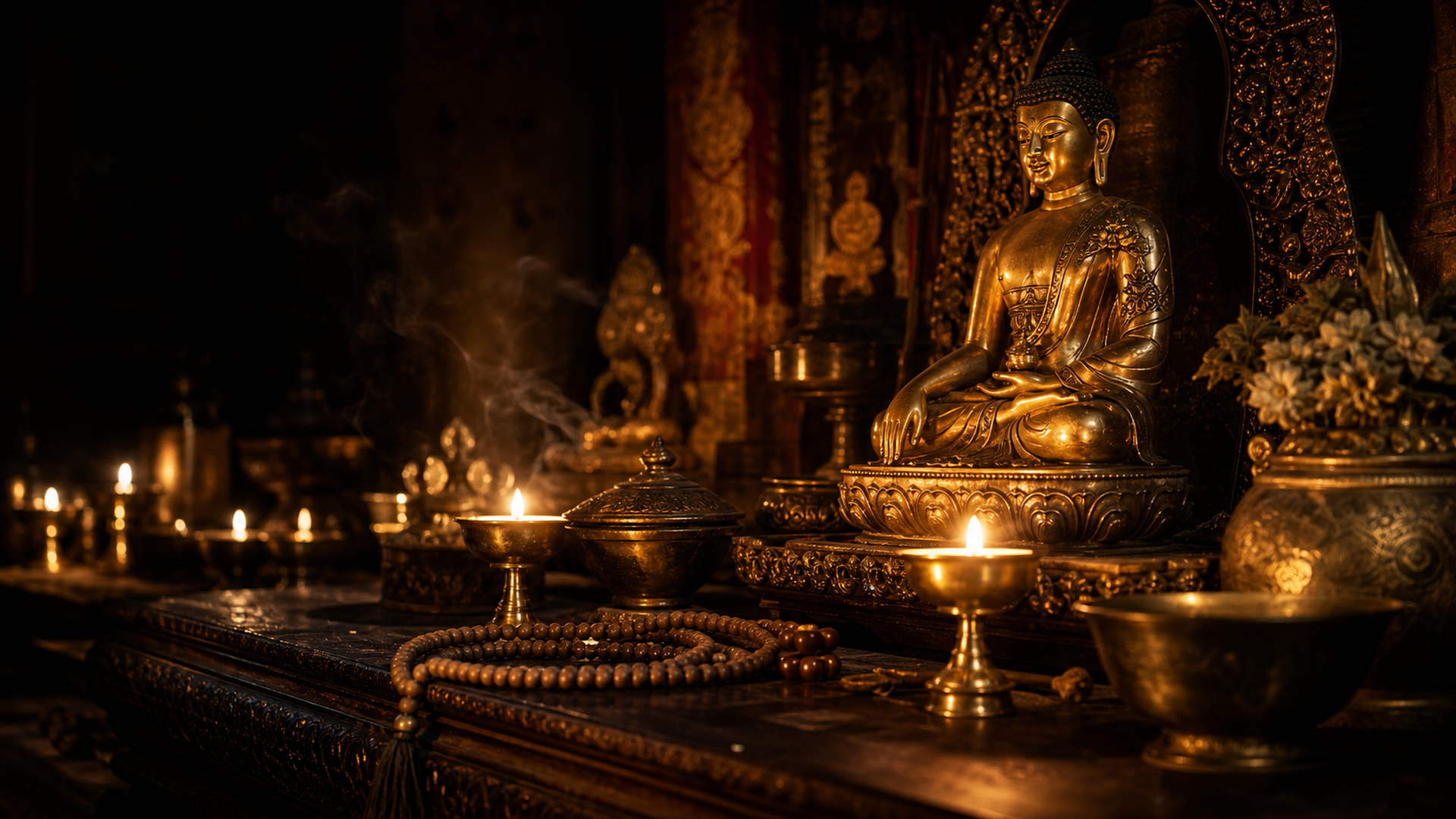
In Tibetan tradition, objects used for spiritual practice are often consecrated in a ceremony known as rabné. During this ritual, a high lama or a group of monks engage in deep meditation, chanting mantras and visualizing deities to invoke their enlightened energy.
This powerful spiritual resonance is then sealed into the object—be it a mala, a pendant, or a bracelet.
When you receive a blessed piece, you are not only getting a handcrafted item. You are receiving an object that has been imbued with a specific, positive frequency. Think of it as a spiritual tuning fork.
Its resonance can help to elevate your own, reminding your mind and spirit of their inherent potential for peace, compassion, and wisdom. This is why the authenticity of the blessing matters so profoundly. As one of our customers shared, "Knowing my mala was.
It feels alive."
However, the blessing is only one half of the equation. The other, equally important half is your own intention. When you choose a piece of jewelry, you are activating a partnership. By consciously setting an intention for your piece—whether it's for protection during a difficult time, for an open heart in your relationships, or for focus during meditation—you awaken its dormant energy.
Your focused mind directs its power. The jewelry then becomes a constant, physical anchor for that intention. Every time you touch it, see it in the mirror, or feel its weight on your skin, you are gently reminded of the path you have chosen for yourself.
It is a tool for mindfulness, a silent companion that helps you stay centered and true to your goals throughout the day.
Decoding the Symbols: A Guide to Common Motifs and Their Meanings
Tibetan Buddhist jewelry is a rich visual language, with every symbol and motif carrying layers of meaning. Understanding this symbolism allows you to choose a piece that resonates most deeply with your personal journey.
While designs like Tibetan prayer beads or Guanyin pendants are steeped in ancient lore, their messages are presented in ways that speak to universal human experiences.
The Eight Auspicious Symbols (Ashtamangala): These are among the most sacred symbols in Tibetan Buddhism, representing the gifts offered to the Buddha upon his enlightenment.
- The Endless Knot: A closed, interwoven pattern representing the interconnectedness of all things and the eternal nature of the mind. It symbolizes wisdom and compassion.
- The Lotus Flower: Rises from the mud to bloom in pristine beauty, symbolizing purity, spiritual awakening, and the potential for enlightenment in all beings.
- The Victory Banner: Represents the victory of wisdom over ignorance and the triumph of the Buddha's teachings over all obstacles.
- The Dharma Wheel: With its eight spokes, it represents the Noble Eightfold Path, the core teachings of Buddhism that lead to liberation from suffering.
Mantras and Deities:
- Om Mani Padme Hum: This is the most famous mantra in Tibetan Buddhism, the mantra of Avalokiteshvara (the Buddha of Compassion). Chanting it or wearing it is believed to invoke immense compassion for yourself and all beings. Each syllable purifies a negative emotion.
- Guanyin (Avalokiteshvara): The bodhisattva of compassion, often depicted with many arms to reach out and help all who suffer. A Guanyin pendant is a powerful symbol of unconditional love and protection.
- Green Tara: A female bodhisattva known as the "Mother of Liberation." She represents swift, compassionate action and is called upon for protection from fear and for help in overcoming obstacles.
- Medicine Buddha: The Buddha of healing. His image or mantra is invoked for physical, mental, and spiritual healing, and for overcoming the "sickness" of ignorance.
Sacred Objects:
- Vajra (Dorje): Symbolizing a thunderbolt or a diamond, the Vajra represents the indestructible and powerful nature of enlightenment. It is a symbol of masculine presence and skillful means.
- Bell (Ghanta): The bell represents feminine presence and wisdom—specifically, the wisdom that realizes emptiness. Together, the Vajra and Bell symbolize the perfect union of wisdom and compassion required for enlightenment.

The Presence of Natural Materials: Choosing Your Stone
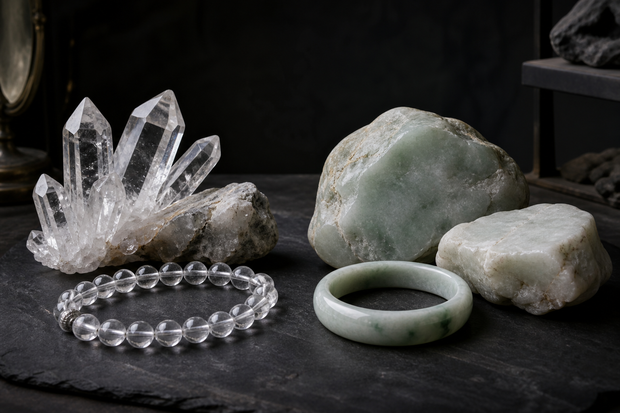
The materials used in Tibetan jewelry are as significant as the symbols carved upon them. Each stone and seed carries a unique character, carefully selected for its ability to support your spiritual and emotional well-being.
This blend of ancient lore and modern practice makes spirituality accessible and personal. When you choose a stone, you are choosing an ally for your journey.
Here are some of the most common materials and their qualities:
- Black Obsidian: Born from volcanic fire, this powerful stone is known as a spiritual protector. It is famous for its ability to "dispel negativity" by creating a shield around your presence. It helps to ground you, release emotional blockages, and bring clarity in confusing situations. An obsidian bracelet is an excellent choice if you work in a stressful environment or are sensitive to the presence of others.
- Red Agate: This vibrant, earthy stone symbolizes vitality, courage, and protection. It is a grounding stone that enhances security and stability. Red Agate is believed to stimulate your life force (Qi or Prana), boosting your physical strength and your will to persevere through challenges.
- Rose Quartz: The quintessential stone of unconditional love. Its gentle, nurturing quality opens the heart focus point, promoting self-love, compassion for others, and deep emotional healing. It helps to soothe grief, dissolve resentment, and bring loving relationships into your life.
- Lapis Lazuli: A stone of royalty and spirituality throughout Buddhist history, this deep blue crystal is associated with the third eye focus point. It enhances wisdom, intuition, and the quest for truth. Lapis Lazuli encourages self-awareness and helps you to speak your truth with clarity and confidence.
- Tiger's Eye: With its captivating golden bands, Tiger's Eye is a stone of confidence, focus, and willpower. It helps you to release fear and anxiety, empowering you to take decisive action. It is an excellent stone for achieving goals and for bringing good luck and prosperity.
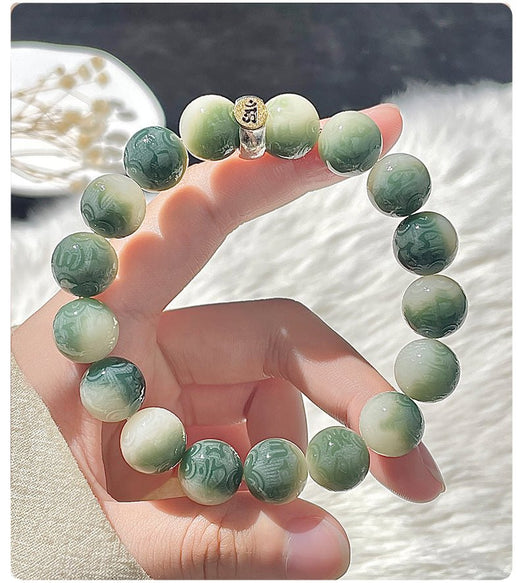
- Sandalwood & Bodhi Seeds: These organic materials are central to the creation of mala beads. Sandalwood has a calming, soothing scent that aids in meditation. Bodhi seeds come from the type of tree under which the Buddha attained enlightenment, making them incredibly sacred. Using a mala made from these materials connects you directly to a long lineage of spiritual practice.
Integrating Tibetan Jewelry into Your Modern Life: Practical Guidance
Bringing a piece of sacred jewelry into your life is the beginning of a beautiful relationship. To make the most of its potential, you can integrate it into your daily routines with mindfulness and intention. Here's some practical guidance to help you connect with your new spiritual tool.
How to Choose Your Piece: Trust your intuition. As you browse, notice which piece you feel drawn to. Is it a particular color, a symbol, or a stone? Often, the piece that catches your eye is the one whose presence you need most at this moment.
You can also choose based on a specific intention. Are you seeking more love and compassion? Rose quartz may call to you. Do you need protection and grounding? Black obsidian might be the right choice.
There is no wrong way to choose; let your inner wisdom guide you.
Setting Your Intention: Once you have your piece, take a quiet moment to attune it to your focus.
- Find a peaceful space where you won't be disturbed.
- Hold the jewelry in your hands. Close your eyes and take a few deep, centering breaths.
- Think clearly about what you wish to cultivate in your life. Be specific. For example, instead of just "happiness," you might intend for "patience and understanding in my interactions with my family."
- Verbally or mentally, state your intention to the piece. For example, "I dedicate this mala to helping me cultivate compassion."
- Wear your jewelry. It is now attuned to your personal intention.
Using a Mala for Meditation: A mala is a string of 108 beads used for Japa meditation, or mantra repetition. It's a simple yet profound practice.
- Hold your mala in your right hand, draped over your middle finger.
- Start at the bead next to the larger "guru bead."
- Use your thumb to pull one bead towards you as you recite your chosen mantra (e.g., "Om Mani Padme Hum").
- Continue this for all 108 beads. When you reach the guru bead, you can pause, reflect, or turn the mala around and go in the opposite direction if you wish to continue.
- The physical act of moving the beads helps to keep your mind focused and calm. Explore our handcrafted Mala Beads to begin your practice.
Cleansing and Care: Your jewelry absorbs presence from its environment, so it's important to cleanse it periodically. You can leave it in the light of a full moon overnight, smudge it with sage or palo santo smoke, or place it on a selenite charging plate.
Physically, clean your pieces gently with a soft, dry cloth. Avoid harsh chemicals or prolonged exposure to water, which can damage the stones and stringing material.
The Buddhabelief Promise: Authenticity in a World of Imitations
In an era of mass production and fast fashion, the story behind an object has become more important than ever. When it comes to spiritual jewelry, authenticity is not a luxury; it is the very essence of the piece's character.
A factory-made trinket with a Buddhist symbol may look similar, but it lacks the soul and feeling of a genuinely consecrated item. This is where the Buddhabelief promise makes all the difference.
Each piece in our collection is handmade Buddhist jewelry. This means that a human touch, filled with intention and care, is part of its creation from the very beginning. Our artisans are not only workers; they are craftspeople who understand the sacred nature of the symbols and materials they are shaping.
This dedication to traditional craftsmanship helps preserve a vital cultural heritage while ensuring that every item is unique.
Crucially, every piece is then empowered by high lama blessings. This sacred act, performed with deep meditative focus, infuses the jewelry with positive, protective, and calming presence. This is the unseen element that transforms an accessory into a talisman.
You can feel the difference. It's a subtle feeling, a sense of peace, a feeling of being supported. As another customer, David, wrote to us, "I've bought 'spiritual' bracelets from other places before, but they always felt... empty.
My Buddhabelief obsidian bracelet feels different. It feels solid, grounding. I wear it to work every day, and I genuinely feel more centered and less affected by office drama." As one of our customers shared, "Knowing my mala was blessed by a lama gives me a sense of peace and connection I can't find elsewhere.
What does it mean for a piece to be "blessed by a lama"? " } },{ "@type": "Question", "name": "What does it mean for a piece to be "blessed by a lama"?
When you choose Buddhabelief, you are not only buying a product. You are investing in a piece of living tradition. You are supporting artisans who keep ancient skills alive. And you are welcoming an object into your life that has been treated with the utmost reverence and spiritual care, from the hands that made it to the blessings that empower it.
Real Stories, Real Transformation: How Sacred Jewelry Empowers Lives
The true measure of this jewelry is not only in its history or symbolism, but in the real-life impact it has on those who wear it. These are stories of subtle shifts and profound changes, of finding anchors in the storm of modern life.
Jane, a Yoga Instructor in California: Jane begins every yoga class by setting an intention. She wears a rose quartz love-boost pendant that rests near her heart. She notes, "It's not only about aesthetics—it's a tool for my practice.
Before class, I hold the pendant and focus on creating a space of unconditional acceptance for every student who walks through the door. I feel its gentle presence helps me stay centered and compassionate, even on challenging days.
My students have commented on the calm, loving atmosphere in the room, and I know my pendant plays a part in that. It's my constant reminder to lead from the heart."
Mark, a Project Manager in New York: Mark works in a high-pressure corporate environment filled with deadlines and competitive focus. He struggled with work-related anxiety and found it hard to switch off after hours.
On a friend's recommendation, he started wearing a black obsidian and tiger's eye bracelet. "I was skeptical at first," Mark admits, "but I was willing to try anything. I put it on my right wrist every morning with the intention of staying grounded and protected from negativity.
The change was gradual, but I noticed I was less reactive in stressful meetings. The physical weight of the bracelet was a reminder to take a deep breath before responding. It's like having a silent coach on my wrist, helping me stay focused and deflecting the stressful feelings that used to drain me."
Sophie, a Student Traveling in Southeast Asia: Sophie was on her first solo backpacking trip, and while excited, she also felt moments of intense loneliness and vulnerability. Her mother had given her a small Green Tara pendant before she left.
"I wore it every single day," Sophie says. "In crowded markets or on long bus rides, I would just hold onto it. It made me feel safe, like I had a guardian with me.
It was more than a piece of jewelry; it was my connection to home and a symbol of strength. It gave me the courage to keep exploring, to trust my instincts, and to fully embrace the adventure.
It was my little piece of unwavering support."
These stories illustrate how Tibetan Buddhist jewelry works in the real world—as a focus for intention, a shield of protection, and a source of comfort and empowerment. It becomes a personal and cherished partner on your unique journey through life.
Frequently Asked Questions about Tibetan Buddhist Jewelry
Do I have to be a Buddhist to wear this jewelry?
Not at all. The principles represented in Tibetan jewelry—such as compassion, wisdom, protection, and inner peace—are universal human values. People from all spiritual paths and belief systems are drawn to these pieces for their beauty and the positive intentions they represent.
Wearing them is about your personal connection to their meaning and energy, not about religious affiliation.
How do I know which piece is right for me?
The best way to choose is to trust your intuition. Browse the collections and see what you are naturally drawn to. Often, the symbol or stone that catches your eye is the one whose energy you most need.
You can also choose based on a specific goal. If you want to cultivate more self-love, choose rose quartz. If you need focus and protection, consider black obsidian or tiger's eye. The right piece will feel like it was meant for you.
What does it mean for a piece to be "
A blessing, or consecration, is a traditional Tibetan Buddhist ceremony where a high lama or monk infuses an object with positive spiritual presence. Through deep meditation, mantra recitation, and visualization, they invoke the enlightened qualities of deities like Chenrezig (Compassion) or Tara (Protection).
This process transforms the item from a simple object into a sacred talisman, a vessel of positive resonance intended to support and protect the wearer.
How should I care for my spiritual jewelry?
Treat your jewelry with reverence. To care for it physically, wipe it gently with a soft cloth and avoid exposing it to harsh chemicals or submerging it in water for long periods. To care for it energetically, it's good practice to cleanse it from time to time, as it can absorb energies from its environment.
You can do this by letting it rest in moonlight (especially a full moon), smudging it with sage smoke, or placing it near a singing bowl as it is played.
What is the significance of the 108 beads on a mala?
The number 108 is sacred in many Eastern traditions. In Buddhism, it is said there are 108 worldly passions or afflictions that one must overcome to achieve enlightenment. When you use a mala for mantra meditation, repeating your mantra 108 times, it is a symbolic act of transforming these 108 afflictions into the 108 qualities of a Buddha.
The larger bead at the end, the "guru bead," represents the teacher or the ultimate wisdom, and it is not counted.
Keep reading