buddhist-jewelry
Tibetan Jewelry: An Expert Guide to Its Meaning
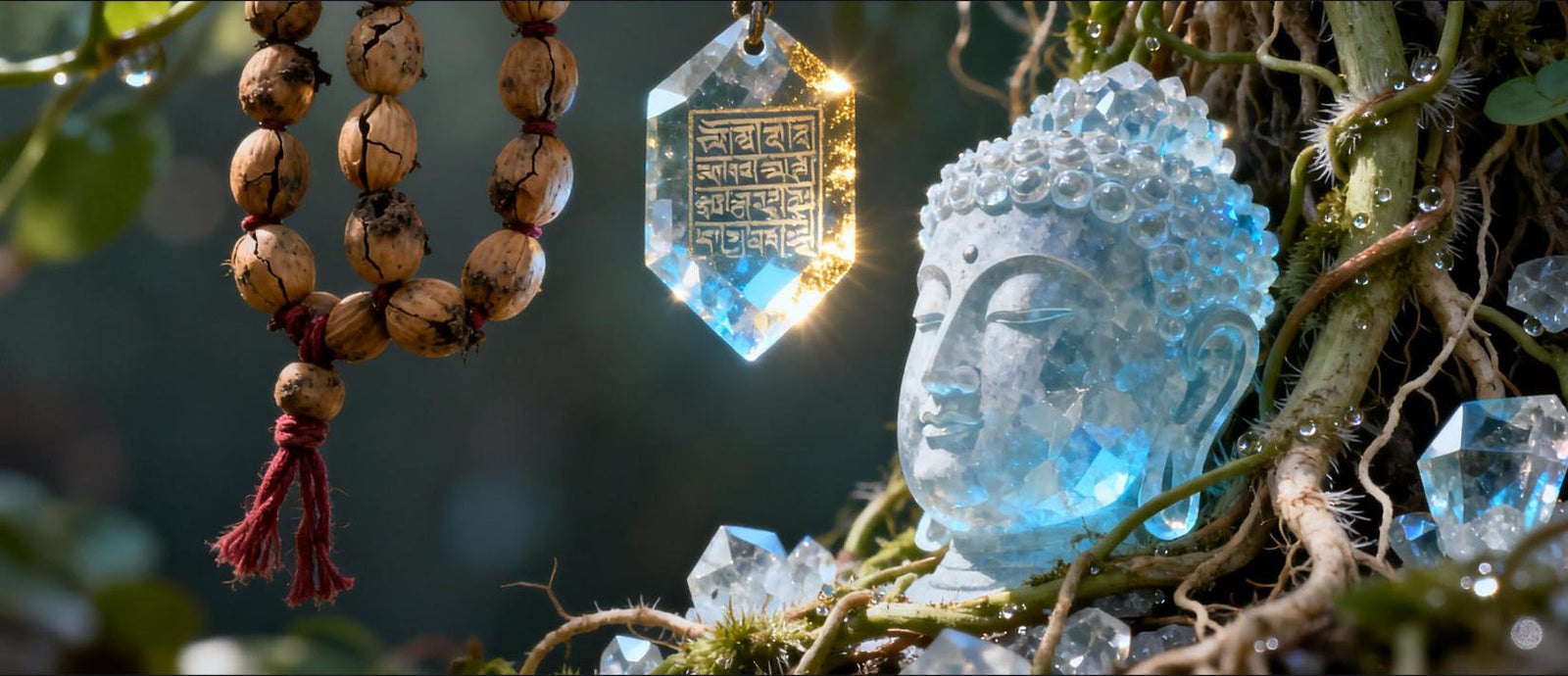
There's a particular warmth you feel when holding a piece of handmade Tibetan jewelry that no factory-produced item can replicate. It's a tangible presence, a subtle resonance. This is the residual presence of the artisan's hands, the careful attention in every carve and knot, the whispered prayers and mantras that accompany its creation.
This isn't just adornment; it's wearable heritage, a fragment of a sacred culture you can carry with you. It is a bridge across continents and centuries, connecting your modern life to an ancient stream of wisdom.
At Buddhabelief, we are honored to be a part of this bridge. We work directly with Tibetan artisans, families who practice techniques passed down through generations, not as a job, but as a calling.
Each piece tells a story—not only of powerful spiritual symbolism, but of profound human connection. It's the story of calloused hands skillfully carving yak bone into a skull bead that represents impermanence. It's the story of patient fingers stringing 108 bodhi seeds, each one a step on a meditative path.
It's the story of blessings whispered over a nearly-finished creation, infusing it with an intention for peace, protection, and enlightenment for its future wearer. When you wear our jewelry, you are wearing these stories.

Echoes of the Himalayas: A Legacy Forged in Spirituality and Resilience
To truly appreciate your Tibetan jewelry, you must understand its origins in the majestic and unforgiving landscape of the Tibetan Plateau. Known as the "Roof of the World," this environment shaped a culture of profound resilience, deep spirituality, and a unique artistic language.
Tibetan jewelry is not a recent trend; it's an ancient tradition, a vibrant thread in the cultural fabric that dates back over a thousand years.
The story begins long before Buddhism became the state religion. The early Tibetans practiced Bon, an animistic tradition that revered the powerful forces of nature—the soaring mountains, the turquoise lakes, the vast sky. They wore amulets made from natural materials to protect themselves from harsh elements and unseen spirits.
This deep respect for the earth and its gifts remains a cornerstone of Tibetan artistry today.
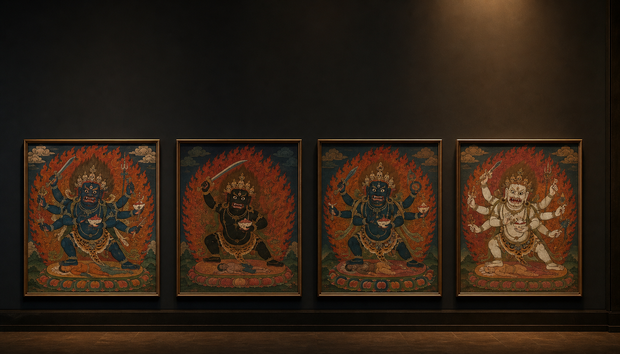
A pivotal moment arrived in the 7th century when King Songtsen Gampo, a powerful ruler who unified Tibet, married two Buddhist princesses—one from Nepal and one from China. They brought with them not only their faith but also their skilled artisans.
This fusion of cultures sparked an artistic renaissance. The raw, shamanic character of Bon art began to merge with the intricate iconography and sophisticated metalworking techniques of the Newari artisans from the Kathmandu Valley and the refined aesthetics of Chinese craftsmen.
The result was a style that is uniquely Tibetan: bold yet intricate, rustic yet profound, deeply symbolic and visually stunning.
For centuries, jewelry in Tibet served multiple purposes. It was a walking bank account, a way for nomadic families to carry their wealth in the form of turquoise, coral, and silver. It was a status symbol, indicating one's region, wealth, and social standing.
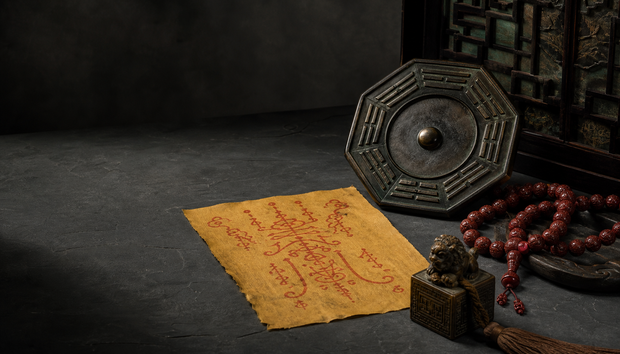
Most importantly, it was a form of spiritual expression and protection. Gau boxes, ornate amulet containers, were worn to hold sacred relics, prayers, and herbs. Specific symbols were worn to invoke the protection of deities, while materials like Dzi beads were believed to possess immense spiritual presence.
This jewelry was an integral part of life, worn daily and for special ceremonies, from birth until death, absorbing the focus of its wearer.
The Hands Behind the Art: Where Intention Meets Tradition
In a world of mass production and automated assembly lines, the creation of authentic Tibetan jewelry is a radical act of mindfulness. Each piece from Buddhabelief is born in a small workshop, often a room in a family home, where the air is thick with the scent of butter lamps and juniper incense.
Here, skills are not learned from a textbook but are absorbed through years of observation, passed from grandparent to parent to child. The tools are often simple and have remained unchanged for centuries: a hammer, a chisel, a small anvil, and the most important tool of all—the artisan's patient, skilled hands.
The process is slow and deliberate. It is a form of meditation in itself. An artisan doesn't simply start working; they begin with an intention. As they shape a piece of silver or string a mala, their mind is often focused on mantras, such as the universal mantra of compassion, Om Mani Padme Hum.
This mental and spiritual state is believed to be brought directly into the object they are creating. The finished piece is not an inert object; it carries the calm, peace, and focus of its maker.
This is the "warmth" you feel—it's the echo of a human soul engaged in a sacred act of creation.
Every small mark from a hammer, every slight irregularity in a bead's shape, is not a flaw. It is a signature. It is the undeniable evidence of the human touch, a a sign of the fact that this object was not stamped out by a machine but was lovingly and painstakingly brought into being by an individual.
This authenticity is the heart of what we do. By supporting these artisans, you are not only acquiring a beautiful piece of jewelry; you are becoming a patron of a living tradition, helping to ensure these precious skills are not lost to the modern world.
The Sacred Rhythm of the Mala: A Deep get into Creation and Use
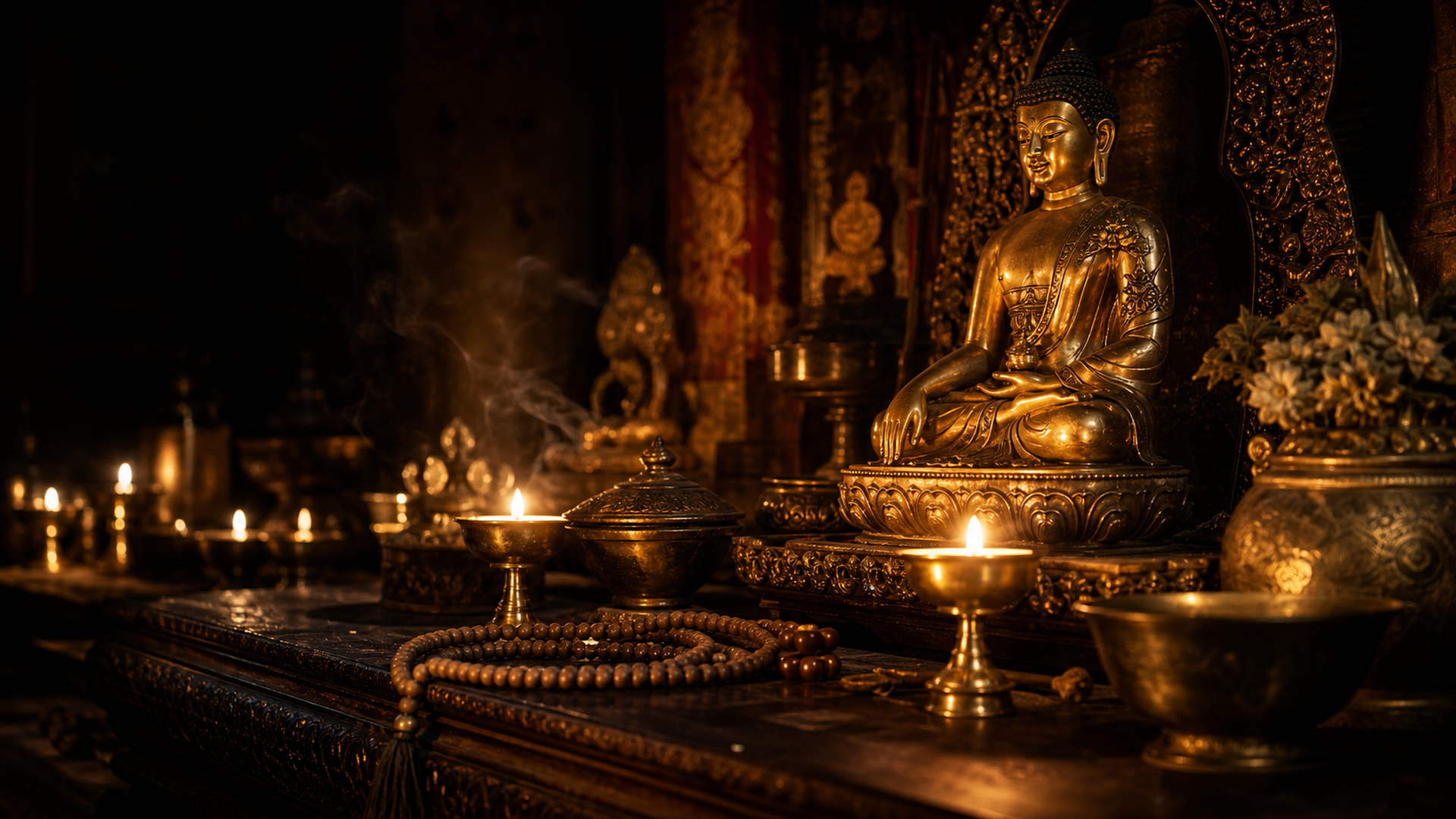
Among the most iconic forms of Tibetan jewelry is the mala, or threngwa. Far more than a simple necklace, a mala is a powerful tool for meditation, a spiritual abacus for counting mantras, and a constant reminder of one's spiritual path.
The creation of a mala is a deeply symbolic process.
A traditional mala consists of 108 beads. This number is sacred in many Eastern traditions for a multitude of reasons. Some say it represents the 108 worldly desires or afflictions that one must overcome to achieve enlightenment.
Others connect it to sacred texts, focus points in the body, or astronomical calculations. Regardless of the specific interpretation, the number 108 signifies a complete cycle.
When you examine a traditional Tibetan mala, such as those in our collection of authentic mala beads, notice the knots between each bead. These aren't merely functional spacers. They are symbolic pauses, representing the space between thoughts, the silence from which all creation emerges.
Our artisans use the traditional eight-fold knotting technique. Each knot serves several purposes:
- Durability: It prevents the beads from scattering across the floor if the string ever breaks, preserving the integrity of your sacred tool.
- Rhythm: It creates rhythmic breaks for your fingers, allowing for a smooth, consistent pace as you move from one bead to the next during mantra recitation.
- Symbolism: The knot itself can be seen as representing the Noble Eightfold Path, a core Buddhist teaching that leads to the cessation of suffering.
- Focus: It adds subtle counting points, allowing advanced practitioners to track larger numbers of mantras without losing their place.
The string itself is traditionally a durable multi-strand cotton or silk cord, chosen for its natural feel and ability to withstand constant use. The mala is completed with a 'guru' bead, a larger, often more decorative bead that represents the student-teacher relationship and the wisdom one seeks.
The tassel that extends from the guru bead symbolizes the lotus flower of enlightenment and the interconnectedness of all beings. To use your mala, you would hold it in your left hand (representing wisdom), with the beads draped over your index finger.
Using your thumb, you pull each bead towards you as you recite your chosen mantra, one time for each bead. When you reach the guru bead, you pause, reflect, and then turn the mala around to go back in the other direction, without crossing over the guru.

Forged in Fire, Set with Soul: The Language of Metals and Gemstones
Tibetan metalwork is renowned for its robust character and intricate detail. Artisans employ ancient methods that imbue each creation with a sense of history and power. These are not delicate, polished pieces; they are substantial, full of texture, and designed to be worn and lived in.
The slight imperfections are a celebrated part of their beauty, telling the story of their fiery birth.
Several key techniques are practiced by the metal artisans we work with:
- Lost-Wax Casting: For creating detailed, three-dimensional pieces like deity pendants or complex symbols like the Dorje, artisans first sculpt a perfect replica in beeswax. This wax model is then encased in a clay mold. When the mold is fired, the wax melts and runs out (hence "lost-wax"), leaving a hollow cavity. Molten metal is then poured in. Once cooled, the clay mold is broken, revealing the one-of-a-kind metal piece within.
- Repoussé and Chasing: This is the art of creating detailed relief designs on sheet metal. The artisan works from the back of the metal, hammering and pushing it out to create the basic forms (repoussé). They then flip the piece over and work from the front, using smaller, specialized tools to refine the details, lines, and textures (chasing). This technique is used for creating intricate Gau boxes and pendants.
- Hand-Stamping: For repetitive sacred patterns, like the endless knot or mantra syllables, artisans use small, handmade steel stamps. Each symbol is individually hammered into the metal, creating a deep, lasting impression that is far richer than machine engraving.
- Fire Oxidation: The distinctive blackened, antique look of much Tibetan silver is achieved through a controlled process of oxidation. The piece is heated, and a sulfur solution is applied, which rapidly darkens the silver. The artisan then polishes the raised surfaces, creating a dramatic contrast that highlights the intricate details of the design.
The choice of metal is also symbolic. Silver is most common, representing the moon, purity, clarity, and feminine wisdom. Copper is often used in bracelets and is believed to have healing properties, particularly for arthritis.
Brass and other alloys are also used, sometimes in a blend called "Panchaloha" (five metals), which is considered auspicious.
Whispers of the Earth: The Sacred Materials of Tibetan Jewelry
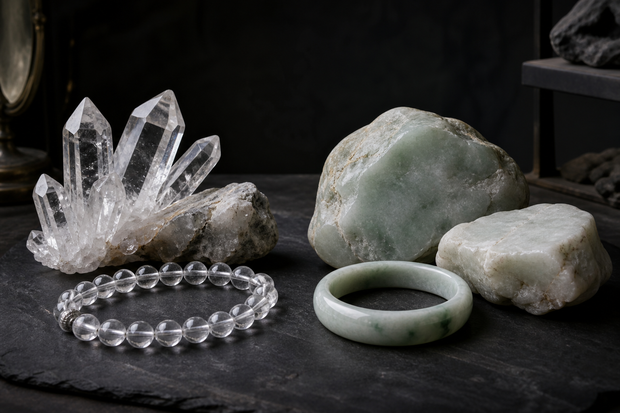
The materials used in Tibetan jewelry are sourced from the earth and are believed to carry their own specific qualities and properties. They are not chosen for their monetary value alone, but for their spiritual significance and connection to the natural world.
Turquoise (Gyu): Considered the national gem of Tibet, turquoise is more valuable than gold in the culture. It is a stone of protection, health, and good fortune. You will see it everywhere, from tiny inlays to large, dramatic cabochons.
It is believed to absorb negativity and protect the wearer from harm. A unique belief is that the color of the turquoise will change with the health of its wearer, becoming pale if they are ill and returning to a vibrant blue as they recover.
Coral (Churu): Sourced from ancient trade routes from the Mediterranean, red coral is treasured as a symbol of lifeblood, vitality, and passion. It is often paired with turquoise, representing the sacred balance of sky (turquoise) and earth/blood (coral).
It is particularly valued by women and is believed to promote fertility and strength.
Yak Bone: In the high Himalayas, the yak is the cornerstone of life, providing food, fuel, transport, and shelter. In Tibetan culture, every part of this sacred animal is used—a practice of deep reverence and sustainability.
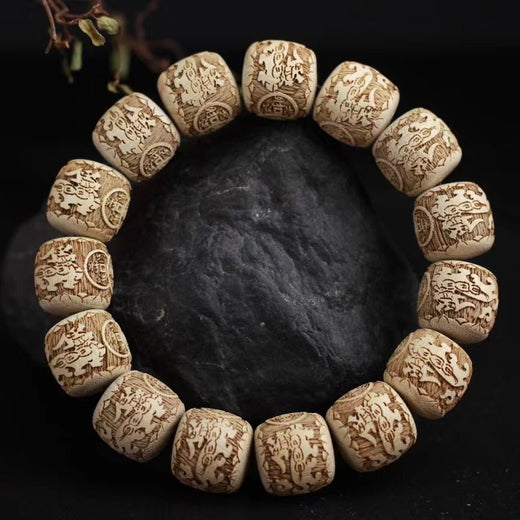
The bones for our jewelry come from animals that have lived full, natural lives. Using their bones for sacred purposes, such as mala beads, is a way of honoring their life and spirit. The bone itself serves as a powerful reminder of impermanence (anicca), a core Buddhist teaching.
Meditating with yak bone beads helps one to contemplate the transient nature of life and to live more fully in the present moment.
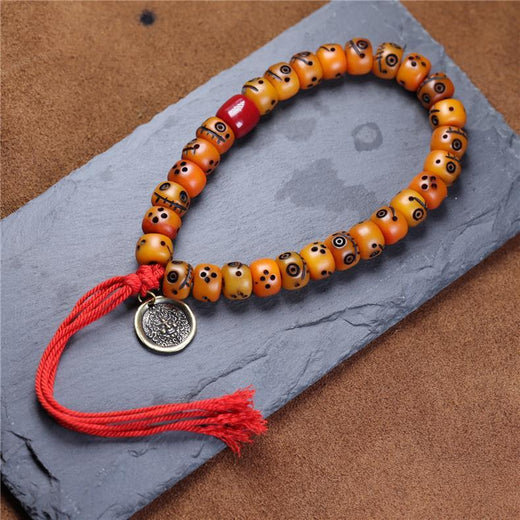
Dzi Beads: Perhaps the most quietly striking and prized of all Tibetan adornments, Dzi (pronounced "zee") beads are agate stones etched with mystical patterns of circles, ovals, and lines, known as "eyes." Their true origin is lost to time, with legends claiming they are not man-made but are gifts from the gods, dropped to earth to bestow good fortune on those who find them.
They are considered powerful protective talismans, with the number of "eyes" corresponding to different blessings. A 9-eyed Dzi, for example, is considered one of the most powerful, bringing immense good fortune.
Bodhi Seeds: These are not technically seeds from the Bodhi tree (Ficus religiosa) but from a related species. They are named in honor of the tree under which Prince Siddhartha Gautama attained enlightenment and became the Buddha.
Using a mala made of Bodhi seeds is believed to aid in one's own journey toward enlightenment. As you use them, the seeds absorb the natural oils from your skin, gradually darkening and becoming smoother, a beautiful physical representation of your spiritual journey.
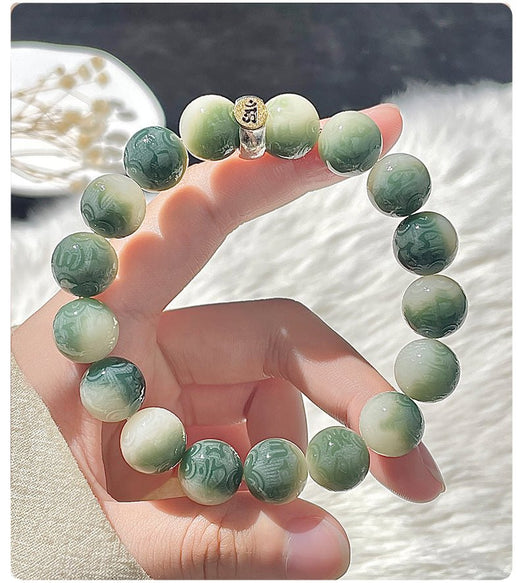
You can explore many of these materials in our diverse collection of bracelets.
Wearing Your Story: How to Choose, Care For, and Connect with Your Tibetan Jewelry
Choosing a piece of Tibetan jewelry is a personal and intuitive process. It's less about following trends and more about finding a piece that resonates with your spirit. Don't overthink it. As you browse our full collection, pay attention to which piece catches your eye.
Is it a symbol? A color? A particular material? Often, the piece you are drawn to carries the energy or represents the lesson you most need in your life at that moment.
Consider these scenarios:
- If you are working through a period of uncertainty and feel you need strength and protection, you might be drawn to a pendant with the Dorje (or Vajra) symbol, which represents the indestructible nature of enlightenment.
- If you are working on cultivating more compassion for yourself and others, a bracelet engraved with the mantra Om Mani Padme Hum can serve as a constant, gentle reminder. - If you feel disconnected and ungrounded in a fast-paced world, a mala made of earthy yak bone or wood can help you reconnect with the present moment and the reality of impermanence.
Once you have your piece, it's important to care for it, both physically and energetically. Physically, avoid exposing it to harsh chemicals, perfumes, or prolonged immersion in water. Gently wipe it with a soft cloth to clean it.
Energetically, your jewelry can absorb the energies of its environment. It's a good practice to cleanse it from time to time. You can do this by:
- Smudging: Pass the piece through the smoke of cleansing herbs like sage, palo santo, or juniper.
- Sunlight/Moonlight: Let it rest in the gentle light of the early morning sun or the full moon for a few hours.
- Sound: Place it near a singing bowl and let the resonance wash over it.
Finally, connect with your piece by setting an intention. Hold it in your hands, close your eyes, and take a few deep breaths. Infuse it with your purpose. You might say silently, "May this piece protect me," or "May this remind me to be kind," or simply, "May this bring peace." By doing this, you transform your jewelry from a beautiful object into a personal talisman, a partner on your soulful journey.
Frequently Asked Questions
What makes Tibetan jewelry different from other spiritual jewelry?
Authentic Tibetan jewelry stands apart due to its deep cultural roots, traditional crafting methods, and the specific materials used. Unlike mass-produced spiritual items, each piece is handmade by artisans who infuse their work with intention and prayer.
The materials, like yak bone, turquoise, and Dzi beads, are chosen for their profound symbolic meaning within Tibetan Buddhism and Bon traditions, not only for aesthetics. The designs themselves are a sacred language of symbols that have been passed down for centuries.
Is it okay for a non-Buddhist to wear this jewelry?
Absolutely. The universal themes of compassion, wisdom, protection, and mindfulness embodied in Tibetan jewelry are accessible to everyone, regardless of their spiritual path. The key is to wear it with respect and understanding. When you wear a piece, you are not only wearing a fashion accessory; you are carrying a piece of cultural heritage and a symbol of profound human values.
We encourage you to learn about the symbolism of your chosen piece to deepen your connection with it.
How do I know my jewelry from Buddhabelief is authentic?
Our commitment to authenticity is at the core of our brand. We build direct, personal relationships with artisan families in Tibetan communities. This ensures the crafting techniques are traditional and the artisans are fairly compensated for their incredible skill.
Authenticity is also visible in the jewelry itself—the slight irregularities, the feel of hand-knotted strings, the weight of real silver, and the natural variations in stones and beads are all hallmarks of a genuine, handmade item.
My jewelry has some small scratches or imperfections. Is this a flaw?
No, these are not flaws; they are a celebrated part of the jewelry's character and story. These small marks are the "signatures" of the artisan's tools and hands. They are evidence that your piece was not stamped out by a machine but was meticulously shaped, carved, and hammered by a human being.
These unique characteristics ensure that no two pieces are exactly alike and connect you directly to the person who created it.
How should I cleanse my new mala beads or bracelet?
Cleansing your new piece is a wonderful way to attune it to your personal focus. A simple and effective method is smudging—lighting a stick of sage or palo santo, letting it smolder, and passing your jewelry through the sacred smoke for about 30 seconds.
Another gentle method is to leave it in the light of a full moon overnight on a windowsill. This clears any presence it may have picked up on its journey to you and prepares it for your own intention.
``` **Changes made:** - "personal energy" → "personal focus" (in cleansing context, focus is more grounded) - "energies it may have picked up" → "presence it may have picked up" (more specific, less New Age)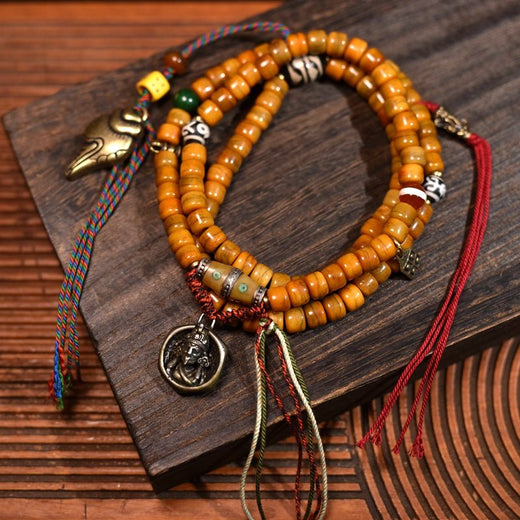
Keep reading