buddhist-jewelry
The Ultimate Guide to Choosing Your First Mala
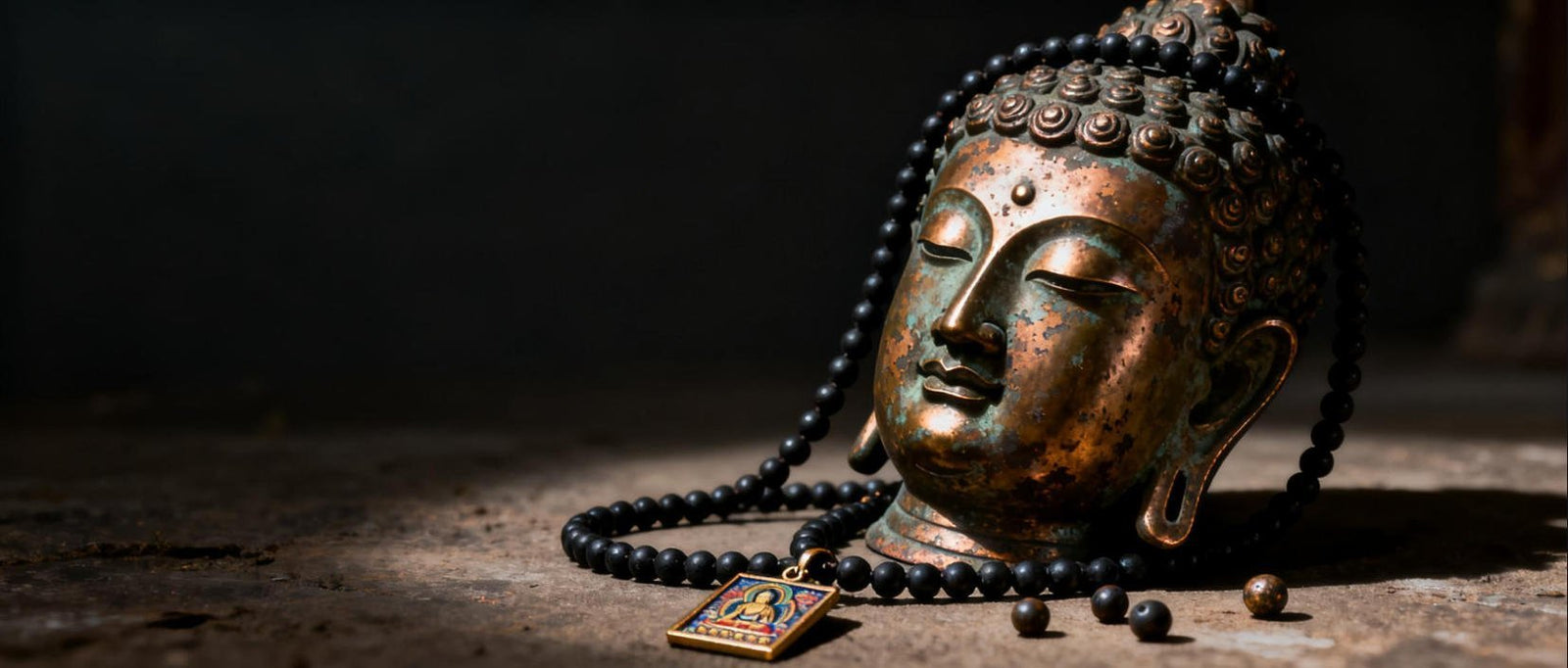
You feel the pull. Maybe you've seen them wrapped around the wrist of a serene yoga teacher or noticed their elegant, grounding presence in a meditation space. A mala bead necklace is more than an accessory; it's a companion for your journey inward, a physical anchor for your spiritual aspirations.
But with so many types—108 beads, different seeds, powerful stones, and intricate carvings—the choice can feel overwhelming. How do you find the right one? The one that feels like it was made just for you?
The answer lies not in following a trend, but in listening to the quiet wisdom of your own heart. This guide is your map. We will walk you through the history, the materials, and the sacred anatomy of these beautiful tools, helping you connect with the mala that is waiting to support your practice.
When our team was exploring the bustling mala stalls near the

How To Choose Mala is how to Choose Your First Mala Bead Necklace: A Beginner's Guide How to Choose Your First Mala Bead Necklace: A Beginner's Guide You feel the pull.
The Soul of the Mala: A Journey Through Time and Tradition
Before you choose your mala, it helps to understand its deep roots. These prayer beads are not a recent invention; they are part of an ancient lineage of spiritual technology. The story of the mala begins in India over 3,000 years ago.
The Sanskrit word mālā translates to "garland," and japa means "to recite." A japa mala, therefore, is a garland for reciting mantras, a tool to keep the mind from wandering during meditation.
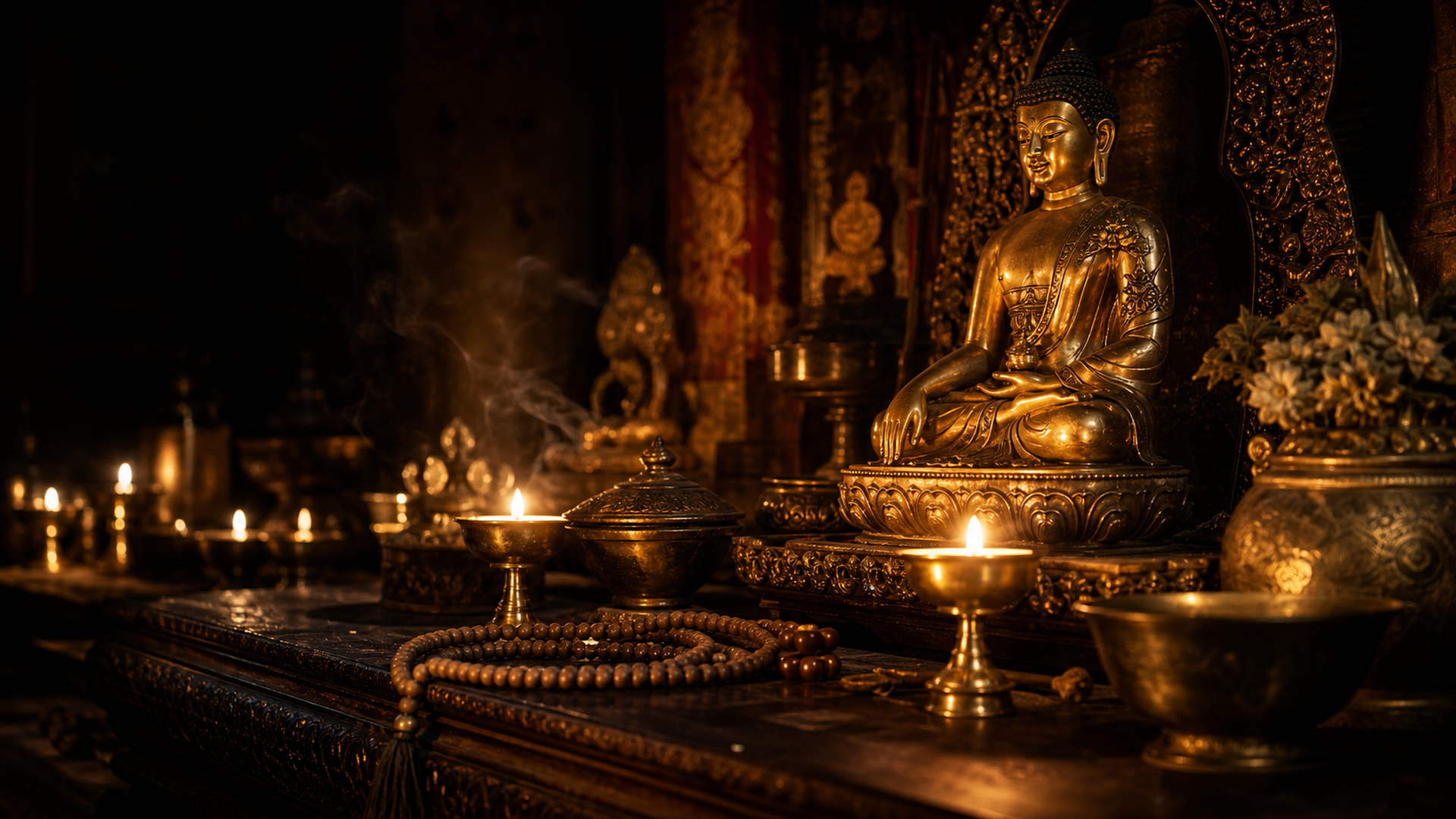
Originally used in Hinduism, the practice was adopted by the Buddha and woven into the fabric of Buddhist practice. From India, the mala traveled along the Silk Road and across the Himalayas, finding a profound home in Tibetan Buddhism, where it became an essential part of daily life.
You see them in the hands of monks, draped around the necks of nomads, and placed reverently on home altars. This tradition of using beads for prayer is a near-universal human impulse, echoed in the Catholic rosary, the Islamic misbaha, and the Greek komboskini.
It speaks to our shared need for a tangible connection to the sacred, something to hold onto as we reach for the intangible.
At the heart of the mala is the number 108. This is not an arbitrary number; it is considered sacred across multiple traditions for a wealth of reasons. Contemplating these connections can be a meditation in itself:
- Spiritual Desires: It is said there are 108 earthly temptations or defilements (kleshas) that we must overcome to achieve enlightenment. Each bead represents one of these challenges, and each recitation of a mantra is a step toward transforming them.
- The Cosmos: The universe itself seems to sing in the rhythm of 108. The diameter of the Sun is approximately 108 times the diameter of the Earth. The distance from the Sun to the Earth is about 108 times the diameter of the Sun. This cosmic connection links your personal practice to the vastness of the universe.
- The Heart Chakra: In yogic tradition, it is believed that 108 focus points of presence (nadis) converge to form the heart chakra (anahata). Chanting a mantra 108 times is thought to awaken this center of love, compassion, and spiritual connection.
- Sacred Texts: There are 54 letters in the Sanskrit alphabet, each with a masculine (Shiva) and feminine (Shakti) quality, totaling 108. The principal Upanishads, foundational texts of Hindu philosophy, are also numbered at 108.
When you hold a 108-bead mala, you are holding more than a string of beads. You are holding a piece of history, a cosmic map, and a powerful tool for inner transformation. It is a lineage of mindfulness passed down through generations, now resting in your hands.
Step 1: Listen to Your Intention — What is Your Heart Seeking?
Before you ever look at a single bead, the most important step is to turn inward. Close your eyes, take a deep breath, and ask yourself a simple question: Why now? What is stirring within you that has drawn you to seek out this sacred tool?
The purpose of your mala is its soul, and your intention is the key that unlocks its power. Your intention is the most important filter you will use, guiding you to the materials and qualities that will serve you best.
Let's explore some common paths. See if your own story resonates with one of these scenarios:
Scenario: The Overwhelmed Professional
Your days are a cascade of deadlines, notifications, and demands. Your mind feels like a browser with too many tabs open, and the feeling of "being on" never seems to cease.
You crave a moment of genuine stillness, an anchor in the storm of your racing thoughts.
Your intention is CALM. You are seeking a grounding practice to soothe an anxious mind and return to a state of peaceful equilibrium.
Scenario: The Creative Mind in a Rut
You feel a fog in your mind. Ideas that once flowed freely now seem just out of reach, and your focus is scattered. You find yourself procrastinating or getting lost in distractions, longing for the mental sharpness and inspiration to bring your projects to life.
Your intention is PRESENCE. You are seeking a tool to cut through the mental clutter, sharpen your focus, and create a clear channel for insight and clarity.
Scenario: The Empathetic Soul
You feel things deeply—not only your own emotions, but the presence of those around you. This sensitivity is a gift, but it can also leave you feeling drained, vulnerable, and weighed down by external negativity.
You need a way to protect your own light and build a sense of inner fortitude.
Your intention is RESILIENCE. You are seeking a tangible symbol of protection and strength, a shield to help you navigate the world with an open but protected heart.
Scenario: The Spiritual Seeker
You have read the books, listened to the podcasts, and tried the meditation apps. You feel a deep yearning for a more profound connection to your spiritual path, something more tangible and ritualistic than just thinking about it.
You are ready to commit to a daily practice.
Your intention is DEVOTION. You are seeking a sacred object to deepen your practice, a physical representation of your commitment to your spiritual growth and connection to the divine.
Take a moment. Which of these resonates? Perhaps it's a blend of a few. Find the single word that feels most true for you right now—calm, presence, resilience, devotion, healing, abundance, love.
Hold this word in your heart. This is your compass. It will guide you through the next step.
Step 2: Feel the Material — The Presence in Your Hands
A mala is a deeply tactile experience. The weight of the beads, their texture against your fingertips, and their temperature are all part of the meditation. The material isn't just about aesthetics; each seed, wood, and stone carries a unique character, a feeling that will become a part of your daily ritual.
As you read about these materials, pay attention to which one your intention calls out to.
Bodhi Seed: The Classic Choice for Awakening
Sourced from the sacred Ficus religiosa tree, Bodhi seeds are the quintessential material for a traditional mala. It was under a Bodhi tree that Prince Siddhartha Gautama attained enlightenment and became the Buddha.
To hold these seeds is to connect with that very moment of profound awakening. They are earthy, lightweight, and have a subtly textured surface with small, dark markings. Running your fingers over their organic surface is a meditation in itself, perfect for grounding a flighty mind and connecting to traditional teachings.
Over time, Bodhi seeds will absorb the oils from your skin and the presence of your practice, growing darker and smoother, becoming a living record of your journey. This makes them ideal for an intention of devotion or spiritual connection.
Yak Bone: A Symbol of Impermanence and Resilience
In the high, harsh landscapes of the Himalayas, the yak is a symbol of life, strength, and endurance. In Tibetan Buddhism, nothing is wasted, and using the bones of a yak that has passed naturally is a profound act of respect and a powerful reminder of impermanence (anicca).
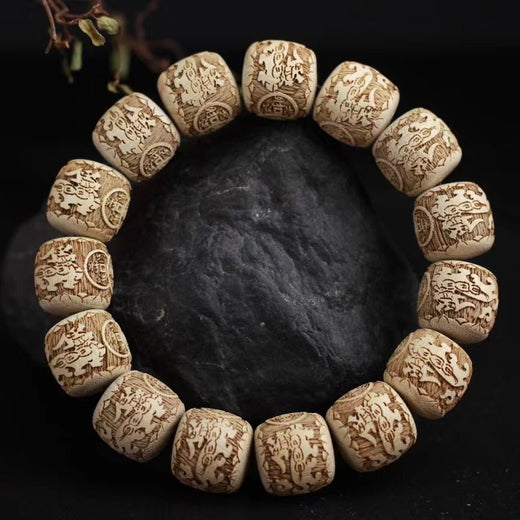
Each bead, often hand-carved with mantras or symbols, feels solid and cool to the touch. There's a raw, organic strength here. A mala made from yak bone is a potent shield, a tool for grounding your focus and transmuting fear into courage.
It is ideal for those with an intention of protection, strength, or resilience.
Lotus Seed: For Transformation and New Beginnings
The lotus flower is a revered symbol of purity and spiritual awakening. It grows from the mud at the bottom of a pond, pushing its way up through murky water to blossom in the sun.
This journey represents our own potential to rise above our challenges and limitations to achieve enlightenment. Lotus seeds are smooth, calming, and surprisingly lightweight. Their gentle presence encourages peace and patience, making them perfect for intentions of transformation, patience, and finding beauty in difficult circumstances.
Rudraksha Seed: The Fiery Seed of Protection
Known as the "tears of Shiva," Rudraksha seeds are deeply grooved, powerful beads with a strong, protective character. Legend says that Lord Shiva, after a long period of meditation for the good of all beings, opened his eyes and shed a single tear, which grew into the Rudraksha tree.
These seeds are believed to shield the wearer from negative influences, promote vitality, and calm the nervous system. Their rough texture provides a distinct tactile focus during japa. They are an excellent choice for an intention of protection, fearlessness, or vitality.
Sandalwood: The Scent of Mindfulness
The moment you pick up a sandalwood mala, you are greeted by its sweet, woody, and calming aroma. This scent is not only pleasant; it is a powerful tool for meditation.
The fragrance is known to quiet the mind, promote relaxation, and enhance concentration, making it easier to drop into a meditative state. The beads are smooth and light, warming to your touch. A sandalwood mala is a perfect companion for an intention of calm, peace, or mindfulness.
Gemstones: Grounded Allies for Your Journey
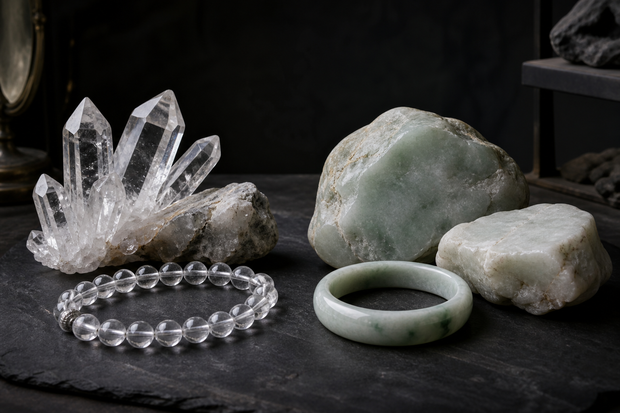
Stones and crystals are born of the earth, each carrying a unique presence. Choosing a gemstone mala allows you to align with the specific qualities you wish to cultivate.
- Lapis Lazuli: With its deep celestial blue, this stone is a symbol of wisdom, truth, and inner vision. It is associated with the throat and third eye chakras, encouraging clear communication and heightened intuition. Choose Lapis for an intention of truth or spiritual insight.
- Turquoise: Highly prized in Tibetan culture, Turquoise is a master healing and protective stone. It is believed to absorb negativity, balance the emotions, and connect the earthly and spiritual realms. It's a wonderful choice for an intention of healing, wholeness, or protection.
- Amethyst: This beautiful purple quartz is a stone of tranquility and spiritual awareness. It is known for its ability to calm the mind, soothe anxiety, and enhance intuition, making it a powerful aid for meditation. Choose Amethyst for an intention of stress relief or spiritual connection.
As you explore these qualities, you can see how they come to life in our full collection of mala beads. Let your intuition be your guide. Which material makes you feel something? That is the one for you.

The Anatomy of a Mala: Understanding Its Sacred Components
A mala is more than a simple string of beads; each element of its construction is imbued with purpose and symbolism. Understanding its anatomy will deepen your appreciation and enhance your practice.
The 108 Beads: These are the primary counting beads used to track the recitation of your mantra. As you move from one bead to the next, you are fully present with each repetition, allowing the sound and feeling to permeate your being without the distraction of keeping count.
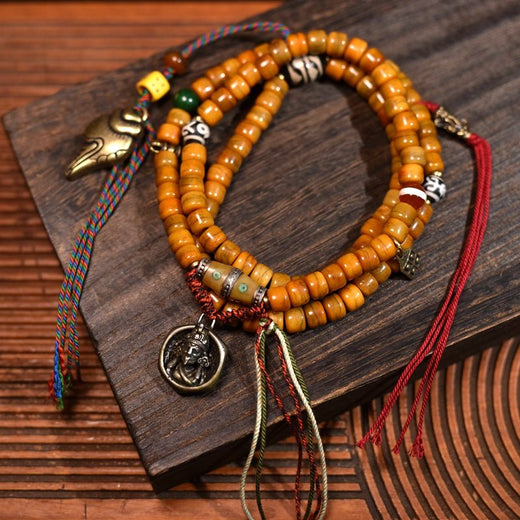
The Guru Bead: The 109th bead, which is often larger or of a different material, is called the Guru or Meru bead. Guru means "teacher," and this bead represents your own inner teacher, the divine, or the student-guru relationship.
It is the start and end point of your meditation. When you reach the Guru bead, you do not cross over it. Instead, you pause to honor your practice and your intention. It serves as a moment of reflection before you turn the mala around and continue your recitations in the opposite direction.
The Tassel: The tassel has multiple layers of meaning. On one level, it represents the roots of the lotus plant, a reminder of our connection to the divine and our potential to grow from the mud of our daily lives.
It also symbolizes the convergence of all the intention brought to your practice, which you can then offer up for the benefit of all beings. As a collection of many threads bound together, it is a powerful symbol of oneness and our interconnectedness.
The Knots: In a traditionally crafted mala, a tiny knot is tied between each bead. This has both a practical and a spiritual purpose. Practically, the knots create space, making it easier for your fingers to move from one bead to the next.
They also ensure that if the mala ever breaks, the beads won't scatter. Spiritually, each knot represents the link between all things in the universe and symbolizes the challenges or "knots" in life that we work to untangle through our practice.
Weaving Your Mala into Your Life: A Practical Guide
Once you have chosen your mala, the real journey begins. Integrating it into your life is a beautiful and rewarding process. Here is how you can begin your practice.
How to Use Your Mala for Japa Meditation:
- Find a comfortable, quiet place to sit. Hold your mala in your right hand, as this side is associated with positive, outgoing presence.
- Let the mala drape over your middle finger. The middle finger represents the sky or ether, a vast and open space. Avoid using your index finger, which is associated with the ego.
- Starting with the bead next to the Guru bead, use your thumb to gently pull the bead toward you as you recite your chosen mantra, either aloud or silently.
- With each recitation, move to the next bead, pulling it toward you with your thumb. Allow the physical sensation to anchor your focus.
- Continue this process until you have completed all 108 beads and have arrived back at the Guru bead.
- Pause at the Guru bead. Take a moment for gratitude and reflection. Do not cross over it. If you wish to continue for another round, simply flip the mala around and go back in the direction you came.
Choosing a Mantra:
A mantra is a sacred sound, word, or phrase that carries a specific feeling. When repeated, it helps to focus the mind and elevate your consciousness. You can use a traditional Sanskrit mantra or a simple affirmation that aligns with your intention.
- Om Mani Padme Hum: This is the great six-syllable mantra of compassion associated with Avalokiteshvara, the bodhisattva of compassion. It is said to contain the entirety of the Buddha's teachings.
- So Hum: A simple yet profound mantra meaning "I am that." It connects your individual consciousness with the universal consciousness. Inhale on "So," exhale on "Hum."
- Personal Affirmations: You can also use affirmations that directly reflect your intention. For example: "I am calm and at peace," "I am focused and clear," or "I am safe and protected."
Beyond Formal Meditation:
Your mala is a companion for your entire day, not only for your time on the meditation cushion. Wear it as a necklace or wrap it around your wrist as a constant, physical reminder of the intention you set.
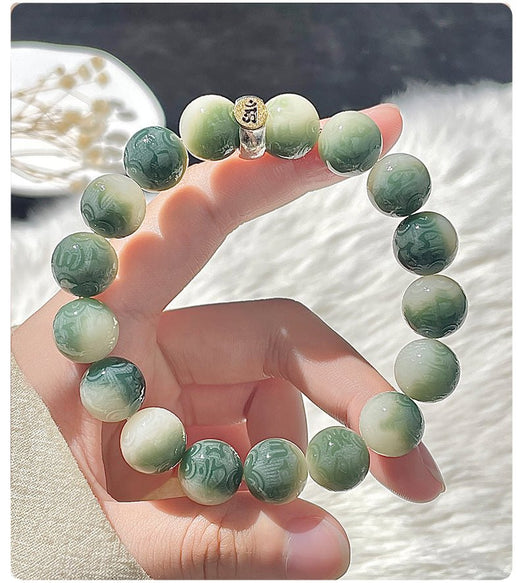
During a stressful meeting or a difficult conversation, you can discreetly touch the beads to reconnect with your center. if you choose a full 108-bead mala or a shorter wrist mala bracelet for on-the-go mindfulness, the practice remains the same: to bring you back to the present moment.
Caring for Your Sacred Companion
Your mala is a meaningful tool. Just as you would care for any cherished object, your mala benefits from regular cleansing and mindful handling. It absorbs presence from your practice and your environment, so periodic clearing helps to restore it to its natural state.
Cleansing Your Mala:
- Moonlight: One of the gentlest and most powerful methods is to place your mala in the light of a full moon overnight. The lunar presence is purifying and recharging.
- Sunlight: A brief period in the sun can also be cleansing, but be mindful, as prolonged exposure can fade certain gemstones or dry out seeds.
- Smudging: Pass your mala through the smoke of cleansing herbs like sage, palo santo, or cedar. The smoke will carry away any stagnant presence.
- Sound Bath: Place your mala near a singing bowl and let the resonance wash over it. This is a beautiful way to reset its presence.
Storing and Handling:
When you are not using or wearing your mala, keep it in a special place, like a small silk pouch or on your personal altar. This shows reverence for the tool and its purpose.
Try not to let it touch the ground. Treat it as the sacred object it is.
What if Your Mala Breaks?
It is a common belief that when a mala breaks, it is not a negative sign. Instead, it can symbolize the breaking of a cycle or the completion of a karmic pattern.
It means you have fulfilled the intention you set with that mala. It is a moment for reflection and gratitude for the lessons learned and the journey you have traveled with it. You can choose to gather the beads and have them restrung, perhaps with a new Guru bead to signify a new intention, or you can retire them to your altar as a tribute to your practice.
Choosing your first mala is a profound step on your spiritual path. It is an act of self-love and a commitment to your own inner peace. Trust the process, listen to your intuition, and know that the right mala will feel like an old friend, ready to support you on the journey ahead.
When you're ready, you can explore our full collection of authentic Tibetan jewelry to find the companion that calls to your heart.
Explore our Rudraksha meditation mala.
Frequently Asked Questions
1. Can I wear more than one mala at a time?
Yes, you can absolutely wear more than one mala. Practitioners enjoy layering malas of different materials to combine their qualities. You might wear a sandalwood mala for calm alongside a turquoise mala for protection.
The most important thing is how it feels to you. If wearing multiple malas feels supportive and good, then it is the right practice for you.
2. What if I'm not a Buddhist? Can I still use a mala?
Of course. While malas have deep roots in Buddhism and Hinduism, they are ultimately tools for mindfulness and meditation, which are universal practices.
You do not need to subscribe to any specific religion to benefit from using a mala. It is a tool for anyone seeking to quiet their mind, focus their intention, and connect with their inner self.
3. How do I know if I'm using my mala "correctly"?
The "correct" way to use a mala is the way that feels most authentic and supportive to your practice. While there are traditional guidelines, such as using the right hand and the thumb to pull the beads, the true purpose is to aid your focus.
If you are using it with intention, reverence, and mindfulness, you are using it correctly. Let go of the need for perfection and simply be with the practice.
4. Should I let other people touch my mala?
Your mala holds your personal presence and becomes attuned to your intentions and practice. For this reason, it is generally recommended to keep it as a personal, sacred object.
Allowing others to handle it can introduce their presence into it. If someone does touch it, you can simply cleanse it afterward using one of the methods described above to restore its purity.
5. What's the difference between a mala necklace and a mala bracelet?
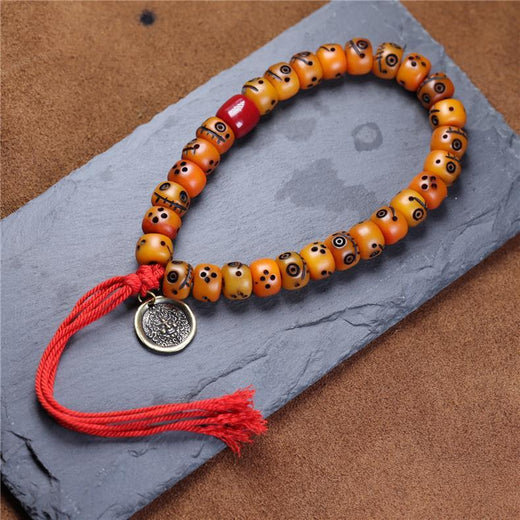
A traditional mala necklace has 108 beads, which is the standard for a full round of japa meditation. A mala bracelet, often called a "wrist mala," has a smaller number of beads, typically
Keep reading