buddhist-jewelry
Choose Spiritual Jewelry for Your Intention
You know you want a piece that does more than adorn. You want it to mean something, to do something, to be a silent partner on your journey. But standing before a collection of malas, bracelets, and pendants—each beautiful, each whispering of different qualities—the choice can paralyze you.
It's a common feeling, a moment of being lost in a sea of sacred potential.
The secret is to stop looking so intently at the jewelry and start listening, with just as much focus, to yourself. What ache in your soul are you trying to soothe? What dormant quality are you trying to awaken and invite into your life?
Your intention is the truest compass you will ever possess, and this guide is your map. We will explore not only the what, but the why and the how, connecting you to a tradition of adornment that has supported seekers for centuries.
During our last visit to a small artisan collective in Dhar

The Compass of Intention: Listening to Your Inner Voice
Before a single bead is carved or a stone is polished, the journey of your spiritual jewelry begins within you. In the noise of daily life, it's easy to lose track of your own inner presence.
Choosing a sacred object is an invitation to tune back in. This isn't about what you think you *should* want; it's about what your spirit is genuinely asking for.
Take a moment, right now. Close your eyes and take three deep, slow breaths. Ask yourself a few quiet questions:
- What is the most persistent feeling I'm experiencing these days? Is it anxiety, fatigue, confusion, or a sense of disconnection?
- What quality, if I had more of it, would make the biggest positive change in my life? Is it courage, compassion, clarity, or peace?
- Where in my life do I feel a blockage? Is it in my ability to speak my truth, to set boundaries, or to feel safe and grounded?
Your answers are the starting point. They are the raw material of your intention. In Buddhist practice, this is akin to setting a Sankalpa—a heartfelt resolve, a solemn vow you make to yourself to support your highest truth.
It's more than a fleeting wish; it's a direction you consciously choose to orient your life towards. Your piece of jewelry then becomes the physical anchor for this Sankalpa. Every time you see it, touch it, or feel its weight against your skin, you are reminded of the promise you made to your own soul.
A Legacy in Your Hands: Understanding the Forms of Tibetan Spiritual Jewelry
The pieces you see today are not modern inventions; they are descendants of a rich lineage of spiritual technology. For centuries in the Himalayas, jewelry was never just for decoration. It was a form of protection, a tool for practice, and a public declaration of one's spiritual path.
Understanding these forms deepens your connection to the piece you choose.
Mala Necklaces (Japa Beads)
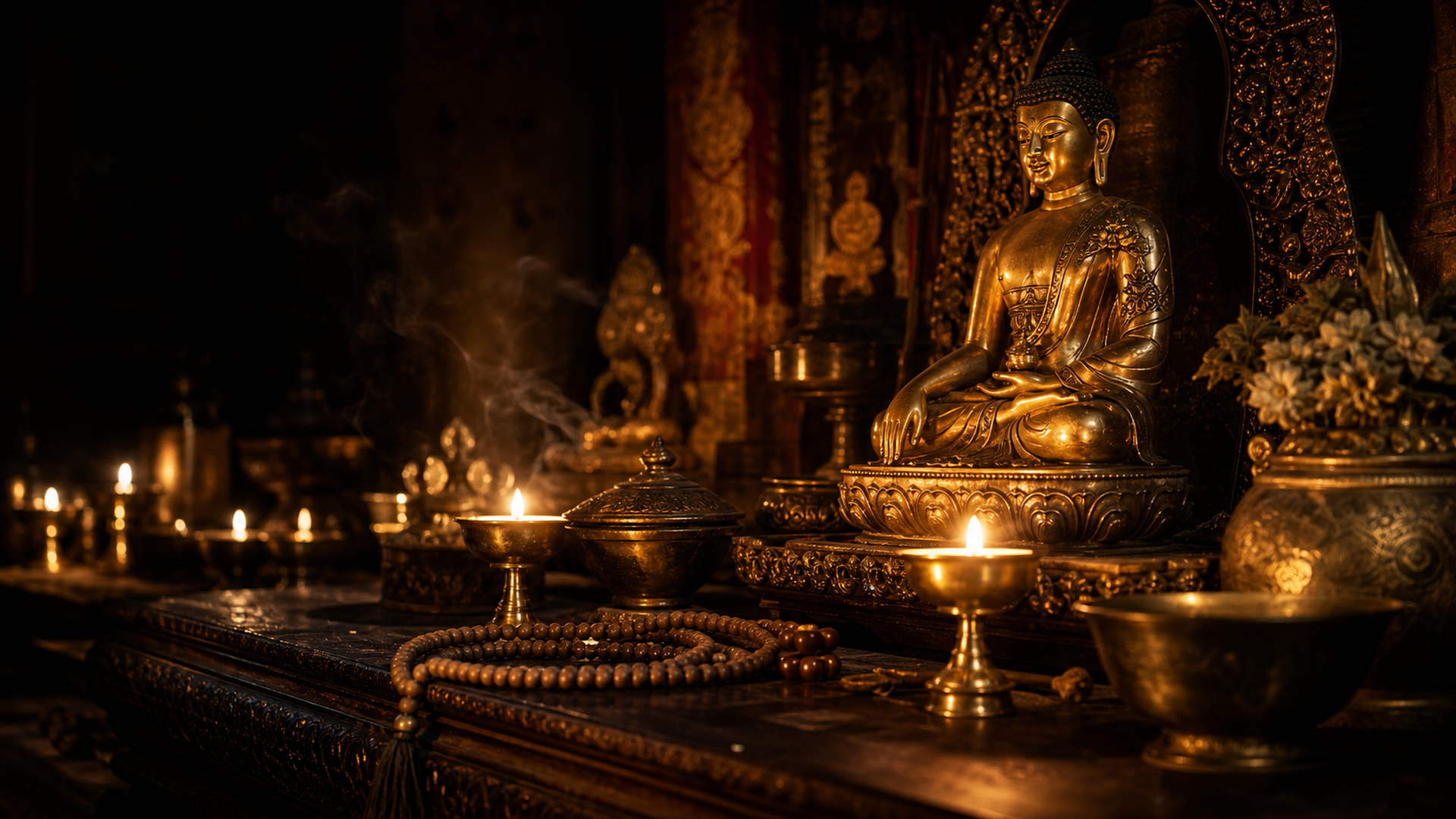
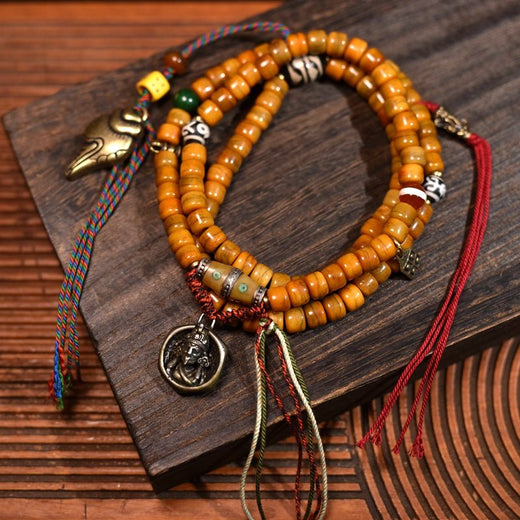
The mala is perhaps the most iconic piece of Buddhist spiritual hardware. Originating in India over 3,000 years ago, its use spread with Buddhism across Asia. A traditional mala consists of 108 beads, a number of profound significance.
It is said there are 108 afflictions (kleshas) or worldly desires, and reciting a mantra 108 times helps to purify and transcend them. The number also appears in astrology, sacred geometry, and the number of energy lines (nadis) converging to form the heart chakra.
A mala is more than a string of beads. It has a specific anatomy:
- The 108 Beads: Used for counting mantras, breaths, or prostrations. The practice of moving from one bead to the next, known as japa meditation, focuses a restless mind.
- The Guru Bead (or Meru Bead): The larger bead at the bottom, which signals the start and end of a round of 108. It represents the teacher or the ultimate wisdom you seek. You do not cross over the Guru bead out of respect; instead, you turn the mala around and go back in the other direction.
- The Tassel: It symbolizes the lotus blossom, representing enlightenment and the interconnectedness of all beings. It also serves to bundle the threads of the mala together, signifying our connection to the divine.
Choosing a full 108-bead mala is a commitment to a closer, more structured practice. It's a tool designed for the dedicated work of transformation, one mantra at a time.
Spiritual Bracelets
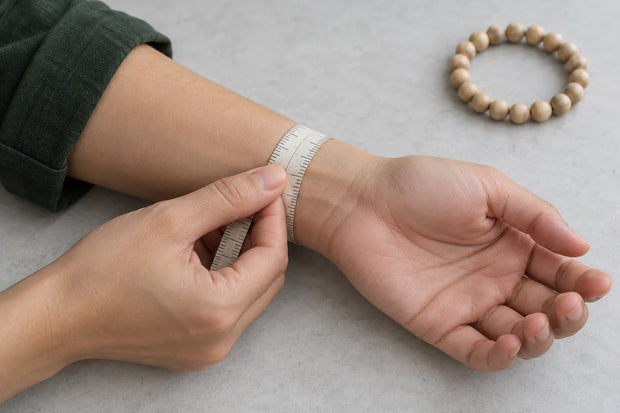
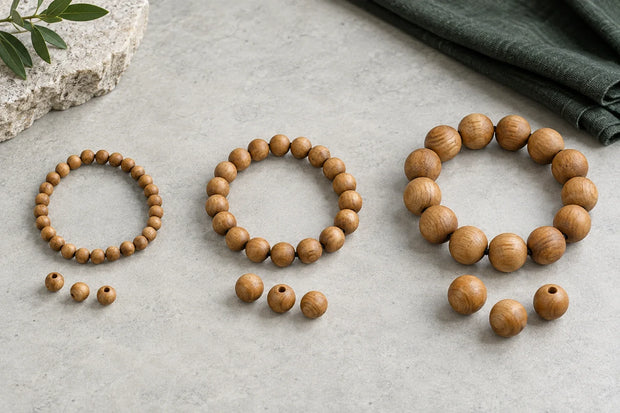
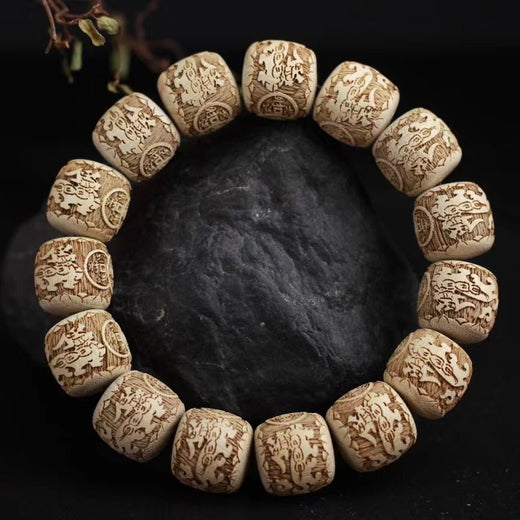
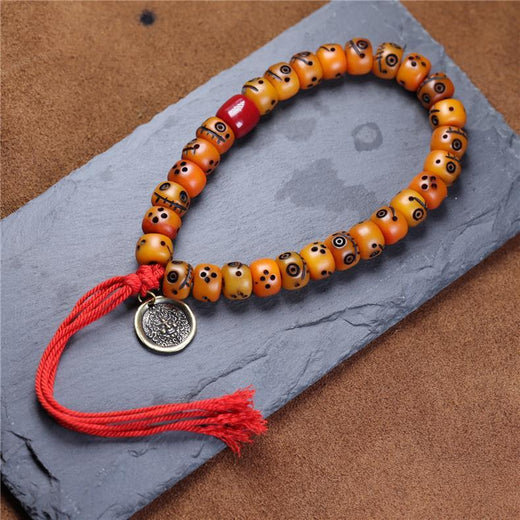
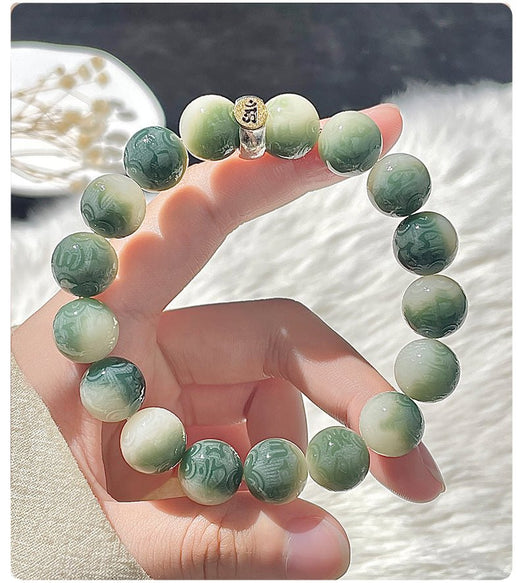
Bracelets are a more modern and practical adaptation, allowing you to carry the presence of a full mala in a more subtle, everyday form. They often feature a symbolic number of beads (commonly 21 or 27) and serve as a constant, tangible reminder of your intention.
A bracelet on your wrist is in your line of sight throughout the day, catching your eye as you type, drive, or hold a cup of tea, pulling your awareness back to your purpose.
A common belief in energy work suggests the wrist you choose matters. The left wrist is considered the "receiving" hand, closer to your heart and more connected to your inner self. Wearing a bracelet here is thought to help you absorb the stone's presence and cultivate the qualities you seek within.
The right wrist is the "giving" hand, associated with action in the outer world. Wearing a protective or strengthening bracelet here can help you project that presence and influence your environment.
Pendants and Amulets
Worn over the heart or throat, pendants are potent focal points for specific qualities or protections. In Tibetan tradition, these are often far more than simple charms. A Ghau box, for instance, is a portable shrine or amulet container, traditionally used to hold sacred relics, medicinal herbs, or written mantras, keeping them close to the heart for protection during travel.
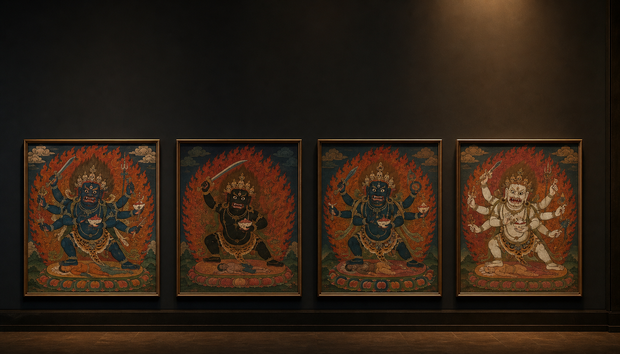
A Thangka pendant is a miniature sacred painting, depicting a Buddha, Bodhisattva, or mandala, allowing you to carry the visual presence and blessings of the deity with you. Common symbols like the Vajra (symbol of indestructibility and spiritual power), the Endless Knot (representing the interconnectedness of all things), or the mantra "Om Mani Padme Hum" serve as powerful reminders of core Buddhist principles.
Your Presence: A Guide to Materials and Their Meanings
The substance of your jewelry is its voice. Each material carries a unique character, a story, and a traditional association cultivated over thousands of years. As you read, notice which descriptions resonate. Your intuition will often recognize the quality you need before your conscious mind does.
Seeds & Woods: The Earth's Wisdom
- Bodhi Seed: These are not technically seeds but the polished and hardened seeds of the ficus religiosa tree, the very species under which Siddhartha Gautama attained enlightenment. For this reason, Bodhi seeds are the traditional and most revered material for malas. They represent the potential for awakening that exists within you. With use, they absorb your oils and your character, darkening in color and becoming a true extension of your practice.
- Sandalwood: Treasured for its fragrant, calming aroma, sandalwood has been used for centuries to aid meditation. Its scent is believed to quiet the mind, reduce anxiety, and open one to a closer spiritual state. It's a gentle, soothing presence that encourages tranquility.
- Rudraksha Seed: Though most strongly associated with the Hindu deity Shiva, Rudraksha seeds are widely used by Buddhist practitioners as well. Their name translates to "Tears of Shiva." They are known for their protective qualities, believed to shield the wearer from harmful influences and promote mental clarity.
Stones & Crystals: The Planet's Power
- Turquoise: In Tibetan culture, turquoise is more precious than gold. It is considered a master healing stone, a protector against harm, and a guarantor of health and good fortune. It is believed to absorb negativity and change color to warn the wearer of impending illness or danger. It also promotes communication and speaking one's truth from the heart.
- Lapis Lazuli: With its deep celestial blue and flecks of golden pyrite, Lapis Lazuli has been a stone of royalty, priests, and visionaries for millennia. It is a stone of truth, awareness, and deep inner wisdom. It stimulates the third eye focus point, enhancing intuition and helping you connect with your authentic self.
- Amethyst or Lavender Jade: These cool, soothing stones are traditionally linked to calming the mind and easing worry. Amethyst is a natural tranquilizer, dissolving negativity and relieving stress. It enhances spiritual awareness and intuition, making it perfect for meditation. Lavender Jade brings a similar peace, but with a focus on emotional balance and harmony.
- Black Onyx or Obsidian: These are powerful psychic shields. Black Onyx is a grounding stone that provides strength and stamina during times of stress, confusion, or grief. It helps you absorb and transform negativity. Obsidian is even more direct; born from volcanic fire, it is a stone of truth that works quickly to bring hidden issues and negative patterns to the surface so they can be released.
- Carnelian or Red Coral: These fiery stones are for vitality, courage, and creative focus. Carnelian is a stabilizing stone that restores motivation and stimulates creativity. It gives you the courage to overcome difficulties and trust in yourself. Red Coral, from the sea, represents our lifeblood and is believed to protect from depression and invigorate the spirit.
Metals & Bone: The Cycle of Life
- Yak Bone: In the high plateaus of Tibet, nothing is wasted. The use of yak bone is a profound and earthy reminder of impermanence (anicca), a core tenet of Buddhism. Meditating with bone beads helps you contemplate the cycle of life and death, encouraging you to live more fully in the present moment. Its solid, protective quality can make you feel safe and shielded from external chaos. * Copper: Known for its conductive and healing properties, copper is believed to stimulate presence, enhance psychic abilities, and balance the focus points. It is often used in bracelets to help with arthritis and joint pain, bridging the physical and the subtle.

Matching the Tool to the Task: Choosing Jewelry for Your Intention
Now, let's bring it all together. Here are some common scenarios—archetypes of the modern seeker. See if you recognize yourself in any of them. This is where your self-inquiry meets the tangible world of sacred adornment.
For the Seeker of Calm: When Your World is Too Loud
Your Scenario: Your nervous system feels constantly wired. Your thoughts are a relentless chorus of to-do lists, worries, and what-ifs. You crave silence, a moment of stillness in the internal storm. You need an anchor, not a stimulant.
Your Intention: To quiet the mind, soothe anxiety, and find a grounded, peaceful center.
The Ideal Piece: A full 108-bead Mala Necklace. The physical act of using a mala is a powerful antidote to a scattered mind. The 108 beads provide a structured, rhythmic practice for meditation, giving your overactive hands and mind a single, calming point of focus.
The repetitive motion of moving from bead to bead is a proven anxiety reliever, activating the parasympathetic nervous system.
Materials to Look For: Bodhi Seed for its connection to enlightenment and grounding presence; Lavender Jade or Amethyst for their cool, soothing feeling that calms the mind; Sandalwood for its serene aroma; or Yak Bone for its solid, protective presence that makes you feel safe from external chaos.
Your Practice: Commit to a daily 5-minute meditation. You don't even need a mantra to start. Simply hold the mala and on each bead, take one full inhale and one full exhale. When you feel a wave of anxiety during the day, stop what you are doing, hold the Guru Bead between your thumb and finger, and take three conscious, deep breaths.
This small act can reset your entire nervous system.
For the Builder of Boundaries: When You Feel the Weight of the World
Your Scenario: You're an empath, a caregiver, a healer, or you work in a high-stress environment. You absorb the presence of people and places like a sponge, and by the end of the day, you feel drained, heavy, and unsure where your presence ends and someone else's begins.
Your Intention: To create a protective shield, deflect negativity, and maintain your personal power and vitality.
The Ideal Piece: A Protective Bracelet or a Thangka Pendant. A bracelet sits on the wrist, a point of pulse and action, serving as a constant guard at the gateway of your focus. A pendant hangs over the heart, protecting your core emotional and spiritual center.
Materials to Look For: Black Onyx or Obsidian, the ultimate psychic shields that absorb and transmute negativity. Turquoise is a powerful Tibetan protector, while Tiger's Eye helps you stay grounded and centered in your own power, deflecting unwanted influence.
Your Practice: Before you leave the house or enter a challenging situation, hold your bracelet or pendant. Visualize a bubble of protective light surrounding you, with your jewelry as the generator of this shield.
State your intention: "I am safe, I am sovereign, I release what is not mine."
For the Cultivator of Compassion: When the Heart Feels Closed
Your Scenario: You find yourself being harsh or judgmental, either towards yourself or others. You feel disconnected, walled-off, and you long for a closer sense of connection, kindness, and open-heartedness.
Your Intention: To dissolve the armor around your heart and actively cultivate Karuna (compassion) and Metta (loving-kindness) for yourself and all beings.
The Ideal Piece: A mala or pendant inscribed with the mantra "Om Mani Padme Hum," the sacred mantra of Chenrezig (Avalokiteshvara), the Buddha of Compassion. The piece itself becomes a beacon of compassionate focus.
Materials to Look For: Rose Quartz is the classic stone of unconditional love. Green Aventurine is a heart healer that dissolves negative emotions. Lapis Lazuli connects you to a sense of universal love and wisdom.
Your Practice: Use your mala to recite "Om Mani Padme Hum" 108 times daily. As you recite, visualize a warm, loving light emanating from your heart, first filling your own body, then extending to your loved ones, to your community, and finally to all beings without exception.
For the Seeker of Clarity and Wisdom: When the Path is Foggy
Your Scenario: You are at a crossroads. You're facing a major decision, feeling confused about your purpose, or simply seeking a closer understanding of your life's path. The mental fog is thick, and you need a beacon of clarity.
Your Intention: To gain insight, access your inner wisdom (Prajna), and cut through the illusions of confusion and doubt.
The Ideal Piece: A Lapis Lazuli mala or a pendant featuring a symbol of wisdom like the Endless Knot, which represents the infinite wisdom of the Buddha.
Materials to Look For: Lapis Lazuli to activate the third eye and connect you to your innate wisdom. Clear Quartz to amplify your intention and bring clarity of thought. Bodhi Seed to remind you of your own potential for enlightenment.
Your Practice: Sit with your piece in quiet meditation. Hold a specific question or situation in your mind. Don't force an answer. Simply hold the question and be open to any insights, feelings, or images that arise.
Wear your piece as a reminder to pause and connect with your inner knowing before you speak or act.
Weaving Your Jewel into Your Life: Activating and Caring for Your Piece
Once you've chosen your piece, your relationship with it truly begins. It arrives as a beautiful object, but it becomes a sacred tool through your attention and care. This process transforms it from something you own into a part of your practice.
Setting Your Intention
When you first receive your jewelry, find a quiet moment. Don't just put it on. Hold it in your hands. Feel its weight, its texture, its temperature. Close your eyes and bring to mind the intention you identified earlier.
You can state it aloud or silently. For example: "I dedicate this mala to the cultivation of peace within myself," or "I activate this bracelet as a shield of protection." Infuse the piece with your purpose.
This simple ritual forges a conscious link between you and your new spiritual ally.
Cleansing and Recharging
Your jewelry, especially pieces made of crystal or stone, can absorb the presence of its environment. It's important to cleanse it regularly to clear any accumulated debris and restore it to its natural state. This is like hitting a reset button.
- Moonlight: The gentle presence of the full moon is a wonderful way to cleanse and recharge your pieces. Simply leave them on a windowsill overnight.
- Smudging: Pass your jewelry through the smoke of cleansing herbs like sage, palo santo, or cedar. The smoke carries away stagnant qualities.
- Sound: The resonance of a Tibetan singing bowl, a bell, or a chant can effectively clear a piece. Place your jewelry near the sound source and let the resonance wash over it.
- Avoid Water: Be mindful that water can damage certain materials, especially woods like Bodhi Seed or Sandalwood, and can cause the string of a mala to stretch or break over time. When in doubt, choose a dry cleansing method.
Cleanse your piece whenever it feels "heavy" or dull, or at least once a month. Explore the entire collection of sacred tools to find the one that is waiting to support you.
Beyond the Material: When Your Jewelry Becomes Your Teacher
Over time, your relationship with your spiritual jewelry will deepen and evolve. You'll notice that the Bodhi seeds of your mala grow darker and smoother, polished by your touch and infused with the presence of your mantras.
Your Turquoise bracelet might seem to change color slightly with your moods or health. It ceases to be an external object and becomes a witness to your journey, a repository of your prayers and intentions.
A day may come when your mala breaks. In our culture, a broken object is often seen as a failure. In Buddhist tradition, a broken mala is a cause for reflection, not regret. It can signify the end of a cycle, a karmic breakthrough, or that the purpose of that particular mala in your life has been fulfilled.
It is a powerful symbol of progress. You can have it restrung, perhaps with a new Guru bead to mark the new chapter, or you can retire the beads and begin anew.
Ultimately, remember that the power is not in the object itself. The obsidian doesn't *create* protection; it awakens the fierce, protective strength that is already within you. The rose quartz doesn't *give* you compassion; it helps you dissolve the barriers to the boundless compassion that is your true nature.
These pieces are not rare charms. They are exquisitely crafted keys, designed to open up the doors to the wisdom, peace, and power that already reside inside you.
Frequently Asked Questions
What if I'm not a Buddhist? Can I still wear this jewelry?
Absolutely. While these pieces are rooted in Tibetan Buddhist tradition, their core purpose is to support universal human qualities like peace, compassion, and wisdom.
You do not need to identify as a Buddhist to benefit from the focusing power of a mala or the grounding presence of a stone bracelet. Approach the piece with respect for its origins and use it as a tool for your own personal growth and mindfulness practice, whatever your spiritual path may be.
How do I know which wrist to wear my bracelet on?
While there are traditional beliefs about the left wrist being for "receiving" and the right for "giving," the most important guide is your own intuition.
Try wearing your bracelet on each wrist and notice how it feels. Does one feel more natural or powerful? Some people wear calming stones on the left to receive their benefits internally, and protective stones on the right to project that energy outward.
There is no wrong answer; trust your body's wisdom.
My mala broke. What does that mean?
A broken mala is traditionally seen as a positive sign, not a bad omen. It can symbolize a breakthrough—that you have completed a cycle of intention and practice.
The breaking of the cord represents the release of old patterns or the fulfillment of the purpose for which the mala was used. You can gather the beads and have them restrung, often with a new Guru bead to symbolize a new beginning, or you can offer them back to the earth.
How often should I cleanse my spiritual jewelry?
This depends on how often you wear it and what kind of environments you are in. If you wear a protective bracelet every day in a stressful workplace, you might want to cleanse it every few days.
For a mala used only for meditation in a quiet space
Keep reading