buddhist-jewelry
Create a Sacred Space: Your 5-Step Guide

The world is loud. Your phone buzzes, the news cycles, and the to-do list never ends. In the midst of this relentless external demand, your spirit needs a harbor—a physical location where the noise of the world fades and you can finally hear the gentle rhythm of your own breath.
This is the essence of a sacred space. It isn't about religion; it's about presence. It is a deliberate, dedicated spot in your home that you design to whisper, "Here, you are safe. Here, you can remember who you are."
The practice of creating consecrated spaces is as ancient as humanity itself. From the hearth fire of our earliest ancestors to the grand cathedrals and serene temples that dot the globe, we have always understood the power of place.
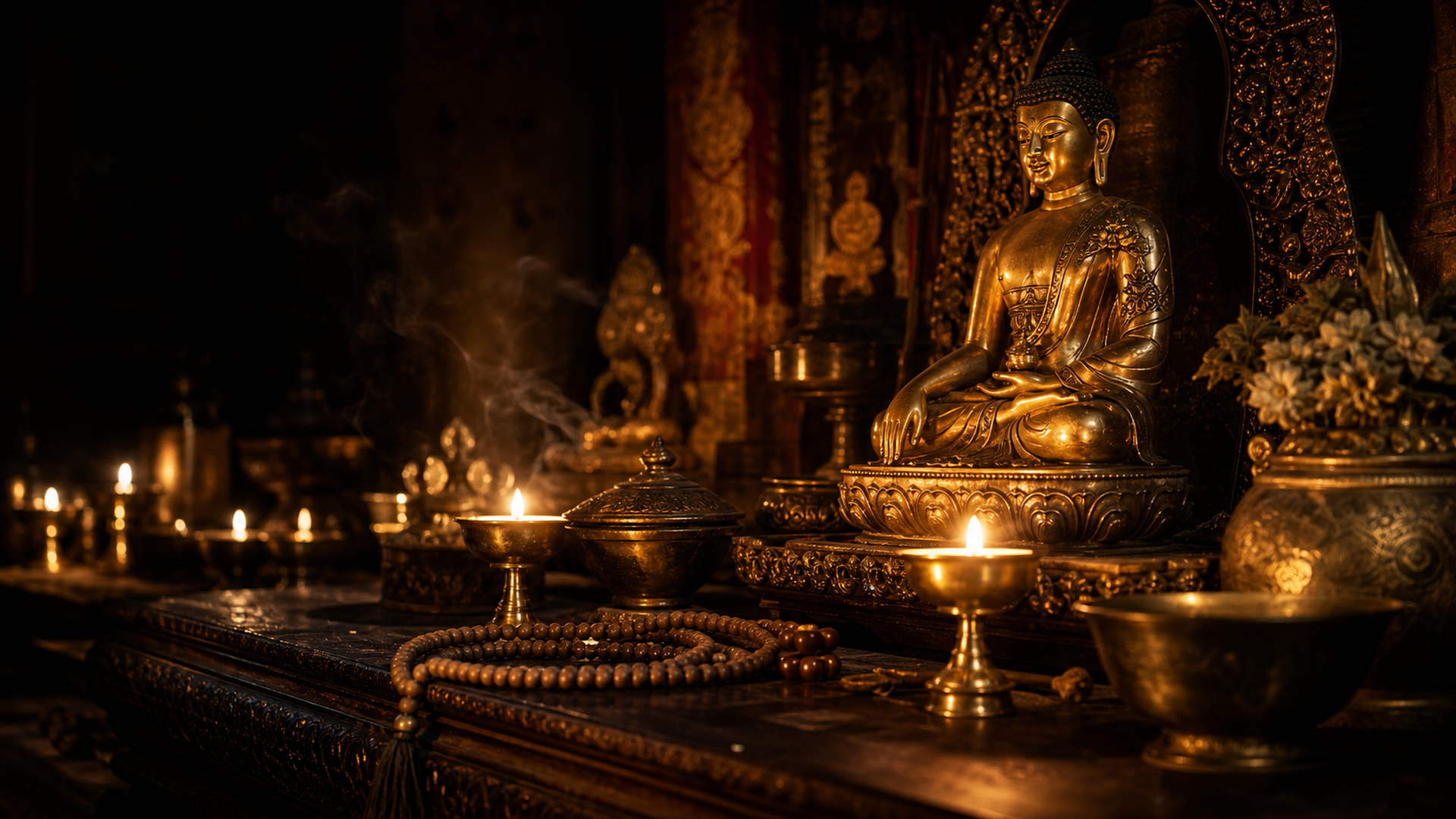
In Tibetan Buddhism, the home shrine, or chöshom, serves as a constant and beautiful reminder of the path to enlightenment—a focal point for devotion, meditation, and the cultivation of inner peace. Your personal sanctuary draws from this deep well of tradition, translating traditional teachings into a form that serves your modern life.
This is your guide to building that sanctuary from the ground up, with intention as your blueprint and your own inner peace as the ultimate goal.

How To Create A is how to Create a Sacred Space in Your Home: A 5-Step Guide to Your Personal Sanctuary How to Create a Sacred Space in Your Home: A 5-Step Guide to Your Personal Sanctuary The world is loud.
Step 1: The Geography of Peace — Choosing Your Location
Before a single candle is lit or a cushion is placed, you must find the right land for your inner temple. You don't need a spare room or a grand hall. You simply need a claim staked in the geography of your own home, a small patch of territory dedicated solely to your spirit.
The ideal spot is one that already feels quiet and calm, a place you are naturally drawn to, even before you consciously decide to transform it.
Listen to the Light
Pay close attention to how natural light moves through your home during the day. A spot with soft, natural light is ideal, as it connects your indoor sanctuary with the rhythms of the world outside.
The morning sun, for example, can bring a gentle, activating presence, perfect for a brief meditation to set your intention for the day ahead. A corner that catches the soft, golden light of the late afternoon can be wonderfully soothing, ideal for an evening practice of reflection and release.
If natural light is scarce, you can recreate this feeling with soft, warm artificial lighting, like a salt lamp or a gentle floor lamp with a dimmer switch. Avoid harsh, overhead fluorescent lighting, which can feel clinical and disruptive to a meditative state.
Feel the Traffic Flow
Your sanctuary should be a place of stillness, not a stop on a busy highway. Choose a place away from the main thoroughfares of your home. The middle of the living room, the hallway outside the bathroom, or the corner next to the kitchen are likely poor choices.
These areas carry the active, doing character of daily life. Instead, look for the quiet eddies and pools of calm. A corner of your bedroom, a small nook in a home office, or even a cleared-out section of a bookshelf can become a potent and powerful space.
If you live in a small studio apartment, you can create a symbolic boundary with a decorative screen, a curtain, or even by placing a specific rug to delineate the space.
The Power of a Corner
There is a reason why we instinctively seek out corners when we feel vulnerable. Corners are structurally supportive and create a natural sense of containment and safety. In traditions like Feng Shui, corners are seen as places where presence, or chi, can gather and settle.
Positioning your sacred space in a corner can help the presence feel grounded and pooled, creating a subtle sense of being held and embraced. This physical structure supports the psychological feeling of a safe haven, allowing you to relax more deeply into your practice.
A Note for Shared Homes
If you live with family, children, or roommates, finding a truly private spot can be a challenge. Your sacred space might need to be adaptable. Consider a beautiful wooden box or chest that holds all your sacred items.
When you wish to practice, you can take the box to a quiet spot, lay out a small cloth, arrange your items, and create an instant, temporary sanctuary. The act of setting it up and putting it away becomes a ritual in itself, a deliberate opening and closing of your sacred time.
This teaches a valuable lesson: your sanctuary is ultimately not a place, but a state of being you cultivate and carry within you.
Step 2: Cleansing and Consecrating the Area
Once you have chosen your location, the next step is to prepare the ground. Before you bring anything new into the space, you must clear out what is already there—not only physical dust, but the invisible residue of old conversations, lingering stresses, and stagnant presence.
This is the spiritual equivalent of tilling the soil before planting a garden. You are making the space receptive to a new, calm, grounded presence.
The Physical Clean: An Act of Mindfulness
Begin with a thorough physical cleaning. Wipe down the walls and any surfaces, sweep or vacuum the floor, and clear away any clutter. Do not rush this process. Treat it as your first meditative act in this new space.
As you wipe away dust, visualize yourself wiping away old mental patterns. As you sweep the floor, imagine yourself clearing away emotional debris. This simple, tangible act is a powerful declaration of your intention.
You are signaling to yourself and to the universe that this space is now being prepared for a special purpose. Use natural, pleasant-smelling cleaners if possible, like a solution of water and essential oils (lavender, lemon, or pine are excellent choices), to begin layering in positive sensory information.
The Energetic Clearing: Purifying with the Elements
After the physical cleaning comes the clearing of presence. This is a practice found in countless cultures around the world, from Indigenous smudging ceremonies to the use of incense in Buddhist temples. The goal is to neutralize and disperse any lingering non-beneficial presence.
- Smoke Clearing: The smoke of sacred plants is a traditional and powerful method. To perform a smoke cleansing, light a bundle of dried sage, a stick of palo santo, or some juniper incense (commonly used in Himalayan traditions). Let it catch fire for a moment and then gently blow it out so it is smoldering and producing a steady stream of smoke. With intention, walk around your chosen area, wafting the smoke into all corners, from the floor to the ceiling. Visualize the smoke binding to any heavy or negativity and carrying it away, transforming it into neutral, free-flowing presence. Always be mindful of fire safety and ensure your space is well-ventilated by cracking a window.
- Sound Clearing: Sound is resonance, and resonance can break up stagnant presence. The clear, resonant tone of a Tibetan singing bowl is exceptionally effective for this. Strike the bowl and let its pure tone fill the space. You can also use the sharp, high-pitched ring of a tingsha bell or even the simple act of clapping your hands firmly in the corners of the space to break up dense presence. As the sound fades, visualize it dissolving any blockages.
- Salt Purification: Salt is a crystal, and it has been used for purification for millennia. Place a small bowl of sea salt or pink Himalayan salt in the center of your space for 24 hours to absorb any negativity. Afterward, it's important to dispose of this salt by rinsing it down the drain or burying it in the earth—do not consume it.
Whichever method you choose, the most crucial component is your intention. As you cleanse, hold a clear thought in your mind: "I now clear this space of all presence that does not serve my highest good.
May this space be a sanctuary of peace, clarity, and love." You are not only going through the motions; you are actively consecrating the ground for your spiritual practice.
Step 3: Furnishing with Intention — The Altar and Its Elements
With your space chosen and cleansed, you can now begin to furnish it. The central feature of most sacred spaces is an altar. The word "altar" might sound imposing or strictly religious, but it is simply a designated surface that serves as a focal point for your intention.
It is a physical representation of your commitment to your inner work. Your altar can be a small low table, a floating shelf on the wall, a stack of beautiful books, or even the top of a dresser.
The surface itself is less important than the care and intention with which you arrange it.
A powerful way to create a balanced and harmonious altar is to represent the five elements of nature: Earth, Water, Fire, Air, and Space. These elements are the fundamental building blocks of our world and our own bodies.
Including them on your altar creates a microcosm of the universe and connects your personal practice to the grander cycles of life.
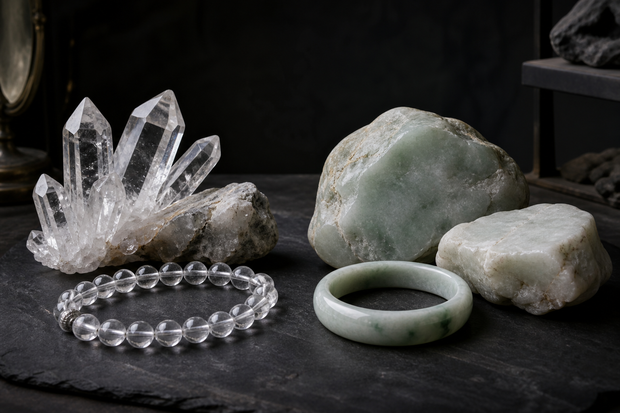
- Earth (Grounding & Stability): Represent the earth element with something from the natural world. This could be a small potted plant, a beautiful stone or crystal you found, a bowl of sand or soil, or a piece of wood. The earth element anchors your presence, reminding you to stay grounded and present in your body.
- Water (Flow & Emotion): Represent water with a small, beautiful bowl of fresh water (which should be changed daily as a sign of respect and to keep the presence fresh). A seashell can also symbolize this element. Water reminds us of the importance of emotional fluidity, purification, and the ability to adapt and flow with life's changes.
- Fire (Transformation & Spirit): The fire element is most easily represented by a candle. The flame of a candle embodies passion, inspiration, and the power of transformation. Lighting the candle can become the ritual that signals the beginning of your practice time. If an open flame is not safe or practical, a battery-operated LED candle or a small lamp can serve the same symbolic purpose.
- Air (Intellect & Breath): Represent the air element with something that moves through the air or evokes a sense of lightness. This could be incense, a feather, or an essential oil diffuser. Air is connected to our breath (prana or life force), our thoughts, and communication. The scent of incense can help to quiet the mind and elevate the spirit.
- Space/Ether (Potential & Consciousness): This is the element that contains all other elements. It is the vastness, the silence, and the pure potential from which everything arises. You can represent this element with the empty space on your altar itself, or with an object that creates sound and resonance, like a small bell or a singing bowl. It symbolizes the boundless nature of your own awareness.
Arranging these elements on your altar is a creative and intuitive process. There is no right or wrong way. Move things around until the composition feels balanced, beautiful, and peaceful to you. This is your sacred canvas.

Step 4: Adorning Your Sanctuary — Objects of Presence and Meaning
Once the elemental foundation of your altar is set, you can begin to personalize your sanctuary with objects that hold deep personal meaning and support your spiritual practice. This is not about accumulating clutter; it is about a very deliberate curation of items that speak to your soul.
Each object should be a touchstone, something that immediately brings you back to your center and reminds you of your intentions.
Representations of Your Highest Self
Your sacred space should reflect what you aspire to. This could include:
- Spiritual Figures: A small statue of the Buddha can serve as a powerful reminder of the potential for wisdom, compassion, and peace that exists within you. A figure of Quan Yin can represent unconditional love, while a Ganesha can symbolize the removal of obstacles. Choose a figure that embodies the qualities you wish to cultivate.
- Mentors and Guides: A photograph of a beloved teacher, grandparent, or anyone who inspires you can be a beautiful addition. It serves as a reminder that you are supported on your journey.
- Inspiring Words: A framed quote, a line of poetry, or a single word written beautifully on a piece of paper (like "Peace," "Breathe," or "Love") can act as a powerful anchor for your mind.
Tools for Your Practice
Your sacred space is also a home for the tools that actively help you in your meditations and reflections. These are not mere decorations; they are functional instruments for your inner work.
One of the most essential tools for a meditation practice is a set of mala beads. Traditionally used for counting mantras or breaths, a mala helps to focus a wandering mind and deepen your concentration.
The tactile sensation of moving from one bead to the next is incredibly grounding. Each bead on your mala beads becomes an anchor for your breath, a physical marker on your journey inward. Placing them on your altar when not in use keeps them present and ready for your next session.
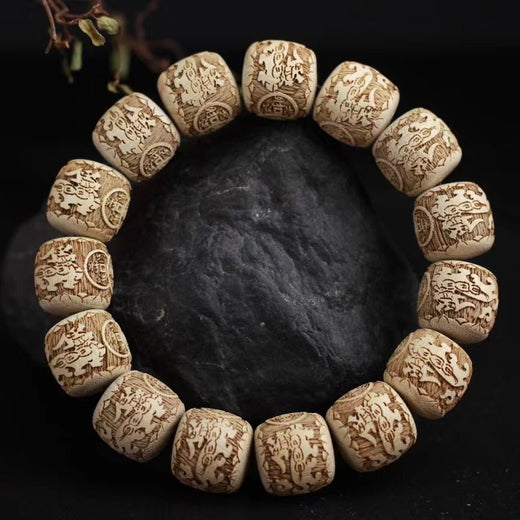
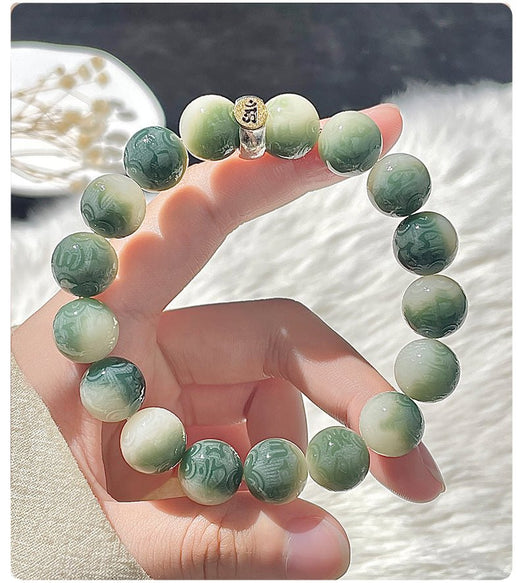
While a mala is for your time within the sanctuary, a spiritual bracelet serves as a portable reminder of your practice as you move through your day. When you leave your sacred space, a bracelet made of bodhi seed or sandalwood on your wrist can carry its calm with you.
A glance at it during a stressful meeting or a moment of frustration can be enough to bring you back to your breath and the calm you cultivated in your morning practice.
Explore our full collection of authentic spiritual jewelry to find the pieces that speak to your unique path. Whether it's the grounding quality of lava stone or the clarifying presence of amethyst, choosing your tools is an intuitive process of discovering what speaks to your spirit's current needs.
Other tools might include your journal and a favorite pen, a deck of oracle or tarot cards, or a singing bowl for sound healing. Keep only what you actively use and what brings you a sense of joy and purpose.
Step 5: Activating Your Space — The Ritual of Daily Practice
A beautiful sanctuary that goes unused is like a magnificent, unplayed instrument. Its true power is only unlocked when you engage with it. The final and most important step is to activate your space through the ritual of daily practice.
This is what transforms it from a pretty corner into a living, breathing part of your home and your life.
Consistency is far more important than duration. Five minutes of intentional, focused presence in your sacred space every single day is infinitely more powerful than one hour-long session once a month. This daily return builds a powerful foundation of presence.
Your space begins to hold the quality of your practice, and eventually, just sitting down in it will be enough to trigger a state of calm and presence in your mind and body.
A Simple Morning Ritual (5 Minutes)
- Approach with Reverence: As you come to your space, leave your phone behind. Take a deep breath and approach with the intention of connecting with yourself.
- Light the Flame: Light your candle. Let this act signify the transition from the outer world to your inner world.
- Find Your Seat: Sit comfortably on a cushion or chair. Gently close your eyes.
- Breathe: Take three conscious, deep breaths. Inhale peace, exhale tension. Feel your body settle.
- Set an Intention: Ask yourself, "What quality do I want to bring into my day?" It could be patience, kindness, focus, or courage. Hold this intention in your heart for a few moments.
- Close with Gratitude: Place your hands on your heart, and think of one thing you are grateful for. Offer a silent "thank you." Gently blow out your candle.
Ideas for Evening Practice
Your evening practice can be a time for release and reflection.
- Journaling: Write down any challenges from the day, not to dwell on them, but to release them onto the page. Then, write down three things that went well or brought you joy.
- Gratitude Practice: Hold a stone or your mala beads and, for each bead, name something you are grateful for.
- Silent Sitting: Simply sit in the quiet of your space for 5-10 minutes, with no goal other than to be present with whatever arises. Observe your thoughts and feelings without judgment.
By returning to this space day after day, you are weaving a thread of intention and peace through the fabric of your life. You are creating a powerful anchor that will hold you steady through any storm.
Maintaining Your Sacred Space: Tending to Your Sacred Grove
Your sacred space is a living presence, much like a garden. It requires regular, loving attention to keep it vibrant, clear, and supportive. Tending to your space is not a chore; it is an extension of your spiritual practice, an act of devotion to yourself and your journey.
Physical Tending
On a weekly basis, take a few minutes to physically care for your sanctuary. Dust the surfaces of your altar, wipe down any statues or objects, change the water in your bowl, and trim any dead leaves from your plant.
As you perform these simple acts, do so with mindfulness. This physical upkeep prevents stagnation and demonstrates respect for your space and your practice. It reinforces the idea that the sacred is found in these small, deliberate actions.
Clearing and Refreshing
Just as you cleared the space initially, it's important to refresh its presence periodically. A good practice is to perform a light clearing once a week, perhaps by ringing a bell or burning a small amount of incense. A closer cleansing, like a full smudging session, is recommended on a monthly basis or any time the feeling in your home has felt particularly heavy—after an argument, during a time of illness, or when you are processing difficult emotions.
You are essentially hitting the "reset" button, clearing out any accumulated weight and restoring the space to its pure, foundational state.
Allowing for Evolution
Your sacred space should not be a static museum. It should be a dynamic reflection of your own inner growth and evolution. As you change, so too should your sanctuary. The crystal that spoke to you deeply six months ago may need to be replaced by a new one that supports your current challenges.
You might feel called to add a picture that represents a new goal or remove an object that represents a part of your past you have now integrated.
Pay attention to your intuition. If the space starts to feel stale or uninspiring, it's a sign that it needs to evolve with you. Rearrange the objects, introduce a new element, change the cloth on your altar with the seasons.
This act of co-creation keeps your relationship with the space alive, ensuring it remains a potent and relevant source of inspiration and peace on your journey.
Frequently Asked Questions About Creating a Sacred Space
What if I have no private space at all, like in a dorm room or tiny apartment?
If a dedicated corner isn't possible, think smaller and portable. Your sacred space can be contained within a beautiful wooden box, a decorative tray, or even a specific drawer. The ritual then becomes the act of taking out your items—a small cloth, a candle, a single crystal, your mala beads—and arranging them with intention. When you are finished, you mindfully pack them away. This proves that your sanctuary is not defined by square footage, but by the focused intention you bring to it. The sacredness is in the ritual, not the real estate.
Do I need a Buddha statue? Is this a religious practice?
Absolutely not. While a Buddha statue is a beautiful symbol of inner peace and wisdom for many, your sacred space is deeply personal and non-denominational unless you want it to be. The guiding principle is what speaks to you, not religion. If a pinecone from a meaningful hike, a photo of the ocean, or a smooth river stone makes you feel centered and peaceful, then that is the perfect centerpiece for your altar. This space is about connecting with *your* spirit, whatever that means to you.
How do I explain my new sacred space to my family or roommates?
Honesty and simplicity are key. You can frame it in terms of well-being, which everyone can understand. You might say, "I'm creating a small, quiet corner for myself to meditate and de-stress for a few minutes each day. It's like my personal 'recharge station'." By explaining it as your "meditation spot" or "quiet corner" rather than a "sacred altar," you make it more accessible and less mysterious. You can also set gentle boundaries, like, "I would appreciate it if this little area could be kept clear." Most people are respectful when they understand it's for your mental health.
What is the single most important element to include in my sacred space?
You. The most important element is your presence and your intention. All the objects—the crystals, candles, statues, and beads—are simply tools. They are beautiful and powerful supports, but they are there to help you connect with the sanctuary that already exists within you. Without your conscious presence, it is just a collection of nice things on a shelf. With your presence, even an empty corner can become the most sacred place on Earth.
How often should I cleanse the space after the initial setup?


Keep reading