buddhist-jewelry
A Sacred Guide to Mala Bead Meditation
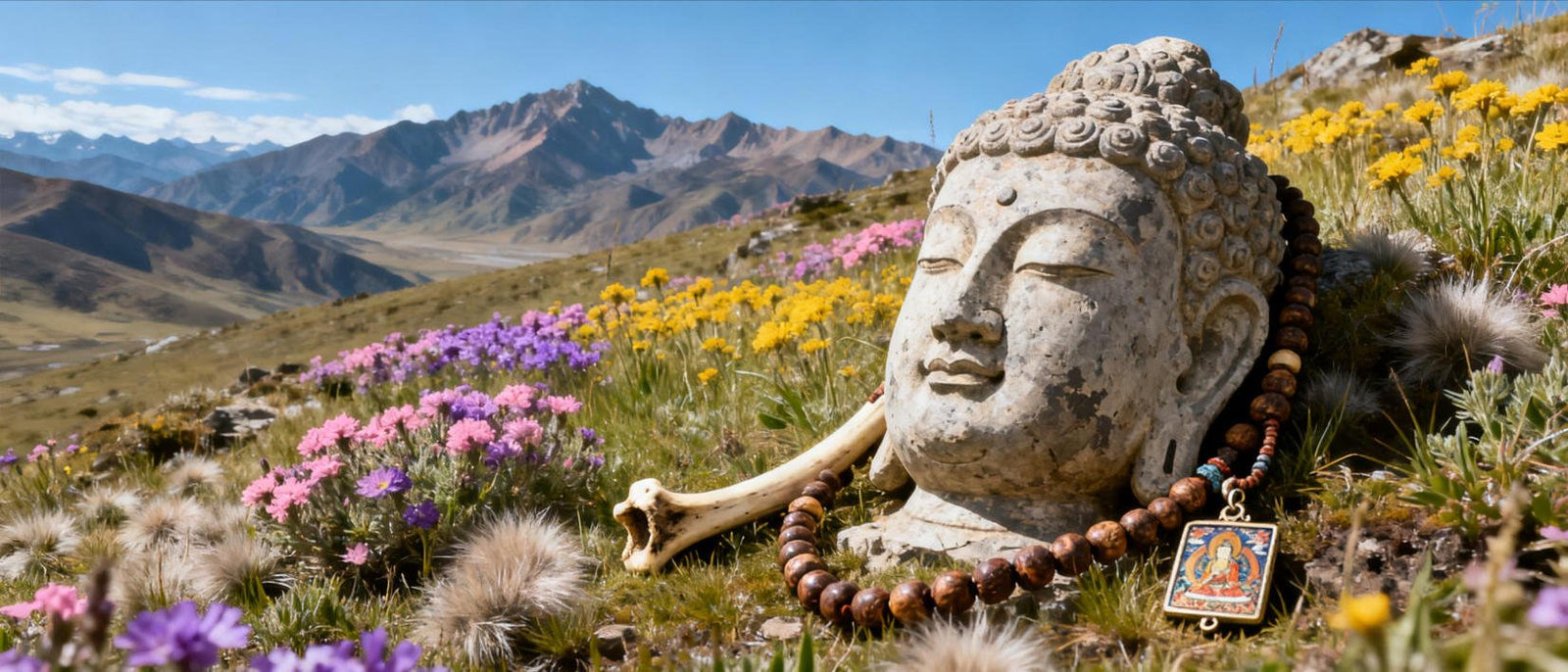

Each bead is hand-knotted by Tibetan artisans at monasteries in Nepal and Tibet, following centuries-old traditions passed down through generations of craftsmen.
How To Meditate With is you feel its potential for peace, but it sits silently in your hand, a beautiful yet dormant tool.
The Whispering Power in Your Hands: An Invitation to Mala Meditation
You hold your mala. The beads are smooth, the tassel soft against your palm. You feel its potential for peace, but it sits silently in your hand, a beautiful yet dormant tool. How do you unlock its ancient power?
How do you transform this string of beads into a conduit for profound tranquility and focus? The answer lies in the ancient practice of Japa meditation, a gentle dance between the mind, the voice, and the hands.
It’s a method so simple and intuitive it feels like remembering something your soul once knew.
This practice is not about the strenuous effort of emptying your mind, a task that can often feel impossible in our busy world. Instead, it is about filling your mind with a single, purposeful resonance—a sacred sound, or mantra.
This mantra becomes your anchor, and your mala beads become the sacred abacus that helps you count and keep this focus. Each bead you touch is a repetition, a gentle return to your center, a step along a well-worn path to inner stillness.
You are about to engage in a ritual that has been practiced across generations, a technique that connects you to a lineage of seekers who, just like you, sought a way to quiet the noise and hear the wisdom within.
This guide will walk you through every step of that journey. From understanding the deep history encoded in your mala's design to choosing the perfect mantra and working through the inevitable wanderings of your mind, you will discover how to awaken the potential held within your hands.
Prepare to begin a practice that can ground your spirit, clarify your thoughts, and open your heart.
A Sacred Thread Through Time: The History and Symbolism of Mala Beads
Your mala is more than a meditation accessory; it is a piece of living history, a direct link to millennia of spiritual tradition. The word "mala" is Sanskrit for "garland," and its origins trace back to India around the 8th century B.C.E.
Initially used in Hinduism as a tool for devotional prayer and chanting, this sacred technology was later adopted by Buddhist practitioners as they sought effective methods for focusing the mind during meditation.
As Buddhism spread from India, the mala traveled with it, journeying along the Silk Road and across the Himalayas into Tibet, China, and Japan. While its form adapted slightly to each culture, its core purpose remained unchanged: to serve as a tactile guide for counting mantras, prayers, or breaths, thereby freeing the mind from the task of counting and allowing it to immerse itself in the practice.
At the heart of the mala's design is the sacred number 108. The persistence of this number across various spiritual and scientific disciplines is profound. In Vedic cosmology, 108 is the number of existence itself.
Astronomically, the distance between the Earth and the Sun is approximately 108 times the Sun's diameter. In yogic philosophy, there are said to be 108 sacred sites (pithas) throughout India, and 108 energy lines (nadis) converging to form the heart chakra.
In Buddhism, 108 represents the number of mortal desires or "kleshas" that you must overcome to achieve Nirvana. Each repetition of your mantra is a step in this transformative journey, and completing a full cycle of 108 is a symbolic act of spiritual completion.
Every part of your mala is rich with meaning:
- The 108 Beads: These are the primary beads used for counting your mantra repetitions. They represent the journey from our ordinary state of mind to our inherent enlightened nature.
- The Guru Bead: Also known as the "meru" or "sumeru" bead, this is the larger, often decorative bead at the base of the mala. It is the starting and ending point of your meditation. It symbolizes the teacher or the ultimate wisdom you seek. You do not cross over the guru bead out of respect; instead, you pause to honor your intention and then turn the mala around to begin another round.
- The Tassel: The threads of the tassel are bound together, representing our interconnectedness and oneness with all beings. It also symbolizes the lotus flower, which grows in mud but blossoms into a thing of pure beauty—a metaphor for our own journey of enlightenment, rising from the "mud" of worldly suffering. *
- The Knots: In many traditionally crafted malas, a tiny knot is tied between each bead. These knots create perfect spacing for Japa practice and also symbolize the challenges or "knots" in life. They remind us that even amidst difficulties, a sacred space for pause and reflection always exists.
If you are drawn to the grounding quality of sandalwood or the clarifying character of clear quartz, you can explore a wide variety of authentic mala beads to find the one that resonates with your personal path and intention.
Choosing Your Companion: Selecting a Mala That Resonates with You
Selecting a mala is a deeply personal and intuitive process. It is less about what a mala is "supposed" to do and more about what you feel when you hold it. This string of beads will become an intimate companion on your spiritual journey, absorbing your intention and the resonance of your mantras.
Therefore, the right mala is the one that feels like an extension of yourself.
The materials from which a mala is made carry their own unique qualities, cultivated over centuries of traditional use. Consider what qualities you wish to cultivate in your life and practice:
-
Woods and Seeds: These materials offer a direct connection to the earth, providing grounding and stabilizing presence.
- Sandalwood: This aromatic wood is prized for its calming and soothing qualities. It is believed to quiet the mind, promote compassion, and enhance meditative states.
- Bodhi Seed: "Bodhi" in Sanskrit means "enlightenment." These seeds come from the Bodhi tree, the very type of tree under which the Buddha attained enlightenment. Using a Bodhi seed mala carries the symbolism of your own potential for awakening.
- Rudraksha Seed: With a unique texture and powerful presence, Rudraksha seeds are traditionally associated with the Hindu deity Shiva. They are believed to offer protection, shield against negativity, and promote vitality.
-
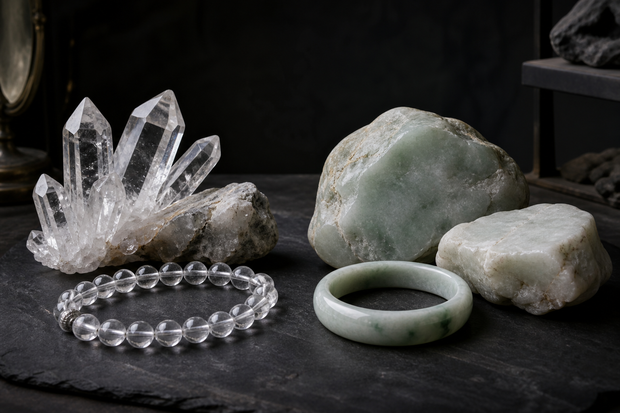
Gemstones and Crystals: These carry the presence of the earth's minerals, each with its own specific resonance.
- Amethyst: A stone of spirituality and contentment, amethyst is known for its ability to calm the mind and enhance intuition. It is an excellent choice if your intention is to deepen your spiritual connection.
- Rose Quartz: The quintessential stone of unconditional love, rose quartz opens the heart chakra. It is perfect for practices focused on cultivating self-love, compassion for others, and emotional healing.
- Lapis Lazuli: A stone of truth and wisdom, Lapis Lazuli is believed to stimulate the third eye chakra, enhancing insight, clarity, and self-expression.
- Tiger's Eye: If you seek focus, courage, and a clear mind, Tiger's Eye is a powerful ally. It is a stone of practicality and willpower, helping you stay grounded in your purpose.
Beyond the full 108-bead mala, you might also be drawn to a wrist mala. These shorter versions, often with 21 or 27 beads, are perfect for shorter meditation sessions or for carrying with you throughout the day.
They serve as a constant, tactile reminder of your intention. For a constant reminder of your intention throughout the day, you might also consider a wrist mala bracelet. Ultimately, trust your intuition. Which mala catches your eye?
Which one feels right in your hand? That is the one meant for you.

Preparing Your Space and Mind: The Art of Setting the Container
Before you ever touch the first bead, you create a container for your practice. This preparatory phase takes only a few moments, but it is a powerful ritual that signals to your mind and nervous system that it is time to shift gears from the outer world of doing to the inner world of being.
This is how you create a sacred space, both around you and within you.
Find Your Sacred Space: You don't need a dedicated temple, just a quiet corner where you can be undisturbed for the duration of your practice. It might be a cushion on the floor, a specific chair, or even a spot in a park.
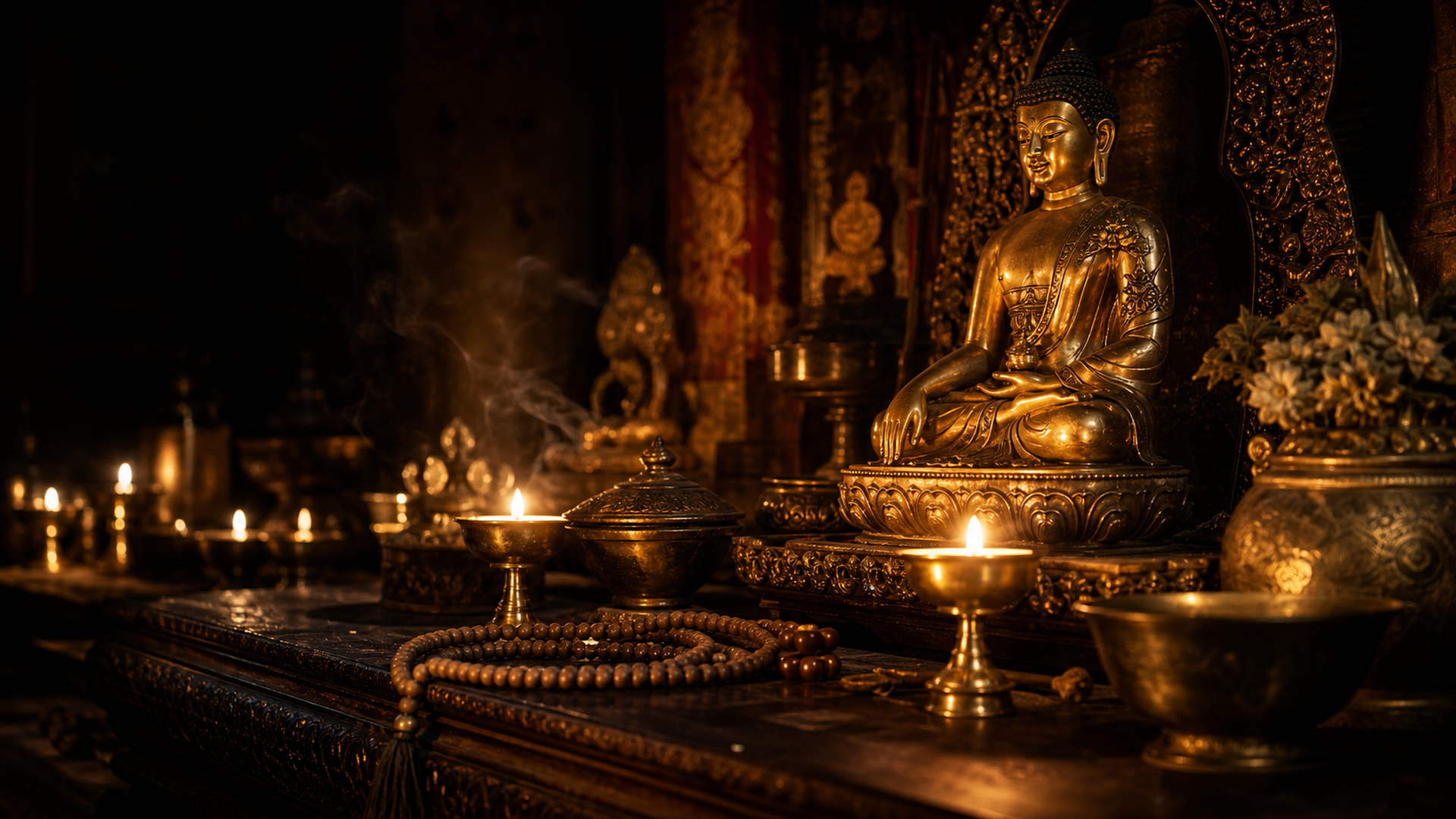
To enhance the sacredness, you might light a candle, burn some calming incense like sandalwood or frankincense, or place an object that is meaningful to you nearby. This simple act of preparation transforms an ordinary space into your personal sanctuary.
Find Your Posture (Asana): Sit comfortably on a cushion or chair. The goal is a posture where your spine can be straight but not rigid, allowing presence (prana) to flow freely. Imagine your vertebrae are a stack of coins, balanced and aligned.
If you're on the floor, a cross-legged position like Sukhasana (Easy Pose) is ideal. If you're in a chair, place both feet flat on the floor. Let your hands rest gently on your knees or in your lap.
The key is sustainable comfort; if your body is tense and aching, your mind will be distracted. Allow your body to be both stable and relaxed.
Set Your Intention (Sankalpa): Briefly close your eyes. Ask yourself: Why am I sitting here today? What do I wish to cultivate? Is it for calm amidst a stressful week? For focus on an important project?
For healing a wounded heart? For a closer connection to my spiritual self? Silently state this intention to yourself. Frame it as a positive, present-tense statement. For a busy professional, it might be, "I am clear and focused." For someone working through anxiety, it could be, "I am safe and at peace." This intention is the fuel for your practice, the North Star that guides you back when your mind wanders.
Take Three Clearing Breaths: This is the final step that brings you fully into the present moment. Inhale deeply through your nose, filling your belly and chest. As you exhale slowly through your mouth, make a gentle "haaa" sound and consciously release the day's clutter.
Feel your shoulders drop, your jaw unclench. With the second breath, let go of any anticipation about the practice itself. With the third, simply arrive. You are here now. The container is set.
The Sacred Hold: Connecting with Your Mala Physically
How you hold your mala is not arbitrary; it is a symbolic gesture, a form of mudra that enhances the focused quality of your meditation. The traditional method engages specific fingers, each representing a different aspect of consciousness and the elements, turning a simple physical act into a profound spiritual one.
Begin by taking your mala in your right hand. Traditionally, the right hand is associated with giving, with pure action, and with projecting intention outward, making it the preferred hand for chanting mantra. Let the mala drape over your middle finger.
The beads should rest on the second knuckle, allowing them to be moved easily. Now, use your thumb to gently pull the first bead (the one next to the Guru bead) toward you.
There is a beautiful symbolism at play here:
- The Middle Finger (Akasha - Ether/Space): This finger is associated with the element of space or ether and is connected to the sushumna nadi, the central channel that runs along the spine. By resting the mala on this finger, you are symbolically placing your practice in this central, most spacious channel, elevating it beyond the mundane.
- The Thumb (Agni - Fire): The thumb represents divine consciousness, the universal self, or the fire element of transformation. As you use your thumb to pull each bead, you are performing a symbolic action: drawing the divine (thumb) towards the individual (bead) and using the fire of your awareness to deepen your mantra.
- The Index Finger (Vayu - Air): In this practice, your index finger typically remains extended, pointing away from the beads and not touching them. The index finger represents the ego, the sense of "I" and "me." By keeping it separate, you are symbolically setting the ego aside for the duration of the practice. You are not trying to force or control the meditation with your individual will, but rather allowing the practice to unfold through you.
This hold might feel a little awkward at first, and that's perfectly normal. Be gentle with yourself. With time, the movement will become a fluid, second-nature rhythm. The physical sensation of the smooth bead moving under your thumb will become a powerful anchor, a constant, grounding touch that brings you back to the present moment again and again.
The Heart of the Practice: Chanting Your Mantra (Japa)
Now you arrive at the heart of the practice—the smooth integration of mantra, breath, and bead. This trinity of action is what transforms the mechanical process of counting into a deeply meditative experience. This is Japa, the practice of repetitive chanting.
A mantra is a sacred sound, word, or phrase that is repeated to focus the mind. The word itself comes from two Sanskrit roots: "man," meaning mind, and "tra," meaning tool or instrument. A mantra is literally an "instrument of the mind." Its power lies not only in its meaning, but in its felt presence.
When you repeat a mantra, you are creating a specific quality of focus in your mind and body that can override the chaotic frequencies of stress, anxiety, and discursive thought.
Choosing Your Mantra: The mantra you choose should feel right to you. It can be a traditional Sanskrit mantra, rich with the depth of centuries of use, or a simple affirmation in your own language.
-
Traditional Sanskrit Mantras:
- Om Mani Padme Hum: This is the great six-syllable mantra of compassion from Tibetan Buddhism. It is the invocation of Avalokiteshvara, the Bodhisattva of Compassion. Chanting it is said to purify negative karma and cultivate boundless loving-kindness for all beings.
- Om Shanti Shanti Shanti: A beautiful mantra for peace. "Om" is the primordial sound of the universe, and "Shanti" means peace. You chant it three times to invoke peace in body, speech, and mind.
- So Hum: This mantra translates to "I am That." It is a powerful mantra for self-realization, aligning your individual consciousness with universal consciousness. It naturally synchronizes with the breath: "So" on the inhale, "Hum" on the exhale.
-
Affirmations in Your Language:
- "I am calm and centered."
- "I invite love and kindness."
- "Let it be."
- "Peace begins with me."
The Process of Japa:
- Begin with the first bead next to the Guru bead, held between your middle finger and thumb.
- Take a gentle breath in. As you exhale, recite your chosen mantra one time. You can chant it aloud, whisper it, or repeat it silently in your mind. The silent repetition is considered the most advanced, but starting aloud can help with focus.
- Upon completing the mantra, use your thumb to pull the next bead into place over your middle finger.
- Inhale, and on the exhale, recite the mantra again.
- Continue this process, moving from one bead to the next, coordinating each repetition with a single bead. Let your breath, the sound, and the movement become one unified rhythm.
Reaching the Guru Bead: When you have completed 108 repetitions, you will arrive back at the Guru bead. Here, you pause. Do not cross over the Guru bead. This pause is a moment of gratitude—for the practice, for the teachings, and for your own effort.
You can bow your head in reverence. If you wish to continue with another round of Japa, you physically turn the mala around in your hand and begin again in the opposite direction. This act of turning honors the Guru bead as a sacred turning point, a symbol of the wisdom you should not "step over" but rather integrate before proceeding.
working through the Inner Landscape: What to Do When Your Mind Wanders
There is a common misconception that meditation is about having a completely blank mind. If you sit down with this expectation, you will quickly become frustrated. The nature of the mind is to think—that is its job.
Your mind will wander. It will make to-do lists, replay conversations, worry about the future, and drift into daydreams. This is not a sign of failure. In fact, it is the entire point of the practice.
Every time your mind wanders and you gently guide it back, you are strengthening your "muscle" of awareness. The moment you realize, "Oh, I'm thinking about my email inbox," that moment of noticing *is* mindfulness. The true practice is not in never leaving, but in always returning.
Your mala is your greatest ally in this process. The mantra, the breath, and the physical sensation of the bead under your thumb are your anchors to the present moment. When you notice your mind has drifted off on a tangent, follow these simple steps:
- Acknowledge, Don't Fight: Gently and without judgment, acknowledge where your mind went. "Ah, there's a thought about work." Don't scold yourself or get frustrated. Fighting your thoughts only gives them more energy. Simply notice them, as if you were watching clouds pass in the sky.
- Gently Release: Consciously let go of the thought. You can visualize it dissolving or floating away.
- Return to Your Anchor: Deliberately bring your attention back to one of your anchors. You might focus on the sound of your mantra, the feeling of your breath entering and leaving your body, or the distinct tactile sensation of the bead you are holding. Choose one and rest your attention there.
Imagine you are training a new puppy. You wouldn't yell at it every time it ran off; you would gently call its name and guide it back to your side, over and over again, with patience and kindness.
Treat your mind with this same self-compassion. For a student overwhelmed by exams, each bead can be a conscious return from the racing "what-if" scenarios to the simple reality of the present moment. For a parent dealing with the constant demands of family, each bead is a small island of peace, a return to self amidst the chaos.
The return is the practice.
Integrating Your Practice: Bringing the Mala's Peace into Your Day
The profound effects of your mala meditation are not confined to the 20 or 30 minutes you spend on the cushion. The goal is to carry the calm, focus, and compassion you cultivate during your practice out into the rest of your life.
Your mala can continue to be your companion in this integration.
After the Final Bead: When you reach the Guru bead and complete your final mantra, don't just jump up and rush into your day. Take a few moments to sit in the stillness you have created.
Release the mantra and the counting. Simply be present with your breath and notice how you feel. Is there more space in your mind? A sense of calm in your body? Reconnect with the intention you set at the beginning.
Offer a silent thanks for this time you've given yourself.
Caring for Your Mala: Your mala is a sacred object that has absorbed the energy of your practice. Treat it with respect. When you are not using it, store it in a special place, like a small pouch or on a personal altar.
Avoid placing it directly on the floor. Periodically, you may wish to cleanse it energetically. You can do this by letting it rest in the light of the full moon, smudging it with sage or palo santo smoke, or placing it on a selenite crystal.
Wearing Your Mala: Practitioners choose to wear their mala as a necklace or wrapped around their wrist. This is more than a beautiful accessory; it is a physical, wearable reminder of your intention and your connection to your practice.
Throughout the day, when you feel stress rising or your mind becoming scattered, you can simply touch your mala. That physical contact can be enough to trigger the memory of the peace you felt during your meditation, allowing you to take a deep breath and re-center yourself in the midst of daily life.
Remember that consistency is far more powerful than duration. A heartfelt practice with 27 beads (one-quarter of your mala) done daily will yield more benefits than a sporadic, long session once a month. Your mala becomes a trusted companion on your journey.
As you explore our full collection of spiritual jewelry, remember that each piece holds the potential to be a touchstone for your mindfulness, a beautiful reminder of the peace that always resides within you.
Explore our monk-blessed Yak Bone 108 mala.
Frequently Asked Questions
Can I use my mala for more than one mantra?
Yes, you absolutely can. While some practitioners dedicate a specific mala to a single mantra to build a particular energy, it is perfectly fine to use your mala for different mantras or intentions depending on what you need in your practice that day.
Your mala is a tool for your journey, and it can adapt with you.
What do I do if my mala breaks?
In the Buddhist tradition, a mala breaking is not seen as a bad omen. On the contrary, it is

Keep reading