buddhist-jewelry
Integrating Tibetan Energy Jewelry into Modern Life: Sc
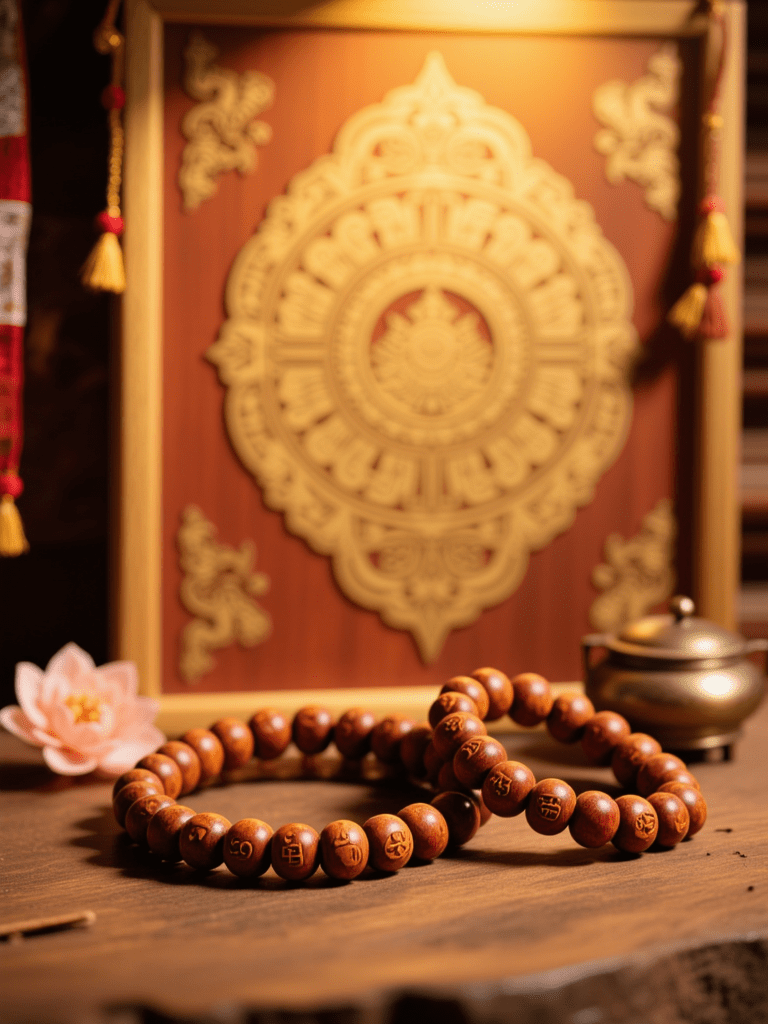
The blue light of your monitor reflects in your eyes. Another email notification flashes, pulling your attention from the report you were meant to finish an hour ago. Your shoulders are tight, your breath is shallow, and your mind feels like a browser with too many tabs open.
It’s a familiar state of being, a low-humming static of overwhelm that defines so much of modern existence. In that moment, your thumb instinctively finds the cool, smooth surface of the turquoise bead on your wrist.
You roll it between your fingers. The texture is real, solid, ancient. You take a conscious breath, feeling the air fill your lungs. The digital noise recedes, just for a second. That small, tangible anchor brings you back to your body, back to the present.
This isn't about escaping your life; it's about finding a way to be fully present within it. Tibetan energy jewelry is not a remarkable cure, but a powerful tool—a physical reminder of the stillness and strength that already reside within you, waiting to be accessed.

What It Really Is: Beyond Aesthetics to Ancient Roots
To truly understand Tibetan jewelry, you must look past the surface beauty and journey to the rugged, high-altitude plateau of the Himalayas. This is not adornment born of fleeting fashion, but of profound necessity, deep spirituality, and nomadic life.
Its origins are woven into the very fabric of Tibetan culture, predating the arrival of Buddhism in the 7th century and drawing from the animistic Bon religion that revered the spirits of mountains, lakes, and sky.
The materials themselves were considered sacred conduits of natural energy. Turquoise, mined from the Himalayan peaks, was not merely a blue stone; it was a fragment of the sky, a protector against evil, and a symbol of life-giving water.
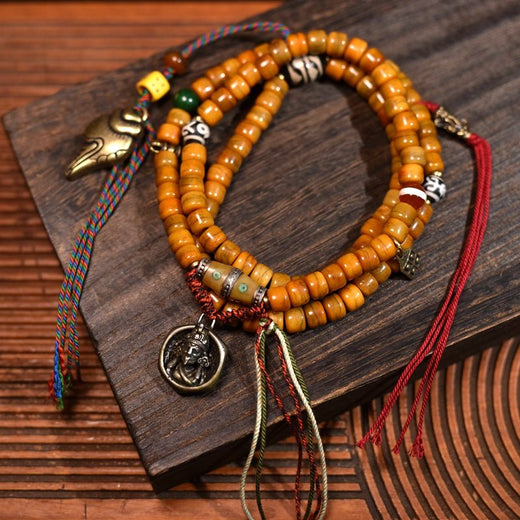
For the nomadic peoples of Tibet, like the Khampas of the eastern grasslands, jewelry was their bank and their spiritual shield. Wealth was not stored in buildings but worn on the body. Elaborate necklaces of coral, amber, and turquoise, along with intricately worked Ghau boxes—small amulet containers holding sacred texts or relics—were a family's entire fortune.
Coral, traded up from the distant sea along the Silk Road, was treasured as a symbol of life force and vitality, its deep red color a potent defense against illness. These were not simply accessories; they were declarations of status, stores of generational wealth, and vital talismans for protection on arduous journeys across the unforgiving landscape.
The silverwork, often an alloy known as "Tibetan silver," was hand-hammered with symbols and patterns passed down through generations of artisans in places like Lhasa and Shigatse. Each piece told a story of its owner's lineage, their spiritual commitments, and their connection to the land.
When you wear a piece of authentic Tibetan jewelry, you are connecting to this unbroken lineage of resilience and faith. You are wearing a piece of history, a a sign of a culture where the spiritual and the material are inseparable, and where beauty is a direct expression of profound meaning.
Many of these sacred forms of adornment carry the echoes of prayers recited in monasteries like Drepung or Sera, imbued with centuries of devotion.
The Deeper Meaning: A Language of Symbols and Elements
Every element of Tibetan jewelry is a word in a rich symbolic language, speaking directly to the core principles of Buddhist philosophy. It’s a wearable dharma talk, a constant, silent reminder of the path to enlightenment.
Understanding this language transforms a beautiful object into a profound tool for your spiritual journey. The materials, colors, and symbols are chosen with deliberate intention, each carrying a specific resonance and meaning that has been refined over more than a thousand years.
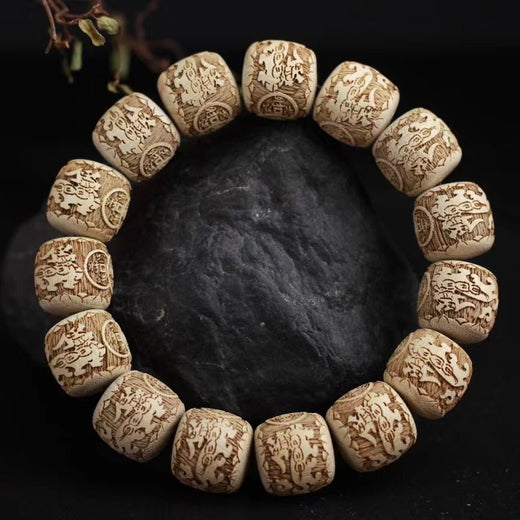
The symbols you see carved into beads or hammered into silver are not mere decorations. The Endless Knot, or shrivatsa, with its flowing, interwoven lines, represents the interconnectedness of all phenomena. It reminds you that your actions have endless consequences and that wisdom and compassion are inextricably linked.
The Vajra, or dorje, is a symbol of indestructibility and spiritual power—the "thunderbolt" of enlightenment that shatters illusion. To wear it is to invoke your own indestructible Buddha-nature. The most common inscription, the six-syllable mantra Om Mani Padme Hum, is the embodiment of the compassion of all Buddhas.
Chanting it, or even just seeing it on your wrist, is a practice in cultivating compassion for yourself and all sentient beings. Each syllable is said to purify a specific negative emotion: pride, jealousy, desire, ignorance, greed, and anger.
The materials themselves are imbued with spiritual significance. As mentioned, turquoise is a master healer and protector, believed to change color to warn the wearer of danger or illness. Lapis Lazuli, with its deep celestial blue and golden flecks, is the stone of wisdom and truth, associated with the Medicine Buddha and his power to heal.
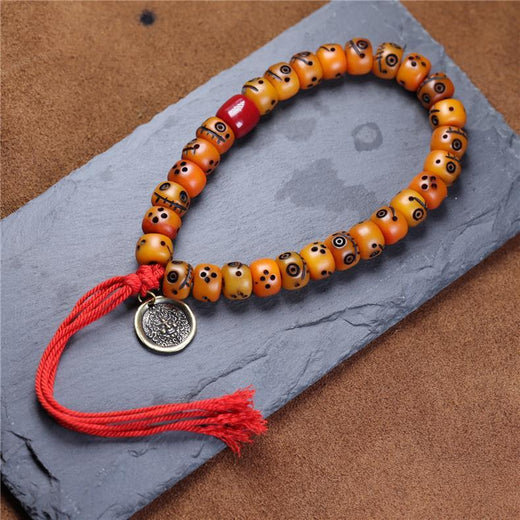
Carnelian provides courage and dispels apathy, while Dzi beads are the most revered of all. Believed to be of celestial origin, these etched agate stones are powerful amulets, with the number of "eyes" on the bead signifying its specific protective qualities.
A 9-eyed Dzi, for example, is considered one of the most powerful, believed to bring boundless merit and good fortune. By choosing a piece, you are not only selecting an accessory; you are choosing which spiritual quality you wish to cultivate in your life.
When you begin exploring our collection of meaningful pieces, you'll start to see this profound language in every design.
Real Benefits for Modern Life: Your Tangible Anchor in the Storm
How can an object forged in the ancient Himalayas offer genuine benefits amidst the digital chaos of your 21st-century life? The power of this jewelry lies not in magic, but in its ability to serve as a potent, physical anchor for your mind.
Its benefits are practical, tangible, and directly applicable to the challenges you face every day.
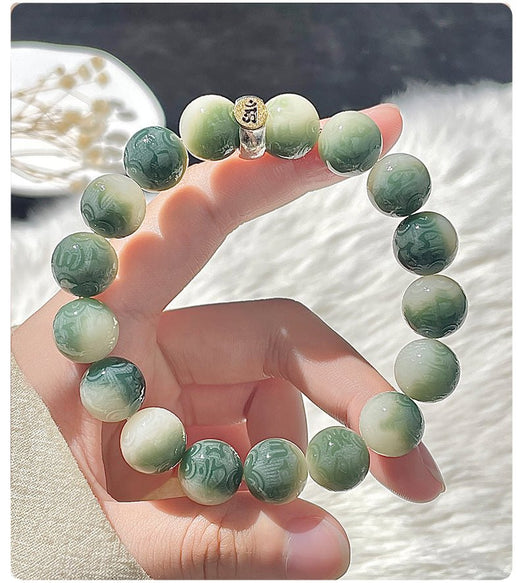
Think of your mala bracelet as a mindfulness bell you can wear. During a tense negotiation or while stuck in traffic, the feeling of the beads against your skin becomes a non-intrusive cue. It’s a silent invitation to return to the present moment.
Instead of getting lost in a spiral of anxious thoughts, you can touch each bead, take a single deep breath, and re-center yourself. This simple, somatic act breaks the cycle of unconscious reaction and creates a space for conscious response.
It’s a micro-meditation that you can practice anywhere, anytime, without anyone even knowing.
This jewelry also serves as a powerful tool for intention setting. When you put on your necklace in the morning, you can hold the pendant for a moment and set a clear intention for your day.
Perhaps you choose to focus on patience, holding a piece with howlite. Or maybe you need clarity for a difficult project, and you connect with the energy of a lapis lazuli bead. This small ritual transforms the act of getting dressed into a moment of conscious purpose.
The jewelry then becomes a touchstone for that intention throughout the day. A glance at your wrist or a touch of the pendant can instantly recall your morning’s purpose, pulling you back on track when you get distracted or discouraged.
In a world that demands constant outward focus and digital engagement, these pieces encourage a vital return to your inner landscape. They are a connection to something ancient, stable, and deeply meaningful. Wearing a symbol like the Endless Knot is a quiet rebellion against a culture of disposability and fragmentation.
It reminds you of a larger, interconnected reality, providing a sense of perspective and stability. It's not about adding another item to your life, but about integrating a tool that helps you navigate your existing life with more grace, awareness, and intention.
 — explore our Tibetan jewelry collection for authentic pieces.
How to Choose Your Authentic Piece: A Guide to Conscious Selection
Choosing a piece of Tibetan energy jewelry is an intuitive and personal process, but it should also be an informed one. Authenticity is paramount, not for the sake of prestige, but because genuine pieces carry the energetic and cultural integrity of their origins.
A mass-produced replica may look similar, but it lacks the soul and intention of a handcrafted item.
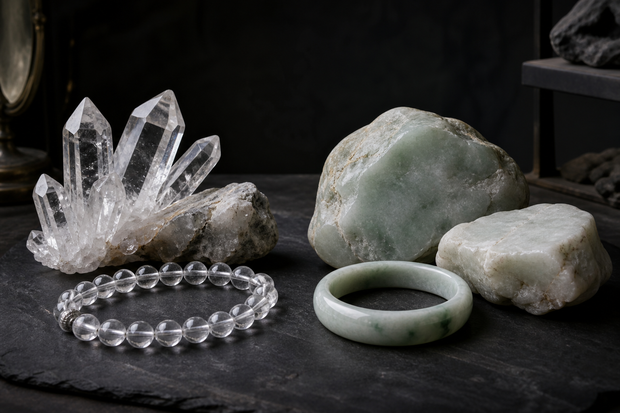
First, pay close attention to the materials. True turquoise has natural variations in color and matrix (the dark lines running through it); a piece that is perfectly uniform in color is often dyed howlite or even plastic.
Natural coral will have subtle imperfections and growth lines. Feel the weight and temperature of the stones—genuine stones often feel cooler and heavier than imitations. Look for signs of hand-craftsmanship. Are the silver beads perfectly identical, or do they show slight variations that indicate they were hand-hammered?
On a mala, are the beads knotted by hand on a durable cord? These small details are the hallmarks of an artisan's touch, distinguishing it from a factory production line.
Consider the source. A reputable seller will be transparent about where their jewelry comes from and who makes it. They should have a deep understanding of the symbolism and the cultural context of their pieces.
Ask questions. A seller who can tell you the meaning of a 3-eyed Dzi bead versus a 2-eyed one, or explain the significance of the Vajra symbol, is one who is invested in the culture, not only the commerce.
When you find your own piece of authentic Tibetan artistry, you are not only making a purchase; you are becoming a steward of a tradition and supporting the artisans who keep it alive.
This connection adds a profound layer of meaning to the piece you choose to wear. Ultimately, the right piece will resonate with you. Trust your intuition. Which symbol, which stone, which design calls to you?
That is often the piece that holds the lesson or the energy you most need at this point in your journey.
How to Use It: Activating Your Jewelry as a Spiritual Tool
Once you have chosen your piece, the next step is to make it your own. Integrating it into your life is a practice of intention. This isn't about following rigid rules, but about building a personal relationship with your jewelry, transforming it from a passive object into an active participant in your spiritual well-being.
The first step is cleansing. Your jewelry has been on a journey to reach you, passing through many hands and environments. Cleansing it clears away any residual energies and prepares it to receive your personal intention.
There are several traditional methods. You can gently smudge it with the smoke of burning juniper, which is the preferred incense in Tibetan traditions, or with sage. You can also place it in the light of a full moon overnight to purify and recharge it.
Another powerful method is using sound; placing your jewelry near a singing bowl and striking the bowl a few times allows the resonant resonance to cleanse the piece on a deep level. Choose the method that feels right to you.
After cleansing, you must consciously set your intention. Find a quiet moment where you won't be disturbed. Hold the piece in your hands. Close your eyes and take three deep, slow breaths, centering yourself in the present moment.
Feel the weight, texture, and temperature of the jewelry. Now, bring to mind the intention you wish to infuse it with. Do you seek clarity, compassion, strength, or protection? State your intention clearly in your mind or whisper it aloud.
You might visualize a bright, clear light filling the piece, sealing your intention within it. If you are working with a mantra like Om Mani Padme Hum, you can chant it softly while holding the piece.
This ritual formally dedicates the jewelry to your personal path, making it a true spiritual tool tailored to your needs.
Common Questions About Tibetan Jewelry
As you begin your journey with these powerful objects, questions will naturally arise. Here are answers to some of the most common inquiries, helping you deepen your understanding and practice.
1. Do I have to be a Buddhist to wear Tibetan jewelry?
Absolutely not. While the symbols and traditions are rooted in Tibetan Buddhism, the core principles they represent—compassion, mindfulness, wisdom, and inner peace—are universal.
People from all spiritual paths, or none at all, can benefit from using these pieces as tools for personal growth. The key is to approach them with respect for their cultural origins and to use them with positive intention.
2. How often should I cleanse my jewelry?
This is a matter of personal preference and intuition. A good practice is to cleanse your piece when you first receive it. After that, you might choose to cleanse it monthly, perhaps in alignment with the full moon.
You should also consider cleansing it after a particularly difficult or stressful day, or if you feel its energy has become heavy or dull. If someone else has handled it extensively, a quick cleansing is also a good idea.
Trust your feeling; you will know when it's time.
3. What is the significance of a 108-bead mala?
The number 108 is sacred in many Eastern traditions. In Buddhism, it is said there are 108 afflictions or "kleshas" that obscure our true nature.
Reciting a mantra 108 times while passing over each bead is a practice of purifying these afflictions. The number also has astronomical significance and corresponds to various other spiritual and mathematical principles. A full 108-bead mala is used for formal meditation practice, while shorter wrist malas (often with 21 or 27 beads) are for convenience and serve as a constant reminder throughout the day.
4. The markings on my Dzi bead are fading. What does this mean?
This is often seen as a positive sign. In Tibetan belief, as a Dzi bead works to protect you and absorb negativity, its markings may change or fade.
It indicates that the bead is actively working for you. It is a sign of a genuine, powerful Dzi that has formed a strong connection with its wearer. It does not mean its power is diminishing, but rather that it is being put to use.
5. Is it okay to wear different pieces of jewelry with different intentions at the same time?
Yes, it is perfectly fine. You can think of it like assembling a team of spiritual allies.
You might wear a turquoise bracelet for protection, a lapis lazuli necklace for clear communication, and a carnelian ring for courage. The key is to be clear in your own mind about the intention for each piece.
When you put them on, take a brief moment to connect with the purpose of each one. They can work in harmony to support different aspects of your life.
6. My mala bracelet broke. Is this a bad omen?
Quite the opposite. In Tibetan tradition, when a mala or piece of protective jewelry breaks, it is believed to signify that it has successfully absorbed a significant amount of negative karma or blocked a harmful event that was headed your way.
Its purpose in that cycle is complete. It is a cause for gratitude, not fear. You can gather the beads and have them re-strung, perhaps with a new guru bead or on a new cord, and set a fresh intention for the next phase of your journey.
It marks the end of one chapter and the beginning of another.
Your Next Step on the Path
You’ve now journeyed from the clamor of your daily life to the serene peaks of the Himalayas, uncovering the true origin and profound meaning of these sacred objects. You understand that Tibetan energy jewelry is more than adornment; it is a bridge.
It is a bridge between the ancient and the modern, the spiritual and the material, the chaotic world outside and the peaceful center within you. It is a practical tool for mindfulness, a wearable reminder of your deepest intentions, and a connection to a lineage of profound wisdom.
The journey doesn't end with reading this article. It begins when you choose to consciously invite this practice into your life. The next step is to find the piece that speaks to your soul, the one that feels like it was waiting for you. Begin your journey by exploring our collection and discover the tangible anchor that will support you on your unique path.
Keep reading