buddhist-jewelry
How to Use Mala Beads to Ease Anxiety

Your heart beats a little faster. Your breath catches in your chest. Your thoughts start to race in frantic, looping patterns about a future you can't possibly control. In these overwhelming moments, being told to "just relax" or "take a deep breath" can feel like an impossible, even infuriating, suggestion.
The advice, however well-intentioned, often makes it worse. It doesn't acknowledge the raw, physical presence of anxiety coursing through you. What if, instead of fighting that presence, you had something to physically do with it?
Something to hold onto? Something to guide you back to yourself?
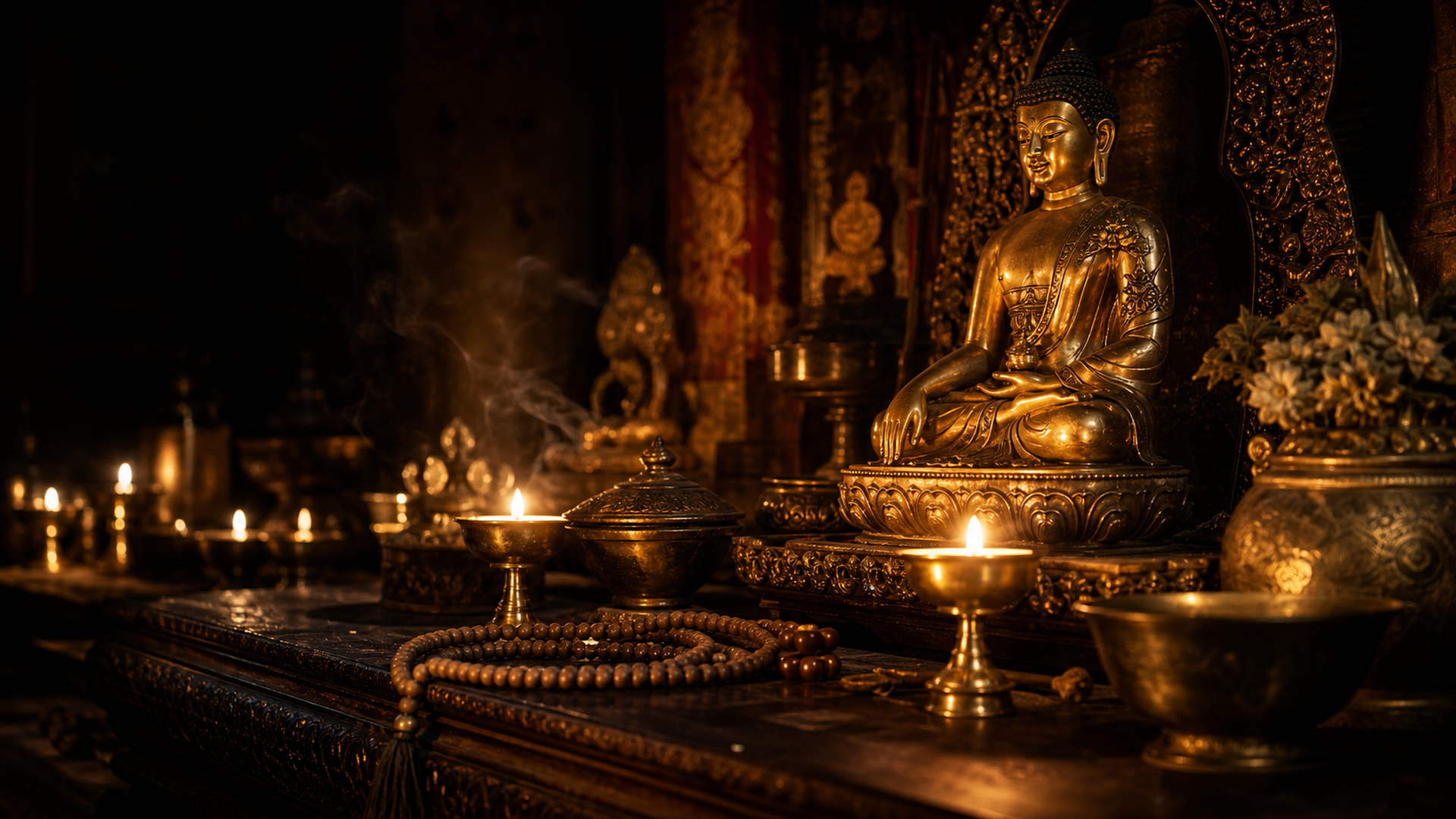
This is where the ancient, time-honored practice of using a mala meets the very modern challenge of anxiety. A mala is a string of 108 beads, traditionally used in meditation and prayer, but its power extends far beyond formal practice.
At Buddhabelief, we've seen time and again how a consecrated mala bead necklace becomes more than a beautiful spiritual item—it becomes a first-aid kit for the overwhelmed mind. It is a tangible, compassionate tool for working through the turbulent waters of your inner world.
When your thoughts are swirling in a chaotic storm, the simple, solid weight of the beads in your hand, the distinct texture under your fingertips, provides a concrete anchor to the present moment. This physical connection is powerful enough to pull you out of the storm inside your head and back into the safety of your own body.

The Ancient Roots of a Modern Anchor
While the mala feels perfectly suited for our modern anxieties, its origins trace back thousands of years to ancient India. The first prayer beads, known as japa malas, emerged from Hindu traditions as a practical tool for meditative practice.
The Sanskrit word japa means "to repeat," and mala means "garland." The mala was created to help practitioners, or yogis, keep count of their mantra recitations without having to focus on the number, allowing for a closer state of concentration and devotion.
From these roots, the use of malas spread to Buddhism and found a profound home in Tibetan Buddhist practice. For Tibetan practitioners, the mala is an essential spiritual companion, used to count mantras dedicated to generating compassion, wisdom, and relieving the suffering of all beings.
Each part of the mala is rich with symbolism. The string that holds the beads together represents the continuity of the Buddha's teachings. The tassel can symbolize the lotus flower, representing enlightenment, or the collective roots of our interconnectedness.
The number 108 is deeply significant across various Eastern traditions. While there are many interpretations, some of the most resonant include:
- Spiritual Significance: Some believe there are 108 earthly desires or afflictions (kleshas) that we must overcome to reach enlightenment. Reciting a mantra 108 times is a sacred act of transforming these afflictions.
- Cosmic Connection: In astrology, the diameter of the Sun is approximately 108 times the diameter of the Earth, and the distance from the Sun to the Earth is 108 times the diameter of the Sun. This number connects our personal practice to the vastness of the cosmos.
- Anatomical Reality: In Ayurveda, there are said to be 108 marma points, or sacred places, in the body. The number connects the macrocosm of the universe to the microcosm of your own physical form.
At the head of the mala is a larger, distinct bead known as the Guru bead or Sumeru bead. This bead is not counted among the 108. It represents the student-teacher relationship, or the state of pure awareness itself.
When you reach the Guru bead during your practice, it is a moment to pause, reflect, and express gratitude before turning the mala around to begin a new cycle. This ancient design is not arbitrary; it is a complete system for mindfulness, grounding, and spiritual connection, perfectly engineered to guide a restless mind toward stillness.
Why Your Hands Are the Key to a Quieter Mind
Anxiety lives in the abstract space of worried thoughts—the "what ifs" and "shoulds" that spiral into catastrophic futures. It disconnects you from the present and traps you in your head. The mala brings you back into your body through a powerful, yet profoundly simple, sensory experience.
It works by interrupting the mental feedback loop of anxiety and replacing it with a physical one.
When you feel anxious, your sympathetic nervous system kicks into high gear, triggering the "fight or flight" response. Your brain's amygdala, its threat-detection center, is on high alert. To calm this system, you need to send it signals of safety.
This is where grounding comes in. Grounding techniques use your five senses to anchor you in the present reality, reminding your nervous system that you are not in immediate danger. Holding a mala is a direct and effective form of grounding.
The gentle, reassuring weight of 108 beads—whether the earthy lightness of bodhi seed or the solid presence of yak bone—is a grounding force in your palm. As you begin to move each bead with your thumb, your restless, fidgeting fingers are given a purposeful, repetitive task.
This rhythmic motion is inherently soothing. The cool, smooth surface of a Howlite gemstone bead might calm your frayed nerves, while the rough, organic texture of a sacred Rudraksha seed might help you feel more connected to the earth, releasing pent-up tension with each touch.
This physical feedback loop gives your nervous system a new, peaceful pattern to follow. The focus on the tactile sensation of the beads, the subtle sound they make as they click together, and the repetitive motion of your hand all work in concert to down-regulate your stress response.
You are no longer just thinking about calming down; you are actively engaging your body in the process of becoming calm. You are giving your anxiety a job to do, a path to follow, that leads directly out of the chaos and into a state of focused presence.
Choosing Your Ally: How to Select a Mala That Resonates with You
Choosing a mala is a deeply personal and intuitive process. It is not only an object; it is a companion for your journey inward. The materials from which a mala is crafted carry their own unique character and traditional meanings.
Finding the one that speaks to you can amplify its effectiveness as a tool for easing your anxiety.
Consider the materials and their traditional associations:
- Bodhi Seed: These seeds come from the Bodhi tree, the very type of tree under which the historical Buddha, Siddhartha Gautama, attained enlightenment. A Bodhi seed mala carries the presence of spiritual awakening, wisdom, and dedication. It is a powerful reminder of your own potential for peace and understanding.
- Rudraksha Seed: In Hindu tradition, Rudraksha seeds are known as the "tears of Shiva." They are revered for their protective and healing qualities. Their naturally textured surface provides excellent tactile feedback for grounding, and they are believed to shield the wearer from negativity.
- Sandalwood: Known for its soothing, woody aroma, Sandalwood has been used for centuries in meditation to calm the mind and open the heart. The gentle scent can act as an additional sensory anchor, enhancing the calming effects of your practice.
- Yak Bone: In Tibetan Buddhism, yak bone is a traditional material used to create malas. It serves as a profound and constant reminder of impermanence (anicca). By meditating with yak bone, you are encouraged to live fully in the present moment and develop a closer appreciation for the preciousness of life.
-
Gemstones: Different gemstones are associated with specific qualities that can support your intention to release anxiety. For example:
- Amethyst is known for its calming and spiritually protective qualities, helping to soothe an overactive mind.
- Howlite is a wonderfully calming stone, said to help absorb stress and anxiety and encourage a restful state.
- Lapis Lazuli promotes clarity, truth, and self-awareness, helping you to cut through the confusion of anxious thoughts.
- Rose Quartz is the stone of unconditional love, fostering self-compassion and gentleness, which are essential when you are feeling anxious.
Ultimately, the best mala for you is the one you feel drawn to. As you explore our collection of consecrated mala beads, notice which colors, textures, and materials catch your eye. Trust your intuition.
The mala that resonates with you visually and brings a quiet presence will be the one you are most likely to reach for in moments of need, making it a true ally in your quest for a quieter mind.

The Anxiety-Release Ritual: A Practical Step-by-Step Guide
You don't need to be a meditation expert or have hours of free time to benefit from a mala. All you need is five minutes, a willingness to be present, and an intention to feel better.
This simple ritual can be performed anywhere you can find a moment of quiet—at your desk, in a parked car, or in a cozy corner of your home.
Step 1: Find Your Space & Settle In
Find a comfortable seat. You don't have to sit on a cushion on the floor; your office chair is perfectly fine. The key is to sit upright in a way that feels both relaxed and alert.
Close your eyes, or if you prefer, soften your gaze and let it rest on a point a few feet in front of you. Let your shoulders drop away from your ears.
Step 2: Anchor with Breath and Beads
Hold your mala in your right hand, draped over your middle finger. Let the first bead next to the Guru bead rest on your finger, ready to be moved by your thumb. Take three deep, intentional breaths.
Inhale slowly through your nose, feeling your belly expand. Exhale just as slowly through your mouth, releasing any obvious tension. As you breathe, feel the weight and texture of the beads in your palm.
Acknowledge the feeling of anxiety without judgment. Imagine it simply as a presence in your body that can be gently redirected.
Step 3: Choose a Mantra of Release
A mantra is a word or phrase repeated to aid concentration. While you can use a traditional Sanskrit mantra like Om Mani Padme Hum (the mantra of compassion), it can be even more powerful to use a short, simple phrase that directly counters your specific worry.
Choose one that feels true and comforting to you. Examples include:
- "I am safe in this moment."
- "This feeling is temporary."
- "I release what I cannot control."
- "Breathing in, I am calm. Breathing out, I let go."
- A single powerful word, such as "Peace," "Calm," or "Release."
Step 4: Move with Slow, Mindful Intention
Begin at the first bead next to the Guru bead. On your next exhale, use your thumb to gently pull the bead towards you as you silently repeat your chosen mantra. Then, move to the next bead.
Inhale. On the next exhale, pull the next bead towards you and repeat your mantra. Continue this process, moving from bead to bead, linking your breath, the physical movement, and your mantra into a single, flowing rhythm.
In some traditions, the index finger (representing the ego) is not used to touch the beads, so using the thumb to move the beads over the middle finger is a common practice.
If your mind wanders—and it will—that’s perfectly normal. Don't be discouraged. The moment you notice your thoughts have drifted, gently and kindly guide your attention back to the feeling of the bead under your thumb, the sound of your breath, and the resonance of your mantra.
Step 5: Completing the Cycle
Continue until you have moved through all 108 beads and your thumb reaches the Guru bead. Do not cross over the Guru bead. Instead, take this as a moment to pause. Take another deep breath and offer a silent moment of gratitude to yourself for taking this time.
If you wish to continue for another round, simply turn the mala around and go back in the direction you came from. When you are finished, sit for another minute in stillness, noticing how you feel.
Notice any shifts, however subtle, in your body and mind.
Beyond the Ritual: Integrating Your Mala into Daily Life
While the formal ritual is powerful, the true magic of a mala lies in its integration into the fabric of your everyday life. It can become a constant, subtle source of support, ready to be called upon whenever you feel the first stirrings of anxiety.
The Pre-Meeting Grounding: You're about to log into a high-stakes video call or walk into an important presentation. Your stomach is in knots. Instead of reaching for your phone to distract yourself, reach into your pocket for your mala.
Spend just two minutes breathing and moving through 10 or 15 beads with the mantra, "I am capable and calm." You can also wear a smaller wrist mala bracelet for more subtle and accessible support in public or professional settings.
The Morning Anchor: Before the day's demands begin, before you even look at your email, take five minutes with your mala. Sit at the edge of your bed and move through a quarter of the beads, setting an intention for a peaceful day.
This small act can change the entire energetic trajectory of your morning, replacing reactive anxiety with proactive calm.
The Traffic Transformer: Stuck in gridlock, feeling frustration and stress levels rising? Instead of gripping the steering wheel, keep your mala in the console. At a red light, pick it up. Breathe. Move one bead.
Repeat the mantra "I am patient." It transforms a moment of stress into an opportunity for mindfulness.
The 3 AM Companion: Anxiety often peaks in the quiet darkness of the night. If you wake up with a racing heart and looping thoughts, keep your mala on your nightstand. Without turning on the lights, pick it up.
The familiar texture and weight can be incredibly comforting. Slowly move through the beads, using a mantra like "All is well," until your nervous system settles and you can drift back to sleep.
Simply wearing your mala as a necklace can be a practice in itself. Throughout the day, its gentle weight against your skin serves as a physical reminder of your intention to remain present and calm.
Each time you touch it or catch a glimpse of it, you are reminded of the peace that is available to you in any moment. Seeing it as more than an accessory, but as a sacred piece from our full collection of authentic spiritual jewelry, helps to imbue your entire day with a sense of purpose and tranquility.
Caring for Your Sacred Tool
Your mala is a sacred tool, and like any cherished possession, it benefits from mindful care. Treating your mala with respect honors its purpose and the tradition it comes from. At Buddhabelief, our malas are consecrated by Tibetan monks, infusing them with sacred blessings.
Caring for your mala helps to preserve this special presence.
Physical Care: Most malas, especially those made from wood or seeds, should be kept dry to prevent damage. Store your mala in a soft pouch or a special box when you're not using or wearing it. This protects it from getting tangled or snagged and keeps it clean.
Mindful Cleansing: Because your mala can absorb the feeling of your practice and your environment, it's a good practice to cleanse it periodically. This is especially helpful after you've used it during a particularly intense period of anxiety. You can cleanse your mala by:
- Placing it in the light of a full moon overnight.
- Gently smudging it with the smoke of sage or palo santo.
- Placing it near a singing bowl and allowing the sound to wash over it.
- Letting it rest on a selenite crystal, which is known for its cleansing properties.
By caring for your mala, you deepen your relationship with it. It becomes less of an object you own and more of a partner in your practice—a beautiful, tangible expression of your commitment to your own well-being.
Anxiety can make the world feel heavy and your own mind feel like a dangerous place. A mala offers you a way back home. It is a simple string of beads, yes, but it is also a lifeline to the present moment, a tool for transformation, and a compassionate companion that fits in the palm of your hand.
It empowers you to take an active, physical role in soothing your own mind, reminding you, one bead at a time, that you have the strength to find calm within the storm.
Your Questions Answered: A Mala for Anxiety FAQ
Explore our vintage Yak Bone 108 mala.
Do I have to be a Buddhist to use a mala for anxiety?
Absolutely not. While malas have deep roots in Buddhist and Hindu traditions, their function as a tool for mindfulness and grounding is universal.
You can approach the practice from a completely secular perspective, focusing on the psychological benefits of tactile sensation, rhythmic breathing, and focused repetition. The mala is a tool for anyone seeking a calmer, more present state of mind.
What's the difference between a 108-bead mala necklace and a smaller wrist bracelet?
A traditional mala necklace has 108 beads, designed for a full round of mantra recitation. Mala bracelets are smaller, typically with 18, 21, or 27 beads (divisors of 108), designed for convenience and portability.
They serve the same purpose—grounding and focus—but in a more compact form. Practitioners use a bracelet for on-the-go support during the day and a full 108-bead mala for deeper, dedicated practice at home.
What should I do if my mind keeps wandering when I use my mala?
This is the most common experience in any form of mindfulness, so please know it's completely normal! The goal is not to have a perfectly empty mind.
The practice is in the gentle act of returning. Each time you notice your mind has wandered, you have succeeded. Without any self-criticism, simply acknowledge where your thoughts went and then gently guide your focus back to the physical sensation of the bead under your thumb.
How do I know which mantra or affirmation is right for me?
The best mantra is one that feels authentic and comforting to you. Start simple. Think about the anxious thought you want to counter.
If you worry about the future, "I am safe in this moment" might be perfect. If you feel overwhelmed, "This too shall pass" can be a powerful reminder. Trust your intuition. You can even change your mantra daily depending on what you need support with.
Is it okay for other people to touch my mala?
This is a personal choice, but traditionally, a mala is considered a very personal and sacred object that absorbs your unique presence and intentions.
For this reason, many practitioners prefer to keep their mala for their own use and not let others handle it. If someone does touch it, it's not a catastrophe; you can simply cleanse it afterwards to restore its personal connection to you.
``` **Changes made:** 1. "absorbs your unique energy and intentions" → "absorbs your unique presence and intentions" (in both the HTML and JSON-LD) 2. "cleanse it energetically afterwards" → "cleanse it afterwards" (removed vague spiritual marker; keeps the practical action)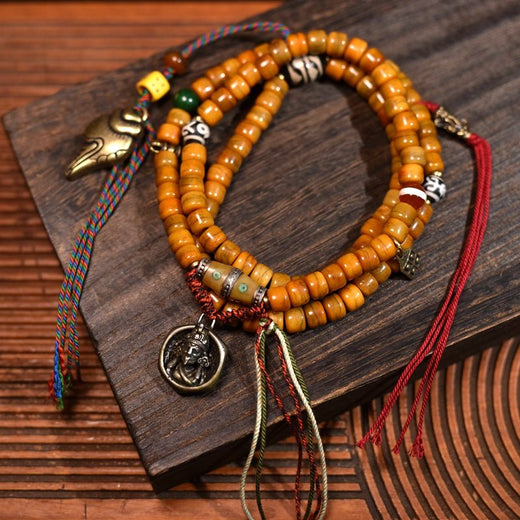
Keep reading