buddhist-jewelry
Mala Beads for Men: A Modern Guide to Spiritual Accessories
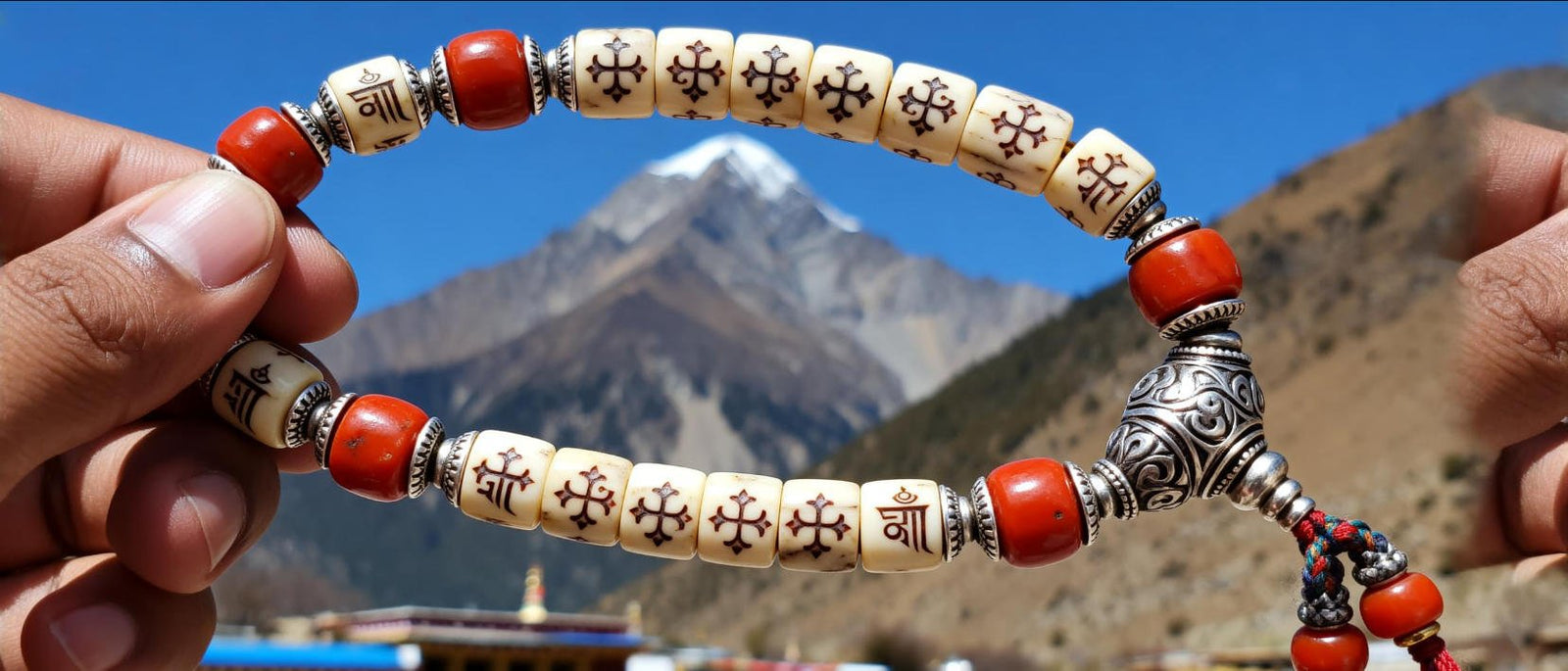
There's a quiet revolution happening in men's spiritual practice. A powerful shift is underway, moving beyond outdated notions that cast mindfulness as separate from masculine presence. Today, modern men are rediscovering a profound truth that ancient warriors, stoic philosophers, and Himalayan monks have always known: true, unshakeable strength is forged in the crucible of inner stillness.
In this landscape of renewed self-awareness, the mala bead—once perhaps perceived as solely ornamental or esoteric—is emerging as a potent tool for the contemporary man. It is an ally if you are working through high-stakes boardroom negotiations, building a business from the ground up, scaling a mountain, or simply seeking a closer current of meaning in the flow of your daily life.
This isn't about adopting a new trend; it's about reclaiming an ancient technology for the mind. The world demands your constant attention, pulling you in a thousand different directions. Your phone buzzes, deadlines loom, and the pressure to perform is relentless.
A mala is your anchor in this storm. It is a physical, tangible link to your intention, a way to reclaim your focus and ground your presence when chaos swirls around you. It is a declaration that your inner state is your priority, because from that centered place, all effective action is born.

The Ancient Roots of a Modern Man's Tool
Before a mala ever graced the wrist of a modern CEO or artist, it was a sacred instrument with a deep and storied past. To understand its presence, you must first appreciate its heritage.
The story of the mala, or japa mala, begins in India over 3,000 years ago, rooted in the meditative traditions of Hinduism and Buddhism. The Sanskrit word japa means "to repeat," and mala means "garland." Its purpose was elegantly simple and profoundly effective: to act as a spiritual abacus for counting mantras or breaths during meditation.
The number of beads is almost always 108, a figure held sacred across numerous Eastern traditions. This number is not arbitrary. Vedic culture viewed 108 as the number of existence, representing the entirety of the cosmos.
Astronomically, the distance between the Earth and the Sun, and the Earth and the Moon, is approximately 108 times their respective diameters. In yogic philosophy, there are said to be 108 sacred presence lines, or nadis, converging at the heart chakra.
Reciting a mantra 108 times is believed to bring focus to these channels and align your personal presence with the universal. The 109th bead, known as the Guru Bead or Sumeru, represents the student-teacher relationship and serves as the starting and ending point, a moment to pause in gratitude and reflection.
From India, the use of malas spread with the teachings of Buddhism into Tibet, China, and Japan. In the rugged, high-altitude landscape of the Himalayas, the mala became an indispensable part of Tibetan Buddhist practice.
It wasn't just for monks in secluded monasteries. It was a tool used by warriors to cultivate focus before battle, by kings to seek wisdom in their rule, and by nomads to maintain a connection to the sacred amidst the harsh realities of survival.
These were not men detached from the world; they were men deeply engaged with it, who understood that mastering their inner world was the key to mastering their outer circumstances. When you hold a mala, you are holding a piece of that lineage.
You are connecting with an unbroken chain of men who sought clarity, purpose, and inner fortitude through this simple, powerful tool.
Redefining the Spiritual Accessory for a Purpose-Driven Life
Let's clear the air: a mala is not a necklace in the conventional sense. It's not designed to be a flashy statement piece, but a functional, personal tool—the spiritual equivalent of a well-made automatic watch or a trusted, perfectly weighted pocket knife.
A watch tracks the passing of external time; a mala helps you inhabit the present moment. A knife is a tool for working through the external world; a mala is a tool for mastering your internal landscape.
It is an instrument for focus, a reminder of your highest intention, and a physical anchor to your center.
Imagine these scenarios:
- The Executive: You have five minutes before a critical presentation. Instead of scrolling through emails and jacking up your anxiety, you close your office door. You pull out your mala, close your eyes, and move through 18 beads, focusing on the simple mantra "I am calm and clear." You repeat this six times. You enter the meeting room not with scattered, nervous presence, but with a grounded, commanding presence.
- The Athlete: You're training for a marathon, and you've hit the wall. Doubt creeps in. During your cool-down, you use your mala to cycle through an affirmation: "My body is strong, my mind is resilient." It's not only about physical recovery; it's about rewiring your mental response to adversity, building the grit that will carry you across the finish line.
- The Creative: You're a writer, designer, or musician facing a creative block. The screen is blank, the ideas won't flow. You step away from your desk and hold your mala. You don't force anything. You simply count your breaths, one for each bead. This simple, rhythmic act quiets the inner critic and creates the mental space for new ideas to surface.
- The Father: The kids are testing every limit, and you feel your patience fraying. It's easy to react, to raise your voice. But feeling the beads of your mala bracelet on your wrist is a tactile reminder. It's a pattern interrupt. You take one deep breath before you respond, choosing presence over frustration.
Worn discreetly under a dress shirt, peeking out from the cuff of a work shirt, or accompanying you on a wilderness hike, a mala serves as your personal talisman for grounded, purposeful living. It's a private commitment to your own evolution, a silent partner in your journey toward self-mastery.
Explore our complete collection of authentic mala beads to find the one that speaks to your path.
Choosing Your Mala: Materials That Speak to Masculine Character
The right mala is an extension of your own presence. It should feel right in your hand and align with your personal journey and lifestyle. The materials themselves are not merely decorative; they carry their own distinct qualities and symbolic weight.
Here are materials that naturally align with masculine expression, each telling a different story.
Yak Bone: The Warrior's Grounding Tool
Feel the substantial weight of hand-carved yak bone beads. Slightly textured, earthy, and imbued with the resilient spirit of the Himalayas, this is a mala for the man who values tradition, protection, and a raw, organic connection to the earth.
The yak is a symbol of survival and strength in Tibet, thriving in the harshest of conditions. A yak bone mala is a powerful reminder of your own resilience, your ability to endure and overcome challenges.
In Buddhist philosophy, it also serves as a potent meditation on impermanence, a reminder to live fully in the present moment without attachment to fleeting outcomes. It has a primal, elemental quality that connects you directly to the untamed wisdom of nature.
Ideal for: Entrepreneurs, outdoorsmen, and those seeking a tangible connection to ancient, protective wisdom.
Bodhi Seed: The Strategist's Focus Aid
Understated, lightweight, and rich with unparalleled symbolism, the Bodhi seed mala is the minimalist's choice for profound meaning. These are not seeds from just any tree; they come from the Ficus religiosa, the species of tree under which Siddhartha Gautama sat and attained enlightenment, becoming the Buddha.
Each seed, therefore, carries the potential for your own awakening and clarity. Over time, Bodhi seeds absorb the natural oils from your skin, developing a unique, darkening patina that becomes a beautiful, personal record of your meditative journey.
It's discreet enough for the most conservative office environment yet carries a depth of meaning that is immeasurable.
Ideal for: Professionals, creatives, and anyone who values subtlety, wisdom, and a personal connection to the path of enlightenment.
Rudraksha Seed: The Ascetic's Discipline Charm
Rudraksha seeds are deeply connected to the Hindu deity Shiva, the ultimate archetype of masculine divine energy, representing both the fierce ascetic and the cosmic dancer of creation. The name translates to "Tears of Shiva." Legend says that after a long period of meditation for the well-being of all creatures, Shiva awoke and shed a tear of compassion, which grew into the Rudraksha tree.
The textured beads have a unique feel and are believed to possess electromagnetic properties that help calm the nervous system and increase focus. A Rudraksha mala is a powerful tool for cultivating discipline, concentration, and a transformative inner fire.
Ideal for: Men dedicated to a disciplined practice, yogis, and those seeking to transform their energy and overcome personal obstacles.
Sandalwood: The Statesman's Calming Anchor
For centuries, the subtle, woody fragrance of sandalwood has been prized for its ability to quiet the mind and open the heart. Its scent is inherently grounding and has been scientifically shown to increase alpha brain waves, which are associated with a relaxed, meditative state.
A sandalwood mala is an olfactory anchor to the present moment. Every time you use it, the warmth of your hand releases its gentle aroma, creating a serene sensory experience that enhances meditation and reduces anxiety.
It's the perfect choice for the man who leads, negotiates, and needs to maintain a state of calm clarity in high-pressure environments.
Ideal for: Leaders, public speakers, mediators, and any man seeking to cultivate a calm and centered mind.

The Mechanics of Practice: Using Your Mala for Meditation and Mindfulness
Your mala is a beautiful object, but its true value is unlocked when you use it. The primary practice is called Japa meditation, a simple yet profound technique for focusing the mind. Here's how you can begin.
1. Create Your Space: You don't need a special room or elaborate setup. Simply find a quiet place where you won't be disturbed for a few minutes. It could be your office before anyone else arrives, a chair in your living room, or even your parked car.
Sit comfortably with your spine reasonably straight to allow your breath and presence to flow freely.
2. Set Your Intention: Before you begin, take a moment to set an intention. What quality do you wish to cultivate? It could be patience, focus, compassion, or strength. Holding this intention in your mind infuses your practice with purpose.
3. Hold the Mala: Traditionally, the mala is held in the right hand, draped over the middle finger. The index finger, which represents the ego, is kept out of the process. Your thumb is used to advance the beads.
4. Begin the Repetition: Start with the first bead next to the Guru Bead (the larger, decorative bead). As you hold this bead with your thumb and middle finger, recite your chosen mantra, either aloud or silently.
A mantra is a sound, word, or phrase that you repeat to occupy the mind. Once you complete the recitation, use your thumb to pull the next bead toward you and repeat the mantra.
Continue this process for all 108 beads.
5. The Guru Bead: When you reach the Guru Bead, you have completed one full round. Do not cross over the Guru Bead. Instead, it serves as a moment to pause and reflect. If you wish to continue, you can flip the mala around and go back in the opposite direction.
Choosing Your Mantra
The mantra you choose is deeply personal. It can be a traditional Sanskrit mantra or a simple affirmation in your own language. The key is that it resonates with you.
- For Universal Compassion: Om Mani Padme Hum. This is the most revered mantra in Tibetan Buddhism, a call to the boundless compassion of all enlightened beings.
- For Presence: So Hum. A simple but powerful Vedic mantra translating to "I am that," connecting your breath and being to the universal consciousness.
- For Overcoming Obstacles: Om Gam Ganapataye Namaha. A mantra invoking the presence of Ganesha, the remover of obstacles.
- English Affirmations: "I am grounded and focused." "Breathe in strength, breathe out doubt." "I choose peace."
Beyond formal meditation, your mala can be a powerful tool for mindfulness throughout the day. Keep it in your pocket and simply hold the beads during a stressful meeting. Use a section of the beads on a mala bracelet to count ten deep breaths before reacting to a difficult email.
The mala becomes a bridge, bringing the calm of your practice into the action of your life.
Integrating a Timeless Tool into Your Modern Life
Bringing a mala into your life is about integrating a sacred practice with your daily reality. It's less about adopting a new identity and more about enhancing the one you already have with greater intention and presence.
The question often arises: how do you wear it? Is it just for meditation, or can it be a part of your daily attire?
The answer lies in your intention. When you wear a mala as a necklace or a bracelet, it can serve as a constant, physical reminder of the path you're on. Every time you catch a glimpse of it in the mirror or feel its weight on your skin, it's a gentle nudge back to your center.
It's a pattern interrupt for the mind, pulling you out of autopilot and back into the present moment. It can be a silent source of strength during a challenging conversation or a reminder to be patient when you feel rushed.
It can also be a conversation starter. Someone may ask you about it. This presents an opportunity, not for proselytizing, but for authentic connection. You can simply say it's a meditation tool, or you can share a bit about your commitment to mindfulness.
Or, you can just say it's a personal item with special meaning to you. How you share is your choice. The mala is your personal journey, not a performance.
The key is to treat it with respect. While it can be a beautiful accessory, its primary role is that of a sacred tool. Avoid wearing it during strenuous physical activity where it might get damaged, or in situations where it might be treated carelessly.
When you wear it, wear it with purpose. Let it be a symbol not of what you want to project to the world, but of the inner work you are committed to doing for yourself.
Browse our full collection of authentic spiritual tools to discover the piece that will best support your integration of mindfulness into daily life.
Caring for Your Sacred Tool
Your mala is more than a string of beads; it's a repository of presence. It holds the resonance of your mantras, the focus of your intentions, and the character of the environments you move through.
Just as you would care for any valued instrument, your mala requires occasional maintenance to keep it physically and spiritually clean.
Spiritual Cleansing: It's wise to cleanse your mala when you first receive it and periodically thereafter, especially if you've been through a particularly stressful period. This clears away any accumulated or stagnant presence.
- Sunlight and Moonlight: Place your mala in the light of the full moon overnight to invite quiet calm. A few hours of morning sunlight can also be purifying, but be cautious, as prolonged direct sun can fade certain woods and damage seeds.
- Smoke Cleansing: Light a stick of palo santo, sage, or sandalwood incense. Pass your mala through the smoke several times with the intention of purification.
- Sound Cleansing: Place your mala near a singing bowl and let the resonance wash over it. The pure frequencies can effectively reset the mala's presence.
Physical Cleaning: For most wood and seed malas, a simple wipe with a soft, dry cloth is sufficient to remove dust and oils. Avoid submerging your mala in water, as this can weaken the string and damage the beads.
For gemstone malas, you can use a slightly damp cloth. Yak bone can be wiped clean and will naturally develop a patina from the oils in your skin over time.
Storage and Respect: When you're not using or wearing your mala, store it in a safe and respectful place. A small cloth bag is ideal. You might also choose to keep it on a personal altar or a clean, dedicated space in your room.
Treating your mala with reverence enhances its power as a sacred object in your life.
If Your Mala Breaks: A mala breaking is not a sign of bad luck. In Buddhist tradition, it is often seen as a positive sign—a symbol of a broken cycle. It can signify a major breakthrough in your practice or the completion of a karmic pattern.
It means the mala has absorbed and helped you work through a significant amount of focused intention. At this point, you can gather the beads to have them restrung, perhaps with a new Guru Bead to mark the new beginning, or you can retire the beads and begin a new chapter with a new mala.
Explore our vintage Yak Bone 108 mala.
Frequently Asked Questions
What if I'm not a Buddhist? Can I still use a mala?
Absolutely. While mala beads have their roots in Buddhist and Hindu traditions, they are, at their core, universal tools for mindfulness and meditation. Their purpose is to help you focus your mind and connect with your intention.
You can use a mala to count breaths, repeat a positive affirmation, or simply as a tactile anchor to the present moment, regardless of your spiritual beliefs or lack thereof. It is a tool for anyone seeking a calmer, more centered mind.
How do I choose the right mantra for me?
The most effective mantra is one that resonates with you personally. Don't feel pressured to use a Sanskrit mantra if it doesn't feel authentic to you. Start simple. You can use your breath as a mantra, silently repeating "in" on the inhale and "out" on the exhale.
Or, choose a simple, positive affirmation in your own language that reflects a quality you wish to cultivate, such as "I am calm," "I am focused," or "I am grateful." The power is in the repetition and the intention behind the words.
Should I wear my mala on my left or right wrist?
In spiritual traditions, the right hand is often associated with giving or projecting presence, while the left hand is associated with receiving presence. For this reason, practitioners practice Japa meditation holding the mala in their right hand and wear a mala bracelet on their left wrist to receive its calming, grounding character.
However, there are no strict rules. The most important principle is to do what feels most comfortable and natural for you and your practice.
What is the significance of the 108 beads?
The number 108 is sacred in many Eastern traditions for a variety of reasons. Some believe there are 108 focus points (nadis) that converge to form the heart chakra. In Ayurveda, there are 108 sacred points (marmas) in the body.
Astronomically, the diameter of the Sun is about 108 times the diameter of the Earth. Ultimately, 108 represents a complete cycle, and completing a round of 108 mantra recitations is a way of honoring the wholeness of existence.
What does it mean if my mala breaks?
A mala breaking is traditionally viewed not as a negative event, but as a positive sign of a breakthrough. It signifies the completion of a cycle, meaning the mala has absorbed the focused intention it was meant to and its purpose with you is complete.
It can symbolize that a karmic pattern has been broken or that you have released a significant blockage. You can see it as a celebration of your progress and either have the beads restrung to begin a new cycle or choose a new mala to support the next chapter of your journey.
Keep reading