buddhist-jewelry
Mala Beads vs. Prayer Beads — A Sacred Guide
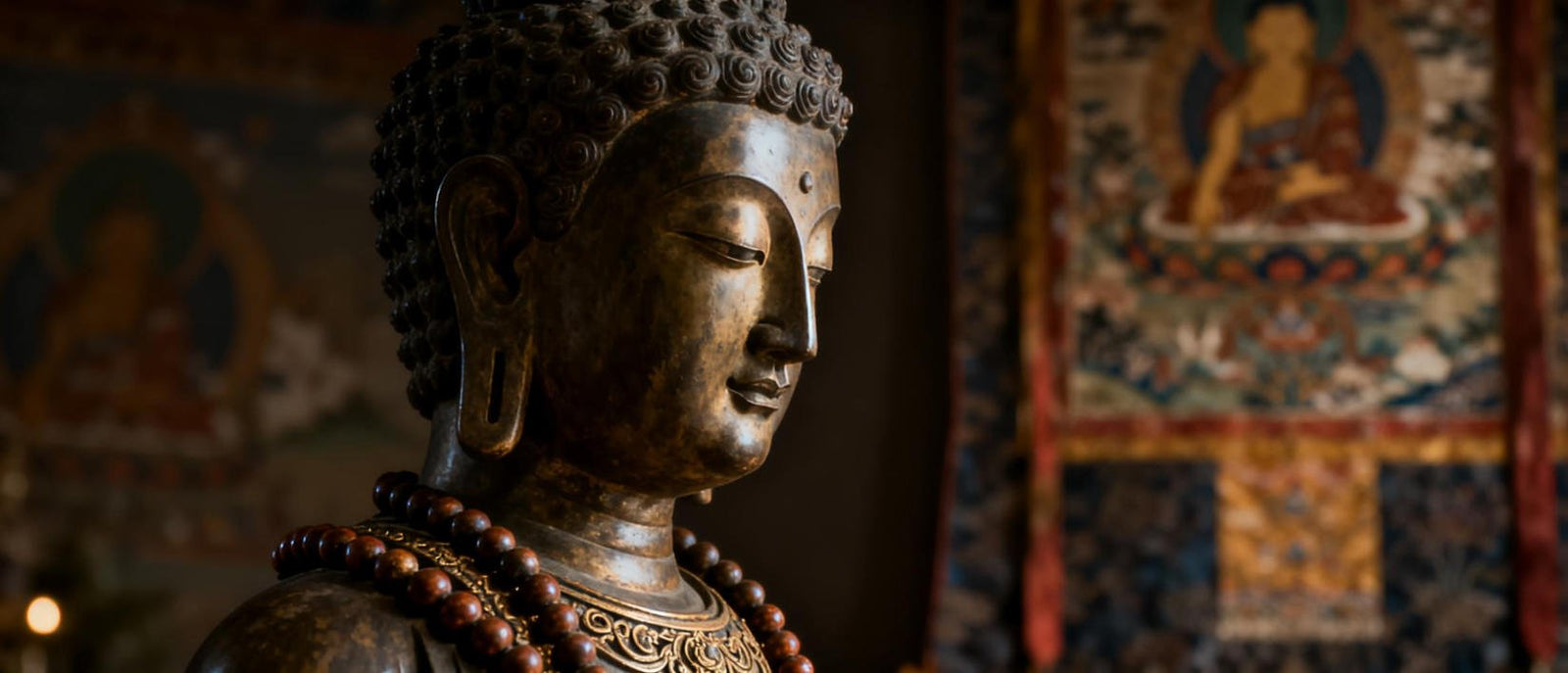
Picture a quiet, sunlit courtyard in a Tibetan monastery. A monk's fingers move rhythmically, almost unconsciously, over a string of 108 bodhi seed beads. Now, imagine a centuries-old European cathedral, where a worshipper whispers prayers while their thumb and forefinger trace the smooth surface of glass pearls on a rosary.
Separated by continents, languages, and theological frameworks, these two individuals share a profound secret: the human spirit finds comfort, focus, and connection in the tactile rhythm of sacred beads. This practice is not confined to one faith but is a near-universal thread woven through the rich weave of global spirituality.
While we at Buddhabelief are deeply rooted in the authentic Tibetan Buddhist mala tradition, understanding this global family of prayer beads deepens our appreciation for the universal human yearning for the divine. These are not only simple trinkets; they are ancient spiritual technologies.
They are companions on the path to inner peace. By exploring their shared purpose and unique expressions, you can enrich your own practice and find the tool that speaks directly to your soul.

A Universal Rhythm: The Ancient Heartbeat of Prayer Beads
Long before they were known as malas, rosaries, or tasbihs, beads served a fundamental human purpose: counting. The impulse to track, to measure, and to bring order to the world is ancient. Archaeologists have discovered beads made from ostrich eggshells in Africa dating back tens of thousands of years.
While their exact purpose is lost to time, it’s clear that humans have been stringing objects together for symbolic and practical reasons since the dawn of our consciousness.
The transition from a simple counting tool to a spiritual instrument was a natural evolution. As spiritual practices developed, requiring the repetition of sacred words, names, or phrases, the need for a reliable counter became apparent.
The mind, prone to wandering, could not be trusted to both recite a mantra and keep an accurate tally. The string of beads became the solution—a spiritual abacus that freed the mind to focus entirely on the practice itself.
This innovation appeared independently across the globe. The earliest known use of prayer beads originates in Hindu traditions in India around the 8th century BCE, where they were called japa malas. From there, the practice migrated, adapting to new cultures and beliefs.
It traveled with Buddhism along the Silk Road into Tibet, China, and Japan, and it emerged in different forms within Christianity and Islam. Each tradition infused the beads with its own unique symbolism and methodology, yet the core function remained remarkably consistent: to anchor the practitioner in a sacred, repetitive rhythm.
The Spiritual Technology of Touch: Why Beads Work
Across faiths and cultures, prayer beads serve astoundingly similar purposes. They are, at their essence, a highly refined spiritual technology designed to solve common challenges you might face in meditation and prayer. Understanding *why* they are so effective can transform your relationship with them from one of simple use to one of deep appreciation.
Focus for the Wandering Mind: Imagine you sit down to meditate, determined to find a moment of peace. Within seconds, your mind presents a to-do list, replays a conversation from yesterday, and worries about tomorrow.
This "monkey mind" is a universal human experience. The simple, repetitive act of moving a bead with your thumb for each breath or mantra gives your restless mind a physical anchor. It’s a job to do, a tangible task that occupies the part of your brain that might otherwise create distractions.
This physical engagement keeps you grounded in the present moment, turning an abstract intention into a concrete action.
Rhythm for Recitation: Beads provide an essential structure for repetitive prayers or mantras. The steady click and slide from one bead to the next creates a meditative cadence. This rhythm is more than pleasant; it can help entrain your brainwaves, encouraging a shift from the active beta state to the more relaxed and receptive alpha or even theta states of consciousness.
This is where deep insights can arise and the nervous system can truly rest and reset. The mala becomes a metronome for your soul, guiding you into deeper states of awareness.
A Tactile Connection to the Divine: Spiritual practice can often feel abstract. An intention, a prayer, a mantra—these are concepts that exist in the mind. The physical sensation of beads under your fingertips bridges the gap between the mental and the physical.
The weight of a stone mala, the warmth of sandalwood, the textured surface of a rudraksha seed—these sensations create a powerful mind-body connection. They make your practice more grounded, embodied, and present. You aren't just thinking a mantra; you are feeling your way through it, bead by bead.
Sacred Counting, Sacred Meaning: On the most basic level, beads serve as a reliable counter for prayers, mantras, or breaths, freeing your mind from the task of keeping track. But it goes deeper. The numbers themselves are sacred.
In the Buddhist tradition, the number 108 is profoundly significant. Completing a round of 108 repetitions is not only an arbitrary goal; it is a symbolic act of engaging with the entirety of a spiritual concept.
The beads ensure the integrity of the practice, allowing you to fulfill a sacred number of recitations with devotion and focus.
The Japa Mala: A Deep get into Buddhist Tradition
The Buddhist mala, or japa mala, is perhaps the most widely recognized type of prayer bead in the world today. Its story begins in ancient India and is intricately woven into the fabric of Buddhist philosophy and practice.
To hold a mala is to hold a piece of this rich history in your hand.
The practice of using beads for mantra recitation (japa means "muttering" in Sanskrit) was adopted by early Buddhists from the surrounding Hindu culture. As Buddhism spread, the mala traveled with it, becoming an essential tool for monks and lay practitioners alike.
In Tibet, the mala became central to Vajrayana Buddhism, where specific materials and practices were developed for various tantric purposes. Each element of the mala was imbued with layers of profound symbolism, transforming it from a simple counter into a microcosm of the Buddhist path.
The Sacred Number 108: Why 108 beads? This number holds immense significance in many Dharmic religions. While there are numerous explanations, some of the most common in Buddhism include:
- The 108 Defilements (Kleshas): It is said there are 108 human passions or defilements (such as greed, anger, and ignorance) that obscure our true Buddha-nature. Reciting a mantra 108 times is a symbolic act of overcoming these defilements.
- Astrological Significance: In Vedic astrology, there are 12 astrological houses and 9 planets. 12 multiplied by 9 equals 108.
- The Heart Chakra: It is said that 108 energy lines converge to form the heart chakra.
- Desires, Lies, and Ignorance: Some traditions break it down as 108 types of lies, 108 human desires, or 108 forms of ignorance.
Anatomy of a Mala: A traditional Tibetan mala is more than a string of beads. Each part has a name and a purpose.
- The 108 Beads: These are the counting beads used for your mantra repetitions.
- The Guru Bead: The 109th bead, which is often larger or of a different material, is called the Guru Bead or Sumeru Bead. It represents the teacher or the enlightened mind. This bead is never counted or crossed over. It serves as the start and end point of your practice.
- The Tassel: The tassel that extends from the guru bead symbolizes the lotus blossom of enlightenment and our connection to the divine. The many threads coming together as one also represent the interconnectedness of all beings.
- Spacer Beads: Some malas, particularly those in the Tibetan style, have additional marker beads at intervals like 27 or 54. These allow for shorter recitation sessions while still keeping track of your progress toward 108.

How to Use Your Mala: A Practical Guide for Your Spiritual Journey
Using a mala is a simple, beautiful, and deeply personal practice. While there are traditional guidelines, remember that the goal is to support your journey, not to add rigid dogma. Here is a practical guide to get you started.
1. Find Your Intention and Your Mantra: Before you begin, take a moment to set an intention. What are you dedicating this practice to? It could be for your own peace, for the well-being of a loved one, or for all sentient beings.
Then, choose your mantra. For beginners, a simple and powerful mantra is "Om Mani Padme Hum," the mantra of compassion. You can also use a simple affirmation like "I am calm" or even just your breath as your "mantra," counting one full inhale and exhale per bead.
2. Hold the Mala Correctly: Traditionally, the mala is held in the right hand (though some specific tantric practices use the left). Drape the mala over your middle finger. The index finger, which is said to represent the ego, should not touch the beads.
You will use your thumb to pull each bead toward you as you complete a recitation.
3. Begin the Recitation: Start with the first bead next to the Guru Bead. Hold it gently between your middle finger and thumb. Recite your chosen mantra once, either aloud or silently. Upon completion, use your thumb to pull the next bead into position and repeat the process.
Your thumb moves, but the mala itself remains relatively still, with the beads flowing through your fingers like a river.
4. Continue Around the Mala: Proceed from one bead to the next, synchronizing your mantra and movement. Allow yourself to fall into a natural rhythm. If your mind wanders, gently guide it back to the sensation of the bead and the sound of the mantra.
Don't judge yourself; simply return to the practice. This act of returning is the practice itself.
5. Reaching the Guru Bead: When you have completed 108 repetitions, you will arrive at the Guru Bead. Do not cross over this bead. This is a moment to pause, offer gratitude to your teachers and the lineage, and reflect on your practice.
If you wish to continue with another round, you simply turn the mala around and go back in the direction you came from. The last bead of your first round becomes the first bead of your second.
Choosing Your Sacred Companion: Materials and Their Meanings
Selecting a mala is an intuitive and exciting process. The material you choose can support the specific intention of your practice. Each wood, seed, and stone carries unique presence and symbolism, accumulated over centuries of use.
When you browse a collection of sacred jewelry, let your intuition guide you to the one that feels like an old friend.
Traditional and Organic Materials:
- Bodhi Seeds: This is the classic and most traditional material for a Buddhist mala. "Bodhi" means "enlightenment" in Sanskrit. These seeds come from the Ficus religiosa tree, the same species under which the historical Buddha, Siddhartha Gautama, attained enlightenment. Using a bodhi seed mala carries the symbolism of your own potential for awakening.
- Sandalwood: Prized for its fragrant, soothing scent, sandalwood has been used for millennia in spiritual ceremonies. The aroma is believed to calm the mind, reduce anxiety, and invite positive calm, making it an excellent choice for a calming and centering meditation practice.
- Rudraksha Seeds: While strongly associated with the Hindu deity Shiva, rudraksha seeds are also widely used in Tibetan Buddhism. The textured seeds are known as "Shiva's tears" and are believed to offer powerful protection, concentration, and a shield against negativity.
The Presence of Gemstones:
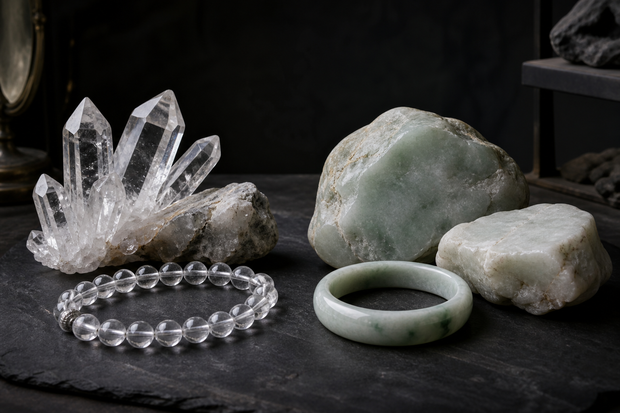
- Lapis Lazuli: With its deep celestial blue, Lapis Lazuli is a stone of truth, wisdom, and spiritual insight. It is associated with the throat and third eye focus points, encouraging clear communication and a closer connection to your inner knowing.
- Amethyst: This beautiful purple quartz is a stone of tranquility and spiritual awareness. It is known for its ability to calm the mind and emotions, making it ideal for those seeking to reduce stress and deepen their meditative state.
- Turquoise: A stone deeply revered in Tibetan culture, turquoise is a powerful talisman of protection, healing, and communication. It is believed to connect the earth and the sky, grounding your focus while opening you to spiritual heights.
- Tiger's Eye: This grounding stone, with its captivating golden-brown bands, instills courage, strength, and self-confidence. It's an excellent choice when your intention is to overcome fear, stay centered during challenging times, and express your goals.
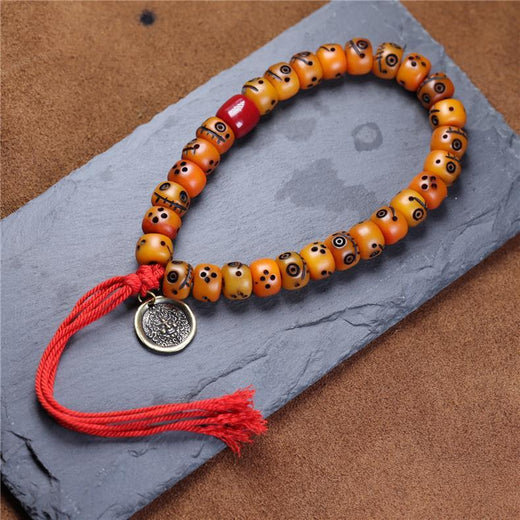
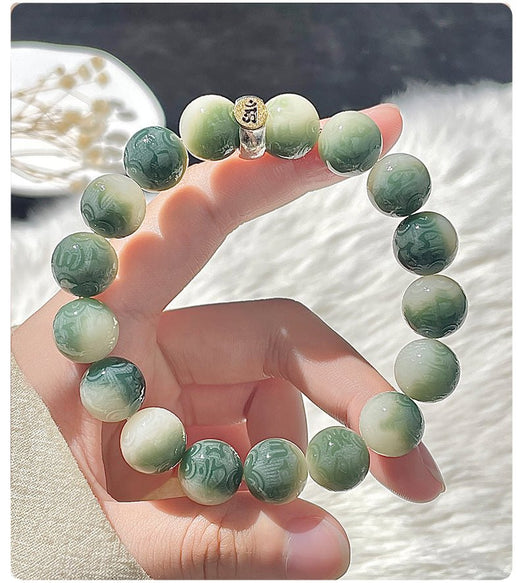
Full Malas vs. Wrist Malas: For portability and as a constant reminder of your path, you might also consider a wrist mala. These are shorter versions, often with 21 or 27 beads, designed to be worn as a bracelet.
They are perfect for on-the-go mindfulness, allowing you to count a few mantras while waiting in line or during a stressful moment at work. To complete a full round of 108, you would simply complete four or five circuits of your wrist mala.
The choice between a full mala and a wrist mala depends on your lifestyle and how you intend to integrate the practice into your daily life.
A weave of Faith: Prayer Beads in Other World Traditions
The Buddhist mala is part of a beautiful global family of prayer beads. Looking at its cousins in other faiths highlights the shared human instinct for contemplative practice while also celebrating the unique theological paths people walk.
It is not a matter of which is "better," but of appreciating the different languages the human heart uses to speak to the divine.
The Catholic Rosary: The most well-known prayer bead in the Western world, the Holy Rosary has a different structure and purpose than a mala. It consists of 59 beads arranged in a specific pattern, including a crucifix.
The practice involves meditating on the "Mysteries" of the lives of Jesus and Mary while reciting a set sequence of prayers: the Our Father, the Hail Mary, and the Glory Be. Unlike the single-mantra repetition of a mala, the rosary guides the practitioner through a narrative, contemplative journey.
The Islamic Tasbih (or Misbaha): In Islam, prayer beads are known as a Tasbih or Misbaha. They are used for dhikr, the act of remembering God. A typical tasbih has 99 beads, corresponding to the 99 names of Allah in the Qur'an.
A smaller, 33-bead version is also common, which is cycled through three times. After formal prayers, a Muslim may use the tasbih to recite phrases like "Subhanallah" (Glory to God) 33 times, "Alhamdulillah" (Praise be to God) 33 times, and "Allahu Akbar" (God is greatest) 33 times.
The focus is on devotion and remembrance.
The Eastern Orthodox Komboskini: In the Eastern Orthodox Christian tradition, you will find the komboskini (Greek) or chotki (Russian). This is not a string of beads but a knotted rope, usually of wool to symbolize the flock of Christ.
The number of knots varies—33 (for the years of Christ's life), 50, 100, or 300. It is used for the constant repetition of the Jesus Prayer: "Lord Jesus Christ, Son of God, have mercy on me, a sinner." The practice, known as hesychasm, is a profound form of breath-centered, contemplative prayer aimed at achieving inner stillness (hesychia).
While the materials, numbers, and specific words differ, the underlying principle is the same. Each of these tools—mala, rosary, tasbih, komboskini—is designed to occupy the hands and the voice, freeing the heart to open to a closer reality.
Integrating Sacred Beads into Your Modern Life
You don't need to be a monk in a monastery to benefit from the profound power of a mala. These sacred tools can be seamlessly integrated into your modern life, serving as anchors of peace amidst the chaos of the everyday.
Mindfulness on the Go: Your practice doesn't have to be a formal, 30-minute session. A wrist mala is a perfect companion for micro-doses of mindfulness. Stuck in traffic? Instead of frustration, slowly move through a few beads while taking deep breaths.
Feeling anxious before a meeting? Discreetly touch each bead under the table, grounding your focus. These small moments accumulate, weaving a thread of peace throughout your day.
A Wearable Reminder of Your Intention: Choosing to wear your mala as a necklace or bracelet (when not in active use) transforms it into a wearable sanctuary. Every time you catch a glimpse of it in the mirror or feel its weight on your skin, you are gently reminded of your spiritual intention.
It becomes a physical cue to return to your center, to be more compassionate, or to remain courageous in the face of challenges. It is a silent, supportive friend on your journey.
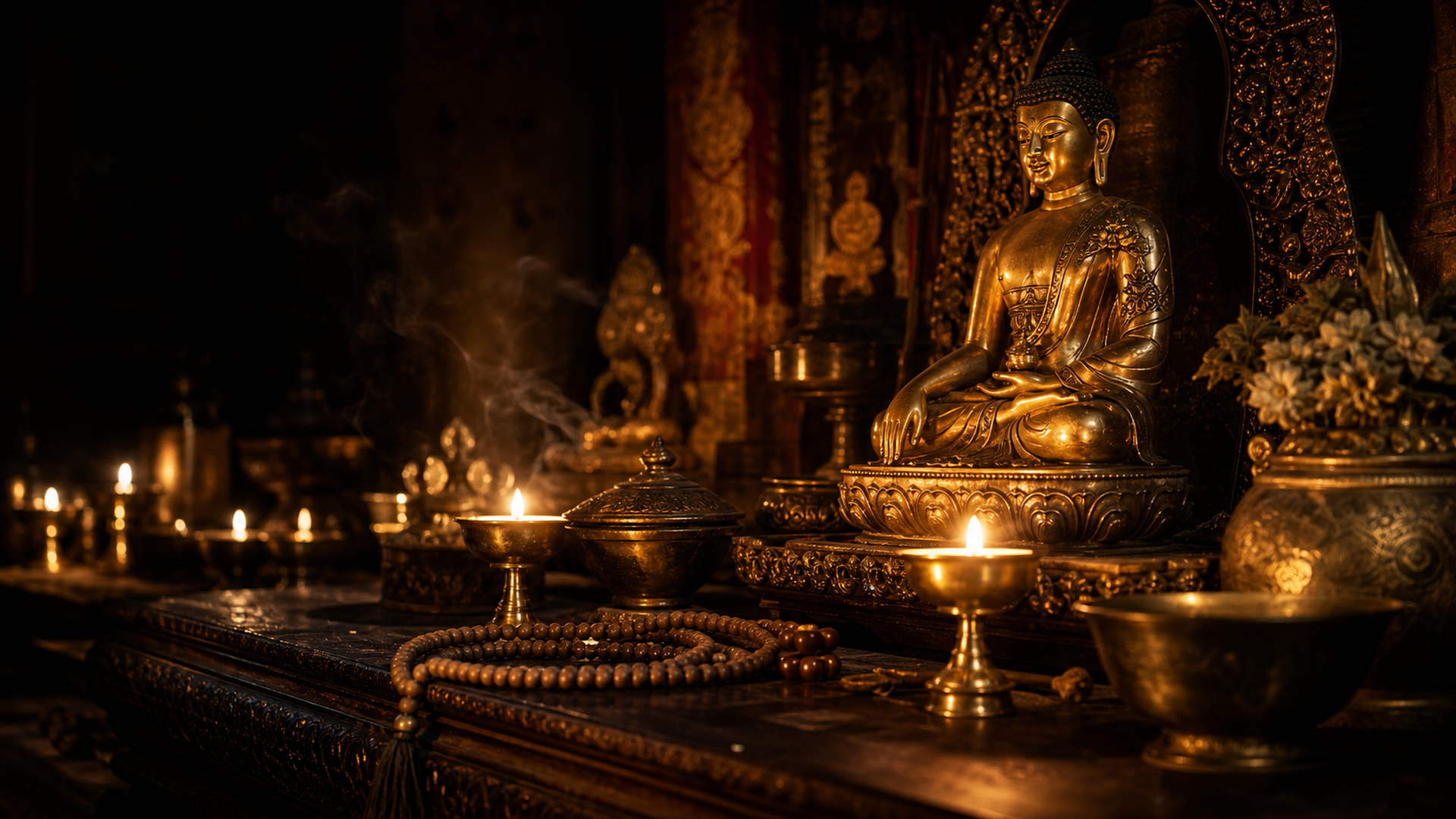
Creating a Sacred Space and Caring for Your Mala: Your mala will hold the quality of your practice. It is a sacred object and should be treated with respect. When not in use, keep it in a special place, like a small pouch or a dedicated spot on your altar.
It's traditional to not let your mala touch the floor or the ground. Periodically, you may wish to cleanse it by smudging it with sage or palo santo, or by letting it rest in the light of the full moon.
This care and reverence deepens your connection to the tool and the practice it represents.
Ultimately, whether it's a Buddhist mala, a Christian rosary, or an Islamic tasbih, these beads are far more than beautiful objects. They are tools of transformation, carriers of intention, and companions on the most important journey you will ever take: the journey inward.
May you find the sacred companion that resonates with your spirit and supports you in discovering the peace that already resides within you. Explore our full collection to find the piece that calls to you.
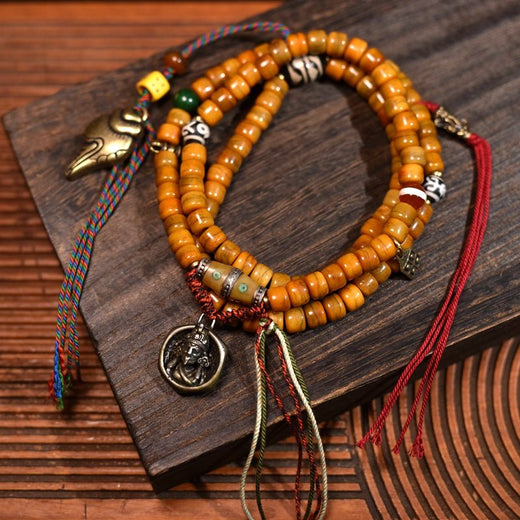
Explore our monk-blessed Yak Bone 108 mala.
Frequently Asked Questions
Can anyone use a mala, or is it just for Buddhists?
Anyone can use a mala. While it has deep roots in Buddhist and Hindu traditions, its function as a tool for focus and mindfulness is universal. People from all walks of life use malas to aid in meditation, breathwork, or reciting affirmations. The key is to approach the practice with respect for its origins and to use it in a way that feels authentic to your own spiritual path.
What's the difference between a 108-bead mala and a wrist mala?
A traditional 108-bead mala is designed for a full round of mantra recitation during formal meditation practice. A wrist mala, typically made with 21 or 27 beads, is a shorter, more portable version. It's designed for convenience, allowing for shorter practices throughout the day and serving as a wearable reminder of your intention. To complete a full 108 repetitions with a wrist mala, you would simply complete four or five circuits of the bracelet.
How do I choose the right mala for me?
Choosing a mala is a deeply personal and intuitive process
Keep reading