buddhist-jewelry
Mala Practice: Real Stories of Transformation
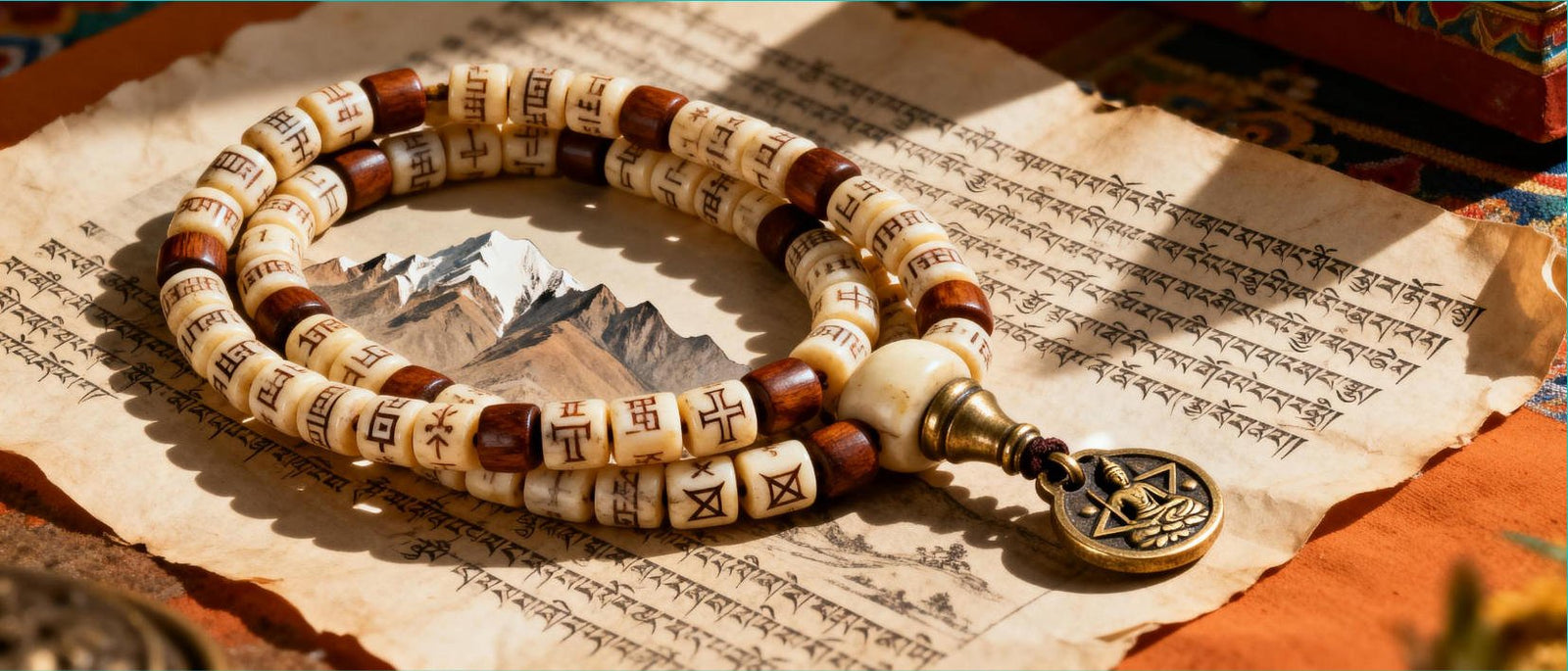
We often speak of intention and peace in abstract terms. They can feel like distant, aspirational concepts, floating just out of reach. But what do these ideas actually look like in a human life, with its relentless deadlines, its unexpected heartbreaks, and its quiet, daily demands?
How do you find a moment of stillness when your calendar is screaming for your attention? The most profound proof is not found in ancient texts, but in the lived experiences of people just like you.
People who have woven the simple, ancient practice of using a mala into the fabric of their modern lives and have discovered a fundamental shift for the better.
These are not only stories of using a beautiful piece of jewelry. They are testaments to transformation. They reveal how a simple, tangible tool—a string of 108 beads—can radically alter your relationship with your own mind, your emotions, and the world around you.
This is a journey from the chaos of the reactive mind to the calm clarity of the responsive heart. It's a journey that begins with a single bead, and a single breath.
Each bead is hand-knotted by Tibetan artisans at monasteries in Nepal and Tibet, following centuries-old traditions passed down through generations of craftsmen.

The Ancient Roots of a Modern Anchor
Before we looking closely at the personal stories of transformation, it's important to understand that the mala is not a new invention. Its roots stretch back over 3,000 years into the spiritual soil of India, where it emerged within both Hinduism and Buddhism.
The word "mala" (माला) is Sanskrit for "garland," the same way a garland of flowers honors a sacred space, a mala is a garland of intentions used to adorn your inner temple.
Its primary purpose has always been deeply practical: to aid in a form of meditation known as japa. Japa involves the repetitive recitation of a mantra—a sacred sound, word, or phrase. In the whirlwind of the mind, it's easy to lose count or let your thoughts drift away.
The mala acts as a spiritual abacus. By moving your fingers from one bead to the next with each repetition of the mantra, you anchor your wandering mind to a physical sensation. This tactile connection keeps you present, focused, and immersed in the feeling of your chosen intention.
It frees your mind from the task of counting, allowing you to sink more deeply into the meditative state itself. This ancient technology for focus is, perhaps, more relevant today in our age of digital distraction than ever before.
Deconstructing the Mala: more than Beads
A mala is a circle of profound symbolism, with each component carrying its own distinct meaning. Understanding its structure deepens your connection to the practice and transforms it from a simple counting tool into a map of your spiritual journey.
At its heart are the 108 beads. This number is sacred across numerous Eastern traditions for a wealth of reasons. Some say there are 108 focus points (nadis) converging to form the heart chakra.
In astrology, the diameter of the Sun is about 108 times the diameter of the Earth, and the distance from the Sun to the Earth is 108 times the diameter of the Sun. In Ayurveda, there are 108 sacred points (marmas) on the body.
Whatever the origin, completing a round of 108 repetitions is considered a significant spiritual accomplishment, a full cycle of devotion and focus.
The 109th bead, which is larger and often decorative, is called the Guru Bead or Meru Bead. It is not counted among the 108. It represents the teacher, the divine, or your own highest wisdom.
When you begin your meditation, you start at the bead next to the Guru Bead and travel all the way around the circle. Reaching the Guru Bead again signifies a moment of pause, reflection, and gratitude.
It’s a reminder of the teacher within and without. You do not cross over the Guru Bead; instead, you can turn the mala around and go back in the opposite direction if you wish to continue.
Finally, the tassel that extends from the Guru Bead is a symbol of oneness and interconnectedness. The many individual threads of the tassel bind together to form a single, unified whole, representing our connection to the divine and to each other.
It symbolizes consciousness, the source from which all things arise. The materials themselves, from earthy sandalwood to vibrant gemstones, each carry a unique energy, allowing you to choose a mala that resonates with your specific intention.
if you seek calm, clarity, or courage, there is a mala that aligns with your path.
Elena's Story: From Burnout to Breath, One Bead at a Time
Elena’s identity was her productivity. As the founder of a fast-growing tech startup, her mind was a browser with 100 tabs open at once—investor pitches, product roadmaps, team dynamics, and the ever-present fear of failure.
Sleep was a luxury she couldn't afford, often replaced by a draining cycle of late-night work, caffeine-fueled anxiety, and utter exhaustion. Her body was in a constant state of high alert, and "peace" was a word she associated with a vacation she never had time to take.
For her birthday, a friend gave her a stunning Amethyst Mala. It felt like a beautiful, but utterly foreign, object. "I remember thinking, 'What am I supposed to do with this? I don't have time to meditate,'" she recalls.
For weeks, it sat on her desk, a purple whisper of tranquility in a room that screamed urgency. Her transformation began not with a commitment to an hour of silent meditation, but with the simple decision to take three breaths.
She kept the mala right next to her keyboard. Every time she felt the familiar surge of panic before a big meeting or the crushing weight of her inbox, she would reach for it.
"I didn't even chant," she shares. "I'd just hold the cool, smooth amethyst beads and take three deliberate, conscious breaths, moving my thumb over one bead per breath. It was a circuit breaker. A pattern interrupt." In that tiny space she created—the space of three breaths—the world didn't stop, but her frantic, reactive mind did.
Those three-bead moments became islands of sanity in a chaotic sea. Over weeks, the practice naturally expanded. Sometimes it was five breaths. Sometimes, at the end of a long day, she would sit for a few minutes and just hold the mala, feeling its weight in her hand as a grounding presence.
The Amethyst, known for its calming and clarifying properties, seemed to be the perfect companion for her journey. The mala became a symbol of a new choice. It represented the choice to pause instead of panic, to breathe instead of hyperventilate, and to lead from a place of calm authority instead of crisis-driven adrenaline.
"It didn't change my workload," Elena says, a newfound calm in her voice. "I'm still just as busy. But it completely changed my experience of it. It taught me that I have a choice in how I respond.
I'm now making decisions from a place of clarity I honestly didn't know I had. That little string of beads didn't take anything away from my life; it gave me back myself."

A Practical Guide: Your First Steps with a Mala
You don't need to be an expert meditator or a spiritual guru to begin. The beauty of the mala is its simplicity and accessibility. Here is how you can start your own practice and invite a new level of intention into your life.
Choosing Your Mala: The most important rule is to choose a mala that calls to you. You might be drawn to a specific color, a gemstone with a meaning that resonates with your current life situation, or the feel of a certain type of wood.
Trust your intuition. Whether it's the grounding presence of Onyx, the heart-opening quality of Rose Quartz, or the expressive quality of Lapis Lazuli, your choice is part of the process. Explore the different qualities and intentions within our collection of authentic mala beads to find your perfect companion.
Cleansing and Setting an Intention: When you first receive your mala, it's a beautiful ritual to cleanse it of any presence it may have picked up on its journey to you. You can do this by letting it rest in moonlight overnight, smudging it with sage or palo santo, or simply holding it and visualizing it being bathed in a cleansing white light.
Once cleansed, hold it in your hands, close your eyes, and set your intention. This could be a single word like "peace," "clarity," or "strength," or a short phrase like "I respond with compassion." This infuses the beads with your personal intention and purpose.
How to Hold and Use Your Mala: Traditionally, the mala is held in the right hand, draped over the middle finger. You use your thumb to pull each bead towards you as you recite your mantra.
The index finger, which is associated with the ego, is not supposed to touch the beads. You start with the first bead next to the Guru Bead. Recite your mantra once (aloud or silently), then use your thumb to pull the next bead into place and repeat.
Continue this process for all 108 beads until you return to the Guru Bead. This is a moment to pause, honor your practice, and feel gratitude.
Simple Practices for Beginners:
- The Breath Practice: Just like Elena, you can start without any mantra at all. Hold your mala and for each bead, take one full cycle of breath—a slow inhale, a gentle exhale. This is a powerful way to calm your nervous system instantly.
- The Simple Mantra: Choose a simple, universal mantra. "So Hum" (pronounced so-hum) is a wonderful choice, meaning "I am that" in Sanskrit. Inhale on "So," exhale on "Hum." Or, simply use a word that feels right: "Calm," "Love," or "Peace."
- The Gratitude Practice: Go around the mala and for each bead, think of one thing you are grateful for. It can be as small as the cup of tea in your hands or as big as the love of your family. This practice can profoundly shift your perspective from lack to abundance.
David's Story: Finding Color in the Grey of Grief
After a profound and sudden personal loss, David's creativity vanished. An artist whose life was a vibrant weave of color and form, he found himself in a monochrome world. His studio, once a sanctuary of inspiration and joyful mess, felt cavernous, empty, and suffocatingly silent.
The canvas stared back at him, blank and mocking. The grief was a thick fog that muted everything.
A well-meaning friend, seeing his struggle, gave him a Lapis Lazuli Mala, mentioning its ancient connection to truth, wisdom, and self-expression. David thanked her, but the deep blue beads felt like another heavy object in a life already weighed down by sorrow.
For weeks, it sat on a dusty shelf, a silent observer of his inertia.
One morning, in the particularly heavy quiet that grief brings, he found himself staring at it. On an impulse he didn't understand, he took it down. The beads felt cool and solid in his palm.
He didn't know any traditional mantras, and the idea of chanting felt disingenuous. So he simply sat on the floor of his studio, holding the beads, and created his own mantra from the raw material of his pain.
With each bead his thumb touched, he would breathe in the word "Truth" and breathe out the word "Fear."
"Tears started flowing with the first few beads," David recalls, his voice thick with the memory. "It wasn't a sad, desperate crying. It was a release. With every 'Truth' I inhaled, I was acknowledging the reality of my pain, my loss, my anger.
I stopped fighting it. With every 'Fear' I exhaled, I was letting go of the terror that I would never feel joy again, that I would never create again." He went around the entire mala, 108 times acknowledging his truth and releasing his fear.
It was the first time in months he had felt anything other than a dull ache.
That practice became his daily ritual. The Lapis Lazuli, a stone of the throat chakra, was helping him give voice to the unspeakable. The mala didn't quietly strike him or erase his grief, but it gave him a container for it.
It was a tool to process the emotion instead of being drowned by it. Slowly, tentatively, color began to seep back into his world. He started with small charcoal sketches. Then, one day, he picked up a brush and mixed a deep, resonant blue—the color of his mala, the color of his truth.
His art was different now, imbued with a new depth and emotional honesty. The mala hadn't given him his old life back; it had helped him find the voice to begin a new one.
Beyond the Stories: Weaving Stillness into Your Own Life
The power of a mala practice lies in its adaptability. You don't need a silent meditation cushion or an hour of uninterrupted time. You can integrate these moments of mindfulness into the most challenging and chaotic parts of your day.
Think about how this could look in your own life:
- The Overwhelmed Parent: You're in the kitchen, dinner is burning, and your toddler is having a meltdown. Instead of escalating with them, you can reach for a mala bracelet on your wrist. While you hold your child, you can discreetly move your thumb over a few beads, taking deep, calming breaths. It's a silent, personal reset button that allows you to respond with more patience and love.
- The Anxious Student: You're facing a mountain of textbooks and the pressure of final exams. Your mind is racing, making it impossible to focus. You can take a five-minute study break, pick up your mala, and recite a mantra for clarity like "I am focused and calm" for 27 beads (a quarter of the way around). This short break can clear the mental fog and improve your concentration far more than pushing through the anxiety.
- The Frustrated Commuter: You're stuck in bumper-to-bumper traffic, late for an important appointment. Road rage is bubbling up. You can keep a mala in your car's center console. At a red light, simply hold it. Feel the texture of the beads. Breathe. It transforms dead time into an opportunity for focus, reminding you that your inner peace isn't dependent on the traffic moving.
These scenarios show that a mala isn't about escaping your life; it's about being more present within it. It’s a tangible reminder that you always have access to a place of stillness, no matter what is happening around you.
Your Mala, Your Journey: A Lifelong Companion
Elena’s journey was about managing the energy of ambition. David’s was about working through the depths of grief. Your journey is uniquely your own. Your mala will become a witness to your growth, a repository for your intentions, and a faithful companion through all of life’s seasons.
The beads may grow smoother with time, worn down by your touch and infused with the energy of your practice. It will become more than an object; it will be a part of your story.
The goal is not perfection. There will be days your mind wanders uncontrollably. There will be days you forget to practice altogether. That’s okay. The practice is not about achieving an unbreakable state of bliss.
It is about the gentle, compassionate, and consistent act of returning. Returning to the breath. Returning to the bead. Returning to the present moment. It is in this simple act of returning, again and again, that true transformation occurs.
Your journey from stress to stillness begins with a single step. Perhaps it's time to find the mala that is waiting to walk that path with you. Explore our full collection of authentic Tibetan jewelry and discover the tool that will help you write your own story of transformation.
Explore our vintage Yak Bone 108 mala.
Frequently Asked Questions About Mala Practice
Do I need to be a Buddhist to use a mala?
Absolutely not. While malas have deep roots in Buddhism and Hinduism, they are, at their core, a universal tool for mindfulness and meditation. People from all walks of life and belief systems use them to focus the mind, calm the nervous system, and set intentions.
Think of it as a tool for focus, much like a painter uses a brush or a musician uses an instrument. Its power lies in its use, not in adherence to a specific dogma.
How do I choose the right mala for me?
There are three wonderful ways to choose a mala: by intuition, by intention, or by gemstone properties. Often, you will simply be drawn to the color and feel of a particular mala without knowing why—trust that instinct.
Alternatively, you can choose based on an intention you want to cultivate, such as choosing Rose Quartz for love or Tiger's Eye for courage. Lastly, you can research the traditional metaphysical properties of different stones and woods to find one that aligns with your personal goals.
What does it mean if my mala breaks?
In the Tibetan Buddhist tradition, a broken mala is seen as a positive sign. It can symbolize the breaking of a cycle of suffering, the release of karma, or the fulfillment of the intention you set for the mala.
It means you have completed a cycle and are ready for the next stage of your journey. While it can be sad to see a beloved item break, it presents an opportunity for reflection.
You can choose to gather the beads and have them restrung (perhaps with a new Guru bead to mark the new beginning) or return them to the earth as an offering.
How often should I use my mala?
Consistency is far more powerful than duration. A dedicated practice of five minutes every day will have a more profound impact than a sporadic one-hour session once a month. The goal is to build a new neural pathway in your brain, and this is best done through regular repetition.
Start with a manageable goal, even if it's just for 10 breaths each morning. You can always expand your practice as it becomes a more natural and cherished part of your daily routine.
Can I wear my mala as a necklace or bracelet?
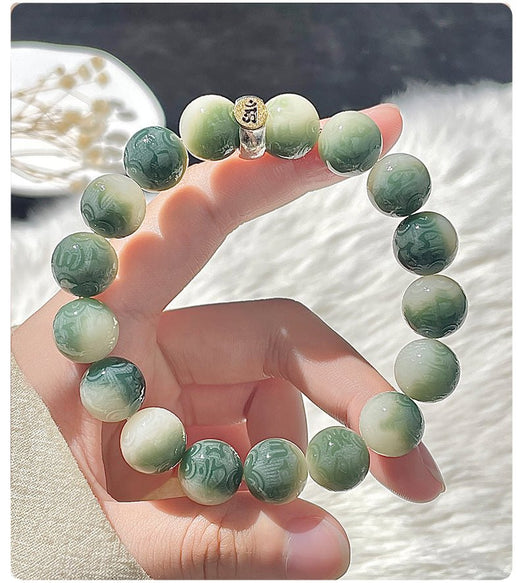
Yes, practitioners wear their mala as a necklace or wrap it around their wrist as a bracelet. Wearing your mala is a beautiful way to keep your intentions close to your body and mind throughout the day.
It serves as a constant, gentle reminder of your practice and your purpose. The only consideration is to treat it with respect and care, as it is a sacred tool. Avoid wearing it during activities where it might get damaged or submerged in water for long periods.
Keep reading