buddhist-jewelry
How to Use Mantra Malas: A Complete Guide
There's a moment in every practitioner's journey when counting breaths evolves into something more profound. It's a subtle shift, a quiet awakening to a closer dimension of practice. You begin to sense that your inner world is not silent, but filled with a subtle hum of presence.
You discover that certain sound resonance, when repeated with focused intention, can rearrange your very consciousness. This is the sacred space where the mantra mala becomes not only a tool for counting, but a living partner in your spiritual evolution.
A mala is a bridge between the tangible and the intangible. It is the physical anchor for the formless presence of sound. At Buddhabelief, we understand this profound relationship. We create mantra malas with specific attention to their sonic purpose, viewing each one as a vessel for sacred presence.
Each bead is selected not only for its unique material properties and beauty but for how its specific frequency enhances the resonance of sacred sounds. This ancient craft is then completed with a vital final step: our malas are blessed by Tibetan monks who have dedicated their lives to mastering the power of mantra, infusing each piece with an intention of pure focus and spiritual lineage.

The Ancient Pulse of Mantra: A Journey Through Sound and Spirit
To truly appreciate your mala, you must first understand the power it is designed to channel: the mantra. The word itself offers the first clue to its immense potential. It comes from ancient Sanskrit, a language considered by sages to be a resonance map of consciousness itself.
"Mantra" is a combination of two root words:
- Man, meaning "mind."
- Tra, meaning "instrument," "vehicle," or "to protect."
Together, they create "mind instrument"—a tool to transport your consciousness beyond its usual, often chaotic, limitations. A mantra is a vehicle of sound that carries the mind from a state of distraction to one of deep concentration and stillness.
It is a form of protection, shielding the mind from the relentless barrage of negative thought patterns and external noise.
The origins of mantra practice are lost in the mists of antiquity, first appearing in the Vedic texts of ancient India over 3,500 years ago. The early seers, or rishis, were not authors in the modern sense; they were considered "hearers" of the eternal resonance of the cosmos.
Through deep states of meditation, they perceived the fundamental sounds that underpin creation. These sounds, when articulated as mantras, were believed to be literal sonic expressions of divine presence. This is the concept of Shabda Brahman—the ultimate reality brought forth as sound.
From these Vedic roots, mantra practice blossomed within both Hindu and Buddhist Tantric traditions. In Tibetan Buddhism, the role of mantra is paramount. It is seen as the very speech of enlightened beings. When you chant the mantra of a particular Buddha or Bodhisattva, you are not merely asking for their help; you are invoking their enlightened qualities within yourself.
You are tuning your own presence to the frequency of their compassion, wisdom, or protective power. This is why the precise pronunciation and the unbroken lineage of transmission from a qualified teacher (guru) to a student are held in such high regard.
It ensures the mantra's character remains pure and effective through generations.
How a Mala Transforms Sound into Spiritual Alchemy
A mantra on its own is powerful. But when you add a mala to your practice, you create a complete circuit for spiritual presence. This transforms a purely mental or vocal exercise into a holistic, multi-sensory experience that engages your body, speech, and mind.
The mala acts as a master conductor, orchestrating the flow of calm and deepening the impact of the mantra in several profound ways.
Mantras work through a science of resonance. Ancient traditions teach that the human body is interwoven with a network of subtle focus points, known as nadis. It is through these channels that prana, or life-force presence, flows.
Stress, trauma, and negative thought patterns can create blockages in these channels, leading to physical and emotional imbalance. The specific frequencies of a sacred mantra, like the primordial sound "Om," resonate through your entire being, resonating with these nadis and gently dissolving obstructions.
The physical act of your thumb touching each bead sends a tiny, rhythmic pulse through this system, amplifying the mantra's clearing effect and allowing calm to flow freely.
Your brainwaves are a direct reflection of your mental state. In your daily, active life, you primarily operate in a Beta brainwave state—alert, focused, but also prone to stress and anxiety. The rhythmic, repetitive nature of moving through the 108 beads of a mala, coupled with the resonant sound of the chant, naturally guides your brain into an Alpha state.
This is the state of relaxed, calm awareness associated with light meditation and daydreaming. As your practice deepens, japa can even lead you into the Theta state, a world of profound stillness, heightened intuition, and deep subconscious access.
The mala becomes the metronome that paces this descent into inner peace.
Your subconscious mind is like fertile soil; it will grow whatever seeds are planted in it. Repetitive thoughts, especially those charged with emotion, are the seeds. Imagine you are struggling with feelings of inadequacy.
By choosing a mantra for confidence and repeating it 108 times daily with your mala, you are systematically planting new seeds. Each pass over a bead is an act of programming. You are overwriting the old, limiting belief with a new, empowering intention.
The mala provides the structure for this sacred repetition, ensuring the new programming takes root deeply and effectively.
The mala brings a crucial element of physicality to this process. It grounds your spiritual practice in the here and now. The feeling of the beads—their weight, their texture, their temperature—keeps you present. When your mind inevitably wanders, the sensation of the next bead in your fingers is a gentle, non-judgmental call to return to the mantra.
This creates a powerful kinesthetic link, training your very cells to associate the feeling of the mala with a state of peace and focus.
Choosing Your Sacred Ally: A Guide to Mala Materials and Their presence
The material of your mala is not merely an aesthetic choice; it is a meaningful one. Each stone, seed, and wood carries a distinct presence, a unique "song" that can harmonize with and amplify the intention of your chosen mantra.
Selecting a mala is an intuitive process. As you explore the possibilities, notice which materials you feel drawn to. This attraction is often your inner wisdom guiding you to the quality you most need.
Exploring our full collection of Mala Beads can help you intuitively connect with the material that calls to you.
For Grounding, Stability, and Protection
When your mind feels scattered or you feel disconnected from your body, these materials can anchor your focus and create a foundation of stability.
- Rudraksha Seeds: Known as "Shiva's tears," these sacred seeds have a rich history in yogic traditions. Legend says that Lord Shiva, after a long period of meditation for the well-being of all creatures, awoke and shed a tear of compassion, which grew into the Rudraksha tree. Their earthy, organic presence is powerfully grounding, anchoring your spiritual practice into physical reality. They are known to shield the wearer from negative influence and promote inner peace.
- Yak Bone: In the high mountains of Tibet, the yak is an essential part of life. A mala made from yak bone is a profound and traditional reminder of impermanence (anicca). Meditating with it helps you connect to the preciousness of this human life and the reality that all things are transient. This understanding cuts through attachment and fear, connecting your practice to the raw, unvarnished truth of existence.
- Sandalwood: The subtle, sacred scent of sandalwood has been used for centuries to quiet the mind and prepare it for meditation. Its fragrance has a calming effect on the nervous system, helping to maintain focus and ward off distractions. Its presence is soothing and grounding, connecting you to the earth while promoting a sense of inner tranquility.
- Lava Stone: Forged in the fiery heart of the earth, lava stone embodies grounding strength. It represents strength, courage, and stability through times of change. Its porous nature makes it an excellent diffuser for essential oils, allowing you to add an extra layer of aromatherapy to your practice.
For Heart-Opening, Compassion, and Healing
To cultivate love, forgiveness, and emotional balance, these materials speak directly to the heart chakra (Anahata).
- Rose Quartz: The quintessential stone of unconditional love. Its gentle, pink presence soothes the heart, dissolves emotional wounds, and fosters compassion. It is a powerful ally for mantras like Om Mani Padme Hum, deepening the intention of loving-kindness not only for others but, crucially, for yourself.
- Bodhi Seeds: These are not from the exact tree the Buddha sat under, but from a related species. They carry the symbolic presence of his enlightenment, or "Bodhi." Meditating with Bodhi seeds is a powerful statement of your own potential for awakening. They hold the feeling of compassionate wisdom, reminding you that the capacity for enlightenment exists within you right now.
- Turquoise: A sacred stone in Tibetan culture, turquoise is considered a bridge between heaven and earth. It is a stone of wholeness, communication, and spiritual attunement. It promotes honest self-expression from the heart and is believed to absorb negativity, protecting the wearer and bringing peace of mind.
For Wisdom, Clarity, and Intuition
When you seek to calm mental chatter, access deeper insight, and connect with your inner wisdom, these stones are invaluable.
- Lapis Lazuli: With its deep celestial blue and flecks of golden pyrite, Lapis Lazuli looks like a starry night sky. This stone has been prized by priests and royalty for millennia as a key to spiritual insight. It powerfully stimulates the third eye chakra (Ajna), enhancing intuition, clarifying thought, and revealing inner truth. It is ideal for wisdom mantras like the Manjushri mantra, Om Ah Ra Pa Ca Na Dhih.
- Amethyst: A stone of spiritual protection and purification. Amethyst's calming presence stills the "monkey mind," allowing for clearer perception and a closer meditative state. It is associated with the crown chakra (Sahasrara), facilitating a connection to higher consciousness and divine wisdom.
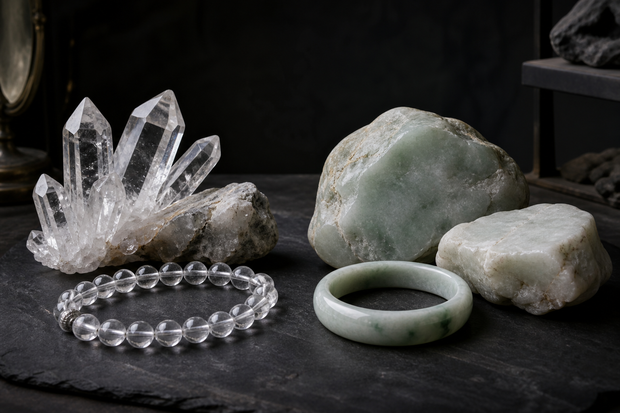
- Clear Quartz: Known as the "master healer," clear quartz is a powerful amplifier of intention. It absorbs, stores, releases, and regulates presence. When used in a mala, it magnifies the power of your mantra and your personal intention, broadcasting it into the universe. It also brings clarity of mind, helping you focus on your spiritual goals.

The Sacred Rhythm of Japa: A Practical Guide to Mantra Meditation
Japa is the traditional term for mantra repetition meditation. It is an art form, a discipline, and a devotional practice all in one. Engaging in japa with your mala is a way to formalize your commitment and create a potent container for your spiritual work.
Here is a practical guide to beginning or deepening your practice.
Setting the Stage
Before you even touch your mala, take a moment to prepare your space and your mind. Find a quiet place where you won't be disturbed. Sit comfortably, with your spine erect but not rigid—a chair is perfectly fine if sitting on the floor is difficult.
Close your eyes and take a few deep, conscious breaths to center yourself. Then, set a clear intention (sankalpa). What is the purpose of this practice session? Is it to cultivate peace, to send healing to a loved one, or to connect with your own inner wisdom?
Hold this intention in your heart as you begin.
The Technique of Japa
The traditional method for japa is simple yet precise, designed to maximize the flow of presence.
- Hold the mala in your right hand. While some traditions vary, the right hand is generally associated with giving and projective presence.
- Drape the mala over your middle finger. The middle finger is associated with the element of ether or space, representing a pure connection to the cosmos. Avoid using the index finger, which is associated with the ego or the "I-consciousness."
- Use your thumb to pull each bead towards you. As you recite your mantra one time, use your thumb to gently pull one bead over your middle finger. The thumb represents your individual consciousness connecting with the universal. This pulling motion symbolizes drawing the divine towards you.
- Begin with the bead next to the large "guru" bead. The guru bead (or stupa bead) represents the teacher, the ultimate reality, or the state of enlightenment. It is the start and end point of the cycle.
- Continue bead by bead. Recite your full mantra on each of the 108 beads, moving from one to the next with your thumb after each repetition. Try to synchronize your breath with the mantra if it feels natural.
- Pause at the Guru Bead. When you have completed all 108 repetitions and arrive back at the guru bead, take a moment. Do not cross over it. This is a moment to offer gratitude to your teachers, to the lineage, and to the divine. It is a time for silent reflection on your practice.
- To continue, turn the mala around. If you wish to do another round, simply turn the mala 180 degrees and go back in the direction you came, starting with the bead you just finished.
Why 108 repetitions? The number 108 is profoundly significant in many spiritual traditions. There are said to be 108 energy lines converging to form the heart chakra. There are 108 earthly desires in Buddhist teachings.
The diameter of the Sun is about 108 times the diameter of the Earth. Completing a full round of 108 creates a complete circuit, sealing the power of your practice.
Imagine your first session. Your mind will likely wander. You might forget the mantra or lose count. This is completely normal. The practice is not about perfection; it's about returning. Each time you notice your mind has drifted, the feeling of the next bead is your anchor.
Gently, without judgment, you guide your attention back to the sound and the sensation. Over time, the rhythm becomes second nature. The mala feels less like a tool and more like an extension of your own hand, guiding you effortlessly into a state of meditative flow.
If you choose a full 108-bead mala or a smaller wrist bracelet for on-the-go practice, the principles of intention and repetition remain the same.
Beyond Japa: Integrating Your Mala into Daily Life
The transformative power of your mala practice doesn't have to end when you place it on your altar. Your mala can become a constant companion, a wearable reminder of your deepest intentions and a tool for staying mindful throughout the chaos of your day.
Wearing your mala is a beautiful way to carry the presence of your practice with you. When a mala is used regularly for japa, it absorbs the resonance of the mantra and your focused intention.
It becomes charged, saturated with the calm you've cultivated. Wearing it against your skin allows you to continue to benefit from this presence. It can serve as a subtle, personal reminder of your connection to your spiritual path.
When you catch a glimpse of it on your wrist or feel its weight around your neck, it can be a prompt to take a deep breath, recenter yourself, and recall your intention.
Your mala can also be a discreet tool for mindfulness in challenging situations. Stuck in traffic and feeling your frustration rise? Instead of gripping the steering wheel, you can quietly hold your mala and recite your mantra internally a few times.
Feeling anxious before a big meeting? You can discreetly touch the guru bead in your pocket, using it as a tactile anchor to ground your nervous energy. By associating the physical sensation of the mala with the peace of your meditation practice, you create a powerful psychological trigger for calm that you can access anywhere, anytime.
Because your mala is a sacred object that holds intention, it's important to care for it properly. This involves both physical and intentional cleansing. To clean it physically, simply wipe the beads with a soft, damp cloth.
Avoid harsh soaps or chemicals, which can damage natural materials like wood and seeds. Intentionally, your mala benefits from regular clearing. You can leave it in the light of the full moon overnight, smudge it with the smoke of sage or palo santo, or place it on a selenite charging plate.
The most important aspect of caring for your mala is your attitude. Treat it with reverence and respect. When you're not wearing or using it, store it in a special place, like a small silk bag or a dedicated spot on your altar.
This honors its role as a sacred partner in your practice.
The Buddhabelief Difference: An Unbroken Chain of Blessings
In a world of mass-produced goods, the source and intention behind an object matter. A mantra mala is more than a string of beads; it is a conduit for sacred presence. Its effectiveness is profoundly influenced by the consciousness that goes into its creation.
This is the heart of the Buddhabelief difference.
Our commitment begins with the materials. We source authentic, rare stones, seeds, and woods, understanding that the purity of the physical components forms the foundation for the spiritual. Our artisans are not only craftspeople; they are practitioners who mindfully assemble each mala, often while reciting mantras themselves.
This imbues the mala with a presence of peace and purpose from the very first knot.
The most vital step in our process, however, is one that connects your mala to a living spiritual lineage. Before any piece reaches you, it is taken to a Tibetan monastery to be blessed by monks.
This is not a superficial gesture. The monks perform specific ceremonies (pujas) and chant powerful, ancient mantras for hours, directing this concentrated spiritual presence into the malas. They are infusing each bead with the blessings of protection, compassion, and wisdom that have been passed down through an unbroken chain for centuries.
When you choose a piece from our collection, you are receiving more than a beautiful piece of jewelry. You are receiving a sacred object that has been consecrated within a genuine spiritual tradition.
You are receiving a link in this chain of blessings, a tool that has been prepared to support your journey in the most authentic way possible. This infusion of sacred intention creates a palpable difference, transforming your mala from a simple counter into a quietly striking, focused ally ready to partner with you in the profound work of transforming your mind.
Your journey with a mantra mala is a personal one, a path of discovery into the power of sound, intention, and devotion. It is a practice that can ground you, open your heart, and awaken your innate wisdom.
It is a bridge from the noise of the world to the deep, resonant silence within. We invite you to begin.
Explore our vintage Yak Bone 108 mala.
Frequently Asked Questions
What if my mind wanders during japa meditation?
This is not a sign of failure; it is the nature of the mind. The practice of japa is not to have a perfectly still mind, but to gently and consistently return your focus to the mantra each time you notice it has wandered.
The mala is your greatest ally in this. The physical sensation of moving to the next bead is your anchor and your reminder. Be patient and compassionate with yourself. Every time you bring your mind back, you are strengthening your muscle of concentration.
Can I use my mala for more than one mantra?
Traditionally, it is often recommended to dedicate one mala to a single mantra. This allows the mala to become deeply saturated and attuned to that specific mantra's presence, making it a more powerful tool for that particular practice.
However, this is a personal choice. If you feel a strong connection to one mala and wish to use it for different intentions or mantras, you can. It can be helpful to cleanse the mala between switching long-term mantra practices.
What happens if my mala breaks?
In Tibetan Buddhist tradition, a mala breaking is not seen as a bad omen. On the contrary, it is often viewed as a positive sign. It can symbolize the release of a significant amount of karma or the completion of a cycle of practice.
It means you have "broken through" a particular obstacle. You can see it as a celebration of your progress. You can choose to have it re-strung (perhaps adding a new bead to mark the occasion) or retire it respectfully on your altar and begin a new cycle with a new mala.
Is it okay for others to touch my mala?
Because your mala absorbs your personal presence and the specific character of your practice, it is generally recommended to keep it as a personal, sacred object. Allowing others to handle it can introduce different presences that may dilute its focused charge.
If someone does touch it, it's not a catastrophe. You can simply give it a quick cleansing with sage smoke or by placing it in sunlight or moonlight for a short time to restore its personal presence.
How do I choose my first mantra?
Start with a mantra that resonates with you and your current needs. A wonderful and universally powerful mantra to begin with is Om Mani Padme Hum, the mantra of compassion. It is easy to pronounce and its presence is gentle and heart-opening.
Another option is to research mantras associated with qualities you wish to cultivate, such as courage, wisdom, or healing. The most important factor is your connection to the sound and its meaning. Choose one that feels good to chant and dedicate yourself to it for a period of time, such as 40 days, to truly experience its effects.
Keep reading