buddhist-jewelry
Monk-Blessed Jewelry: The Real Meaning
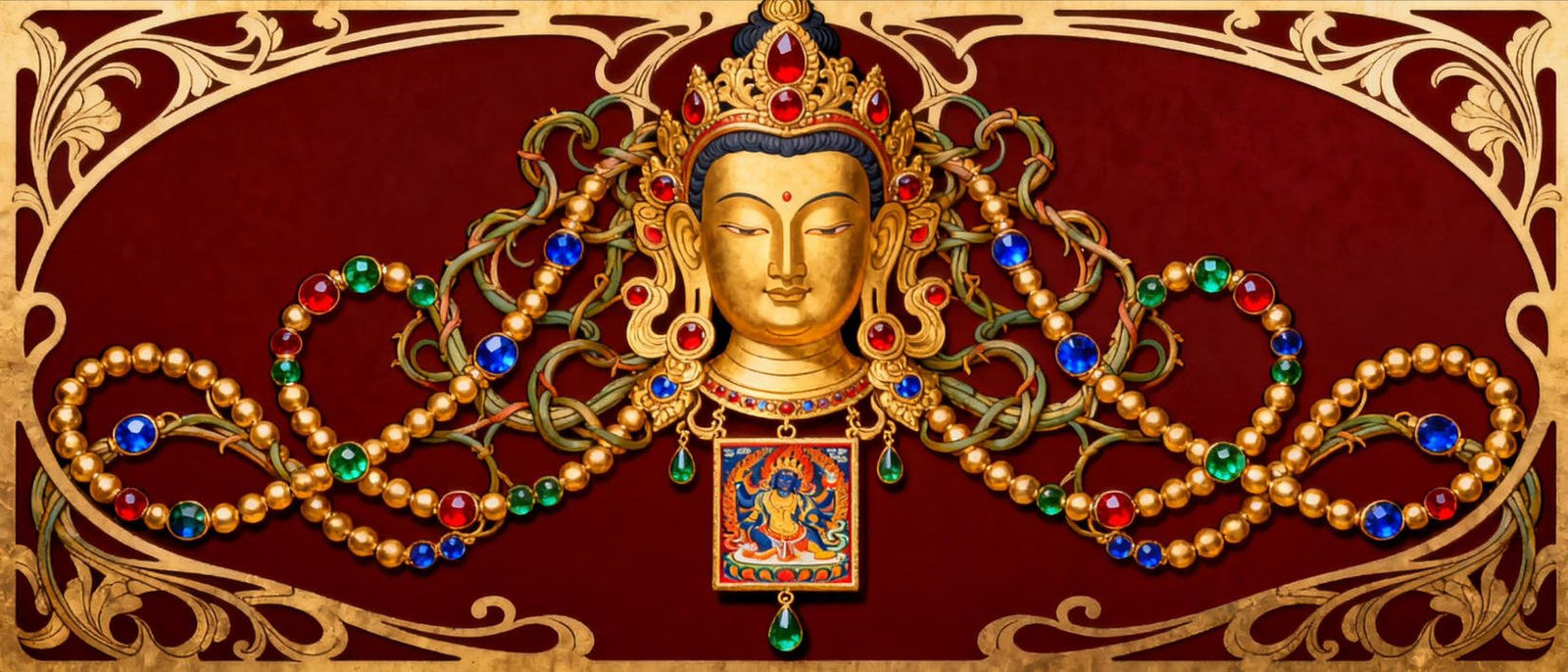
You own a piece of jewelry. It is well-made, beautiful, and fits perfectly on your wrist or around your neck. You appreciate its craftsmanship and the materials from which it is made. Now, imagine that same piece, but it feels different.
It feels… alive. When you hold it, a sense of profound calm washes over you, quieting the usual chatter of your mind. When you wear it, you feel an unseen layer of protection, a subtle shield against the negativity and stress of the day.
This is the tangible, palpable difference between a beautifully crafted object and a consecrated one.
"Monk-blessed" is not a modern marketing term; it is the record of a spiritual event, a sacred process that etches an invisible signature of peace, purpose, and power into the very essence of your piece.
It transforms an accessory into a companion for your spiritual journey. It turns stone and silver into a vessel of intention, a direct link to a lineage of enlightened wisdom that stretches back for centuries.

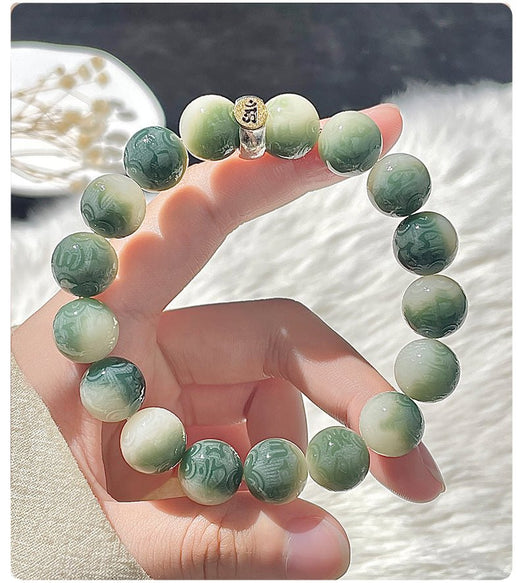
Monk Blessed Jewelry is when you hold it, a sense of profound calm washes over you, quieting the usual chatter of your mind.
A Lineage of Light: The Ancient Roots of Consecration
The practice of blessing or consecrating objects is as ancient as the Dharma itself. Its roots lie in the deep human understanding that physical objects can hold and transmit spiritual presence. In the earliest days of Buddhism, stupas—sacred monuments—were built to house the relics of the historical Buddha, Shakyamuni.
These sites were not mere memorials; they were considered to be living presences, places where the Buddha's enlightened energy remained accessible to the world. Pilgrims would circumambulate them, make offerings, and feel a powerful connection to the teachings.
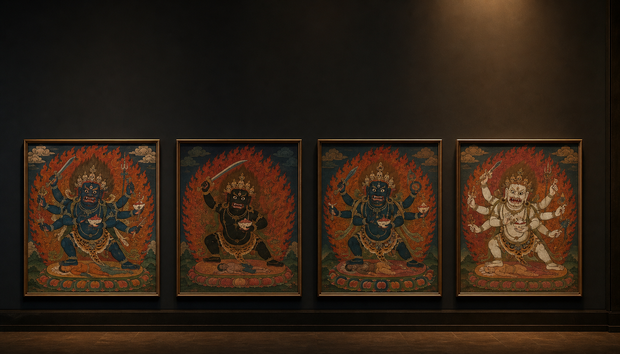
As Buddhism spread from India to Tibet, this understanding evolved. The practice of creating statues (rupas), paintings (thangkas), and ritual implements became central to Tibetan Buddhist practice. But a statue of a Buddha was not considered a true representation until it was "brought to life." This is where the formal ritual of consecration, known in Tibetan as rabné (pronounced "rab-nay"), became essential.
The term itself means "to abide in a state of brilliance" or "to make steadfast." It is the Tibetan equivalent of the Sanskrit term pratiṣṭhā, which means "to establish."
What is being established? The very presence of the enlightened being the object represents. The ritual invites the wisdom-mind of a Buddha or Bodhisattva to merge with the physical form, making the object a true support (rten) for your spiritual practice.
This tradition was not invented but meticulously passed down through an unbroken chain of masters. From the great Indian pandits like Padmasambhava, who brought Buddhism to Tibet in the 8th century, to the revered lamas of today, the methods, mantras, and visualizations of the rabné ceremony have been preserved with incredible precision.
When you hold a blessed object, you are holding a piece of this living history, a direct connection to that sacred lineage.
The Sacred Technology of Rabné: An Invitation to the Divine
The rabné ceremony is a formal, disciplined ritual, not a casual well-wishing. It is a profound technology of the spirit, employing sophisticated methods of meditation, visualization, and sound to alter the character of an object.
The process is undertaken by a qualified high lama or a group of monks who have undergone years, if not decades, of rigorous training in meditation and ritual arts.
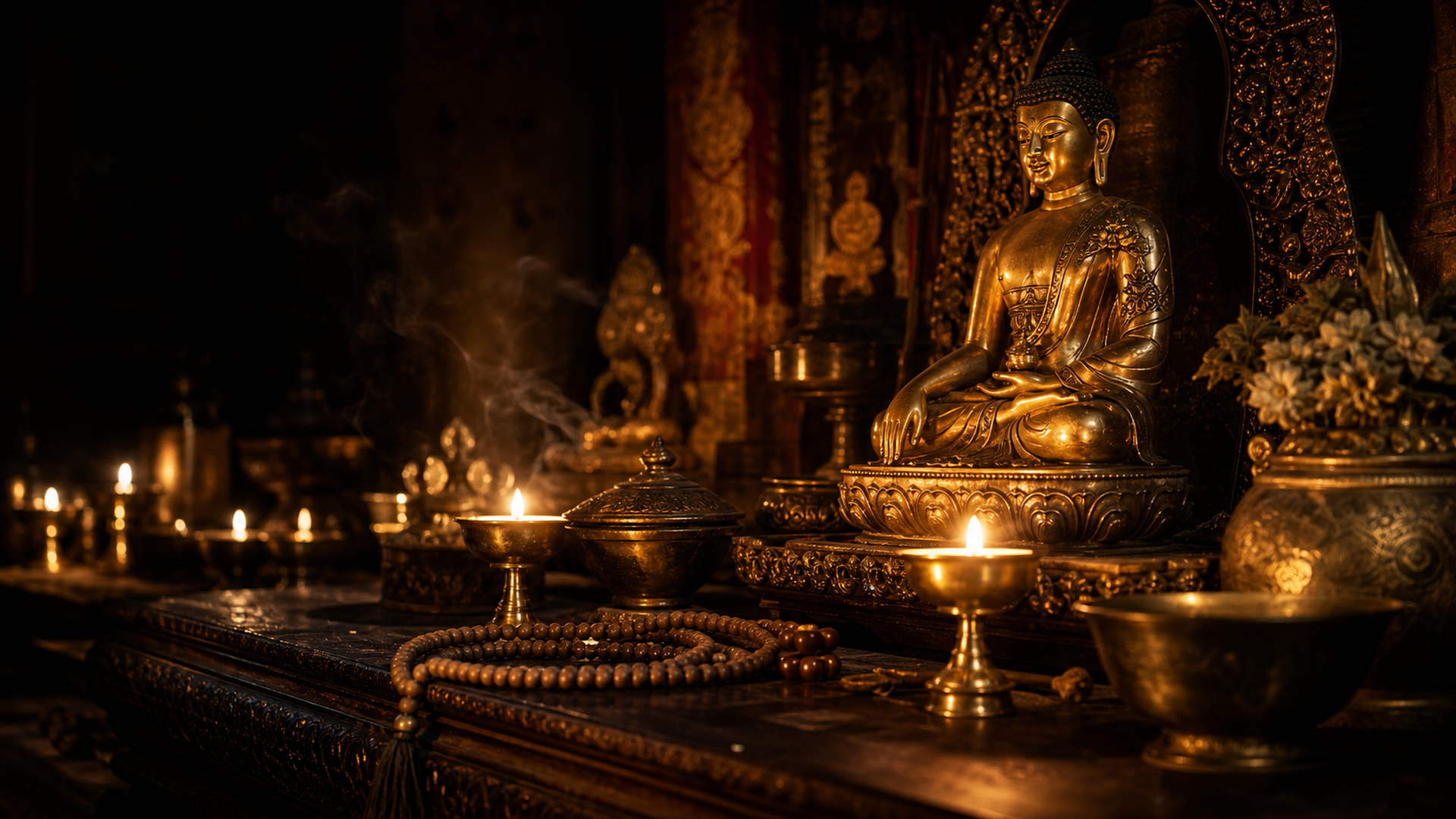
First, the sacred space is prepared and purified. The room is cleansed of all physical and psychic impurities. Mandalas may be drawn, offerings of water, flowers, incense, and light are arranged, and the lama enters a state of deep meditation, or samadhi.
In this state, the lama dissolves their ordinary sense of self and arises in the form of a specific meditational deity (yidam)—perhaps Chenrezig (Avalokiteshvara) for compassion, Manjushri for wisdom, or Tara for protection.
This is not an act of imagination but a profound yogic practice of embodying enlightenment.
The jewelry—whether a string of mala beads, a pendant, or a bracelet—is arranged before the lama on the altar. It is treated not as inanimate material, but as a vessel waiting to be filled.
The lama, embodying the deity, then begins to chant for hours. They visualize radiant beams of light—white, red, blue, yellow, and green—emanating from their heart and from the hearts of countless Buddhas and Bodhisattvas throughout the universe.
This light is pure, blissful, enlightened presence, and it is directed to pour into each and every piece of jewelry, purifying all impurities and infusing it with blessings.
At the heart of the ritual are the mantras—strings of sacred sound that have been used for millennia to invoke specific qualities. For a blessing of compassion, the lama might recite "Om Mani Padme Hum" tens of thousands of times, directing its power into the items.
Each syllable is a key, unlocking a specific aspect of enlightened consciousness. This is not a passive blessing; it is an active invitation. The lama is inviting the wisdom, compassion, and protective power of the enlightened beings to take up permanent residence within the object.
The final step involves specific rituals to "seal" the blessing, ensuring that the sacred presence becomes stable and an inseparable part of the jewelry's essence.
From Matter to Mandala: What Happens During a Blessing?
So, what truly changes in the object? On a material level, nothing. The beads are still stone, the metal is still silver. But on a deeper level, everything has changed. The consecration process imprints the object with a specific, refined quality.
It becomes a stable field of spiritual presence, a miniature mandala you can carry with you.
Think of it like this: an unblessed piece of jewelry is like a clean, empty glass. It is beautiful and functional, but it is empty. A consecrated piece is that same glass, now filled to the brim with pure, clear, life-giving water.
The water doesn't change the glass, but it gives it a new and profound purpose. The glass is now a source of nourishment.
Another analogy is that of a magnet. An ordinary piece of iron is not magnetic. It has the potential, but its internal particles are arranged randomly. When you bring it into contact with a powerful magnet, you align those particles.
The piece of iron is now a magnet itself; it has its own field of influence. Similarly, the rabné ritual aligns the subtle presence of the jewelry with the vast, coherent presence of enlightenment.
The piece no longer just sits there; it radiates. It emanates the qualities that were invoked during the ceremony—peace, compassion, clarity, or protection.
This is why a blessed object feels different. Your own subtle awareness can perceive this coherent, stable field. It is what creates that sense of calm, of being grounded, of feeling protected. The object has become a spiritual tool, a constant, silent reminder of the enlightened qualities you seek to cultivate within yourself.

Activating the Blessing: How to Connect with Your Sacred Jewelry
Receiving a piece of monk-blessed jewelry is the beginning of a relationship. The blessing is potent and stable, but your connection to it deepens through your own intention and respect. You have a role to play in inviting and maintaining this sacred presence in your life.
The jewelry is not a quietly striking charm that works on its own; it is a partner in your practice.
When you first receive your piece, take a quiet moment. Hold it in your hands. Close your eyes and take a few deep breaths. Set a clear intention for what you wish to cultivate in your life by wearing it.
You might say silently, "May this mala help me cultivate patience," or "May this bracelet be a reminder of my own inner strength." This act of personal dedication forges a link between your mind and the blessing within the object.
Consider these scenarios for how to actively engage with your jewelry:
- Before a Stressful Meeting: You are about to walk into a high-pressure presentation. Your heart is racing. Pause for a moment. Touch your blessed bracelet. Feel its coolness against your skin. Remember the calm and stability it holds. Breathe in that sense of peace, and breathe out your anxiety. Walk into the room feeling more centered and grounded.
- During a Moment of Anger: Someone says something that triggers a flash of anger. Your instinct is to react. Instead, your fingers find your mala beads. The simple, repetitive motion of moving from one bead to the next becomes a circuit-breaker for your reactivity. The compassionate presence of the blessing serves as a gentle reminder to choose a more skillful response.
- In Your Meditation Practice: Using a blessed mala for mantra repetition is especially powerful. Each bead has been saturated with the intention of that very practice. As you recite your mantra, the mala acts as an amplifier, helping to focus your mind and deepen your connection to the deity and the mantra's meaning.
Caring for your blessed jewelry is also a part of the practice. Because it is considered a sacred object, it's important to treat it with respect. Avoid placing it on the floor or in unclean places.
It is best not to wear it while bathing or during intense physical activity. When you are not wearing it, you can keep it in a special pouch or on a small altar. This care is not a superstitious rule; it is an expression of mindfulness and gratitude, which in turn strengthens your connection to the object and its purpose.
Wearing Your Practice: The Real-World Impact of a Blessed Object
In a world of mass-produced goods and fleeting trends, a piece of consecrated jewelry stands apart. It is an object of authenticity, imbued with meaning that goes far beyond aesthetics. It is a tangible link to a tradition dedicated entirely to the awakening of human potential.
Wearing it is a quiet statement of your values and a constant support for your journey.
The impact of this is felt in subtle yet profound ways. The blessed object on your wrist or neck becomes a touchstone for mindfulness. Throughout your day, you will catch a glimpse of it, feel its weight, or hear the gentle click of its beads.
Each of these moments is an opportunity to return to the present. It is a gentle tap on the shoulder, reminding you to breathe, to check in with your emotional state, and to reconnect with your highest intention.
This is not about external validation. It is about an internal alignment. The protective qualities of a blessed object are not a remarkable force field that repels all harm. Rather, they work by strengthening your own inner resilience, clarity, and compassion.
When you are more centered and calm, you are less likely to be thrown off balance by external events. When you are more connected to your own compassionate nature, you are better able to navigate difficult interactions.
The jewelry does not change the world around you; it helps you change your response to it.
Ultimately, a blessed object is a mirror. The peace, wisdom, and compassion it holds are a reflection of the same qualities that lie dormant within you—your own Buddha-nature. It is a constant, beautiful reminder that enlightenment is not a distant, unattainable goal, but a potential that resides in your very own heart.
By connecting with the blessing in the object, you are learning to connect with the blessing of your own true nature. Explore our full collection to find the piece that speaks to your path.
Frequently Asked Questions
1. Does the blessing on the jewelry ever wear off?
The blessing itself, consecrated by a high lama, is considered stable and does not "expire" or fade on its own. It is an imprint of intention that becomes part of the object. However, your connection to the blessing can be strengthened or weakened.
By treating the object with respect, using it with intention, and engaging in your own spiritual practice, you keep the connection strong and present. If the object is treated with disrespect (e.g., worn in profane situations, placed on the floor), it is believed that the power of the blessing can diminish.
Some practitioners occasionally have their sacred items re-blessed to refresh and deepen the intention.
2. Do I have to be a Buddhist to wear or benefit from monk-blessed jewelry?
Absolutely not. The universal qualities invoked during a blessing—such as compassion, peace, wisdom, and protection—are not exclusive to any religion. Anyone with an open heart and a sincere intention can connect with and benefit from the calm presence of a consecrated object.
You do not need to follow specific rituals or prayers. Simply wearing the piece with a positive intention is enough to begin experiencing its calming and grounding effects.
3. How should I properly care for my blessed jewelry?
Treat it as a sacred object. The most important guideline is respect. Avoid placing it directly on the ground. Try not to step over it. It's best to remove it before showering, swimming, or engaging in heavy physical labor to protect both the physical materials and the sacred presence.
When you're not wearing it, you can store it in a clean, special place, such as a small silk pouch or on a personal altar. This mindful care reinforces its special purpose in your life.
4. What is the difference between a blessing from any monk and a consecration (rabné) by a high lama?
While any blessing from a sincere monastic is a positive and beneficial event, a formal rabné ceremony is a far more specific and powerful ritual. A high lama, or Rinpoche, has typically spent decades mastering the complex meditations, visualizations, and recitations required for a full consecration.
This allows them to truly embody the deity and channel a profound level of spiritual presence. A general blessing might be a prayer for well-being, whereas a rabné is a "spiritual activation" that invites the wisdom-mind of a Buddha to reside within the object, making it a powerful support for spiritual practice.
5. Can I get my own personal jewelry blessed by a monk?
Yes, this is often possible. If you visit a Tibetan Buddhist monastery or center, especially when a lama is giving teachings, there may be an opportunity to have your personal items (like a mala or a pendant) blessed.
This is usually done more informally, where the lama will hold the item, recite a few mantras, and blow on it to confer the blessing. While this is a wonderful way to add a layer of sacred presence to your items, it is typically a simpler blessing than the intensive, multi-day rabné consecration ceremonies performed for items intended as spiritual supports from the outset.
For our full collection, visit our monk-blessed Tibetan jewelry.
Keep reading