
buddhist-jewelry
Sacred Red String Bracelet: Meaning & Ritual Guide
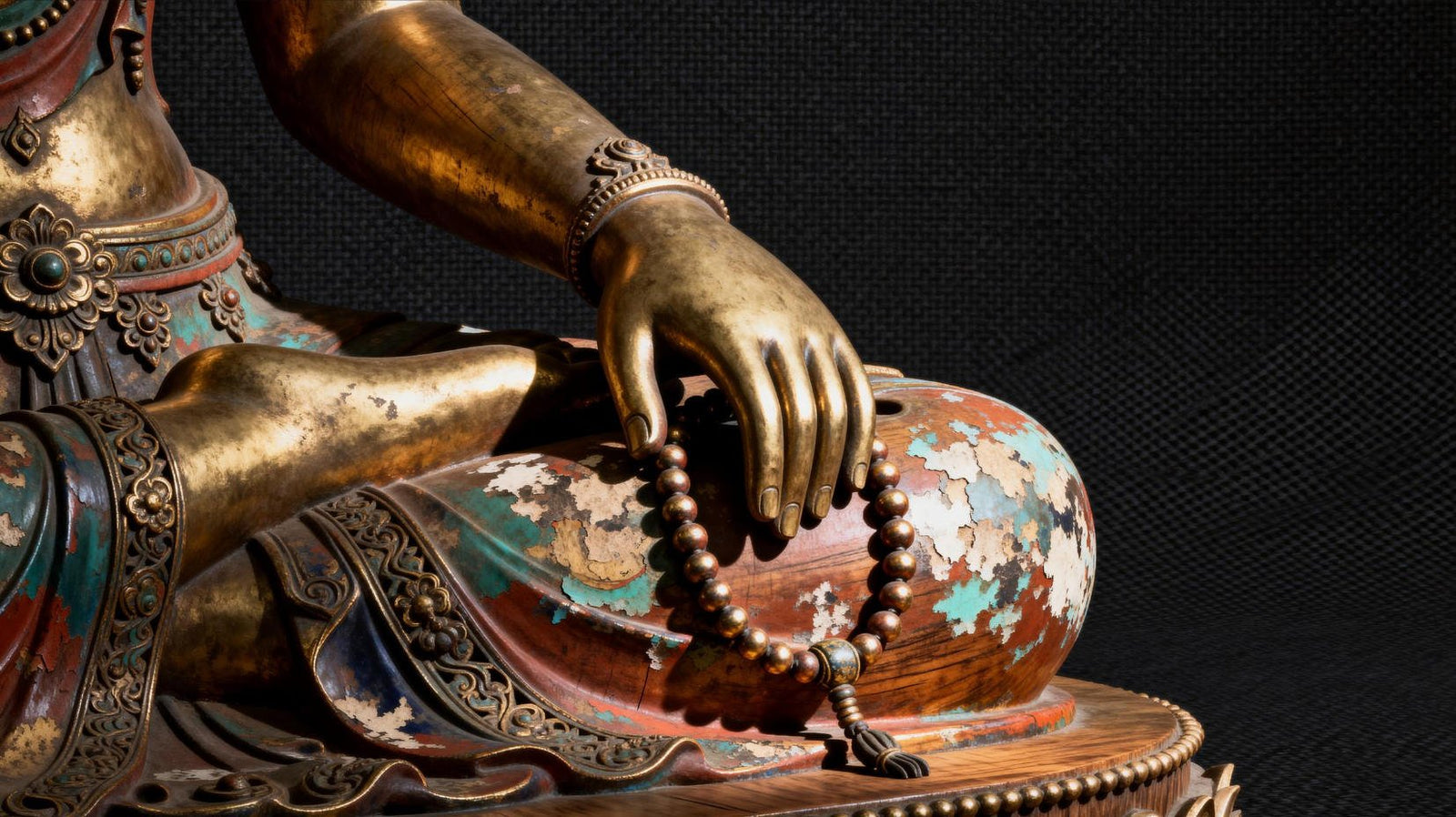
Perhaps you've seen it—a simple, crimson thread knotted around the wrist of a friend who seems more grounded lately. You might have noticed it on your yoga teacher, a quiet anchor on their arm as they guide you through a flow.
Or maybe you've felt a pull yourself, a longing for a tangible connection to your spiritual path in a world that often feels fragmented and chaotic. You see this red string and wonder: Is it just another fleeting trend, or does it hold a closer, more resonant truth?
You're right to be curious. This humble cord is not merely an accessory; it is a thread woven through centuries of profound spiritual tradition, a physical reminder of protection, compassion, and the unwavering intentions you hold for your life.
It's a quiet conversation between you and the path you've chosen to walk, and understanding its true origin is the first step to making it your own.

What It Really Is: The Authentic Roots of the Blessed Cord
While a red string appears in various cultures—from Kabbalah to Hinduism—its significance within Tibetan Buddhism is unique and deeply rooted in the Vajrayana path. To understand its power, you must look beyond the simple notion of a "lucky charm" and see it for what it truly is: a srung-mdud, or "protection knot." This is not a factory-made product but a sacred object consecrated through ritual and intention.
Its origin lies not in a design studio, but in the hands of a Lama, a Rinpoche, or a senior monk within a monastery.
The process of its creation is an act of spiritual practice. The string, often a simple cotton or silk cord, is held by the Lama while they engage in deep meditation and the recitation of specific mantras.
Thousands, sometimes hundreds of thousands, of repetitions of a mantra like Om Mani Padme Hum (the mantra of compassion) or the mantra of a specific protector deity are chanted, infusing the string with potent spiritual presence.
The Lama then ties knots into the string, sealing the presence of the mantras within each twist. When you receive such a cord, you are not only receiving a piece of string; you are receiving the echo of these sacred moments, a direct transmission of the Lama's blessing and the lineage they represent.
The choice of red is profoundly symbolic in Tibetan cosmology. It is not merely a color but a representation of life force, or prana. It is the color of the blood, the vital fluid that sustains us.
In the tantric system of the five Buddha families, red corresponds to Amitabha Buddha, the Buddha of Infinite Light, and represents the wisdom of discernment and the transformation of desire into boundless compassion. It is also the color associated with powerful protective deities like Vajrayogini.
Therefore, the red string is a symbol of this powerful, compassionate, and protective presence. It acts as a shield, not against external demons, but against the internal forces that disrupt your peace. This tradition of blessed cords is the very heart of the authentic Tibetan Buddhist bracelets we strive to share with seekers like you.
The Deeper Meaning: A Tether to Your Innermost Vows
To wear a blessed red string is to engage in a silent, continuous practice. Its meaning unfolds not as a single event, but as a constant, gentle reminder woven into the fabric of your daily life.
It is far more than a passive talisman; it is an active tool for cultivating the mind. At its core, the bracelet serves as a physical tether to your deepest intentions and spiritual vows.
If you have taken refuge or made a commitment to walk the Bodhisattva path—the path of awakening for the benefit of all beings—the string on your wrist is a constant, tactile reminder of that profound promise.
The knot itself holds immense significance. In Tibetan Buddhism, the Endless Knot, or shrivatsa, is one of the Eight Auspicious Symbols. It is a design with no beginning and no end, representing the infinite wisdom and compassion of the Buddha.
It also symbolizes the interdependent nature of reality—how all phenomena are interconnected in a vast web of cause and effect. The simple knot on your bracelet is a miniature echo of this cosmic principle.
It reminds you that your thoughts, words, and actions are never isolated; they ripple outwards, affecting everything and everyone. Each knot in these sacred string bracelets carries this weight of intention, reminding you to act with mindful awareness.
When we speak of "protection," the Buddhist understanding is nuanced. The bracelet is not primarily for warding off external misfortune in a superstitious sense. Rather, its true function is to protect the mind from the "three poisons": ignorance, attachment (or greed), and aversion (or hatred).
These are the internal forces that cloud your perception and lead to suffering. Seeing the red string on your wrist can be a powerful pause button. When you feel anger rising, it reminds you to choose compassion.
When you are lost in craving, it reminds you of contentment. When you feel overcome by confusion, it reminds you to seek clarity. It is a guard for your own mind, helping you to maintain a state of balance and virtue.
The warm, red color is a constant symbol of karuna (compassion), urging you to extend that quality not only to others but also to yourself.
Real Benefits for Modern Life: An Anchor in the Storm
In a life filled with digital notifications, endless to-do lists, and constant external pressures, the traditional teachings embodied in the red string offers tangible, practical benefits. Its power lies in its ability to bridge the spiritual with the everyday, transforming abstract concepts into lived experience.
First and foremost, it serves as a powerful mindfulness anchor. How often does your mind wander, caught in anxieties about the future or regrets about the past? The physical sensation of the bracelet against your skin can become a potent tool for grounding you in the present moment.
When you feel stress building in a meeting or a wave of anxiety washing over you in traffic, you can consciously touch the string. This simple, discreet action can break the cycle of reactive thought.
It’s a tactile cue to return to your breath, to feel your feet on the ground, and to come back to the here and now. It transforms a piece of jewelry into a partner in your mindfulness practice.
The bracelet is also an incredible tool for strengthening your intentions. It’s one thing to set a goal—to be more patient with your children, more focused at work, or more compassionate with yourself. It’s another thing entirely to remember that intention in the heat of the moment.
The red string acts as a constant, gentle nudge. You glance down at your wrist while typing an email and are reminded to communicate with kindness. You see it while reaching for a snack and are reminded of your intention to nourish your body.
It helps close the gap between the person you aspire to be and the choices you make every single day. While the red string is a powerful starting point, exploring our full collection of spiritual tools can help you find other anchors to support your unique journey.
Beyond this, it offers a form of psychological protection. The concept of the "evil eye" or negativity from others can be understood in modern terms as the draining effect of cynicism, gossip, and ill will.
When you wear a blessed object, you are consciously aligning yourself with a positive, sacred lineage. This creates a kind of mental and energetic shield. It’s not magic; it’s a reinforcement of your own inner resilience.
It reminds you that you are connected to something powerful and compassionate, making you less permeable to the negativity that can so easily derail your peace and confidence.

How to Choose an Authentic Bracelet
In a market flooded with mass-produced spiritual accessories, distinguishing a genuine, blessed red string from a simple fashion item is crucial. The bracelet's efficacy is not derived from its material but from the spiritual intention and blessing imbued within it.
Your search for an authentic piece should be guided by an understanding of its sacred origins.
The single most important factor is the source. An authentic Tibetan red string bracelet has been blessed by a qualified and recognized Lama or within a monastic community. The blessing, involving mantra recitation and ritual, is what transforms the object.
A red string manufactured in a factory and sold without any connection to a spiritual lineage is, quite simply, just a red string. When you seek a bracelet, ask about its provenance. Does the seller have a direct relationship with the monastery or the artisans who create them?
Can they speak to the tradition behind the piece? Transparency about the source is the hallmark of an authentic provider. " The Tibetan Buddhist red string, however, is blessed by a Lama through the recitation of specific Buddhist mantras.
' The Tibetan Buddhist red string is blessed by a Lama with Buddhist mantras to serve as a tool for cultivating internal qualities like compassion and mindfulness, and protecting the mind from internal 'poisons' like anger and attachment.
Look for the signs of intention in its creation. While designs can vary, authentic bracelets often feature specific, traditional knots, like the endless knot or a series of smaller knots tied with precision. These are not random decorative elements; they are integral to the bracelet's purpose.
Some may incorporate other meaningful materials like bodhi seeds, turquoise, or small metal charms engraved with mantras, each adding another layer of symbolism. At Buddhabelief, we ensure every one of our Tibetan string bracelets is sourced directly from artisans and monastic communities in the Himalayas, preserving the integrity and spiritual potency of the tradition.
Finally, be wary of exaggerated claims. Authentic Buddhist practice is grounded in the principles of karma, mindfulness, and the cultivation of inner qualities. A genuine seller will speak about the bracelet as a tool for focus, a reminder of compassion, and a source of protection for the mind.
If a seller promises that the bracelet will bring you wealth, make someone fall in love with you, or solve all your problems with no effort on your part, you should be skeptical. The bracelet is a support for your journey, not a substitute for it.
How to Use It: A Ritual for Mindful Wearing
Receiving and wearing your red string bracelet should be a mindful act, a small ritual that marks the beginning of its role in your life. It is not something to be casually slipped on but rather to be integrated with conscious intention.
This simple process honors the sacred presence it carries and aligns you with its purpose. — explore our Tibetan bracelet collection for authentic pieces.
When you are ready to wear your bracelet, find a quiet moment for yourself. Unplug from distractions and hold the bracelet in your hands. Before placing it on your wrist, take a few deep, centering breaths.
Close your eyes and bring to mind your intention. What quality do you wish to cultivate? Is it patience, compassion, courage, or clarity? Perhaps you are dedicating your practice to the well-being of a loved one.
State this intention clearly and silently in your mind, infusing the bracelet with your personal aspiration.
Traditionally, the bracelet is worn on the left wrist. In many spiritual traditions, including Tibetan Vajrayana, the left side of the body is considered the "receiving" side. It is closer to the heart and is associated with the focus points that receive blessings, abundance, and spiritual presence.
By wearing it on your left wrist, you are symbolically opening yourself to receive the positive qualities and protection the bracelet represents. A close friend or loved one can tie it for you, often with three or seven knots, further sealing the intention with an act of shared care.
Once on, the bracelet is meant to be worn continuously. You should not take it off to shower, sleep, or swim. It becomes a part of you. Over time, it will naturally wear and fray.
This is not a negative sign. The eventual breaking of the string is considered a positive event. It signifies that the bracelet has absorbed all the negativity it was meant to, or that the intention it held has come to fruition.
It has served its purpose. When it falls off, take a moment to feel gratitude. You can respectfully dispose of it by burying it in the earth or burning it, returning its elements to nature.
Explore our cinnabar protection bracelet.
Common Questions About the Red String Bracelet
As you begin your journey with this sacred object, you may have some practical questions. Here are detailed answers to some of the most common inquiries, helping you wear your bracelet with confidence and understanding.
1. What do I do when my red string bracelet breaks?
When your bracelet breaks and falls off, it is not a sign of bad luck. In fact, it's quite the opposite. This event is seen as a sign that the bracelet has fulfilled its purpose.
It has absorbed the negativity it was meant to shield you from, or the specific intention you set has been realized. It is a moment for reflection and gratitude. Instead of simply throwing it in the trash, it is respectful to return it to the elements.
You can bury it in your garden or a potted plant, or burn it in a small, mindful ceremony. This honors the spiritual presence it carried and completes its lifecycle.
2. Can I wear it in the shower or while swimming?
Yes, absolutely. An authentic blessed string is meant to be worn continuously until it falls off on its own. It is designed to be a constant companion on your journey, through all of life's activities.
Exposing it to water is part of its natural life. A well-made string from a reputable source will be durable enough to withstand daily wear. The gradual fading of the color and the fraying of the threads are part of its story and a visual representation of its service to you.
3. Which wrist should I wear it on, left or right?
The most common tradition advises wearing it on the left wrist. The left side is considered the receiving side of the body, traditionally linked to the heart. It is the side through which you draw in blessings from the world.
However, while this is the traditional guidance, your personal intention is the most powerful element. If you feel a strong calling to wear it on your right wrist—often considered the "giving" or "projecting" side—you should honor that intuition.
There is no rigid "wrong" way; what matters most is the mindful connection you have with it.
4. Is it okay to buy one for myself?
While receiving a blessed bracelet as a gift from a teacher or a loved one is a beautiful and meaningful experience, it is absolutely appropriate and powerful to choose one for yourself. Purchasing a bracelet for yourself is a conscious act of self-compassion.
It is a declaration of your commitment to your own spiritual path and well-being. It is you taking an active role in your journey, choosing a tool to support your growth and intentions. This act of self-care is a practice in itself.
5. How is this different from a Kabbalah red string?
This is an excellent question, as the two can appear similar. The primary difference lies in their spiritual context, ritual, and meaning. The Kabbalah red string is traditionally made from wool and is tied around the tomb of the matriarch Rachel in Israel before being cut and tied on the wearer's left wrist with seven knots.
Its main purpose is for protection against the ayin hara, or "evil eye." The Tibetan Buddhist red string, however, is. Its purpose is less about warding off external forces and more about cultivating internal qualities like compassion, mindfulness, and protection from one's own mental afflictions or "poisons."
6. Can I wear more than one blessed bracelet?
Yes, many practitioners wear multiple bracelets. You might receive different blessed cords from different teachers or on different occasions. Each can hold a unique blessing or represent a specific intention. You might have one for compassion, another for protection during travel, and a third to remind you of a particular vow.
Stacking them is perfectly acceptable and can be a beautiful way to carry multiple layers of intention. When you explore a diverse range of authentically blessed bracelets, you may find that different ones feel right for different aspects of your path.
Your Next Step on the Path
The red string bracelet is more than a piece of jewelry; it is a companion for your journey inward. It is a tangible link to an ancient lineage of wisdom and a personal, daily reminder of your highest aspirations.
It does not offer remarkable solutions, but something far more valuable: a steady anchor for your own mindfulness, a shield for your heart, and a vibrant symbol of the compassionate path you have chosen to walk.
Wearing it is an act of commitment to yourself and to a more conscious way of living.
If you feel called to this practice, the next step is to find a piece that resonates with your spirit. This is a personal choice, a connection between you and the sacred intention held within the knots.
We invite you to explore our collection of authentically blessed Tibetan bracelets and find the one that speaks to your path, ready to accompany you on your way.
Keep reading