buddhist-jewelry
Taoist Teachings: A Guide to Inner Peace
Sometimes, it feels like you're holding your breath, waiting for the other shoe to drop. The ground beneath you feels unsteady, and the quiet, confident part of yourself seems to have gone missing. You're not looking for a quick fix, just a handrail to hold onto as you navigate a difficult passage.
For centuries, people in similar situations have found a quiet strength in the wisdom of Taoism. From our perspective as practitioners in the Himalayan tradition, we've long admired its profound, gentle guidance. We created our collection of Taoist-inspired jewelry not as a replacement for inner work, but as a tangible reminder of the path back to your own center—a path of balance, acceptance, and flow.
The Foundation: What Taoism Really Is
Walk through any monastery courtyard in Tibet or China, and you'll see the black-and-white Yin-Yang symbol carved into stone, painted on thangkas, woven into textiles. When outsiders hear "Taoism," they picture an old sage with a long beard, or they fixate on that iconic symbol.
These are fragments of it, but the heart of Taoism is something much simpler and more direct. It's less a religion with rigid rules and more a philosophy, a way of seeing and being in the world.
The word Tao (or Dao) itself translates to "The Way" or "The Path." It's not a destination you arrive at, but the natural, unfolding, and often mysterious rhythm of the universe itself. Think of it as the current of a great river.
You can fight it, thrashing and struggling to go your own way, or you can learn to flow with it. Taoist jewelry collection
One of the biggest misconceptions about Taoism is that it's about being passive or lazy—that "going with the flow" means giving up. This couldn't be further from the truth. The core concept here is Wu Wei, which is often translated as "effortless action" or "non-doing." It doesn't mean doing nothing.
It means acting in harmony with the natural flow of things, without forcing or straining. A skilled boatman on the Yangtze navigates rapids by reading the water's movement, using the current's own force rather than fighting against it.
It's the difference between forcing a flower to bloom and providing it with the right soil, water, and sun to let it bloom on its own. When you feel like you're constantly pushing a boulder uphill, Wu Wei suggests looking for a different path—one that works with gravity, not against it.
While our own practices are rooted in Tibetan Buddhism, we see a beautiful resonance here. In Buddhism, we speak of non-attachment—letting go of our rigid expectations and desires. Taoism's Wu Wei is a beautiful, practical expression of this idea.
It's about recognizing that you don't have to control everything to be safe. In fact, true strength and effectiveness often come from yielding, adapting, and allowing. The Tao Te Ching, attributed to Laozi in the 6th century BCE, says, "The softest thing in the universe overcomes the hardest thing in the universe." This isn't a call to weakness; it's a clear insight into the nature of resilience.

Why This traditional teachings Matters So Much in 2026
Let's be honest: life right now can feel relentlessly demanding. The pressure to optimize, to achieve, to perform, and to constantly be "on" is immense. Your phone buzzes with notifications, your calendar is a fortress of obligations, and the news cycle offers a steady diet of anxiety.
It's easy to feel fragmented, pulled in a hundred different directions at once. This is precisely where the grounding wisdom of Taoist teachings for modern life becomes less of a philosophy and more of a lifeline.
Consider these very real scenarios:
- The Weight of a Major Life Change: You might be working through the painful aftermath of a relationship ending, the disorienting quiet of a job loss, or the deep sorrow of grieving a loved one. In these moments, the world screams at you to "be strong," "move on," or "get back out there." Taoism offers a gentler path. It whispers that it's okay to be still, to feel what you feel without judgment. The concept of Yin and Yang reminds you that shadow is as natural as light, and that periods of rest, retreat, and even sadness (Yin) are necessary to create the energy for future growth and action (Yang). Walking through the Jokhang Temple in Lhasa, you witness pilgrims moving in deliberate slowness—some taking years to complete a single circuit—and you understand that honoring the season you're in, rather than forcing a premature spring, is itself a form of devotion.
- The Burnout of Constant Striving: Your career or personal projects demand everything from you. You're pushing, planning, and controlling every variable, yet you feel exhausted and no closer to a feeling of peace. This is the struggle against the Tao. Wu Wei invites you to loosen your grip. It's not about abandoning your goals, but about finding a more intelligent, intuitive way to work. It's noticing when you're forcing a solution and having the wisdom to step back, rest, and let the right path reveal itself. It's the recognition that sometimes the most powerful action is to pause and listen. Tibetan monks practice this through years of meditation retreats, learning that the deepest insights arrive not through force but through receptive stillness.
- The Anxiety of an Uncertain Future: The world feels unstable. It's natural to feel a deep need for security and control. You might find yourself endlessly scrolling, trying to gather enough information to feel safe, only to end up more anxious. The Tao teaches that the universe is fundamentally unpredictable and that our attempts to rigidly control it are the primary source of our suffering. By accepting this uncertainty, not with resignation but with a quiet trust, you can find a different kind of security. It's the security that comes from knowing you are resilient enough to adapt to whatever the river of life brings your way.
In 2026, these teachings aren't an escape from reality. They are a vital tool for engaging with reality as it is, with more grace, less resistance, and a closer connection to your own innate strength.
The Real Benefits: How Taoist Principles Can Reshape Your Experience
Embracing Taoist ideas isn't about levitating or achieving a mystical state. It's about small, deep shifts in your daily experience. It's about how you respond to a traffic jam, how you process difficult news, and how you speak to yourself at the end of a hard day.
These principles work by gently reorienting your relationship with yourself and the world around you.
1. Finding Flow Through Wu Wei (Effortless Action)
Think about a time you were completely absorbed in an activity—maybe gardening, painting, or even just organizing a closet. Time seemed to disappear, and your actions felt fluid and natural. That is a taste of Wu Wei.
It's a state of being where your actions align perfectly with the needs of the moment, without internal friction or resistance. In daily life, practicing Wu Wei means learning to distinguish between productive effort and stressful striving.
It's asking yourself: "Am I pushing against a locked door, or am I turning a key in a willing lock?"
When you're facing a problem at work, instead of immediately forcing a solution, you might take a walk and let the answer emerge. When you're in a difficult conversation, instead of planning your rebuttal, you might simply listen more deeply.
This approach conserves your precious energy. It reduces the background hum of stress that comes from constantly fighting reality. Over time, this practice cultivates a deep sense of trust in your own intuition and in the unfolding of your life.
2. Cultivating Stability with Yin and Yang
The Yin-Yang symbol is perhaps the most famous Taoist concept, but it's often misunderstood. It doesn't represent a battle between good and evil. It represents the dance of complementary opposites that make up all of existence: light and dark, rest and action, feminine and masculine, being and doing.
You need both. Our modern culture heavily favors Yang energy—action, achievement, logic, and constant growth. We celebrate the hustle and often neglect the Yin—rest, intuition, emotion, and quiet contemplation.
This imbalance is a recipe for burnout and emotional instability. Understanding Yin and Yang helps you to consciously bring balance into your life. It means recognizing that after a period of intense work (Yang), you require a period of deep rest (Yin) to recover.
It means honoring your emotions and intuition (Yin) as valid sources of wisdom, not only relying on logic and planning (Yang). When you feel overwhelmed, it's often a sign that your Yang is in overdrive.
The solution isn't to push harder, but to consciously invite more Yin into your day: listen to quiet music, spend time in nature, or simply sit and breathe without an agenda. This dynamic balancing act is the key to sustainable well-being.
3. Reclaiming Your Authenticity with Ziran (Naturalness)
Ziran means "of its own accord" or "spontaneously." It points to the authentic, unconditioned nature of things. A tree is a tree; it doesn't try to be a rock. A river flows to the sea; it doesn't try to flow uphill.
Ziran is an invitation to return to your own authentic nature, free from the layers of "shoulds" and expectations imposed by society, family, and even yourself. It's about unbecoming everything that isn't truly you, so you can be who you were meant to be.
In a world of social media profiles and personal branding, this is a radical act. It means having the courage to be imperfect, to admit when you don't know, and to follow your own unique path, even if it looks different from everyone else's.
It's about listening to the quiet voice inside that knows what feels right for you, beyond the noise of external opinions. Practicing Ziran brings a deep sense of relief and peace. You stop wasting energy trying to be someone you're not and start living with a simple, grounded authenticity.
Those walking this path of self-inquiry find that our Taoist-inspired pieces serve as a simple, daily reminder of this very principle.

How to Choose an Authentic Reminder of the Way
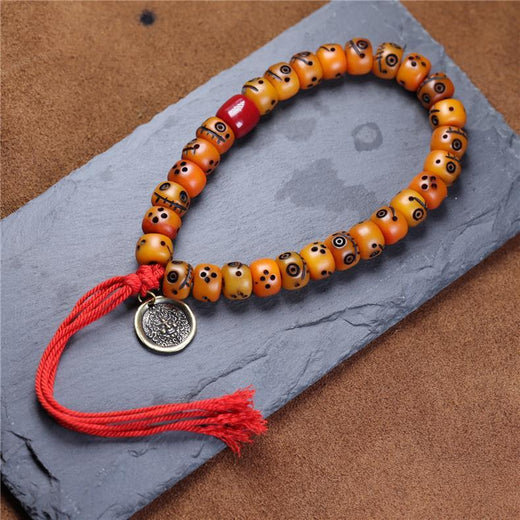
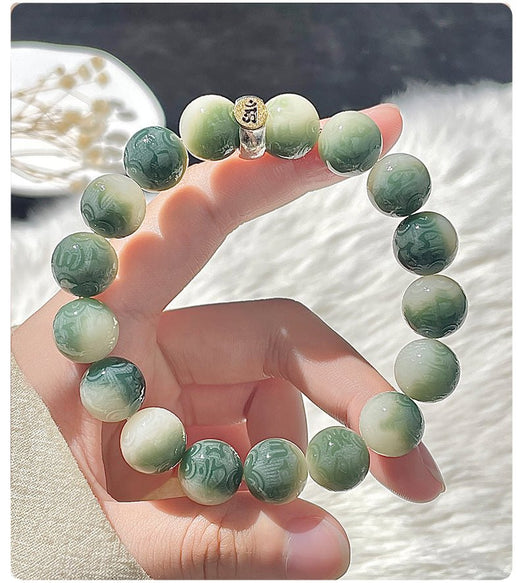
When you're going through a difficult time, having a physical object to hold onto can be deeply grounding. It's a tangible anchor in an intangible storm. A piece of jewelry inspired by Taoist principles isn't a talisman with supernatural powers; it's a quiet, personal reminder of the wisdom you are trying to cultivate within yourself.
When you choose such a piece, you are making a conscious commitment to your own journey of finding balance and peace.
Here are a few things to consider as you explore:
- Symbolism that Resonates: The power of these pieces lies in their symbolism. Does the concept of Yin and Yang speak to your need for balance? A piece featuring the Taijitu (the Yin-Yang symbol) can be a constant reminder to honor both rest and action. Are you drawn to the idea of a life path that unfolds naturally? Perhaps a piece with a simple, unadorned circle, representing the Tao itself, would be more meaningful. The Bagua, an eight-sided symbol representing the fundamental principles of reality, is another striking emblem of harmony and interconnectedness. Choose the symbol that speaks directly to the part of you that is seeking support.
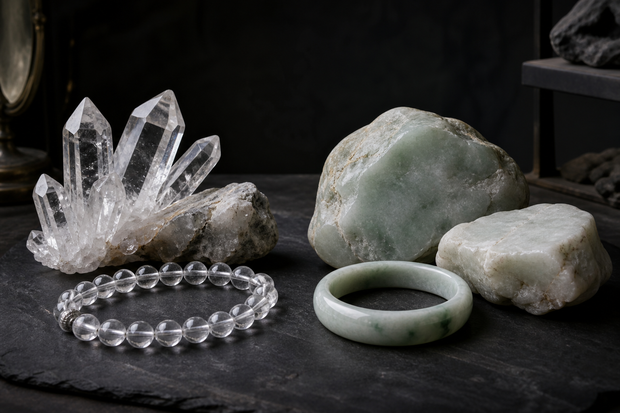
- Materials with Meaning: The materials themselves can carry a grounding quality. Natural stones like black obsidian (for protection and grounding), white howlite (for calm and patience), or jade (a stone deeply revered in Taoist culture for harmony and longevity) can add another layer of meaning. Wood, with its connection to nature and growth, can be a wonderful reminder of Ziran, or naturalness. What matters most is how the material feels to you. Does it feel solid, calming, and real in your hand?
- Craftsmanship as an Act of Intention: An authentic piece is more than an assembly of parts. It's an investment in something made with care and intention. When you know that an artisan, like the craftspeople in our Kathmandu atelier who hand-finish each piece over two to three days, has mindfully shaped and assembled your piece, it carries a different quality. It's not a mass-produced item, but a small work of art infused with human touch. This intentionality becomes part of the piece's story and its role in your life.
For example, a simple Yin Yang Harmony Bracelet isn't just an accessory. It's a tool. When you feel yourself being pulled into the frenzy of over-doing (too much Yang), a glance at it can be the cue you need to pause, breathe, and seek a moment of quiet (Yin).
It's the piece you'll still wear in 20 years because its meaning deepens as your own journey unfolds.
How To Use It Day To Day: Simple Daily Practices
Bringing a piece of Taoist-inspired jewelry into your life is the first step. The next is weaving it into your days in a way that feels supportive, not like another chore. The goal is to create small, simple rituals that anchor you back to your intention for peace and balance.
This is not about complex meditation; it's about finding moments of mindful connection. — explore our Tibetan jewelry collection for authentic pieces.
Here are a few gentle ways to begin: authentic Taoist pieces
- The Morning Intention: Before you even pick up your phone, take a moment. Hold your bracelet or necklace in your hands. Feel its weight, its texture, and its temperature. Close your eyes and take three slow, deep breaths. As you hold it, set a simple intention for the day. It could be, "Today, I will flow where I can and rest where I must." Or, "Today, I will be kind to myself." Putting on the piece becomes the physical act of sealing that intention. It's a two-minute ritual that can change the entire tone of your day.
- The Midday Pause (The "Pattern Interrupt"): When you feel stress or anxiety rising—your shoulders tensing, your breath becoming shallow—use your piece as a pattern interrupt. Reach for it and touch it. Let your fingertips trace the symbol. Use this physical sensation to bring you out of the frantic thoughts in your head and back into your body. Ask yourself a simple question inspired by the Tao: "What is the most effortless, natural next step?" It might be to get a glass of water, to stretch for 30 seconds, or to simply step away from your screen. The piece becomes your trigger for a moment of mindful self-care.
- The Evening Release: At the end of the day, as you take the piece off, let it be a ritual of release. Hold it in your hands one last time. Acknowledge the day's challenges and successes without judgment. Mentally, or even out loud, say, "I release what is not mine to carry." Let the physical act of setting it down on your nightstand symbolize the release of the day's burdens. This creates a clear boundary between the day that has passed and the restorative rest you need.
These aren't rigid rules. They are invitations. Your relationship with your chosen piece will be your own. The most important thing is to imbue it with your personal meaning. It is a companion on your journey, a quiet friend on your wrist or around your neck, reminding you of the peace and resilience that already exist within you.
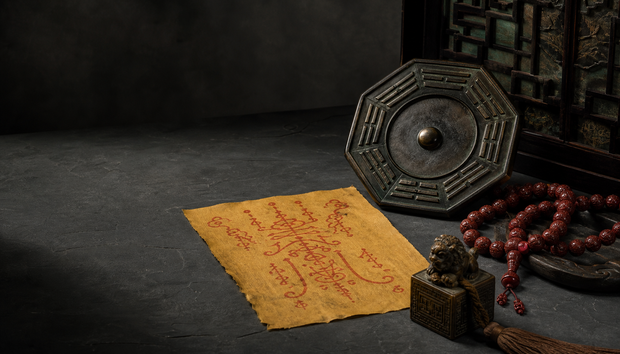
Explore our Taoist Eight Trigram amulet.
Common Questions About Taoist Teachings
When you're exploring a new philosophy, especially during a vulnerable time, it's natural to have questions. You want to understand what you're engaging with. Here are some of the questions we hear regularly, answered with the clarity and respect they deserve.
Is Taoism a religion? Do I have to believe in a god?
This is a wonderful question. Taoism can be both a philosophy and a religion, and it's helpful to understand the difference. Philosophical Taoism, based on texts like the Tao Te Ching written during the Zhou Dynasty, is a way of life and a framework for understanding the universe.
It doesn't require belief in a specific deity. The "Tao" is not a god to be worshipped, but an impersonal, natural principle that governs everything. You can fully embrace Taoist teachings for modern life as a practical philosophy without any religious conversion.
Religious Taoism is a later development that incorporates a pantheon of deities, rituals, and ceremonies. For our purposes, and for those in the West exploring these ideas, we are focusing on Taoism as a life-affirming philosophy that is compatible with any, or no, religious belief.
How is Taoism different from Buddhism?
While they are often grouped together and share some beautiful common ground, like the emphasis on letting go and the recognition of interconnectedness, their origins and focus are distinct. Buddhism originated in India with Siddhartha Gautama, the Buddha, and its central concern is the nature of suffering (Dukkha) and the path to liberation from it (Nirvana).
Taoism originated in China with the sage Laozi and is primarily concerned with living in harmony with the Tao, the natural order of the universe. You could say Buddhism looks more inward at the mechanics of the mind to end suffering, while Taoism looks outward to the patterns of nature to find the way to live wisely and well.
From our perspective, they are not competing paths, but two different, eloquent languages describing the same ultimate reality of peace and flow.
Can these teachings or jewelry really solve my problems, like anxiety or grief?
Be clear about this: Taoist teachings and the jewelry inspired by them are not a cure or a replacement for professional help. If you are struggling with significant anxiety, depression, or grief, seeking support from a therapist or counselor is a sign of great strength.
What these teachings and a physical reminder can offer is support *on* your journey. They provide a framework for relating to your struggles differently. Instead of fighting anxiety, you learn to flow with it.
Instead of resisting grief, you learn to honor it as a natural season of life (Yin). The jewelry serves as a tangible anchor to these new perspectives. Those who practice this approach find that their challenges feel more manageable, but it is a tool to be used alongside, not instead of, professional medical and psychological care.
Isn't "going with the flow" just an excuse for being passive and not taking responsibility?
This is one of the most common and important misunderstandings. The Taoist concept of Wu Wei, or effortless action, is the opposite of passivity. Passivity is giving up. Wu Wei is about skillful, intelligent, and effective action.
A sailor practicing Wu Wei would expertly adjust the sails to use the wind's own power to reach their destination. They are not fighting the wind (striving), nor are they ignoring it (passivity). They are harmonizing with it.
In your life, this means learning to recognize when to push, when to wait, when to speak, and when to be silent. It's a highly engaged and aware state of being that ultimately leads to better outcomes with far less stressful effort.
How do I start if it all feels too overwhelming?
The beauty of the Tao is that you start exactly where you are, with one small thing. Don't feel like you need to read the entire Tao Te Ching overnight. Start with a single concept that resonates with you.
Perhaps it's just the idea of balancing Yin and Yang. For one week, just try to notice: Where in my life am I all action (Yang)? Where can I invite a little more rest (Yin)?
That's it. Or, choose a simple piece of jewelry. Your only practice is to touch it once a day and take one deep breath. The Tao is not a race or a mountain to be conquered.
It is a gentle path that meets you where you are. The smallest step, taken with intention, is all that is ever required.
Will wearing a Yin-Yang symbol clash with my own spiritual beliefs?
For the vast majority of people, no. The Yin-Yang symbol (Taijitu) is a philosophical concept, not a strictly religious icon that demands exclusive devotion. It represents a universal principle of balance that appears across many traditions.
It points to the idea that light and dark, masculine and feminine, action and rest are all necessary parts of a whole. Those exploring spiritual paths find this idea complements, rather than conflicts with, their existing faith or practice.
It's a symbol of cosmic harmony. If you view it as a reminder of the universal need for balance in your life, it can beautifully co-exist with and even enrich your own personal beliefs, whatever they may be.
Your Journey Back to Yourself
The path you are on right now may feel uncertain, and the shore may seem far away. That is a real and valid feeling. The wisdom of the Tao doesn’t promise to magically erase the waves, but it does offer a way to learn to navigate them with more grace and less fear.
It reminds you that you have an inner compass, an innate ability to find your balance, even when the world is tilting.
As you move through 2026 and beyond, these ancient teachings offer a timeless anchor. They are a quiet rebellion against the culture of constant striving and a gentle return to a more natural, authentic way of being. if you begin by simply reading a verse from the Tao Te Ching each morning, or by choosing a physical reminder to wear on your wrist, you are taking a step toward yourself. handcrafted Taoist jewelry
You don't need to become a different person. You only need to remember the wise, resilient person you already are. We invite you to explore the pieces we've gathered, not as a destination, but as a possible companion for your journey.
May you find the path, or rather, realize you are, and always have been, on The Way.
Keep reading