buddhist-jewelry
The Power of Thangka Pendants: Wearable Tibetan Sacred
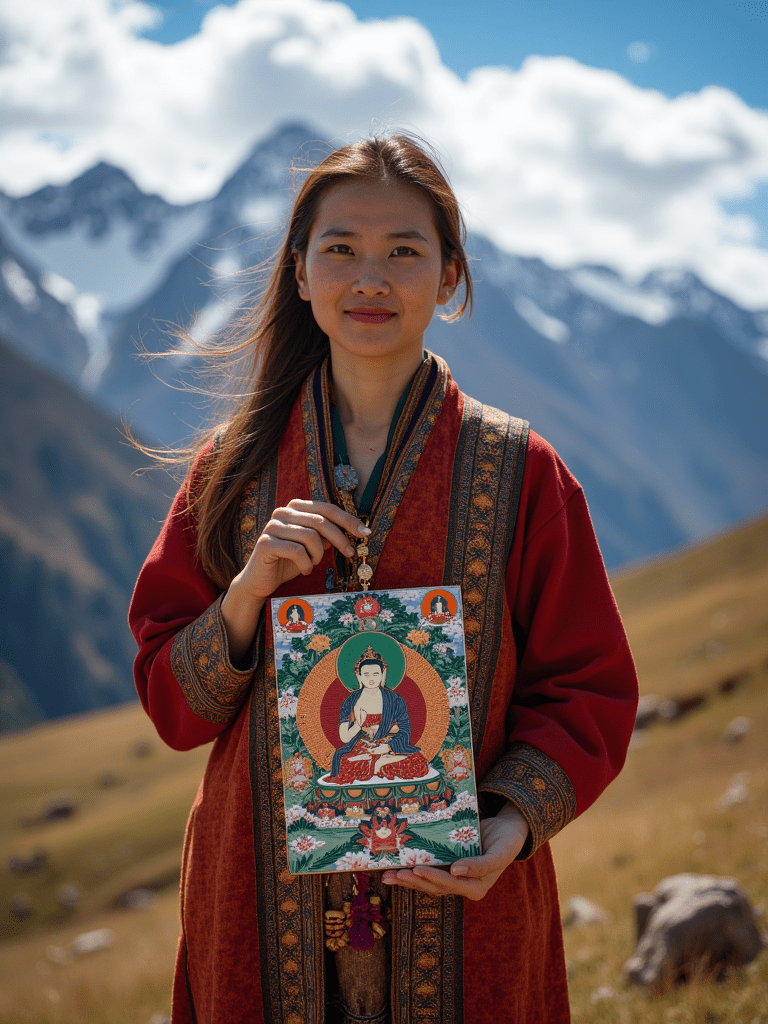
The faint resonance in your pocket pulls you out of the moment. Another notification, another email, another fleeting demand on your attention. You glance at the screen, a cascade of digital noise, and feel a familiar sense of being stretched thin, a subtle disconnection from the solid ground beneath your feet.
There’s a quiet yearning for something real, something with weight and history, an anchor in the relentless stream of the temporary. You seek a reminder of your deeper intentions, a silent companion that doesn’t beep or buzz, but simply is.
This desire isn’t for an escape, but for a tool—a way to carry your sanctuary with you, to touch a piece of timeless wisdom amidst the chaos. It’s a call for a practice you can wear, a sacred object that rests against your skin and reminds you, with every beat of your heart, of the vast, peaceful space that always exists within you, just waiting to be accessed.

What It Really Is
To understand the thangka pendant, you must first journey back in time, not to a jeweler's workshop, but to the vast, windswept plains of Tibet and the hallowed halls of its ancient monasteries. The thangka itself is not jewelry.
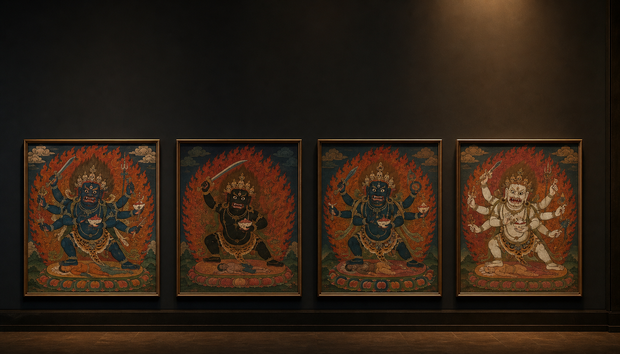
It is a sacred Tibetan Buddhist scroll painting, a tradition stretching back over a millennium. These are not mere decorations; they are profound teaching tools, visual representations of the Dharma, and objects of intense meditative focus.
Traditionally, large thangkas, sometimes spanning several stories, would be unfurled during religious festivals and ceremonies at monasteries like the Jokhang Temple in Lhasa or the great Palpung Monastery in Kham, their vibrant depictions of Buddhas, Bodhisattvas, and mandalas serving as a powerful source of blessing and instruction for entire communities.
The genius of Tibetan culture, born from a landscape that demanded both resilience and movement, was its ability to make the sacred portable. Monks, lamas, and lay practitioners often undertook long, arduous pilgrimages across treacherous mountain passes.
They couldn't carry a large, temple-sized scroll. This necessity gave birth to the miniature thangka. These small, exquisitely painted canvases, often no larger than the palm of your hand, contained all the spiritual potency and iconographic precision of their larger counterparts.
They were a personal temple, a portable guide for meditation and visualization, a direct link to one's chosen deity or protector. These miniature paintings were often encased in metal lockets or frames, sometimes with a silk brocade cover, allowing them to be worn around the neck or secured to a belt.
This practice is also deeply connected to the tradition of ‘tsakli’. Tsakli are even smaller miniature paintings, often used as initiation cards in specific Vajrayana rituals. A lama would use a set of tsakli to confer empowerments, giving the student a visual key to a particular deity's mandala and practice.
The student would then meditate upon this image to deepen their connection. The thangka pendant you wear today is a direct descendant of these authentic, purpose-driven traditions. It is not a modern invention but the evolution of a deeply practical and spiritual tool.
It is the crystallization of a vast artistic and contemplative heritage into a form you can carry close to your heart, transforming a public teaching tool into an intimate, personal guide for your own journey.
Each one is a universe in miniature, born from the sacred necessity of keeping the Dharma alive, not only on a monastery wall, but on the path itself.
The Deeper Meaning
A thangka pendant is infinitely more than a beautiful image encased in silver. To see it merely as art is to miss its core purpose. In the Tibetan tradition, a properly created thangka is considered a living presence, a sacred gateway.
It is a ‘support’ (Tibetan: ten) for meditation, a visual representation of an enlightened state of being that helps you, the practitioner, to access that same state within yourself. When you wear a pendant depicting Chenrezig, the Bodhisattva of Compassion, you are not simply wearing a picture of a deity.
You are carrying a constant, physical reminder of the boundless compassion that is your own true nature. The image serves as a key, unlocking the door to that quality within your own mindstream.
Think of the pendant as a mandala in miniature. A mandala is a celestial palace, a perfect, ordered universe that represents the pure mind of a Buddha. Every element within a thangka—the deity’s posture (asana), hand gestures (mudras), the objects they hold, the colors used—is rich with symbolic meaning.
Nothing is arbitrary. For example, the green color of Green Tara represents her enlightened activity, her ability to act swiftly to overcome obstacles. Her right leg is extended, symbolizing her readiness to leap into action to aid sentient beings.
By familiarizing yourself with this sacred language, the pendant transforms from a static object into a dynamic source of teaching. It continuously transmits the Dharma without a single word. It is a silent sermon you can access at any moment with a simple glance or touch.
Furthermore, wearing a thangka pendant is an act of generating merit and strengthening your connection to the lineage. It is a public and private declaration of your refuge in the Buddha, Dharma, and Sangha.
In Tibetan culture, these pendants are often consecrated in a ceremony called rabné, where a qualified lama blesses the object, inviting the wisdom-being of the deity to merge with the image. This act is believed to "awaken" the thangka, imbuing it with immense spiritual power and transforming it into a true object of refuge.
While you may not have access to such a ceremony, the intention you bring to wearing it is paramount. By treating it with respect and using it as a basis for your practice, you create a powerful bond—a karmic link—to the enlightened qualities it represents.
It becomes a focal point for your devotion, a vessel for your aspirations, and a constant, silent a sign of the path you have chosen to walk.
Real Benefits for Modern Life
In a life saturated with digital alerts and fragmented attention, the thangka pendant offers a uniquely tangible and grounding counterpoint. Its benefits are not abstract or remarkable; they are practical, psychological, and deeply transformative, rooted in the simple act of bringing mindful intention into your daily experience.
It functions as a powerful, non-digital anchor for your awareness.
Imagine you are in a tense meeting or a difficult conversation. Your heart rate rises, your mind starts to race, and you feel the pull of reactive emotions like anger or anxiety. In that moment, the subtle weight of the pendant against your chest, or the conscious act of touching it, becomes a powerful circuit breaker.
This physical sensation serves as a mindfulness trigger. It's a pre-programmed reminder to pause, to take a single conscious breath, and to reconnect with your core intention. Instead of being swept away by the storm of the moment, you are reminded of the calm, compassionate presence of Chenrezig or the fearless wisdom of Manjushri.
This simple, repeated action retrains your nervous system, creating a space between stimulus and response where you can choose clarity over chaos.
The pendant also acts as a tool for actively cultivating specific qualities. It's one thing to wish you were more patient or compassionate; it's another to have a dedicated practice for it. If you are working on developing inner strength and overcoming obstacles, wearing a Green Tara pendant becomes your training partner.
When you put it on in the morning, you can set the intention: "Today, may I embody Tara's fearless, compassionate action." When faced with a challenge, a touch of the pendant is not only for comfort; it's a reminder of your chosen theme for the day.
It shifts your focus from the problem ("This is overwhelming") to the quality you wish to embody ("How would a fearless being approach this?"). This is not passive hope; it is active, intentional transformation.
You are not only wearing a symbol; you are practicing its meaning. You can explore a collection of sacred **explore guardian buddha pendants** to find a deity whose enlightened qualities align with your personal goals for growth.
Finally, the thangka pendant serves as a shield of intention. This isn't a superstitious ward against bad luck, but a psychological fortress built on your own values. The world constantly bombards you with messages of consumption, competition, and distraction.
The pendant is a silent, unwavering counter-message. It reminds you of what you have chosen to value: wisdom, compassion, inner peace. It helps you to navigate the world with a clearer sense of purpose, making it easier to say 'no' to what doesn't serve you and 'yes' to what aligns with your spiritual path.
It is your personal, wearable sanctuary—a piece of sacred stability in a world of constant flux.

How To Spot the Real Thing
Selecting a thangka pendant is a deeply personal process that goes beyond simple aesthetics. You are choosing a spiritual companion, and its authenticity is paramount to its function as a sacred object. An authentic thangka, even in miniature, is created with immense intention and adheres to strict, centuries-old principles.
Knowing what to look for will ensure you invest in a piece that is not only beautiful but also spiritually potent.
The first and most crucial distinction is between a hand-painted piece and a mass-produced print. A genuine thangka pendant contains a miniature painting executed by a trained artist. This artist has often spent years, even decades, studying the craft, which is considered a meditative practice in itself.
They mix their own paints from ground minerals and apply them with impossibly fine brushes, all while holding a state of deep concentration and often reciting the mantras of the deity being depicted. This meditative focus is infused into the artwork.
A printed replica, no matter how high-quality, lacks this vital human element of intention and devotion. Look for the subtle variations, the incredible fineness of the lines, and the luminous quality of the mineral pigments that are the hallmarks of a master's hand.
When you hold a real hand-painted thangka, you can feel the focused dedication it took to create it.
Next, consider the iconography. Authentic Tibetan art is not a field for creative expression in the Western sense. It is a precise science governed by a system of measurement and proportion known as iconometry.
Each deity has exact specifications for their body proportions, posture, the number of arms, the objects they hold, and their facial expression. These details are not arbitrary; they are a visual language communicating specific aspects of enlightenment.
An improperly drawn deity is considered disruptive to practice and unsuitable for use. When you look at a pendant, observe the details. Does the face convey the correct emotion—peaceful, wrathful, compassionate? Are the traditional implements present and correctly rendered?
Choosing a piece from a source that respects and understands these iconographic rules is essential. It ensures your pendant is a true and clear representation of the enlightened mind. You can explore the different **Guardian Buddha pendants** to see how each deity is rendered according to these sacred traditions.
Finally, trust your connection. While technical authenticity is vital, your personal resonance with a piece is just as important. Which deity's qualities speak to your current life situation? Are you seeking the calm presence of the Medicine Buddha, the protection of Mahakala, or the wisdom of Manjushri?
Take time to read about the different figures in the Tibetan pantheon. Gaze at their images. Notice which one feels like a supportive friend, a wise guide, or a fierce protector. The right pendant will often feel like it has chosen you.
This intuitive pull is a sign of a karmic connection, an indication that this particular form of enlightened presence is precisely what you need on your path right now.
How to Use It
Acquiring a thangka pendant is the first step; integrating it into your life as a practice is where its true power unfolds. It is meant to be more than passive adornment. It is an active tool for mindfulness, intention, and transformation.
Treating it with respect and engaging with it consciously will deepen your connection to its sacred purpose.
Ideally, a new thangka is consecrated by a qualified lama in a rabné ceremony to awaken its spiritual essence. If this is not possible for you, you can perform your own simple ceremony of intention.
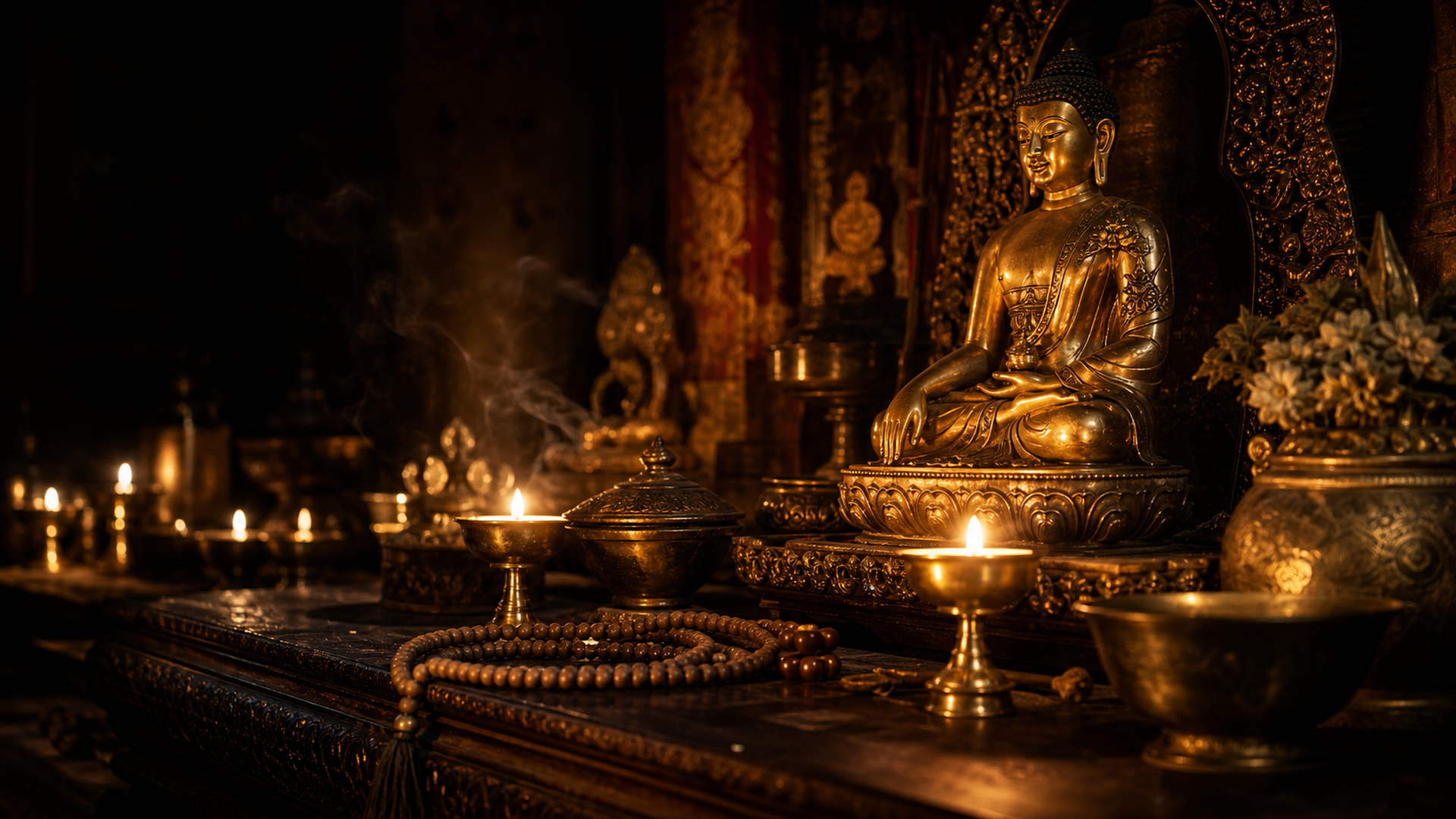
Find a quiet moment. Cleanse the space by burning a small amount of incense like juniper or sandalwood. Hold the pendant in your hands at your heart. Generate a feeling of deep respect and gratitude for the tradition, the artist, and the enlightened qualities the deity represents.
Recite the deity's mantra 108 times using a mala. For example, for a Chenrezig pendant, you would chant OM MANI PADME HUM. As you chant, visualize brilliant light radiating from the pendant, filling your body and mind with the deity's compassionate presence.
Conclude by dedicating the merit of this practice to the benefit of all beings. This act, performed with sincerity, establishes a profound personal connection.
On a daily basis, let the pendant guide your practice.
- Morning Intention: Before your day begins, take a moment to hold your pendant. As you put it on, state a clear intention. For example, "Today, through the inspiration of this White Tara pendant, may I act with compassion and bring long life and healing to my interactions." This frames your entire day with purpose.
- Mindfulness Touchstone: Throughout the day, use the pendant as a physical anchor. When you feel stressed, distracted, or lost in thought, consciously reach up and touch it. Let the physical sensation be a signal to take one deep breath, release your mental chatter, and come back to the present moment. It's a simple, discreet mindfulness practice you can do anywhere.
- Focus for Visualization: During your formal meditation practice, the pendant can be a powerful support. You can take it off and place it before you on your shrine. Gaze at the image, taking in all the details, allowing a clear picture to form in your mind's eye. Then, close your eyes and practice visualizing the deity in front of you or above your head, radiant and alive, sending blessings of light to you.
Finally, always handle your pendant with respect. It represents the enlightened mind, the highest potential of your own being. Avoid wearing it during sleep, showering, or strenuous activity where it could be damaged. When you are not wearing it, don't just toss it on a dresser.
Wrap it in a clean cloth (silk is traditional) and place it in a high, clean place, such as on your altar or a high shelf. By treating this sacred object with care, you are nurturing your own commitment to the spiritual path.
Common Questions
Do I need to be a Buddhist to wear a thangka pendant?
No, you do not need to formally identify as a Buddhist. The qualities represented by the deities in thangka art—such as compassion (Chenrezig), wisdom (Manjushri), and healing (Medicine Buddha)—are universal human values. Anyone seeking to cultivate these qualities in their life can benefit from the focus and inspiration a thangka pendant provides.
However, it is essential to approach it with respect and a genuine appreciation for its origins within the deep philosophical and spiritual tradition of Tibetan Buddhism. It is a sacred tool, not a fashion accessory, and wearing it with that understanding is key.
What's the difference between a thangka pendant and a regular Buddha necklace?
The distinction lies in the specific art form and its purpose. A "regular" Buddha necklace might feature a three-dimensional carving of the Buddha's head or a seated figure. A thangka pendant, by contrast, is a two-dimensional, miniature painting that adheres to the strict iconographic tradition of Tibetan thangka art.
It almost always depicts a full scene: a central deity surrounded by their retinue, landscape elements, or their mandala palace. It is a complete, sacred diagram, not only a portrait. This makes it a more complex and detailed tool for visualization and understanding the interconnectedness of the deity's enlightened world.
How do I know which deity is right for me?
This is a wonderful question that points to the heart of the practice. The best way is through a combination of research and intuition. Read the stories and symbolic meanings associated with different Buddhas and Bodhisattvas.
Which life challenges are you currently facing? If you are struggling with fear or obstacles, Green Tara might be a powerful ally. If you wish to deepen your wisdom and clarity, Manjushri would be an excellent choice.
After learning about them, take time to quietly look at their images. Which one resonates with you on a closer level? Often, you will feel an intuitive pull or a sense of familiarity. Trust that feeling.
You can **find a thangka pendant that speaks to you** by exploring the qualities of each guardian deity.
Can I wear more than one pendant at a time?
While there is no strict rule against it, it is generally recommended to focus on one primary deity at a time. The purpose of the pendant is to help you build a deep, stable connection with a particular aspect of the enlightened mind.
Wearing one pendant allows you to focus your mantra recitation, visualization, and intention-setting on a single practice, which can be more powerful and less confusing than dividing your attention. Think of it as developing a deep friendship with one wise guide before trying to befriend an entire assembly.
What should I do if my pendant breaks?
From a Buddhist perspective, breakage is a powerful lesson in impermanence (anicca). First, do not despair. It can be a sign that the pendant has absorbed some negativity or that a particular cycle is complete.
If the casing is broken but the painting is intact, it can often be respectfully repaired by a jeweler. If the painting itself is damaged beyond repair, or you choose to retire it, you should dispose of it respectfully.
The traditional way is to wrap it in a clean cloth and either place it inside a stupa, a large Buddha statue, or in a clean, high place in nature, like the crook of a tree, where it can naturally return to the elements.
How are authentic thangka pendants actually made?
The process is painstaking and meditative. It begins with a small piece of cotton canvas being stretched and prepared with a mixture of chalk and animal-hide glue, which is polished until perfectly smooth. An artist, following precise iconographic grids, then sketches the deity in charcoal.
The painting itself is done with fine-tipped brushes using mineral pigments—lapis lazuli for blue, malachite for green, cinnabar for red—mixed with a binder. Gold details, representing enlightened wisdom, are often applied as a final, delicate touch.
This entire process can take many days of intense focus for a single miniature painting, which is then carefully set into its pendant casing.
Your Next Step
You’ve journeyed through the history, symbolism, and practice of the thangka pendant. You now understand that it is far more than an object of beauty. It is a key, a guide, and a companion.
It is a piece of living history, a wearable sanctuary that connects you to a lineage of wisdom and to the deepest aspirations of your own heart. It is an invitation to transform the mundane into the sacred, to find your anchor in the storm, and to actively cultivate the enlightened qualities that already reside within you.
The journey doesn't end with reading. It begins with connection. It begins with finding the sacred image that mirrors your own path. We invite you to explore **our curated selection of thangka pendants**, each one hand-painted with devotion and precision by masters of the craft.
Allow yourself the time to gaze at each deity, to feel their presence, and to discover which one calls to you. This is your next step—not only to own a piece of sacred art, but to begin a profound relationship with it.
Keep reading