buddhist-jewelry
Why Tibetan Energy Jewelry Is the Next Big Wellness Tre

You’ve done the work. You’ve downloaded the meditation apps, dedicated ten minutes each morning to stillness, and listened to the calming voices tell you to watch your breath. You’ve tried the gratitude journals, dutifully listing three things each night before sleep. Perhaps you’ve even embraced minimalist living, clearing your space in the hope of clearing your mind. Yet, despite these efforts, you feel a subtle but persistent disconnect—a gap between the digital wellness you consume and the grounded, tangible peace you crave. You find yourself scrolling, searching for something more, something real. It’s a quiet longing not for another quick fix, but for a practice with roots, an anchor that connects you not just to the present moment, but to a lineage of wisdom that has weathered centuries. You’re seeking a tool that doesn’t just live on your screen, but rests on your skin, a physical reminder of your deepest intentions that you can carry through the chaos and calm of your daily life.

What It Really Is: A Legacy Forged in the Himalayas
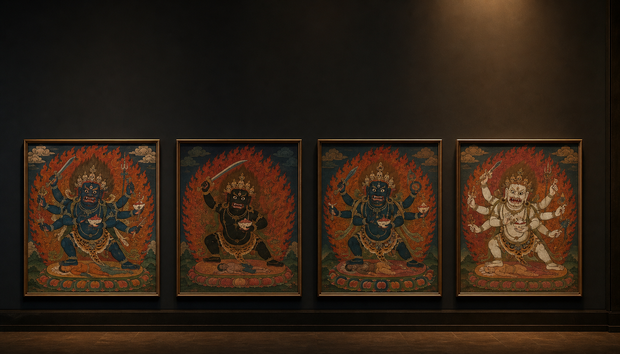
To understand Tibetan energy jewelry, you must first mentally transport yourself to the vast, high-altitude plateau of the Himalayas. This is not jewelry in the Western sense of simple adornment or a fashion statement. Its origins are far more profound, woven into the very spiritual and cultural fabric of the region long before Buddhism arrived. The earliest traditions trace back to the indigenous Bon religion, an animistic faith where nature was alive with spirits and protective amulets were essential for navigating the formidable landscape. Materials were chosen not for their market value, but for their perceived energetic properties and connection to the elements. Turquoise was the "sky stone," a fragment of the heavens that offered protection and health. Coral, traded up from the distant southern seas, represented the lifeblood of the earth, vitality, and preservation from harm. Yak bone, a symbol of impermanence, served as a potent reminder to live a meaningful life.
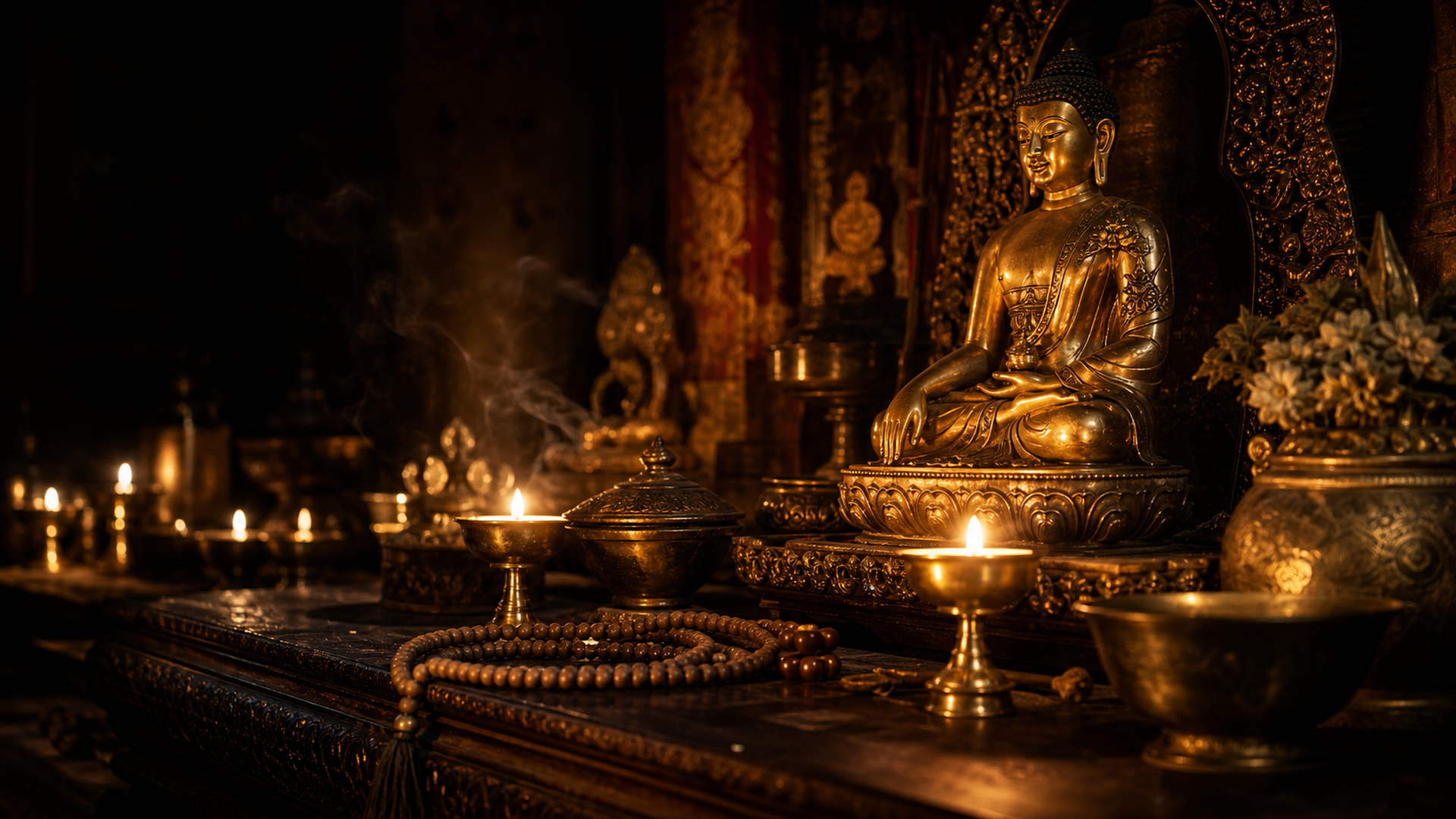
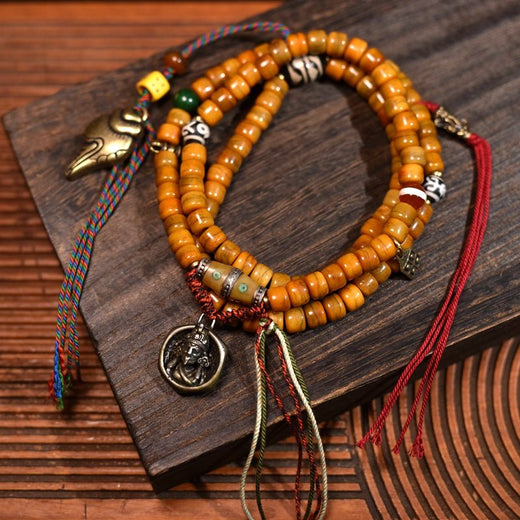
When Padmasambhava, also known as Guru Rinpoche, brought Vajrayana Buddhism from India to Tibet in the 8th century, these ancient material traditions were not discarded; they were integrated. The artisans of the region, particularly the highly skilled Newar craftsmen of the Kathmandu Valley who were often commissioned by Tibetan patrons, began to infuse these pieces with Buddhist iconography. The Dharma Wheel, the Endless Knot, and the Vajra began to appear, carved into bone and hammered into silver. Monasteries became centers of this sacred craft. At the Jokhang Temple in Lhasa, considered the spiritual heart of Tibet, pilgrims would offer precious stones to be incorporated into sacred statues and ritual objects, their collective devotion imbuing the materials with blessings. In great monastic centers like Ganden and Sera, monks would spend their lives creating and consecrating these items, turning the act of craftsmanship into a form of meditation itself. A mala (prayer beads) was not just assembled; it was imbued with countless recitations of "Om Mani Padme Hum," each bead absorbing the vibration of the mantra. This is the crucial distinction: Tibetan energy jewelry is not merely made, it is consecrated. It is a vessel for intention, a physical manifestation of millennia of prayer, and a direct link to the sacred peaks and profound philosophies of its origin. When you wear a genuine piece, you are not just wearing a beautiful object; you are carrying a fragment of this sacred history, a lineage you can explore within our curated collections of authentic pieces.
The Deeper Meaning: More Than Stone and Silver
Every element of a piece of Tibetan jewelry is a deliberate choice, a symbol that communicates a profound spiritual concept. It is a language of materials and forms designed to awaken the mind. When you look beyond the surface beauty, you begin to engage with a rich tapestry of meaning that can guide your daily practice and perspective. These are not just decorative motifs; they are distillations of core Buddhist teachings, intended to serve as constant, accessible reminders of the path to enlightenment. Your bracelet or necklace becomes a focal point for contemplation, a silent teacher you carry with you.
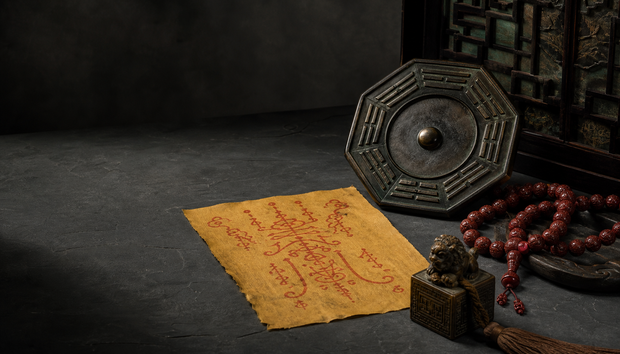
Consider the most common symbols you will encounter. The Endless Knot, a closed, interwoven pattern with no beginning or end, is one of the Eight Auspicious Symbols. It represents the interconnectedness of all phenomena—the idea that wisdom and compassion are inextricably linked, that our actions have endless consequences, and that the temporal and spiritual worlds are not separate. Wearing it is a reminder to consider the ripple effects of your words and deeds. The Vajra (or Dorje in Tibetan) is a symbol of indestructibility and irresistible force. It represents the diamond-like nature of reality and the unshakeable power of an enlightened mind that can cut through all illusion and ignorance. It’s a symbol of your own innate potential for clarity and strength. The Dharma Wheel, or Dharmachakra, with its eight spokes, represents the Noble Eightfold Path, the Buddha's foundational teaching on how to end suffering. It’s a call to right view, right intention, right speech, right action, right livelihood, right effort, right mindfulness, and right concentration in every moment.
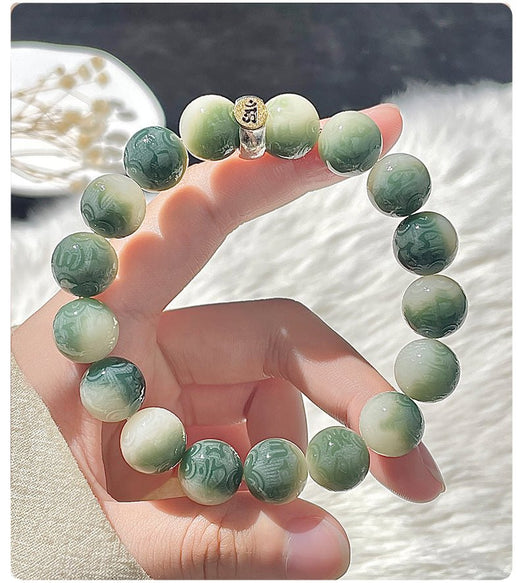
The materials themselves carry deep significance. Bodhi seeds, from the same type of tree under which the Buddha attained enlightenment, represent the potential for awakening within all beings. Yak bone, as mentioned, is a direct meditation on impermanence (anicca), a core Buddhist truth. It reminds you that all things are transient, encouraging you to live fully and without attachment. Perhaps most powerfully, many pieces are inscribed with mantras, most famously "Om Mani Padme Hum." This is the mantra of Avalokiteshvara, the bodhisattva of compassion. Each syllable has a specific meaning, purifying a negative emotion: Om (pride), Ma (jealousy), Ni (desire), Pad (ignorance), Me (greed), and Hum (hatred). To wear and recite this mantra is to actively engage in the alchemical process of transforming these poisons into wisdom. Your jewelry is not passive; it is an active tool for your spiritual journey, a tangible piece of the Dharma.
Real Benefits for Modern Life: An Anchor in the Storm
While its roots are ancient, the utility of Tibetan energy jewelry is profoundly relevant to the challenges you face today. Its benefits are not abstract or mystical; they are practical, psychological, and tangible, offering a direct antidote to the anxiety, distraction, and sense of isolation common in everyday practice. It works by creating a bridge between your inner world of intention and your outer world of action, serving as a constant, physical touchstone for the person you aspire to be.
Think of it as a tool for mindfulness. In a moment of rising stress or anxiety—perhaps during a difficult meeting or while stuck in traffic—the simple, physical sensation of the beads on your wrist can become a powerful anchor. Instead of getting lost in a spiral of negative thoughts, you can consciously bring your attention to the feel of the cool stone or the smooth wood. This simple act of sensory grounding pulls you out of your head and into the present moment. It’s a micro-meditation, a pause button that you carry with you, allowing you to break the cycle of reactivity and choose a more measured response. The jewelry becomes a conditioned trigger for awareness.
It also serves as a potent vehicle for intention. The ritual of putting on your bracelet in the morning can be a transformative act. As you fasten the clasp, you can set a specific intention for the day. Perhaps you choose compassion, dedicating your actions to understanding others. Perhaps you choose patience, reminding yourself to breathe before reacting. Throughout the day, every time you glance at your wrist, you are not just seeing a piece of jewelry; you are being reminded of your own chosen commitment. It turns a passive accessory into an active participant in your personal growth. This is far more effective than a forgotten New Year's resolution because it is present with you, moment by moment. — explore our Tibetan jewelry collection for authentic pieces.
Furthermore, using a mala for mantra repetition can be a life-changing practice for a scattered mind. The "monkey mind," as it's called in Buddhism, constantly jumps from thought to thought. By coordinating the physical act of moving from one bead to the next with the mental and vocal act of repeating a mantra, you give your mind a single point of focus. This harmonizes body, speech, and mind, creating a state of calm concentration that can quiet internal chatter and foster a deep sense of peace. It's a structured way to train your attention, building a mental muscle that serves you long after you've put the mala down. It is a practice of presence, not of perfection.

How to Choose Your Authentic Piece: A Guide to Conscious Selection
Navigating the world of Tibetan jewelry requires a discerning eye and an open heart. The market is flooded with mass-produced imitations that capture the aesthetic but miss the essence entirely. Choosing an authentic piece is not about finding the most flawless or expensive item; it’s about finding a piece with integrity, one that carries the spirit of its tradition. Your selection process is the first step in your relationship with the object, so it should be done with intention and awareness.
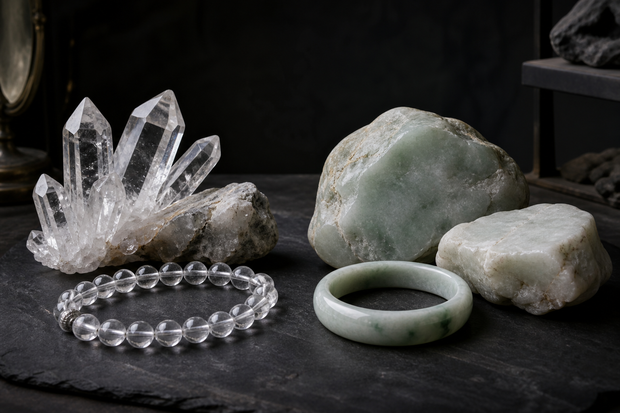
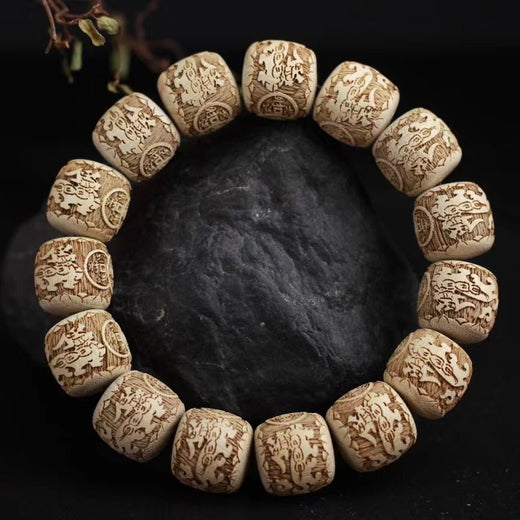
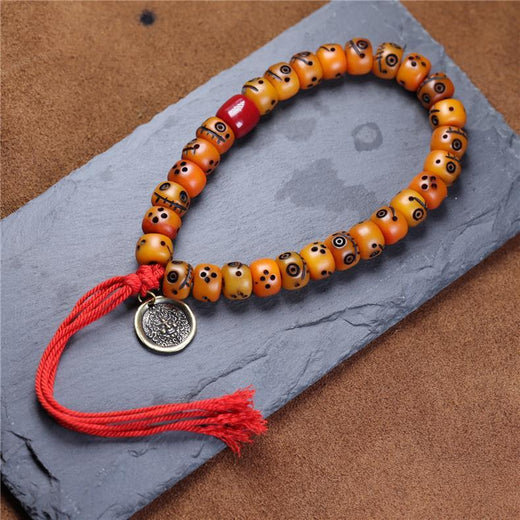
First, pay close attention to the materials. Authentic pieces are crafted from natural, meaningful substances. Real turquoise from the Himalayas has a unique matrix of lines and color variations; it doesn’t look like uniform plastic. True Dzi beads are made of etched agate, not glass or resin, and possess a distinct, weighty feel. Bodhi seeds should show the natural imperfections of a botanical product. Yak bone will have a subtle grain and organic texture. Learn to appreciate these "flaws" as marks of authenticity. Similarly, look for traditional metals like copper, known for its healing properties, and high-quality silver, often with a slightly rustic, hand-worked finish rather than a machine-perfect polish.
Next, consider the craftsmanship. The hands of the artisan leave a story on the piece. Look for signs of human touch. In a traditional 108-bead mala, there will often be hand-tied knots between each bead. This is not just for durability; it aids in the practice of japa (mantra repetition) by providing space to move one's fingers. Carvings on pendants or beads should have depth and character, not the shallow, uniform look of a mold. Feel the weight of the piece in your hand. An authentic item often has a satisfying substance and a tangible energy that is absent from its lightweight, factory-made counterparts.
Most importantly, consider the source. Where is the jewelry coming from? Does the seller demonstrate a genuine understanding of the culture and the symbolism behind their pieces? A reputable source will be able to tell you the meaning of the symbols, the properties of the stones, and ideally, the origin of their crafts. They will speak with reverence for the tradition, not just with marketing buzzwords. You are not simply buying a product; you are becoming a custodian of a cultural artifact. By choosing to support artisans and sellers who have a direct connection to Tibetan and Himalayan communities, you contribute to the preservation of this sacred craft. We encourage you to begin your search with a trusted source that honors this tradition and provides the stories behind each creation.
How to Use It: Activating Your Spiritual Tool
Once you have chosen a piece of Tibetan jewelry that resonates with you, the next step is to make it your own. This involves more than simply wearing it; it’s about consciously activating it as a spiritual tool. This process of cleansing, consecrating, and using the jewelry transforms it from a beautiful object into a powerful ally on your path. It becomes a dedicated partner in your practice of mindfulness, compassion, and self-awareness.
Your first step should be to cleanse the piece. It has been on a long journey to you, passing through many hands and environments. Cleansing clears any residual or stagnant energy, preparing it to receive your personal intention. There are several traditional methods. You can gently smudge it with the smoke of sage or palo santo, allowing the smoke to envelop the piece. You can place it in the light of a full moon overnight, a gentle and powerful way to purify it. Alternatively, the resonance of a singing bowl can be used; simply place the jewelry near the bowl and let the sound vibrations wash over it. The method you choose is less important than the intention you bring to the act: a clear desire to make the piece a clean vessel for your practice.
After cleansing, set your intention. Find a quiet moment and hold the jewelry in your hands. Close your eyes and take a few deep breaths, centering yourself. Reflect on what you wish to cultivate in your life. Is it more patience? Greater compassion for yourself and others? Clarity of mind? Whatever your intention is, infuse the piece with it. You can state it aloud or hold it silently in your mind, visualizing the energy of your intention flowing into the stones and symbols. This act of dedication is what truly makes the jewelry yours. You are programming it to be your personal reminder and support system.
For daily use, many traditions suggest wearing bracelets on the left wrist, which is considered the "receiving" side of the body, helping you to absorb the positive energies and intentions you've set. If you are using a 108-bead mala for mantra meditation, hold it in your left hand. Start at the bead next to the "guru bead" (the larger, decorative bead at the end). With each recitation of your chosen mantra, use your thumb to pull the next bead toward you. You continue this for all 108 beads. The index finger, which is associated with the ego, is traditionally not used to move the beads. When you are not using or wearing your jewelry, treat it with respect. Store it in a special cloth or on a small altar, not just tossed in a drawer. This honors its purpose and preserves its energetic integrity.
Common Questions About Tibetan Energy Jewelry
Is it cultural appropriation for me to wear Tibetan jewelry?
This is a thoughtful and important question. The key distinction lies between appropriation and appreciation. Appropriation involves taking a sacred cultural element out of context, stripping it of its meaning, and using it for personal gain or as a trivial fashion trend. Appreciation, on the other hand, involves wearing these pieces with a genuine respect for and understanding of their origin and significance. When you take the time to learn the meaning behind the symbols, use the jewelry to support a sincere intention for personal growth, and—most importantly—purchase from sources that ethically support the original artisans and their communities, you are engaging in appreciation. You are helping to preserve a sacred tradition, not diminish it. It becomes a respectful exchange, not a theft.
Do I have to be a Buddhist to wear it?
Absolutely not. While the symbolism is deeply rooted in Vajrayana Buddhism, the core principles it represents—compassion, interconnectedness, mindfulness, and the pursuit of wisdom—are universal human values. You do not need to adopt a specific religious label to benefit from a tool that reminds you to be more present, kind, and aware. Think of it as a piece of universal wisdom technology. A mala is a tool for focusing the mind, whether you are reciting a Sanskrit mantra, a positive affirmation, or simply counting your breaths. The Endless Knot reminds everyone of their connection to others. Your sincere intention is what matters most, not your religious affiliation.
What does it mean if my jewelry breaks?
In the Buddhist tradition, the breaking of a sacred object like a bracelet or mala is not seen as a negative omen. Instead, it is often interpreted through the lens of impermanence and karma. It can symbolize the end of a cycle or the release of a particular karmic debt that the piece helped you work through. It may signify that the jewelry has fulfilled its purpose for you. Rather than feeling dismayed, you can take it as a moment for reflection. Thank the piece for the service it has provided on your journey. If possible, you can have it re-strung, perhaps with a new intention, or you can respectfully return the beads to the earth.
How do I know if the "energy" is real?
The "energy" of Tibetan jewelry can be understood in several ways. For some, it is the metaphysical vibration of the stones and the blessings imbued by monks. For others, it is a powerful psychological phenomenon. The reality is, it’s likely a combination of both. The piece works because it is a physical anchor for your own intention. Your belief and focus are powerful forms of energy. When you consciously associate your bracelet with "calm," and you practice turning to it in moments of stress, you create a powerful neurological pathway. The jewelry becomes a trigger for a state of mind you have cultivated. The centuries of collective belief and prayer from the Tibetan tradition create a potent energetic field around these symbols and materials, which can amplify your personal efforts. The energy is real because you make it real through your practice.
Which hand should I wear my bracelet on?
In many Eastern traditions, the left hand is considered the receptive or "yin" side of the body, while the right hand is the projective or "yang" side. For this reason, it is often recommended to wear bracelets intended for personal benefit—such as attracting peace, compassion, or protection—on the left wrist to "receive" their qualities. Bracelets intended to project an energy outward—such as a bracelet for giving healing to others—might be worn on the right. However, this is a guideline, not a strict rule. The most important factor is your own comfort and intuition. Wear it on the wrist that feels right and natural for you; your personal connection is more powerful than any rigid dogma.
Can I wear multiple pieces of Tibetan jewelry at once?
Yes, you can certainly wear multiple pieces. Practitioners enjoy layering bracelets with different stones and symbols to create a combination of energies that feels supportive to them. For example, you might pair a turquoise bracelet for protection with a Bodhi seed mala for enlightenment. The key is to be intentional about it. Choose pieces that resonate with you and feel harmonious together. The goal is to feel supported and mindful, not cluttered or overwhelmed. If you find that wearing many pieces becomes a distraction, it may be better to simplify and focus on one or two key items that align with your primary intention for that day or period in your life.
Your Next Step on the Path
You’ve journeyed through the history, symbolism, and practice of Tibetan energy jewelry. You now understand that this is not a fleeting trend, but a timeless tradition offering tangible tools for a more grounded and intentional life. It’s an invitation to move beyond passive consumption of wellness and into active participation in your own spiritual well-being. This is a practice of wearing your intentions, of carrying a physical reminder of the peace and wisdom that already resides within you. The next step is not to simply acquire an object, but to find a companion for your journey. It’s about discovering the piece that speaks to your unique path and aspirations. We invite you to begin your own journey of discovery by exploring our handcrafted Tibetan jewelry, and find the anchor that feels like it was made just for you.
Keep reading