buddhist-jewelry
Discover the Best Tibetan Mala Bracelet for Positive En
You feel it in the quiet moments—a subtle hum of restlessness, a sense that your energy is scattered. It’s not the dramatic stress of a crisis, but the low-grade friction of a thousand daily demands pulling you in every direction.
You’ve tried apps, breathing exercises, and carving out five minutes for silence, yet the feeling of being untethered persists. You reach for your phone, scroll, and the cycle continues. What you’re truly searching for isn’t another digital solution, but a tangible anchor.
Something you can hold, feel, and connect with that pulls your focus inward, away from the external noise and back to your own center. You yearn for a practice that feels ancient, grounded, and real—a tool that doesn’t just distract you from the static but helps you transmute it into a current of clear, positivity.
This is the silent call that a Tibetan mala bracelet answers.

What a Tibetan Mala Really Is: A Tool Forged in the Himalayas
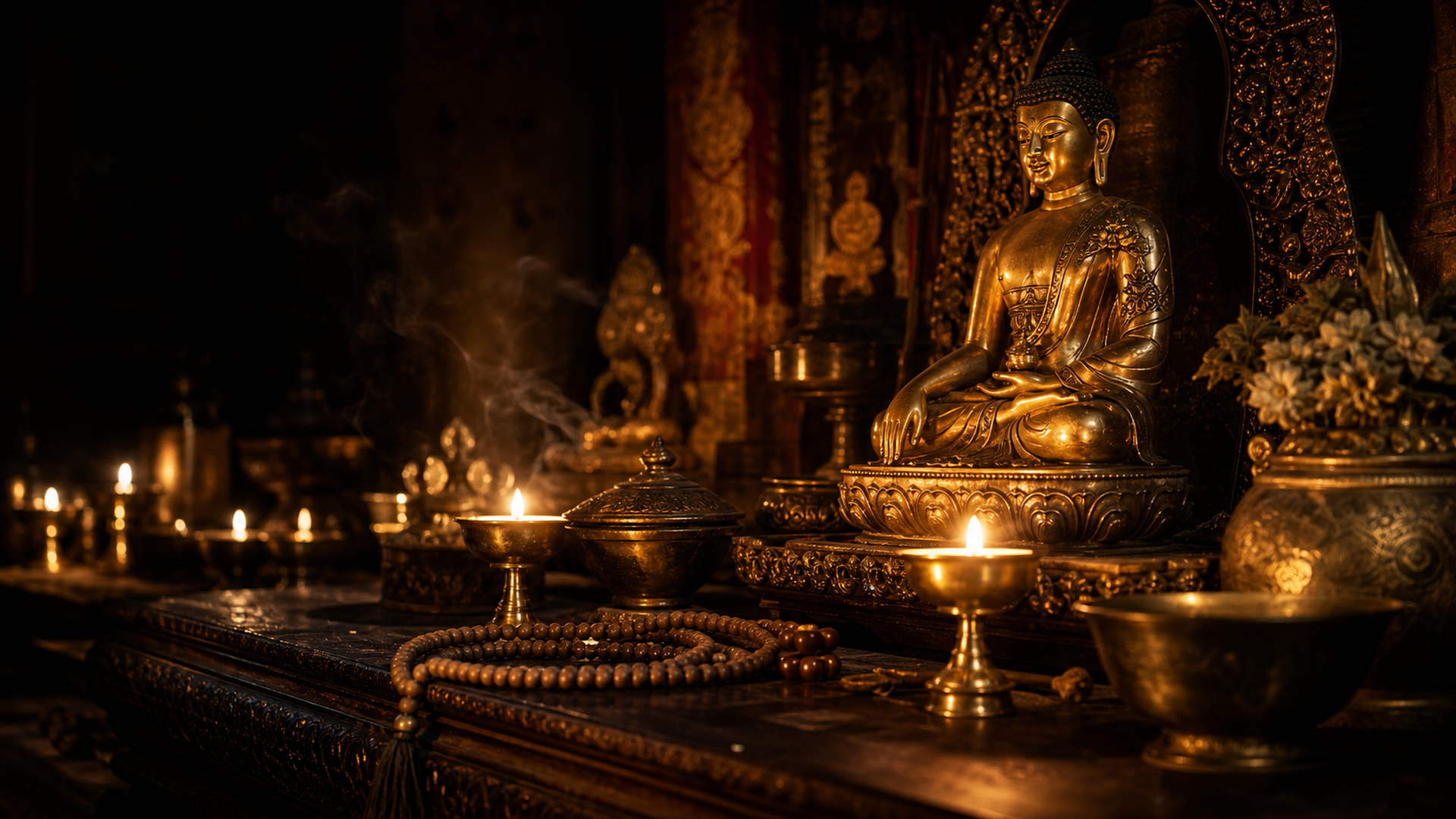
To truly understand the Tibetan mala bracelet, you must look beyond its aesthetic appeal and journey back in time, to the high plateaus of Tibet. The mala, known in Tibetan as a threngwa (ཕྲེང་བ), is not merely a piece of jewelry.
It is a spiritual tool, a sacred abacus for the soul, with roots stretching back to ancient India around the 8th century. Its arrival in Tibet is intrinsically linked with the great master Padmasambhava, or Guru Rinpoche, who is credited with establishing Buddhism in the region.
He brought with him the practice of japa, the recitation of mantras, and the mala was the essential instrument for this profound practice.
The original malas were not crafted from polished gemstones but from the raw, potent materials of the Himalayan landscape. Bodhi seeds were highly prized, as the Buddha, Siddhartha Gautama, attained enlightenment under a Bodhi tree.
These seeds carry a direct connection to that moment of supreme awakening. Yak bone was also commonly used, serving as a powerful reminder of life's impermanence (anicca), a core tenet of Buddhist philosophy.
For practitioners in remote monasteries like the Ganden or Sera Monasteries near Lhasa, a yak bone mala was a daily meditation on the cycle of life and death, encouraging them to practice with urgency and diligence.
The very material of the mala was a teaching in itself.
The construction of a traditional 108-bead mala was a precise and intentional act. The number 108 is deeply significant, representing the 108 worldly desires or defilements (kleshas) that a practitioner seeks to overcome.
Each recitation of a mantra, counted on a bead, is a step in transmuting these defilements into wisdom and compassion. The mala is held together by a durable cord, often of silk, with knots tied between each bead.
These knots serve a practical purpose—preventing the beads from clacking together and making it easier to move from one bead to the next—but also a symbolic one, representing the unbreakable bond of all sentient beings.
The entire design is a spiritual technology, refined over centuries in the harsh and beautiful clarity of the Tibetan highlands, created for the sole purpose of guiding your mind toward liberation.
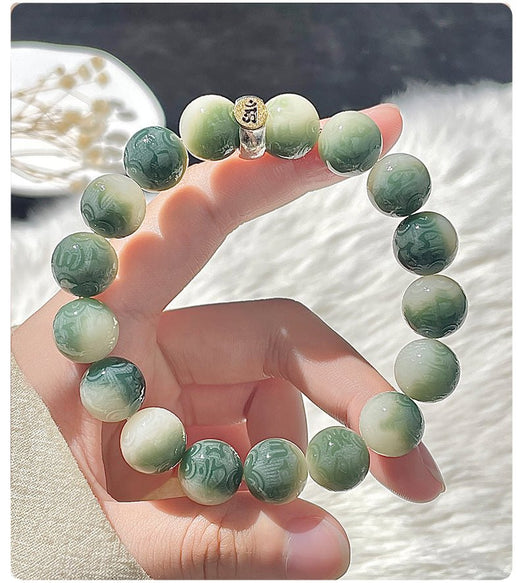
The wrist mala, a shorter version with typically 21 or 27 beads, evolved as a more portable tool for lay practitioners and monks to continue their practice throughout the day. It allows you to carry the essence of the full mala—the intention, the focus, the connection to the dharma—with you everywhere.
When you wear one, you are not only wearing a bracelet; you are carrying a lineage of practice, a piece of Himalayan wisdom that has been passed down through generations of masters and students, from the cave retreats of Milarepa to the bustling modern world.
It is a direct link to an authentic spiritual heritage. When you explore our curated collection of traditional mala beads, you are connecting with this profound history.
The Deeper Meaning Woven into Every Bead
A Tibetan mala is far more than a simple counting device; it is a microcosm of the spiritual path, with every component steeped in profound symbolism. When you hold your mala, you are holding a map of your own journey toward inner peace and enlightenment.
Understanding its structure reveals a closer layer of its power and transforms it from an object into a guide.
The circle of 108 beads is the foundation. This number is sacred across many Eastern traditions. In Tibetan Buddhism, it can represent the 108 volumes of the collected teachings of the Buddha (the Kangyur).
It also signifies the 108 delusions of the mind that you are working to purify with each mantra. As your thumb passes over each bead, you are symbolically taking one step, making one offering, and transforming one small piece of inner turmoil into clarity.
The circular nature of the mala reminds you of the cyclical nature of existence (samsara) and the continuous, unending nature of practice. There is no aggressive start or finish line, only the gentle, persistent rhythm of return.
At the head of the mala is the Guru Bead, also known as the Sumeru or Meru bead. This larger, often more decorative bead is the spiritual axis of the mala. It represents the Guru, the teacher, or the ultimate wisdom and reality to which you aspire.
The Guru Bead is your anchor. You begin your mantra recitation at the bead next to it and proceed around the circle. When you complete a full round of 108 recitations and arrive back at the Guru Bead, you do not cross over it.
Instead, you pause, offer a moment of gratitude to your teachers and the lineage, and then turn the mala around to begin your next round in the opposite direction. This act of turning back is a sign of respect, acknowledging that you, the student, do not "step over" the teacher.
It symbolizes that the path of wisdom is not a linear conquest but a continuous process of learning and humility.
The tassel, or the eternal knot that often finishes a mala, is equally significant. The tassel's many threads represent the interconnectedness of all beings and the roots of the lotus flower, which grows from the mud (samsara) to blossom in the pure air (enlightenment).
It symbolizes your connection to the collective consciousness and the aspiration to practice for the benefit of everyone, not only yourself. In some malas, an endless knot replaces the tassel, a potent symbol in Tibetan Buddhism representing the intertwining of wisdom and compassion, the endless cycle of cause and effect (karma), and the ultimate union of all phenomena.
When you choose a mala, you are also choosing the symbolic representation that resonates most with your personal spiritual goals. This is why the design of authentic Tibetan prayer beads is so intentional.
Real Benefits for Your Modern Life: Beyond Simple Stress Relief
While a mala is an ancient spiritual tool, its benefits are profoundly relevant to the challenges you face today. The positivity it cultivates is not a vague, mystical concept but a tangible shift in your mental, emotional, and even physiological state.
This happens through specific, grounded mechanisms that engage your body and mind in unison.
One of the most immediate benefits you will experience is tactile grounding. In moments of anxiety or mental chatter, your mind is usually lost in the future or the past. The simple act of holding your mala and feeling the smooth, cool surface of the beads under your thumb brings you directly into the present moment.
This is a form of somatic mindfulness. The physical sensation acts as an anchor, interrupting the frantic loop of anxious thoughts. The rhythmic, repetitive motion of passing each bead through your fingers has a deeply calming effect on your nervous system.
It can help regulate your breathing and slow your heart rate, signaling to your body that it is safe and can move out of a "fight or flight" response. This isn't just relaxation; it's a conscious act of reclaiming your physiological state from the grip of stress.
The practice of mantra recitation, or japa, deepens this benefit exponentially. When you pair the physical movement with a chosen mantra—like the universal mantra of compassion, Om Mani Padme Hum—you give your mind a single, positive point of focus.
Instead of being pulled in a dozen different directions by your to-do list or worries, your mental energy is channeled into one purposeful stream. Neurologically, this practice helps to quiet the amygdala, the brain's fear center, and strengthens the prefrontal cortex, which is associated with focus and emotional regulation.
Over time, this creates new neural pathways, making it easier for your mind to return to a state of calm and clarity, even when you are not actively using your mala.
Finally, wearing a Tibetan mala bracelet serves as a constant, gentle reminder of your intention. Throughout your day, you will catch a glimpse of it on your wrist or feel its weight as you move.
Each time, it serves as a subtle prompt. It reminds you to take a conscious breath, to check in with your emotional state, to choose compassion in a difficult interaction, or to simply return to the present moment.
It transforms mundane moments into opportunities for mindfulness. It’s a commitment you make to yourself, a visible and tangible link to your deepest values, far more potent than a notification on a screen. This integration of intention into daily life is where the most profound transformation occurs, turning spiritual practice into a lived reality.
The power inherent in these objects is why we take such care in sourcing every piece in our entire collection of sacred jewelry.

How to Choose an Authentic Mala Bracelet for Your Practice
Choosing a mala is an intuitive and deeply personal process. It is less about finding the "perfect" one and more about finding the one that resonates with your energy and intentions right now. An authentic mala is a partner in your spiritual practice, so selecting it deserves mindful consideration.
Here are the key elements to focus on to ensure you are choosing a genuine tool that will support your journey.
First, consider the material. The substance of your mala is not only decorative; it carries its own specific energy and symbolism.
- Bodhi Seed: As mentioned, these seeds connect you to the Buddha's enlightenment. A Bodhi seed mala is considered auspicious for any practice, as it represents the potential for awakening that exists within you. Over time, the seeds will absorb the oils from your skin, darkening in color and becoming a living record of your devotion.
- Sandalwood: This aromatic wood is prized for its soothing, calming scent, which is believed to enhance meditation and quiet the mind. It is associated with clarity, alertness, and tranquility, making it ideal if your goal is to reduce mental chatter and cultivate peace.
- Rudraksha Seed: While more common in Hindu traditions, Rudraksha is also used by Tibetan Buddhists. These seeds from the Rudraksha tree are associated with the Hindu deity Shiva and are believed to offer protection, shield against negative energies, and promote vitality.
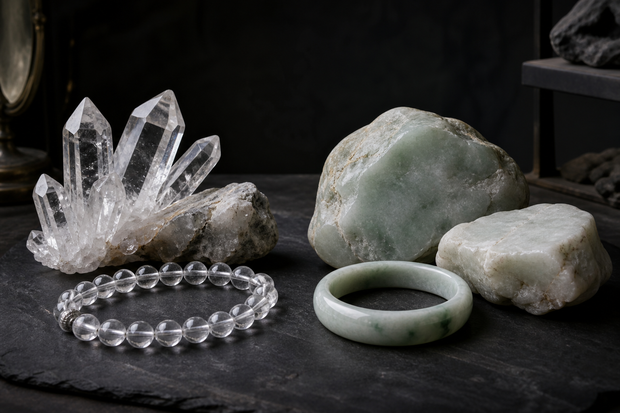
- Gemstones: Stones like Lapis Lazuli (for wisdom and truth), Turquoise (for healing and protection), or Amethyst (for spiritual awareness) can be chosen to align with a specific intention or quality you wish to cultivate.
Next, examine the construction. An authentic, high-quality mala is traditionally hand-knotted between each bead. This is a crucial feature. The knots create a perfect space for your fingers to move from one bead to the next, making the practice of japa smooth and rhythmic.
They also provide durability, ensuring that if the cord ever breaks, you will only lose one bead, not all of them. The Guru Bead should be distinct and securely attached, and the cord should feel strong and reliable.
When you explore an authentic collection of Tibetan mala beads, you can see this commitment to traditional craftsmanship in every piece.
How to Use Your Mala for Mantra and Meditation
Using your mala is a simple yet profound practice that can ground you in minutes. The physical process is designed to focus your mind and open your heart. Here is a step-by-step guide to begin your journey with this sacred tool.
1. Find a Quiet Space and Set Your Intention: Before you begin, take a moment to settle. Sit comfortably with your spine straight but not rigid. Close your eyes and take a few deep, conscious breaths.
Set an intention for your practice. It could be to cultivate compassion, find clarity on a problem, or simply to be present. This intention infuses your practice with purpose.
2. Hold Your Mala with Respect: Traditionally, the mala is held in the right hand, draped over your middle finger. The right hand is associated with giving or projecting energy outward. Your thumb is used to count the beads.
The index finger, which represents the ego, is kept out of the process; it should not touch the beads as you count. It can rest gently alongside your middle finger.
3. Choose Your Mantra: A mantra is a sacred sound, word, or phrase that you repeat. For your first practice, you might choose a simple and powerful one. The most revered mantra in Tibetan Buddhism is Om Mani Padme Hum (pronounced Ohm Mah-nee Pad-may Hung), the mantra of Chenrezig, the Buddha of Compassion.
You can also use a simple affirmation like "I am calm" or "I am present." The power is in the repetition and the resonance of the sound.
4. Begin the Recitation: Start with the first bead next to the Guru Bead. As you hold this bead with your middle finger and thumb, recite your mantra one time, either aloud or silently.
Upon completing the mantra, use your thumb to pull the next bead toward you, and repeat the mantra. Continue this process, moving from one bead to the next, until you have completed a full circle and reached the Guru Bead again.
5. The Turning Point: When you arrive at the Guru Bead, pause. This is a moment to honor your teacher, your intention, and the practice itself. Do not cross over the Guru Bead. To continue, turn the mala 180 degrees in your hand and go back in the direction you came from.
This simple act reinforces the mindset of practice as a continuous journey, not a destination to be conquered. Once you have selected your personal mala for this sacred practice, this process will quickly become a comforting and centering ritual.
Explore our monk-blessed Yak Bone 108 mala.
Common Questions About Your Tibetan Mala Bracelet
As you begin your journey with a mala, questions naturally arise. Here are answers to some of the most common inquiries, helping you deepen your understanding and practice with confidence.
What is the difference between a full 108-bead mala and a wrist mala?
A full 108-bead mala is the traditional tool for a complete seated meditation practice, allowing for 108 repetitions of a mantra per round.
A wrist mala, with 21 or 27 beads, is a more portable version designed for continued practice throughout the day. You can use it for shorter meditation sessions (completing four rounds on a 27-bead mala equals 108) or wear it as a constant reminder of your spiritual intention.
Many practitioners own both: a full mala for their dedicated practice space and a wrist mala for daily life.
Which wrist should I wear my mala bracelet on?
In many Eastern traditions, the left wrist is considered the "receiving" hand, associated with internal energy. Wearing your mala on the left wrist is thought to help you absorb its positive qualities and healing energies.
The right wrist is the "projecting" hand, associated with giving energy to the outside world. However, there are no strict, unbreakable rules. The most important thing is to wear it on the wrist that feels most comfortable and natural for you.
Your personal connection to the mala is more important than rigid dogma.
Can I use a mala if I'm not a Buddhist?
Absolutely. While the mala has its origins in Buddhist and Hindu traditions, it is fundamentally a tool for mindfulness, focus, and intention-setting. Anyone, regardless of their spiritual beliefs or lack thereof, can benefit from the practice of using a mala.
It is a universal tool for calming the mind and connecting with one's inner self. You can use it with traditional mantras, positive affirmations, or even just to count your breaths. The mala welcomes all who seek a path to inner peace.
How do I care for and cleanse my mala?
Your mala will absorb energy from you and your environment, so it's beneficial to cleanse it periodically. Avoid getting it wet, especially if it's made of wood or seeds.
Effective cleansing methods include letting it rest in moonlight (especially during a full moon), smudging it with the smoke of sage or palo santo, or placing it on a selenite crystal. You can also place it in a singing bowl and let the sound resonance cleanse it.
Caring for your mala is an act of respect for your practice and the tool that supports it.
What does it mean if my mala breaks?
A breaking mala is not a sign of bad luck; rather, it is seen as a positive event. It symbolizes the breaking of a cycle of suffering and the release of karma.
It is said that the mala has absorbed all the energy it can hold for a particular intention and has now served its purpose. It is a sign of spiritual progress. When a mala breaks, it is an opportunity to pause, reflect with gratitude on the lessons learned, and then select a new mala for the next chapter of your journey.
Why are authentic malas knotted between the beads?
The knots serve both practical and symbolic purposes. Practically, they provide durability and make the mala easier to use by creating space between the beads for your fingers to move.
If the cord breaks, the knots prevent all the beads from scattering. Symbolically, the knots represent the divine link that connects all things in the universe. They can also represent the challenges or "knots" in life that, through practice, become stepping stones on our spiritual path.
Your Next Step on the Path
You've now explored the deep history, profound symbolism, and practical application of the Tibetan mala. You understand that it is more than an accessory; it is a sacred tool, a companion for your inner journey designed to transform scattered energy into focused, positive intention.
The knowledge is the first step, but the true transformation begins when you bring the practice into your own life. Holding the beads, feeling their weight, and reciting your first mantra is where the journey truly begins.
This is your invitation to move from learning to experiencing. Your path is unique, and the mala that will support you is waiting to be found. Let your intuition guide you as you explore the different materials and energies.
Find the one that speaks to your heart and aligns with the peace and clarity you seek. Your next step is to choose your companion for this beautiful practice. We invite you to discover the authentic Tibetan mala that is meant for you.
Keep reading