buddhist-jewelry
Yak Bone Mala: The Tibetan Art of Grounding & Protection
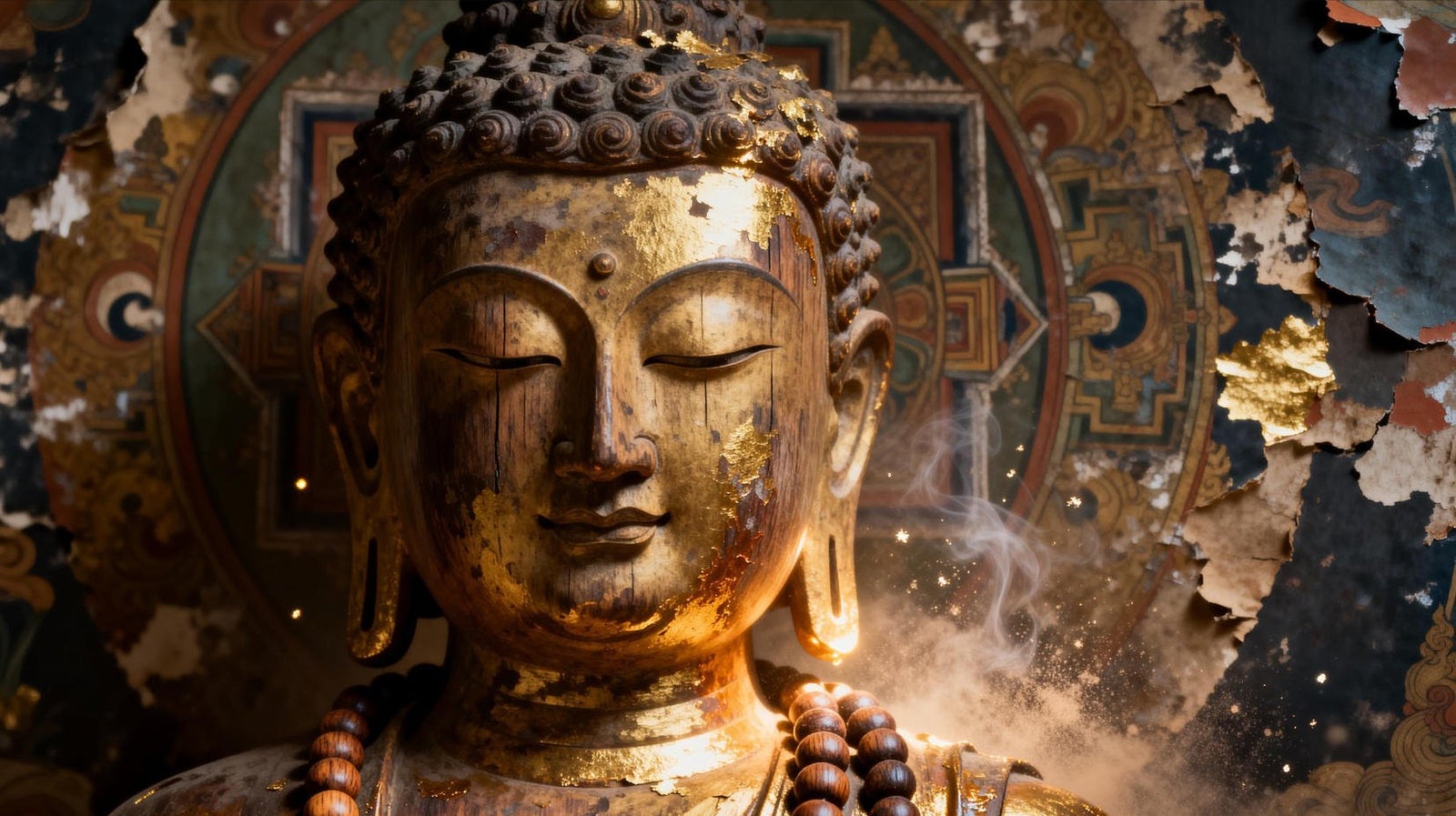
Close your eyes. Feel the weight of it first—substantial, solid, a quiet anchor in the palm of your hand. Now, run your thumb over the beads. Notice the subtle, uneven texture, the faint traces of natural grain, the slight coolness that quickly warms to your touch.
This is not a perfectly uniform, machine-made object. This is a Yak Bone Mala, and every imperfection tells a story of resilience, high-altitude winds, and an ancient spiritual practice. This is a tool for those who seek not to escape the world, but to stand firmly within it, rooted in the present moment with unshakeable clarity.
In a world that constantly pulls your attention outward, toward screens, deadlines, and endless streams of information, the call for grounding is more than a desire; it is a necessity for your spiritual and mental well-being.
The Yak Bone Mala is a direct answer to that call. It is an artifact born from one of the most challenging environments on Earth, carrying an energy that is both primal and profoundly serene.
It serves as a bridge, connecting your contemporary life to a timeless tradition of mindfulness, reverence, and a deep understanding of the cycles of existence.
On our last sourcing trip to Kathmandu, we visited a

A Legacy Carved from the Roof of the World
In the stark, breathtaking landscapes of the Tibetan plateau, where the sky feels close enough to touch and the air is thin and sharp, the Yak is not merely an animal; it is life itself.
For millennia, this magnificent, shaggy creature has been the cornerstone of survival for the nomadic peoples of the Himalayas, the Drokpa. The yak provides everything: its milk is turned into butter for tea and cheese for sustenance; its wool is woven into tents and warm clothing; its strength provides transportation across treacherous mountain passes.
In this symbiotic relationship, born from necessity and forged in deep respect, nothing is ever wasted.
The use of yak bone in sacred objects like malas is the ultimate expression of this reverence. It is not an act of mere utility, but one of profound honor. When a yak's life naturally comes to an end, its spirit is acknowledged, and its physical form continues to serve the community.
The bones, left to be cleansed by the relentless Himalayan sun and scouring winds, are collected with gratitude. This practice is a powerful statement against waste and a beautiful a sign of the cyclical nature of life and death, a core tenet of Buddhist philosophy.
Each bead you hold is a piece of this legacy, a fragment of a life that sustained others, now transformed to sustain your spiritual practice.
This tradition is ancient, predating the formal arrival of Buddhism in Tibet. It is rooted in the shamanic Bön traditions, which held a deep reverence for the natural world and the spirits of the land, sky, and animals.
When Buddhism was introduced in the 7th century, it did not erase these animistic beliefs but rather integrated them, creating the unique and profound spiritual tapestry that is Tibetan Buddhism. The Yak Bone Mala is a perfect embodiment of this synthesis—a tool for Buddhist meditation crafted from a material revered in the oldest spiritual traditions of the Himalayas.
It carries the enduring, unyielding presence of the mountains themselves, a direct link to a tradition that understands the sacred in the everyday, the spiritual in the most material of substances.
From Earthly Remains to Sacred Tool: The Alchemical Process
The journey of a yak bone from a remnant of earthly life to a sacred tool in your hand is a form of alchemy, a process steeped in intention, prayer, and patient craftsmanship. This transformation is not rushed; it is a meditation in itself.
After the bones have been naturally purified by the elements, they are gathered by artisans, often individuals living within monastic communities or families who have passed down the craft through generations.
The carving process is done entirely by hand. Using simple, traditional tools, the artisan shapes each bead. This is not a sterile, mechanical process. With each turn of the bone, with each careful cut and polish, mantras are often recited.
The sacred sounds of "Om Mani Padme Hum" or other potent invocations are believed to be infused into the very material of the bead. The artisan's focused mind, their devotion, and their prayers become part of the mala's character.
This is why an authentic, hand-carved mala feels so different from a mass-produced item. It possesses a certain vitality, a presence that you can feel.
You will notice that no two beads are exactly alike. Some may be slightly more porous, others a shade lighter or darker, marked with subtle lines and pits. These are not flaws; they are the bone's history.
They are a map of a life lived at over 15,000 feet, a sign of the animal's strength. The artisan does not seek to erase these unique characteristics but to honor them. This celebration of imperfection is a profound teaching in itself, a reminder to accept your own perceived flaws and recognize the unique beauty in your own life's journey.
The finished mala, consisting of 108 beads, a guru bead, and a tassel, is more than an object. It is a vessel of concentrated intention, a physical intention-setting of a lineage of faith that stretches back for centuries.
The Metaphysical Resonance of Bone: Impermanence and Primal Presence
Why bone? In many spiritual traditions, bone holds a unique and powerful significance. It represents the essential, unshakeable structure of our being—the framework that remains when all else has fallen away. It is a direct and potent symbol of our own mortality, a concept that, in Buddhism, is not meant to be morbid but liberating.
Contemplating impermanence, or Anicca, is a cornerstone of the path to enlightenment. Meditating with a Yak Bone Mala is a constant, tactile reminder of this truth. Each bead that passes through your fingers whispers the reality that all things, including your own body, are transient.
This realization is not a cause for despair, but a powerful catalyst for living more fully and presently. When you truly understand that this moment is all you have, you are less likely to waste it on trivial anxieties or past regrets.
The mala helps you cut through the illusion of permanence, grounding you in the precious, fleeting reality of the now.
Beyond this, bone is associated with a primal, earthy presence. It connects you to the deep, foundational qualities of the Earth and the life-death-rebirth cycle. In the esoteric practices of Tibetan Vajrayana Buddhism, ritual implements are sometimes made of bone to represent the transmutation of the five poisons (ignorance, attachment, aversion, pride, and jealousy) into the five wisdoms.
While your practice may not be so complex, the underlying principle remains. The Yak Bone Mala helps to transmute your scattered, anxious presence into a state of calm, centered focus. It absorbs and neutralizes negativity, acting as a protective shield for your inner landscape.
It is a tool for facing your own inner "demons"—your fears and attachments—with the same unyielding strength as the yak that roams the high peaks.

Finding Your Anchor: How to Use Your Yak Bone Mala
Your Yak Bone Mala is a powerful spiritual tool, and learning to use it is a simple, intuitive process that can profoundly deepen your meditation and mindfulness practice. It serves as a spiritual abacus, allowing your mind to focus on a mantra or breath without getting lost in the task of counting.
Here is a traditional way to begin your practice:
- Find a Comfortable Position: Sit in a comfortable posture, either on a cushion on the floor or in a chair, with your spine straight but not rigid. Take a few deep breaths to settle your body and mind.
- Hold the Mala with Respect: Hold your mala in your right hand (though some traditions use the left; follow what feels right for you), draped between your middle finger and your thumb. The index finger is sometimes associated with the ego, so it is traditionally not used to touch the beads. Let the mala hang gently.
- Start at the Guru Bead: The larger bead at the end of the mala is called the Guru Bead or Sumeru. It represents the teacher or the ultimate reality. You do not count this bead. Begin with the first bead next to the Guru Bead.
- Recite Your Mantra: As you hold the first bead with your thumb and middle finger, recite your chosen mantra. A universally powerful and accessible Tibetan mantra is Om Mani Padme Hum. This mantra invokes the compassion of all enlightened beings. You can say it aloud or silently to yourself.
- Move to the Next Bead: After one full recitation of the mantra, use your thumb to pull the next bead toward you, and repeat the mantra. Continue this process, bead by bead, moving around the mala.
- The Practice of Presence: The physical act of feeling the bead and pulling it towards you synchronizes your body, speech (mantra), and mind, creating a unified state of focus. If your mind wanders—and it will—the sensation of the bead in your fingers is your anchor, gently calling you back to the present moment and your recitation.
- Completing a Round: When you have completed 108 recitations and reached the Guru Bead again, you can pause. You have completed one full round. Traditionally, you do not cross over the Guru Bead. If you wish to continue, you can turn the mala around and go back in the direction you came.
if you choose a full 108-bead mala or a smaller wrist mala, the practice remains the same. The goal is not to rush through the 108 repetitions, but to be fully present with each one.
You can explore a variety of authentic Tibetan mala beads to find the one that speaks to your personal journey.
Beyond Meditation: Wearing Your Mala as a Shield of Intention
While the Yak Bone Mala is a formidable tool for formal meditation, its power extends far beyond your sitting practice. Wearing your mala is a way to carry your intention, your prayers, and that sense of groundedness with you throughout the day.
It becomes a sacred adornment, a constant, physical reminder of your connection to your spiritual path.
When worn on your wrist, its weight acts as a subtle, grounding touch. In a moment of stress or anxiety at work, the feeling of the beads against your skin can be a discreet cue to take a deep breath, to come back into your body, and to disengage from the mental chatter.
It's like having a spiritual touchstone with you at all times. You can reach for it, run your thumb over a few beads, and instantly reconnect with the calm, centered state you cultivate in your meditation.
Through its presence, a Yak Bone Mala worn on the body is said to offer protection. Its primal, earthy character helps to create a stable foundation, shielding you from the jarring presence you might encounter in crowded or stressful environments.
For empaths or highly sensitive individuals who tend to absorb the emotional states of others, this can be particularly beneficial. It acts as a boundary, not by creating a wall, but by reinforcing the strength and integrity of your own focus so that you are less easily swayed by external influences.
Even a smaller yak bone bracelet can serve as a potent, constant reminder of your intention and a source of quiet strength.
Is a Yak Bone Mala Calling to You? Scenarios for the Modern Seeker
You might feel a pull toward a Yak Bone Mala without fully understanding why. This is often your intuition recognizing a tool that your soul needs. Here are a few scenarios where a Yak Bone Mala can be a particularly powerful ally:
- For the Overstimulated Professional: Your days are a blur of screens, notifications, and back-to-back meetings. You feel perpetually "in your head," disconnected from your body and the physical world. A Yak Bone Mala is your antidote. Its tangible weight and organic texture are a sensory invitation to return to the present. Using it for just five minutes between tasks can reset your nervous system and bring a profound sense of peace to a chaotic day.
- For the Spiritual Explorer: You are on a path of self-discovery, reading books and exploring different philosophies. You understand concepts like "mindfulness" and "presence" intellectually, but you struggle to embody them. A mala practice bridges that gap between theory and experience. It gives you a physical, repeatable action that trains your mind and body to work in harmony, turning abstract ideas into a lived reality.
- For the Empath or Caregiver: You feel things deeply and often carry the emotional weight of others. This can leave you feeling drained, scattered, and uncentered. The Yak Bone Mala acts as your grounded anchor. Its grounding qualities help you create healthy boundaries, allowing you to offer compassion from a place of strength and fullness, rather than depletion.
- For Anyone working through Change or Loss: Life is in flux. You might be facing a career change, the end of a relationship, or the grief of losing a loved one. The mala's very substance—bone—is a profound teacher in the face of such challenges. It reminds you of the natural cycles of life and death, of beginnings and endings. It offers the comfort of knowing that even in loss, there is an essential, unbreakable core that endures.
Caring for Your Sacred Companion: A Guide to Longevity and Respect
Your Yak Bone Mala is more than jewelry; it is a sacred companion on your spiritual path. Treating it with care and respect will not only preserve its physical integrity but also honor the intention infused within it.
With proper care, your mala can last a lifetime.
Handling and Storage: When you are not using or wearing your mala, store it in a special place, such as on your altar, on a statue of a deity, or in a soft pouch.
Avoid leaving it on the floor or in a place where it might be stepped on or treated carelessly. This act of mindful placement reinforces its significance in your practice.
Cleaning: Bone is a porous, natural material. To clean your mala, simply wipe the beads with a soft, dry cloth to remove any oils or dirt. Avoid exposing your mala to water for prolonged periods and never use harsh chemical cleaners, as these can damage the bone and weaken the cord.
The natural oils from your skin will gradually season the beads over time, deepening their color and creating a beautiful patina. This is a sign of a well-loved and frequently used mala.
Cleansing: Because your mala carries the presence of your practice and your environment, you may wish to cleanse it from time to time. There are several ways to do this. You can let it rest in the light of a full moon overnight.
You can also place it near a singing bowl and let the resonance wash over it. Another traditional method is smudging, where you pass the mala through the smoke of cleansing herbs like sage, cedar, or palo santo.
Choose the method that feels most right for you.
If Your Mala Breaks: It is said that when a mala breaks, it symbolizes the breaking of a cycle of karma or the fulfillment of the intention with which you were working. It is not a bad omen.
Rather, it is an opportunity for reflection. You can see it as a sign of progress on your path. The beads can be respectfully gathered and restrung, perhaps with a new intention for the next chapter of your journey.
This act of repair can be a powerful meditative practice in itself. By caring for your mala, you are nurturing your own commitment to your practice. As you explore our full collection of authentic Tibetan jewelry, know that each piece is crafted to be a lasting companion on your path.
Explore our monk-blessed Yak Bone 108 mala.
Frequently Asked Questions About Yak Bone Malas
1. Are yaks harmed to make these malas?
Absolutely not. This is a crucial point of ethics and reverence. In Tibetan culture, the yak is a cherished and essential part of life. These malas are made only from the bones of yaks that have died from natural causes.
The practice is a way of honoring the animal's life and ensuring that no part of its precious gift is wasted. It is an act of respect, not harm.
2. Why do malas have 108 beads?
The number 108 is sacred in many Eastern traditions, including Buddhism and Hinduism. There are numerous interpretations: it is said there are 108 earthly desires or defilements (kleshas) to overcome; some say there are 108 focus points converging to form the heart chakra; in astrology, the diameter of the Sun is about 108 times that of the Earth.
Reciting a mantra 108 times is a traditional way to complete a full cycle of devotion and intention.
3. Can anyone use a yak bone mala, or is it only for Buddhists?
Anyone who feels drawn to the mala's purpose can use it. You do not need to be a Buddhist to benefit from its profound grounding and meditative qualities.
It is a tool for mindfulness, focus, and presence, which are universal human pursuits. The key is to approach it with respect for its cultural origins and to use it with sincere intention.
4. What should I do if my mala breaks?
A broken mala is traditionally seen as a positive sign, indicating that a cycle of karma has been broken or that you have made a significant breakthrough on your path.
It is not a sign of bad luck. You can gather the beads and have the mala restrung, often with a new cord and tassel. This can be an opportunity to set a new intention for the mala as you continue your journey.
5. How do I choose the right mala for me?
Choosing a mala is a very personal and intuitive process. While you can read about the properties of different materials, the best way is often to see which one you are visually and intuitively drawn to.
A Yak Bone Mala may call to you if you are seeking grounding, protection, and a deeper connection to the cycles of life and impermanence. Trust your intuition; the right mala will often feel like it has chosen you.
Keep reading