buddhist-jewelry
Buddha Beads: Complete Guide to Prayer Beads, Materials
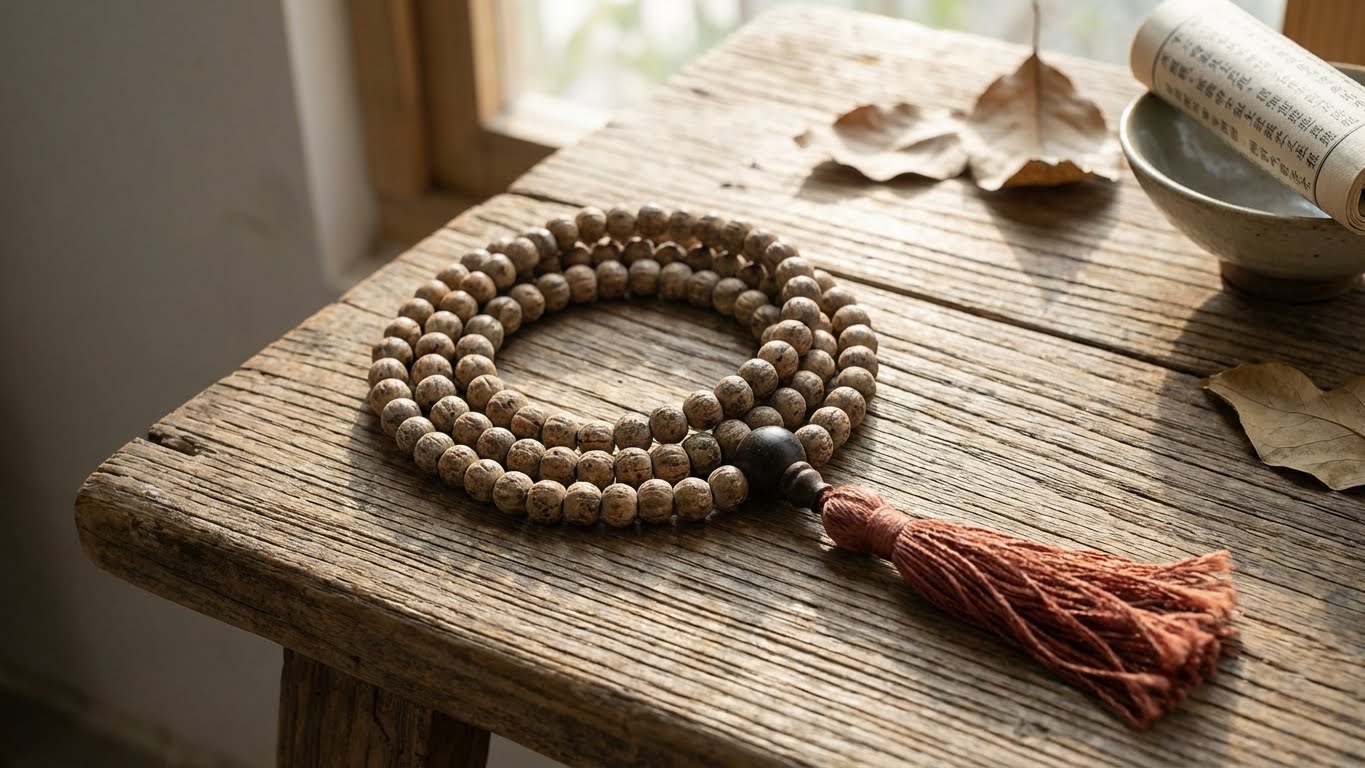
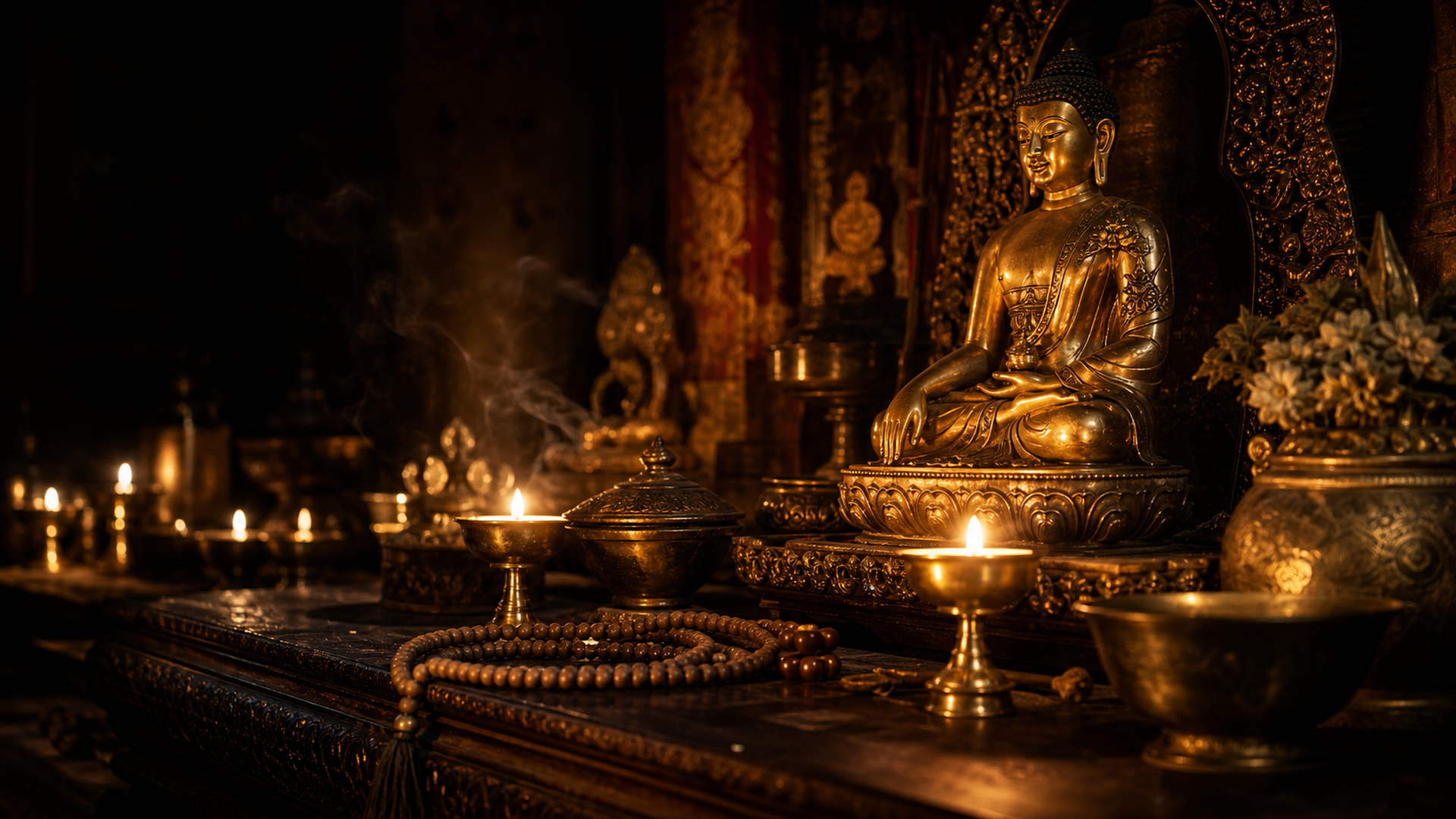
Your hand closes around the smooth, cool beads. The world outside—the deadlines, the notifications, the constant hum of anxiety—begins to fade, even if just for a moment. It’s just you, your breath, and the steady, rhythmic click of your thumb moving from one bead to the next.
This simple, repetitive motion is an anchor in a swirling sea of thoughts. It’s a physical tether to the present moment, a practice that has grounded seekers across generations. This is the experience of the japa mala, often called Buddha beads.
You may have seen them worn as a necklace or wrapped around a wrist, perhaps wondering if they were merely a spiritual fashion statement. But their true purpose runs far deeper. These are not only accessories; they are tools.
They are personal, portable sanctuaries designed for focus, contemplation, and transformation. Each bead is a step on a path, a repetition of an intention, a whisper of a mantra that slowly, profoundly, reshapes your inner world.
This guide is your invitation to look beyond the surface and discover the authentic power you can hold in your own hands.

Understanding Buddha Beads, Really? Uncovering Their Ancient Roots
To truly understand the mala, you must journey back in time, long before it became a familiar sight in yoga studios. Its origins are woven into the spiritual fabric of ancient India, predating even Buddhism itself.
The term itself comes from Sanskrit: mālā (माला), meaning “garland,” and japa (जप), meaning “to mutter” or “to repeat.” In its earliest form, the japa mala was a simple tool used by Hindu sages (rishis) in the Indus Valley to count repetitions of mantras, prayers, or divine names.
This practice of recitation was a cornerstone of Vedic traditions, a way to focus the mind and invoke divine energy.
When Siddhartha Gautama attained enlightenment and Buddhism began to flourish around the 5th century BCE, this powerful tool was adopted and adapted. As the teachings spread from India north into Tibet, east into China, and across Asia via the Silk Road, the mala traveled with them.
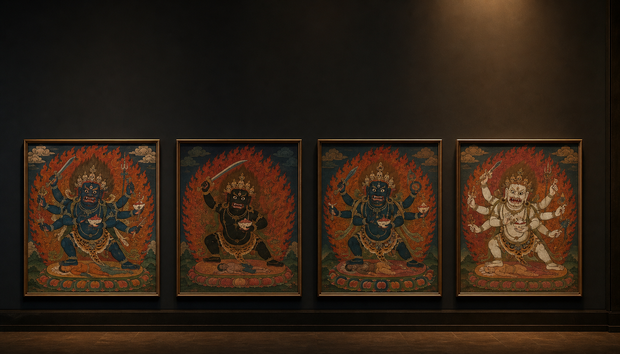
In Tibet, it became an indispensable part of Vajrayana practice. You can see its importance in ancient thangkas and statues, where revered figures like Avalokiteshvara, the bodhisattva of compassion, are depicted holding a crystal mala.
Monasteries like the great seats of learning—Sera, Drepung, and Ganden in Tibet—became centers where the creation and use of malas were refined into a sacred art.
The number of beads, 108, is profoundly significant and not at all arbitrary. This number is considered sacred across several Dharmic traditions. In Buddhist philosophy, it is said there are 108 kleshas, or worldly defilements (unwholesome mental states like greed, hatred, and ignorance), that obscure our true Buddha-nature.
Each recitation of a mantra as you pass a bead is a step in purifying these 108 afflictions. The number also appears in Vedic cosmology; ancient astronomers calculated the distance between the Earth and the Sun, and the Earth and the Moon, to be roughly 108 times their respective diameters.
A mala is, in essence, a microcosm of the universe and a map for your inner journey. It consists of the 108 counting beads, a distinct ‘guru’ or ‘Sumeru’ bead representing the teacher or ultimate reality, and a tassel, which holds symbolic meaning of its own.
The Deeper Meaning: Symbolism Woven into Every Bead
A mala is more than a string of beads; it's a circle of profound symbolism, a spiritual technology where every component has a purpose. When you hold your mala, you are holding a complete teaching, a tangible representation of the path to awakening.
The circular form itself represents the endless cycle of birth, death, and rebirth known as samsara. Your practice with the mala is the active effort to step out of this cycle of suffering and into liberation.
The thread that runs through each bead is the most critical, yet often unseen, element. This is the sutra, a word that means both "thread" and a sacred text or teaching. It symbolizes the unbroken lineage of the Buddha’s teachings, the golden chain connecting you directly to the wisdom of countless masters.
It represents the fundamental consciousness, the singular reality that connects all seemingly separate beings. The beads are the individual moments, the individual lives, the teachings—all held together by this one unifying thread.
At the head of the mala sits the guru bead. It is larger, often distinct in texture or material, and it is the start and end point of your meditation. This bead symbolizes the guru or spiritual teacher, without whom the path cannot be illuminated.
It also represents the ultimate reality, the state of enlightenment or shunyata (emptiness). When your fingers reach the guru bead after 108 recitations, you do not cross over it. Instead, you pause. This pause is a moment of deep respect, of gratitude for the teachings and the teacher.
It is a moment to reflect on your practice before you turn the mala around and begin again. Just as a mala becomes an extension of your practice, many find that wearing a symbol of their birth year's protector deity serves as a constant, silent reminder of their inner potential.
Finally, the tassel. It is not mere decoration. The many threads of the tassel symbolize the roots of the lotus flower, which grows from the mud (samsara) to blossom in the pure air (enlightenment).
It represents our interconnectedness and the aspiration to be of benefit to all sentient beings. In some traditions, it is seen as the thousand arms of Avalokiteshvara, reaching out with compassion to the world.
As your mala ages and absorbs the oils from your skin and the energy of your practice, it becomes a deeply personal and sacred object, a a sign of your journey.
From Ancient Ritual to Modern Resilience: Tangible Benefits of Using a Mala
While rooted in ancient spiritual science, the benefits of using a mala are remarkably relevant and practical for your modern life. The practice of japa meditation offers a potent antidote to the chronic stress, distraction, and disconnection that so many of us experience daily.
These are not vague, esoteric rewards; they are tangible shifts in your mental, emotional, and even physiological state.
One of the most immediate benefits is tactile grounding. In a world lived largely through screens, the physical sensation of rolling a smooth bead between your thumb and finger is a powerful anchor to the present moment.
This somatic (body-based) mindfulness instantly pulls your awareness away from anxious thought loops about the past or future and into the reality of the here and now. The simple weight and texture of the beads in your hand can calm your nervous system, signaling to your body that it is safe to relax.
On a closer level, consistent practice can lead to neurological reprogramming. The combination of a repetitive physical motion (moving the beads), a vocal resonance (chanting the mantra), and a focused intention creates a powerful psycho-physical loop.
This helps forge new, more positive neural pathways in your brain. You are, in effect, training your mind to replace habitual patterns of anxiety or self-criticism with states of calm, compassion, or clarity. The rhythmic nature of chanting has also been shown to stimulate the vagus nerve, which helps regulate mood and reduce the body's fight-or-flight response.
This practice of setting a focused intention is powerful. It's the same principle behind choosing one of the eight guardian Buddha pendants, each embodying a specific quality you wish to cultivate.
In an age of endless digital distraction, the mala is a radical tool for single-tasking. It trains your "monkey mind" to settle on one point of focus: the bead, the mantra, the breath. This cultivates a deep state of concentration (dharana) that extends beyond your meditation cushion.
You may find your ability to focus at work, listen in conversations, and engage fully in your life improves dramatically. The mala becomes your personal gym for building mental muscle, enhancing your capacity for sustained attention and presence.

How to Choose an Authentic Mala: A Guide to Materials and Energy
Choosing a mala is an intimate and intuitive process. It will become your companion in practice, absorbing your energy and intentions. While aesthetics are a factor, the material and craftsmanship are far more important.
An authentic mala feels like an extension of yourself. Your connection to it will deepen the power of your practice.
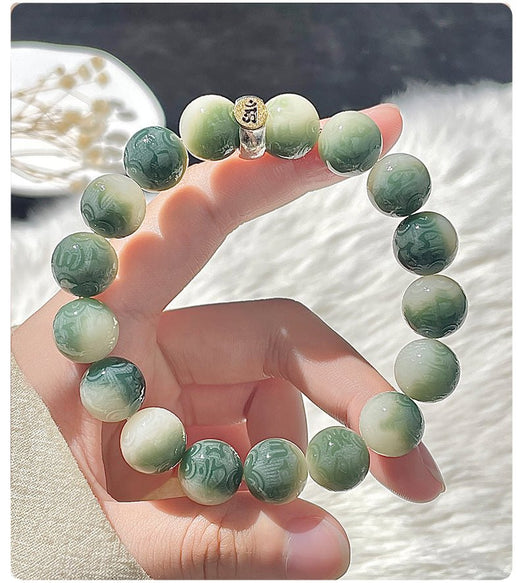
The material is the soul of the mala. Different woods, seeds, and stones carry distinct energies and traditional associations.
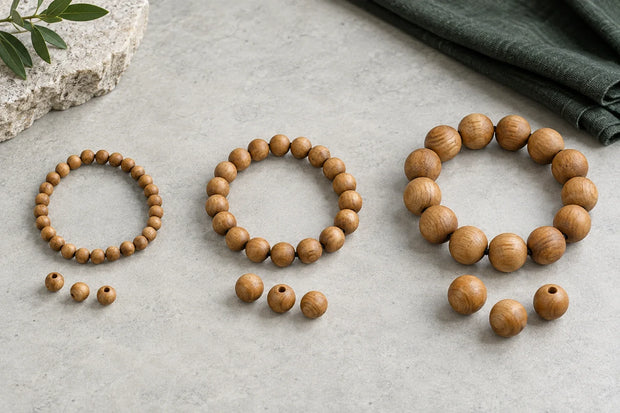
- Bodhi Seeds: This is the classic and most traditional material. "Bodhi" means "enlightened" in Sanskrit, as these are the seeds from the type of tree under which the Buddha attained enlightenment. They are a constant reminder of every being's potential for awakening. As you use them, they will absorb the natural oils from your skin and darken, beautifully reflecting the time and dedication of your practice.
- Sandalwood: Prized for centuries for its fragrant, calming aroma. The scent of sandalwood is believed to soothe the mind, reduce anxiety, and attract positive resonance. It is a wonderful choice if you are seeking a practice focused on peace and tranquility.
- Rudraksha Seeds: With a distinctive textured surface, these seeds have a powerful, protective energy. Traditionally associated with the Hindu deity Shiva, they are used extensively in Tibetan Buddhism for wrathful mantra practices and for their grounding, shielding qualities.
- Gemstones: Stones like Lapis Lazuli (wisdom, truth), Amethyst (clarity, spiritual connection), and Turquoise (protection, healing) add another layer of energetic intention to your mala. In Tibetan tradition, specific stones are often used to align with the energies of different Buddhas or Bodhisattvas.
Ultimately, trust your intuition. Which material are you drawn to? What feels right in your hand? The mala that resonates most strongly with you is the right one. Beyond the material, look for quality craftsmanship.
A traditionally made mala is hand-knotted between each bead. This not only makes it more durable but also provides the perfect amount of space for your fingers to move with ease. The knots also symbolize the interconnectedness of all things and represent the challenges we overcome on our path.
While you let your intuition guide you to the perfect mala, consider exploring our complete collection of mindfully crafted spiritual jewelry to find other pieces that resonate with your path.
How to Use Your Mala: A Step-by-Step Guide to Japa Meditation
Using a mala is a simple, beautiful, and profound practice. It requires no special equipment, only your mala, your voice, and your intention. Here is a guide to begin your japa meditation practice with respect and clarity.
1. Find Your Space and Posture: Choose a quiet place where you can sit comfortably without being disturbed for 10-15 minutes. Sit in a comfortable, upright posture, either on a cushion on the floor or in a chair with your feet flat.
A straight spine allows energy to flow freely.
2. Set Your Intention: Before you begin, take a moment to set an intention for your practice. What quality do you wish to cultivate? Peace? Compassion for yourself or another? Clarity on a difficult situation? Hold this intention in your heart as you begin.
3. Choose Your Mantra: A mantra is a sacred sound, word, or phrase that you repeat. You can choose a traditional Sanskrit mantra, such as the universal "Om" (the sound of creation) or the Tibetan mantra of compassion, "Om Mani Padme Hum." You can also use a simple affirmation in your own language, like "I am peaceful" or "May all beings be happy."
4. Hold Your Mala Correctly: Take your mala in your right hand (in many traditions, the right hand is associated with giving and the left with receiving). Let it drape over your middle finger.
The index finger, which is associated with the ego, should not touch the beads; keep it extended and out of the way. Your thumb will be used to count the beads.
5. Begin the Recitation: Start at the first bead next to the guru bead. As you hold this bead with your middle finger and thumb, recite your chosen mantra once, either aloud or silently.
Upon completing the mantra, use your thumb to pull the next bead towards you and repeat the process. Continue this rhythm—one mantra, one bead—moving steadily through all 108 beads.
6. The Guru Bead Pause: When you have completed all 108 recitations, your thumb will arrive back at the guru bead. This is a sacred pause. Do not cross over the guru bead. Instead, take a moment of gratitude for the practice, the teachings, and your own effort.
If you wish to do another round, simply flip the mala 180 degrees and continue in the reverse direction. This cyclical practice mirrors the journey of life, a path often supported by a personal protector like a Guardian Buddha.
Your Questions on Buddha Beads, Answered
As you begin your journey with a mala, questions will naturally arise. Here are answers to some of the most common inquiries, helping you deepen your understanding and practice with confidence.
Why are there 108 beads on a mala?
The number 108 is sacred in many Eastern traditions. In Buddhism, it most commonly represents the 108 kleshas, or mental defilements, that we seek to purify through practice.
Each repetition of a mantra helps transform one of these afflictions. The number also has astronomical significance (related to the diameters of the Sun and Moon and their distance from Earth) and corresponds to the number of nadis (energy channels) converging to form the heart chakra in yogic philosophy.
Ultimately, it symbolizes the entirety of the path.
What do I do if my mala breaks?
A breaking mala is not a bad omen; in fact, it is often seen as a positive sign. It can symbolize the completion of a cycle, the release of karma, or a breakthrough in your practice.
It signifies that the mala has absorbed a great deal of energy and has completed its work with you for that particular intention. You can respectfully gather the beads and have them re-strung, perhaps with a new intention, or you can offer them back to the earth by burying them in a special place.
Can I wear my mala as a necklace?
Yes, you can absolutely wear your mala as a necklace or wrapped around your wrist. Doing so keeps its protective and intentional energy close to your body throughout the day.
It serves as a physical reminder of your practice and intentions. However, it's important to remember that it is a sacred tool, not only a piece of fashion jewelry. Treat it with respect, and avoid placing it on the floor or in unclean places.
How do I cleanse or "charge" my mala?
Over time, your mala will absorb energies from you and your environment. It’s beneficial to cleanse it periodically to refresh its resonance. You can do this by smudging it with the smoke of sage or palo santo, leaving it in the light of a full moon overnight, or placing it on a selenite crystal plate.
"Charging" a mala is done by using it in your japa practice, infusing it with the powerful energy of your mantra and intention.
Does the material of the mala really matter?
Yes, the material is very significant. While any mala can be used for practice, different materials carry distinct energetic properties that can support your specific intentions.
Bodhi seeds connect you to the energy of enlightenment. Sandalwood promotes calm and clarity. Rudraksha offers protection and grounding. Gemstones like amethyst or rose quartz can amplify qualities like spiritual wisdom or compassion. Choosing a material that resonates with your goals can make your practice even more potent.
Can anyone use a mala, regardless of their religion?
Absolutely. While the mala has its roots in Hindu and Buddhist traditions, it is a universal tool for mindfulness and meditation. The practice of using prayer beads is found in numerous cultures and religions around the world.
The core function of the mala—to focus the mind and count repetitions—is non-denominational. The key is to approach the practice with sincerity and respect for its origins.
Your Journey Begins with a Single Bead
Your mala is far more than a beautiful object. It is a companion, a teacher, and a tangible link to a lineage of wisdom that stretches back for millennia. It is a tool that empowers you to transform distraction into focus, anxiety into peace, and mundane repetition into sacred ritual.
The journey of a thousand miles begins with a single step, and the journey to inner stillness begins with the touch of a single bead.
Your mala is a tool for inner transformation, a physical anchor for your spiritual aspirations. To complement this practice, many find deep connection and protection by wearing a symbol of their karmic guardian. We invite you to discover your own Zodiac Guardian Buddha pendant, a sacred emblem to guide and protect you on every step of your path.
Explore our full range of authentic Buddhist jewelry and find the piece that speaks to your soul, ready to accompany you on your unique journey inward.
Browse authentic Buddhist mala beads and hand-carved buddha pendants to begin your practice.
Terminology varies by tradition. Our Buddhist prayer beads guide explains how malas function as counting tools without treating every regional form as identical.
Keep reading