
buddhist-jewelry
Evil Eye Meaning: Origins, Symbols & How It Protects You
Evil Eye Meaning: Origins, Symbols & How It Protects You
You’ve seen it everywhere. Glimmering on the wrists of celebrities, dangling from the rearview mirrors of taxis, and sparkling in the display cases of jewelry shops from Mykonos to Manhattan. The iconic cobalt blue eye, a simple yet captivating symbol, has become a global fashion staple.
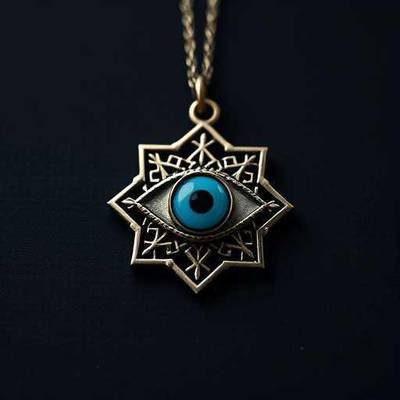
But this ancient emblem is far more than a trend. It is a powerful talisman, a silent guardian worn by millions who seek its solace. The evil eye’s true meaning is rooted in one of humanity's oldest and most profound beliefs: that a single, malevolent look can bring misfortune.
But what is it actually protecting you against, and how does a simple piece of spiritual protection jewelry hold the power to ward it off?
On our last sourcing trip to Dharamsala, we popped
This guide will journey deep into the heart of the evil eye meaning, exploring its ancient origins, its significance across cultures, and the spiritual mechanics behind its protective power. We will uncover the difference between the curse and the amulet designed to repel it, and show you how to choose, cleanse, and wear your own personal guardian to keep your energy safe and your spirit serene.

Evil Eye Protection is the Universal Human Fear Origins: From Ancient Mesopotamia to Modern Culture The Evil Eye Across Traditions How Evil Eye Protection Works: The Spiritual Mechanism Types of Evil Eye Amulets and Their Differences How to Choose and Wear Evil Eye Protection Frequently Asked Questions Evil Eye Meaning: Origins, Symbols & How It Protects You You’ve seen it everywhere.
What Is the Evil Eye? The Universal Human Fear
Before we can understand the amulet, we must first understand the force it is designed to combat. The "evil eye" is not the symbol itself; it is the curse. It is a malevolent glare, a look of envy, jealousy, or intense dislike that is believed to cause injury, misfortune, or bad luck to the person it is directed at.
This belief transcends cultures and millennia, tapping into a universal human fear: the anxiety that our success, happiness, or good fortune can attract the resentment and ill will of others.
The power of the evil eye curse, or mati as it’s known in Greek, stems from the idea that the eyes are a gateway to the soul. Ancient philosophers like Plato and Plutarch theorized that the eyes could emit invisible rays of energy.
When someone looks at another with powerful emotions like envy—the most common catalyst for the curse—these rays are thought to project negativity, disrupting the recipient's energetic field and manifesting as physical or emotional distress, financial loss, or a string of "bad luck."
This curse can be cast in three distinct ways:
- The Unconscious Gaze: This is the most common form. It comes from someone who may not wish you harm intentionally but is overcome by a moment of intense envy. A compliment that feels hollow, a look that lingers a second too long on your new car or happy relationship—these can inadvertently transmit negativity.
- The Intentional Gaze: This is a deliberate curse, where someone actively wishes you ill and directs their negativity toward you with focus and malice. This is the classic "curse" spoken of in folklore and ancient texts.
- The Unseen Evil: This refers to the hidden, intangible forces of negativity that can attach to a person's aura. The evil eye amulet is believed to protect against this unseen malevolence as well, acting as a constant spiritual shield.
At its core, the belief in the evil eye is a recognition of the tangible power of human emotion. It’s an ancient acknowledgment that jealousy is a destructive force and that we need spiritual tools to protect our peace and well-being from the negativity of the outside world.
The amulet, therefore, is not only a superstition; it is a spiritual technology for energetic self-preservation.
Origins — From Ancient Mesopotamia to Modern Culture
The story of the evil eye is as old as civilization itself. Its roots stretch back over 5,000 years to the dawn of written history in Mesopotamia, the cradle of civilization. The Sumerians, one of the world's earliest urban cultures, inscribed cuneiform tablets with texts describing the "inim gal," or "evil eye," and used incantations to ward it off.
They understood envy as a potent, destructive force capable of causing sickness in both humans and livestock.
From Mesopotamia, the belief spread like wildfire across the ancient world.
In Ancient Egypt, the concept of a protective eye symbol was paramount. The Eye of Horus, or Udjat, was one of the most powerful symbols of protection, royal power, and good health.
While distinct from the evil eye amulet we know today, it established the precedent of using an eye symbol as a potent apotropaic (protective) talisman to ward off harm.
The belief truly crystallized in Ancient Greece and Rome. Classical authors and philosophers wrote extensively about the evil eye. Hesiod, Aristotle, and Plato all referenced its power. Plutarch, in his Symposiacs, offered a "scientific" explanation, suggesting that the human eye was the chief source of deadly rays that could spring up like poisoned darts from the inner recesses of a person consumed by envy.
The Romans called it oculus malus, and it was a pervasive fear in daily life, leading to the creation of countless protective amulets and gestures, such as the mano cornuto (horned hand).
The evil eye is not confined to pagan or classical beliefs; it is referenced in the sacred texts of major world religions. It is mentioned in the Old Testament (Proverbs 28:22: "A man with an evil eye hastens after riches and does not know that poverty will come upon him") and is a recognized concept in Islamic and Jewish traditions, solidifying its place in the spiritual consciousness of billions.
As empires rose and fell, the symbol of the protective eye traveled along trade routes like the Silk Road and across the Mediterranean Sea. It was adopted and adapted by countless cultures, each adding its own unique artistic flair and folklore.
The iconic blue glass bead we recognize today, the Nazar Boncuğu, was perfected by Turkish artisans, but its essence remains unchanged: a vigilant eye that never sleeps, forever watching over its bearer.
<The Evil Eye Across Traditions — Greek, Turkish, Jewish, Islamic
While the fear of the envious gaze is universal, its expression and the methods of protection against it are beautifully diverse. The evil eye has been woven into the fabric of countless cultures, each with its unique rituals and interpretations.
Greek Tradition: The Mati
In Greece, the evil eye is known as to mati (το μάτι). The belief is deeply ingrained in the culture, with many Greeks, young and old, taking it very seriously. The curse, or matiasma, is thought to cause sudden headaches, dizziness, inexplicable weakness, and a string of bad luck.
The most common source is considered to be insincere praise or admiration tinged with envy. To counteract a compliment that might carry the curse, Greeks will often say "ftou ftou ftou" (a sound mimicking spitting) to symbolically spit on the complimented person or object, thus warding off the potential negativity.
The classic blue and white amulet, often called a mati itself, is ubiquitous in Greece, worn as jewelry and hung in homes and businesses.
Turkish Tradition: The Nazar Boncuğu
Perhaps the most globally recognized form of the evil eye amulet is the Turkish Nazar Boncuğu. This "evil eye bead" is a staple of Turkish culture, crafted from glass and featuring concentric circles of dark blue, light blue, white, and black.
These amulets are meticulously handmade by glass masters in regions like Izmir, following a tradition that has been passed down for centuries. In Turkey, the Nazar is hung everywhere: over the doorways of new homes, pinned to the clothes of newborn babies, and integrated into all forms of handcrafted protection jewelry.
A core belief in Turkish folklore is that when a Nazar amulet cracks or shatters, it means it has just absorbed a powerful dose of the evil eye, sacrificing itself to protect its owner.
The broken bead is then discarded and promptly replaced.
Jewish Tradition: The Ayin Hara
In Jewish mysticism and folklore, the evil eye is called Ayin Hara (עַיִן הָרָע). The concept is deeply rooted in Kabbalistic teachings, which view it as a powerful negative force that can hinder a person's spiritual and material progress.
Protection against the Ayin Hara often involves reciting specific prayers, such as verses from the Psalms. Two of the most prominent physical talismans used are the red string bracelet and the Hamsa Hand. The red string is traditionally worn on the left wrist, considered the "receiving" side of the body's energy, to intercept and neutralize negative influences.
The Hamsa Hand, or Hand of Miriam, is another powerful symbol used to deflect the evil eye, representing blessings and divine protection.
Islamic Tradition: The Ayn al-Hasud
In Islamic culture, the evil eye is known as nazar or ayn al-hasud (the eye of envy). The belief is referenced in the Qur'an, and protection is primarily sought through faith and prayer, reciting specific verses (surahs) to seek refuge in God from the evil of the envier.
While some Islamic schools of thought discourage the use of amulets, in many folk traditions, talismans are widely used as a supplementary form of protection. The most common is the Hand of Fatima (another name for the Hamsa), named after the daughter of the Prophet Muhammad.
This symbol, along with the blue eye bead, is prevalent in many Muslim-majority countries as a cultural emblem of protection, a tangible reminder to place one's trust in a higher power to ward off harm.

How Evil Eye Protection Works — The Spiritual Mechanism
How can a simple bead or charm hold such profound power? The mechanism behind evil eye protection operates on multiple spiritual and psychological levels, combining ancient symbolism with the focused power of human intention.
The Gaze Returned: Deflection and Confrontation
The primary principle of the evil eye amulet is deflection. The amulet is designed to look like a vigilant, unblinking eye that "stares back" at the world. When a person looks at you with a malicious or envious gaze, their negativity is immediately met by the protective eye of the talisman.
The amulet confronts the curse head-on, neutralizing it and reflecting it away from you before it can cause harm. It acts as a spiritual mirror, bouncing the negativity back to its source or dissipating it harmlessly into the ether.
An Energetic Shield
From a metaphysical perspective, everything is energy. Positive emotions create high-frequency resonance, while negative emotions like jealousy and anger create low-frequency resonance. The evil eye curse is an intentional or unintentional projection of this low-frequency energy.
The amulet, especially when charged with protective intent, acts as an energetic shield or a spiritual filter. It helps to maintain the integrity of your personal aura, preventing these dense, negative energies from penetrating your field and affecting your well-being.
It is a form of spiritual hygiene, keeping your energy clear and bright.
The Power of Belief and Intention
A talisman is not only a passive object; it is a tool activated by your own belief and intention. When you choose to wear an evil eye amulet, you are making a conscious decision to protect your energy.
This act of setting an intention imbues the object with purpose. It becomes a focal point for your own spiritual power and a constant, physical reminder of your commitment to warding off negativity. Every time you see or touch your amulet, you reinforce its protective power, strengthening the shield around you.
This psychological component is crucial—the amulet empowers you to feel safe and in control of your spiritual space.
The Significance of the Color Blue
The traditional cobalt blue color of most evil eye amulets is no accident. Across countless ancient cultures, this specific shade of blue was considered a symbol of divinity, truth, and protection. In the ancient Mediterranean, it was the color of the sky and the sea—vast, powerful, and pure.
It was believed to be a color that repelled evil spirits. The blue is thought to absorb the negativity, neutralizing its harmful effects, which is why the amulet is believed to break after absorbing a particularly potent curse.
When your evil eye amulet breaks, do not be alarmed. This is a sign that it has done its job. It has intercepted a significant amount of negativity directed at you, sacrificing itself in the process.
The tradition is to thank the amulet for its protection, dispose of the broken pieces (preferably in running water or by burying them), and replace it with a new one to continue its vigilant watch.
Types of Evil Eye Amulets and Their Differences
While the classic blue glass bead is the most famous, the world of evil eye protection is rich with diverse symbols and forms. Understanding these variations can help you choose an amulet that resonates most deeply with your personal energy and needs.
Many of these are considered powerful protection symbols with ancient spiritual meanings.
- The Nazar Boncuğu: This is the quintessential Turkish evil eye, made of concentric circles of blue, white, and black glass. It is the most direct representation of the protective eye and is focused purely on deflecting the evil eye curse.
- The Hamsa Hand: Also known as the Hand of Fatima or Hand of Miriam, this is a stylized open right hand. It is a symbol of blessings, power, and strength, used to ward off the evil eye and bring good fortune, health, and happiness. Often, a Nazar is placed in the center of the Hamsa's palm, combining two powerful protective symbols into one potent talisman. You can explore the deep meaning of the Hamsa hand in our detailed guide.
- Red String Bracelets: Originating from Kabbalistic tradition, the red string is a powerful tool for warding off the Ayin Hara. It is worn on the left wrist, which is believed to be the "receiving" side of the spiritual body. The string acts as a seal, blocking negative energies from entering your aura while allowing positive energies to flow freely.
The Meaning of Different Evil Eye Colors
While cobalt blue is the traditional color, evil eye amulets are now made in a variety of hues, each with its own specific intention and protective focus:
- Dark Blue: The classic color for karma and fate protection, calm, and relaxation.
- Light Blue: General protection, broadening your perspective, and solitude and peace.
- Green: Success and happiness; enjoyment of life, health, and new ideas.
- Red: Brings courage, enthusiasm, and energy; protection from fears and anxieties.
- Yellow/Gold: Health, relief from exhaustion, sharper mind, and concentration.
- White: Purity and focus; clears clutter and obstacles to start fresh.
- Black: Power and prosperity; prepares you for the unknown and opens the door to new opportunities.
- Purple: Re-balances your life; removes obstacles and boosts imagination.
How to Choose and Wear Evil Eye Protection
Integrating an evil eye amulet into your life is a personal and intentional act. It's about more than wearing a piece of jewelry; it's about creating a conscious connection with a tool for your spiritual well-being.
Choosing Your Amulet
The most important rule is to trust your intuition. Browse different styles, colors, and symbols. Which piece calls to you? Do you feel a pull towards a classic Nazar necklace, a Hamsa bracelet, or a simple red string?
The amulet that is meant for you will resonate with your energy. Don't overthink it. The connection you feel is the amulet choosing you as much as you are choosing it.
Cleansing and Charging Your Amulet
When you first receive your evil eye protection, it's important to cleanse it of any energies it may have picked up on its journey to you. This prepares it to attune to your specific energy signature. Here are a few simple cleansing methods:
- Moonlight: Place your amulet on a windowsill overnight during a full moon to bathe it in lunar energy.
- Smoke Cleansing: Pass the amulet through the smoke of cleansing herbs like sage, palo santo, or cedar.
- Sound: Use a singing bowl, chime, or bell to create a high-frequency resonance that clears the amulet's energy.
After cleansing, hold the amulet in your hands. Close your eyes and set a clear intention for it. You might say aloud or in your mind, "Protect my energy from all negativity. Keep me safe, grounded, and surrounded by light." This process, often called "charging," programs the amulet with its specific purpose.
Where to Wear and Place Your Protection
The versatility of evil eye talismans allows you to place their protective energy wherever you need it most.
- Personal Jewelry: Wearing an evil eye bracelet, necklace, or ring keeps the protection within your personal aura at all times. Many traditions suggest wearing bracelets on the left wrist to protect your "receiving" side.
- In the Home: Hang a larger Nazar Boncuğu above or next to your front door to act as a guardian for your entire household, preventing negativity from entering your sacred space.
- In Your Car: Dangle a small amulet from your rearview mirror to protect you during your travels.
- At Work: Place a small evil eye on your desk or in your workspace to deflect workplace jealousy and professional negativity.
Gifting Evil Eye Amulets
Giving an evil eye amulet as a gift is a profound act of love and care. It is a traditional gift for significant life events: for a newborn baby to protect their pure spirit, for a friend starting a new business, or for a loved one moving into a new home.
When you give someone this talisman, you are offering them a wish for safety, peace, and happiness. It is a gesture that says, "I want you to be protected."
By choosing, cleansing, and wearing your amulet with intention, you transform it from a beautiful object into a powerful ally on your spiritual journey. You can explore a curated selection of authentic pieces in our collection of protection jewelry.
Frequently Asked Questions
- What is the true meaning of the evil eye?
- The true meaning of the evil eye refers to the curse of misfortune that is believed to be inflicted by a malevolent or envious glare. The popular eye symbol itself is not the evil eye; it is the amulet or talisman created to protect against this curse by deflecting its negativity.
- Is it bad luck to buy an evil eye for yourself?
- No, it is not bad luck to buy an evil eye for yourself. This is a common misconception. While it is considered a very powerful and thoughtful gift, purchasing one for your own protection is a potent act of self-care and intention. The power comes from the belief and intention you invest in it.
- What happens if my evil eye bracelet breaks?
- If your evil eye amulet cracks or breaks, it is traditionally believed that it has just absorbed a powerful dose of negativity or a direct curse, sacrificing itself to protect you. It means the amulet has fulfilled its purpose. You should thank it, dispose of the pieces, and replace it with a new one.
- Which wrist should I wear an evil eye bracelet on?
- Tradition, particularly from Kabbalistic teachings, suggests wearing an evil eye bracelet on the left wrist. The left side of the body is considered the "receiving" side, and wearing the amulet on this wrist helps to block negative energies from entering your aura.
- Can anyone wear an evil eye?
- Yes, absolutely. The evil eye is a universal symbol that transcends specific religions or cultures. Its power lies in the shared human experience of envy and the desire for protection. Anyone who feels drawn to its symbolism and wishes to protect their energy can wear it.
- How do I activate my evil eye jewelry?
- To activate your evil eye jewelry, you should first cleanse it using methods like moonlight, sound, or smoke from sage. Then, hold it in your hands, close your eyes, and set a clear intention for it. State its purpose, asking it to protect you from all forms of negativity and to keep your energy safe.
- What do the different colors of the evil eye mean?
- While the traditional dark blue is for karma and fate protection, other colors carry specific meanings. Light blue offers general protection, green promotes success, red provides courage, yellow enhances health, and white signifies purity and focus.
The journey of the evil eye symbol from ancient curse to modern-day protector is a a sign of its enduring power. It is far more than a fleeting fashion accessory; it is a thread connecting us to the traditional teachings of our ancestors, a universal language of spiritual self-defense.
In a world filled with noise, comparison, and unseen energies, wearing an evil eye is a conscious, empowering choice to safeguard your peace, protect your joy, and honor your own light.
if you are drawn to its rich history, its cross-cultural significance, or the simple, profound comfort it provides, this ancient guardian is ready to watch over you. It serves as a beautiful reminder that you have the power to protect your energy and walk through the world with confidence and serenity.
Find the piece that speaks to your soul and let it be your constant companion on the path to a more peaceful and protected life. Discover your personal guardian in the Buddhabelief collection of protection jewelry.

Keep reading