buddhist-jewelry
Flower of Life Meaning in Tibetan Buddhism: A 2026 Guide
You're thirty minutes into your morning sit. The initial chatter has subsided, the breath has settled, but there's a certain flatness. The concepts you've studied for years—karma, anatta, śūnyatā—feel like familiar, well-worn stones in your mind, but they aren't illuminating the path quite like they used to.
This is the practitioner's plateau, a place of quiet frustration. You might find yourself wondering if there's another way to *see* the Dharma, to feel its truth in a more visceral, less conceptual way.
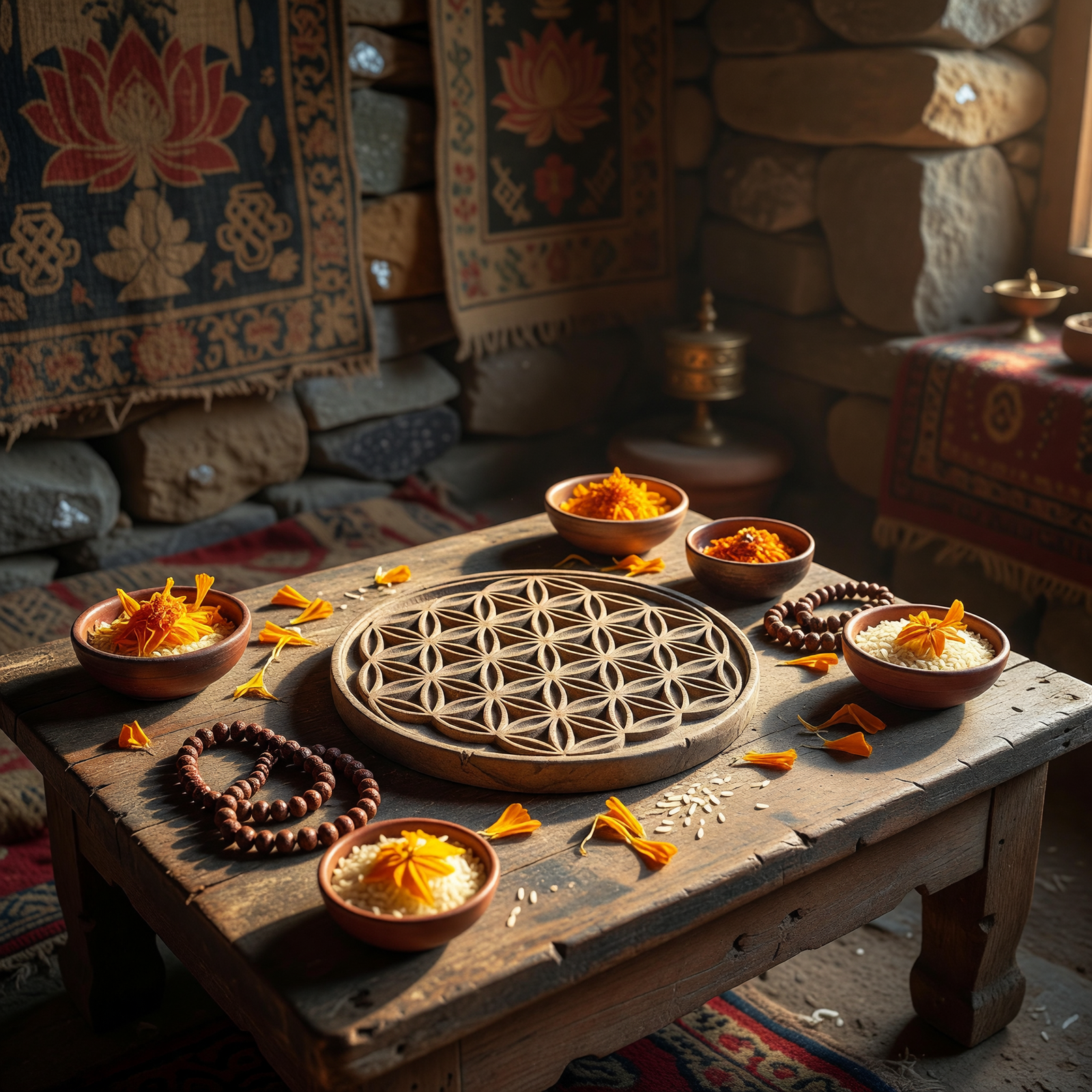
This is where sacred geometry, often mistakenly conflated with the popular 'Flower of Life' symbol, enters the practice not as a new idea, but as an ancient map. It’s a way to trace the profound interconnectedness of all things, a truth that underpins our entire collection of handcrafted pieces.
The Foundation: What Sacred Geometry Really Is in a Tibetan Context
When you search for the Flower of Life meaning, you'll find a beautiful, interlocking pattern of circles, often associated with universal creation, sacred geometry, and a host of spiritual traditions from ancient Egypt to the New Age movement.
It's a powerful symbol of unity. However, let's be clear, as practitioners committed to authenticity: you won't find the term 'Flower of Life' in the Kangyur or Tengyur, the Tibetan Buddhist canons compiled during the 9th through 13th centuries.
It is not, by name, a traditional Tibetan symbol.
This is where many practitioners stumble. They either dismiss the concept entirely or try to force a Western symbol onto an Eastern path. The real insight lies in looking past the specific name to the underlying principle it represents: the universe as an ordered, interconnected, and harmonious whole that arises from a single point.
This principle is not only present in Tibetan Buddhism; it is the absolute heart of it. We just call it by a different name: Mandala (དཀྱིལ་འཁོར།).
A mandala is infinitely more than a pretty geometric design. The word itself means 'circle' or 'center and surrounding environment' in Sanskrit. In the Vajrayana tradition, a mandala is a detailed, two-dimensional representation of a three-dimensional enlightened mind-space—the celestial palace of a Buddha or Bodhisattva.
Every line, every color, every gate, and every deity within it is a precise symbolic representation of a facet of enlightened consciousness.
Where the Flower of Life is a single, repeating pattern, a mandala is a complete cosmological and psychological map. It starts from a central point, a *bindu*, representing the unmanifested potential, the union of wisdom and compassion.
From this seed, the entire universe of the palace unfolds with perfect geometric precision—often spanning 12 to 16 inches across in traditional thangka paintings. This isn't just art; it's spiritual technology. It's a blueprint used in advanced visualization practices (Deity Yoga) to transform one's own consciousness into that of the enlightened being at its center.
So, while the modern Flower of Life symbol points to a beautiful truth of unity, the Tibetan mandala provides a detailed, rigorous, and time-tested path to actually realizing it.
Why This Understanding of Interconnection Matters in 2026

It's easy to dismiss these ancient patterns as archaic or purely aesthetic. But for a practitioner working through the complexities of 2026, understanding this geometric view of reality is more relevant than ever. Your daily life is likely a stream of notifications, fragmented news cycles, and professional silos.
The prevailing feeling is one of separation. Your work project is separate from your family life, which is separate from your spiritual practice. This is the illusion of samsara, and it's exhausting.
The mandala, as the Tibetan expression of sacred geometry, is a direct visual antidote to this fragmentation. It teaches the principle of Dependent Origination (རྟེན་ཅིང་འབྲེལ་བར་འབྱུང་བ་, tendrel). No element within the mandala exists independently.
The outer walls cannot exist without the inner chambers; the deities cannot exist without the central bindu. Everything arises in relation to everything else. When you sit with a mandala during meditation—whether a thangka painted in mineral pigments or a sand mandala taking shape over weeks—your perception begins to reorganize itself around this truth.
Consider these scenarios:
- working through a Professional Plateau: You're a senior manager in a tech company, and your team is stuck. The engineers blame marketing, marketing blames sales. It's a cycle of finger-pointing. Holding the image of a mandala in your mind can shift your approach. You start to see the team not as separate, competing parts, but as an interconnected system. You realize a bottleneck in engineering is intrinsically linked to a promise made by sales. Your perspective shifts from assigning blame to understanding the relationships between the parts. You become a more holistic, effective leader.
- Deepening Strained Relationships: You're in a recurring argument with your partner or a family member about the care of your aging parents. It feels like your positions are miles apart. The geometric principle reminds you that your view and their view, while seemingly opposite, arise from the same central point: love and concern for your parents. The pattern helps you see the shared foundation instead of the conflicting edges. It opens a space for compassion where there was once only opposition.
- Breaking Through a Practice Slump: When your meditation feels like you're just 'watching the breath' for the thousandth time, engaging with a visual pattern can be a powerful circuit breaker. Instead of just focusing on the in-and-out, you can visualize your breath creating a luminous, expanding pattern from your heart center. It transforms a rote exercise into a dynamic, creative exploration of the mind. It's a way to experience the Dharma, not only think about it.
In 2026, the real challenge for a serious practitioner is not learning more concepts, but integrating the ones you know into the fabric of your life. Sacred geometry, through the lens of the mandala, is a master key for this integration.
It remains a constant, silent reminder that nothing is truly separate—a teaching that will only deepen as you return to it.
The Real Benefits: How Sacred Geometry Works in Practice
Understanding these patterns isn't just an intellectual exercise. When you engage with them, whether through visualization or by having a tangible object nearby, they become active supports for your path. They work on the mind in subtle but direct ways.
A Visual Support for Understanding Emptiness (Śūnyatā)
The concept of emptiness can be one of the most difficult to grasp. It's often mistaken for nothingness or a void. Sacred geometry offers a much more elegant and accurate illustration. Look at any of these patterns, like the Endless Knot (one of the eight auspicious symbols).
Its lines are continuous, interwoven, and have no beginning or end. You cannot point to one part of the knot and say, "This is the independent, essential part." The entire pattern exists only as a whole.
If you remove one strand, the entire form collapses. This is a perfect visual metaphor for śūnyatā. It shows that all phenomena are 'empty' of inherent, independent existence. They are defined entirely by their relationships with everything else.
A piece of jewelry engraved with the Endless Knot isn't just a decoration; it's a dharma talk you can hold in your hand, a constant reminder that form is emptiness, and emptiness is form.
A Blueprint for Visualization Practice (Deity Yoga)
For those engaged in Vajrayana practices, the mandala is an indispensable tool. In Deity Yoga (kye-rim), the practitioner dissolves their ordinary sense of self and visualizes themselves as the enlightened deity at the center of the mandala.
This is not an act of fantasy. It is a rigorous psychological technique for recognizing one's own Buddha-nature. The geometric structure of the mandala provides the necessary stability and clarity for this complex visualization.
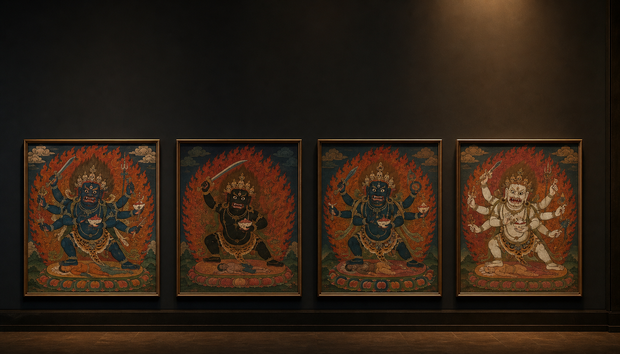
It holds the mind steady. The gates, the walls, the lotus petals—each element corresponds to a specific quality the practitioner is cultivating. Having a physical representation, like a thangka painting or a finely crafted amulet box with these engravings, serves as the anchor for the entire inner practice.
It's the architectural drawing from which you build a palace of enlightened mind.
A Tangible Reminder of Impermanence (Anicca)
Perhaps the most poignant example of sacred geometry in practice is the creation and dissolution of a sand mandala. Monks from esteemed monasteries, like those who bless our malas, spend days or even weeks painstakingly creating a vast, intricate mandala from millions of grains of colored sand.
The focus and precision required are a meditation in themselves. The finished work is a masterpiece of breathtaking beauty and complexity. And then, in a closing ceremony, they sweep it all away. The colored sands are gathered and poured into a nearby river or stream, releasing the blessings back into the world.
There is no greater teaching on impermanence. The beauty was never in the final product itself, but in the entire process of its creation and its inevitable dissolution. It teaches non-attachment at the deepest level.
Related: our artisans' workshops in Kathmandu
How to Choose an Authentic Piece of Sacred Geometry

When you seek a piece of jewelry or a practice object that incorporates these sacred symbols, authenticity is paramount. The market is flooded with mass-produced, laser-etched trinkets that capture the form but miss the spirit entirely.
For those committed to their practice, the difference is not trivial. An authentic piece is an investment in your practice, a tool created with intention. — explore our Tibetan jewelry collection for authentic pieces.
Here are the criteria to consider:
- The Source of the Materials: Where does the silver, the turquoise, the coral come from? Authentic pieces often use traditional materials sourced ethically. We've spent years building relationships with local suppliers in the Himalayan region—herders and miners from Ladakh to Nepal—to ensure the materials are not only of high quality but also carry the resonance of the place.
- The Accuracy of the Symbolism: Is the Endless Knot rendered correctly? Is the vajra on a ghanta bell proportioned according to tradition? Mass producers often alter symbols for aesthetic reasons, diluting their meaning. An authentic piece respects the lineage. When you hold one of our pieces, you're holding a design that has been passed down through generations of artisans whose work is their practice.
Consider what form speaks to your specific needs:
- Pendants and Amulets: A pendant, worn over the heart, is a very personal and potent reminder. A piece featuring the Endless Knot or a Kalachakra mandala can be your private touchstone throughout the day, a way to recall the principle of interdependence during a stressful meeting or a difficult commute.
- Singing Bowls: The geometric patterns often engraved around a hand-hammered singing bowl are not merely decorative. They are connected to the science of cymatics—the visual representation of sound waves. The engravings are intended to help structure the bowl's resonance, aligning the sound it produces with these universal patterns of harmony. A bowl struck at the right angle will reveal these patterns in sand or water placed on its surface.
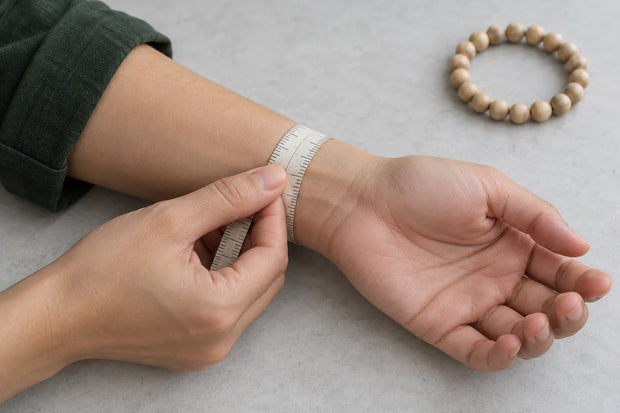
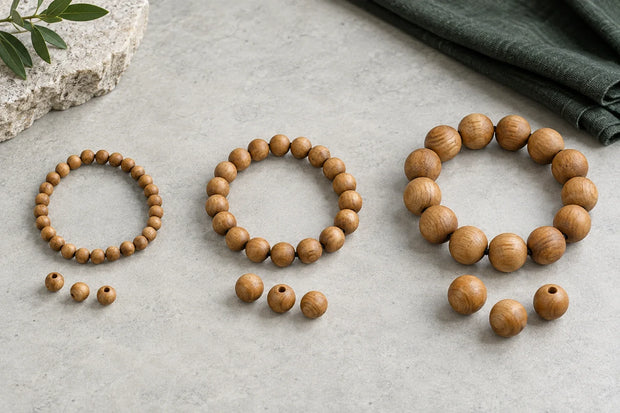
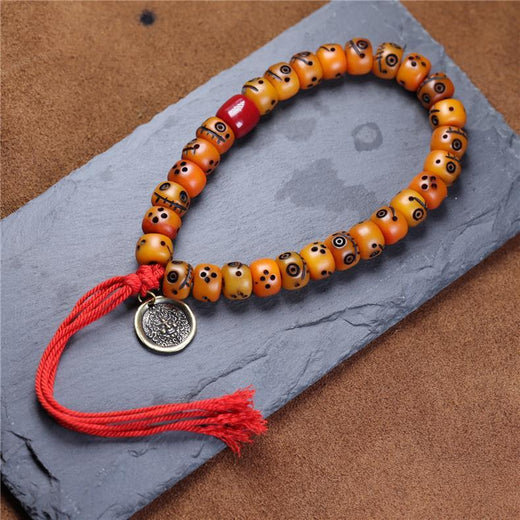
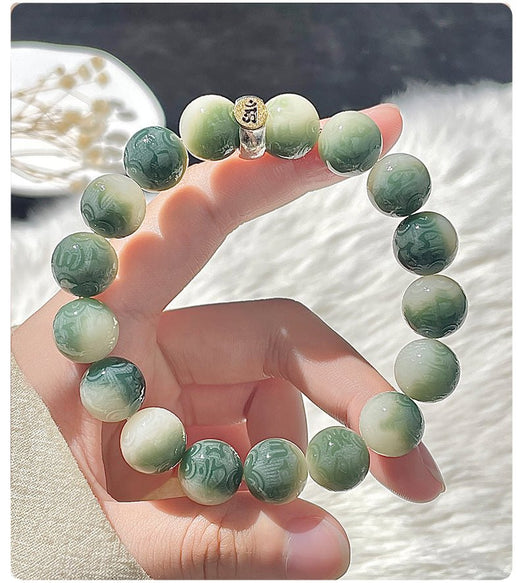
- Bracelets and Malas: Even the simple, circular form of a mala is a type of sacred geometry. It represents the endless cycle of samsara and the path of practice. When a mala is adorned with a guru bead or markers featuring these symbols, it adds another layer of meaning to every recitation. Choosing authentic Tibetan Buddhist jewelry is about finding a companion for your journey.
How To Use It Day To Day in Your Daily Life
An authentic piece of sacred geometry should not only sit in a box. It's meant to be integrated into your life, to serve as a bridge between your formal practice on the cushion and your life in the world. Here are a few practical ways to do that:
- As a Focus for Morning Intention: Before you check your phone or get into emails, take a moment. Place your pendant or bracelet on your desk or altar. Gaze at the pattern for a few minutes. Contemplate its meaning of interconnectedness. Set an intention for your day: "Today, may I see the connections between people and events. May I act with an awareness of the whole, not only my small part." This small ritual—practiced daily by monks in the Jokhang Temple courtyard before dawn—can fundamentally shift the texture of your day.
- As an Anchor During Meditation: If you're experiencing that practitioner's plateau where the mind feels dull or distracted, use your piece as a tactile anchor. Hold it in your hand. Trace the lines of the Endless Knot with your thumb. Feel its coolness, its weight—whether it's hand-cast bronze or turquoise-inlaid silver. This physical sensation can be a powerful way to bring a wandering mind back to the present moment, grounding your awareness in the body when the breath feels too subtle.
- As a Private Reminder in Difficult Moments: You're in a tense negotiation at work or a difficult conversation with your teenager. Your nervous system is firing, and you're about to react from a place of fear or anger. Subtly touch the amulet under your shirt or the bracelet on your wrist. Let it be a secret signal to yourself. A reminder to pause, to breathe, and to remember the larger pattern. This person is not only an obstacle; they are part of an interconnected web, just like you. This simple act can create the space needed to respond with wisdom instead of reacting with habit.
The goal is to transform the object from a passive ornament into an active partner in your practice. Its value is not in its material, but in its ability to consistently bring you back to the Dharma.
Explore our Tai Chi prayer bead bracelet.
Common Questions About Sacred Geometry in Tibetan Buddhism
Walking through the courtyards of Jokhang Temple or sitting with practitioners in Dharamshala, certain questions surface again and again. Here are the ones we hear most often from those on a path of self-inquiry.
Is the Flower of Life a Buddhist symbol?
Directly, no. You won't find the specific "Flower of Life" pattern with that name in traditional Tibetan thangkas or monastery carvings from the 15th century onward. It's a term and a specific geometric construction more associated with Western New Age and esoteric traditions.
However, the underlying principle it represents—the geometric unfolding of the universe from a single point and the interconnectedness of all life—is absolutely central to Buddhist philosophy, especially in the Vajrayana school. The Tibetan expression of this principle is the mandala, which is a more complex and detailed system of sacred geometry used as a map for spiritual transformation.
What's the difference between a mandala and the Flower of Life?
Think of the Flower of Life as a beautiful, universal statement about unity. It's a single, elegant pattern. A Tibetan mandala, on the other hand, is a specific, detailed instruction manual. It's a blueprint of an enlightened being's pure realm and a guide for the practitioner to realize that same state.
Mandalas contain a rich vocabulary of symbols: specific deities, colors representing the five wisdoms, gates symbolizing the path of liberation, and so on. While the Flower of Life points to a destination (oneness), the mandala provides the turn-by-turn directions to get there within the framework of the Buddhist path.
Does a piece of jewelry with these patterns actually have 'presence'?
From a practitioner's perspective, the 'presence' of an object is less about inherent mystical properties and more about a confluence of three factors: the intention of the maker, the purity of the materials, and—most importantly—your own intention as the user.
Material, origin and ceremony details vary by product. Use the individual listing and request supporting records before relying on a particular workshop, artisan or temple claim.
However, this potential is activated by you. When you use the piece as a reminder for your practice, as a focus for compassion, you are the one who brings it to life. It becomes a powerful tool because you make it so.
How can I be sure a piece is authentic?
Authenticity comes down to lineage and transparency. Ask about the people who make the items. Do they have names? Is there a story? We know our artisans personally; we've shared countless cups of butter tea in their workshops in Boudhanath and Kathmandu.
Look for signs of hand-craftsmanship—the slight, beautiful imperfections that are the signature of a human touch. An authentic piece is an investment, so its price will reflect the hours of skilled labor and quality materials like sterling silver or semi-precious stone.
Be wary of prices that seem too good to be true. True authenticity lies in the connection between the maker, the object, and you.
Can I wear these symbols if I'm not a Buddhist?
Absolutely. The principles these geometric patterns represent—interconnection, harmony, balance—are universal truths, not the exclusive property of any single religion. Wearing a symbol like the Endless Knot can be a beautiful way to appreciate Tibetan culture and artistry, and to carry a reminder of these universal values in your daily life.
It is an act of appreciation, not appropriation, especially when sourced from artisans who benefit directly. The only caution is to wear it with respect, understanding that for many, it is not only a design but a sacred symbol of their spiritual path.
How does sacred geometry relate to sound, like in singing bowls?
This is a fascinating area where physics and spirituality meet. The study of cymatics shows that sound resonance create geometric patterns in physical media like water or sand. Different frequencies produce different, often beautiful and complex, patterns.
The ancient crafters of singing bowls understood this intuitively. The geometric engravings on a bowl are not random; they are often meant to visually represent the harmonious, orderly patterns that the bowl's sound produces on a subtle level.
The geometry and the sound are two expressions of the same underlying resonance, designed to bring the mind and body into a state of coherence and peace.
Your Journey, Re-Envisioned
That feeling of being on a plateau in your practice is not a sign of failure. It's an invitation. It's a call to move from the head to the heart, from the purely conceptual to the lived and felt experience of the Dharma.
The path is long, and sometimes we need new maps, or rather, we need to learn to read the ancient maps in a new light.
Sacred geometry, as expressed in the Tibetan mandala tradition that has guided practitioners since the 11th century, offers this new light. It's a way to see the elegant, unbreakable web of connections that you are already a part of.
It's a tool to remind you, in the midst of a chaotic day, of the silent, orderly universe that underpins it all—the kind of clarity you feel standing before a thangka's intricate proportions. This is not about acquiring another spiritual object; it's about acquiring a new lens through which to view your entire life. Yin Yang Symbol Meaning 2026
Moving forward, the journey is about integration. It's about letting these truths seep from the meditation cushion into your relationships, your work, and your every interaction. Perhaps it's time to invite a piece of this sacred map into your life—not as a decoration, but as a compass for the path you're already on.
We invite you to explore our collection of authentic Tibetan jewelry, each piece a sign of this interconnected vision of the world.
Material, origin and ceremony details vary by product. Use the individual listing and request supporting records before relying on a particular workshop, artisan or temple claim.
Keep reading