Green Jade Meaning, Benefits & How to Choose Authentic Jade — authentic Tibetan Buddhist guide by Buddhabelief
Green Jade Meaning, Benefits & How to Choose Authentic Jade

Have you ever felt that familiar tug of anxiety, perhaps after scrolling through social media or facing a particularly demanding week at work? That feeling of needing a pause, a moment to reconnect with something real and grounding? You’re not alone. Many of us, while navigating the demands of modern life, find ourselves searching for anchors – small, tangible connections to peace and purpose. Perhaps you've dabbled in meditation apps or admired the serene aesthetics of spiritual influencers, but still feel a gap. What if a simple, beautiful stone could offer a quiet, steady presence in your daily rhythm? We invite you to explore the profound world of green jade, a stone revered across centuries and cultures, and discover how it might offer the gentle support you're seeking. To begin your exploration, take a look at our explore jade jewelry.

Green Jade Benefits Authentic is 🧭 Navigate Your Journey 🏛️ Browse Our Collection Authentic pieces 📖 Complete Guide Deep reference 🎯 How to Choose Selection guide Have you ever felt that familiar tug of anxiety, perhaps after scrolling through social media or facing a particularly demanding week at work?

The Foundation — What It Really Is

When you hear the word 'jade,' what comes to mind? For most Western collectors, it's a smooth, cool, green stone, perhaps seen in an antique shop or a museum. But to truly understand green jade, we need to look beyond its surface beauty and appreciate the rich geological and cultural tapestry it represents. Geologically, 'jade' isn't a single mineral but rather a term encompassing two distinct types: Nephrite and Jadeite. While both are durable and prized for their beauty, they have different chemical compositions and crystal structures. Nephrite, often found in a wider range of greens, creams, and even black, is traditionally associated with ancient Chinese and Māori cultures. Jadeite, typically brighter and more vibrant in color, is rarer and often linked to Burmese (Myanmar) sources, gaining prominence later in Chinese history. From the 7th century onward, across the Himalayas and beyond, it was primarily nephrite that graced the hands of artisans and adorned sacred spaces.

The misconception we often encounter is that 'jade is just a pretty green stone.' While it is undeniably beautiful, its true significance lies in its cultural weight. In China, jade has been revered for over 8,000 years, often called the 'Stone of Heaven.' It symbolized longevity, prosperity, protection, and even immortality. Emperors were buried in jade suits—the most famous being the Han Dynasty jade burial suit of Liu Sheng, discovered in 1968—and scholars carried jade talismans for wisdom. Its smooth, cool touch was associated with purity and virtue. It was not merely an ornament but a conduit for powerful energies, a bridge between the earthly and the divine. Think of it as a tangible piece of ancient wisdom, passed down through generations, each touch imbuing it with more stories and intentions.

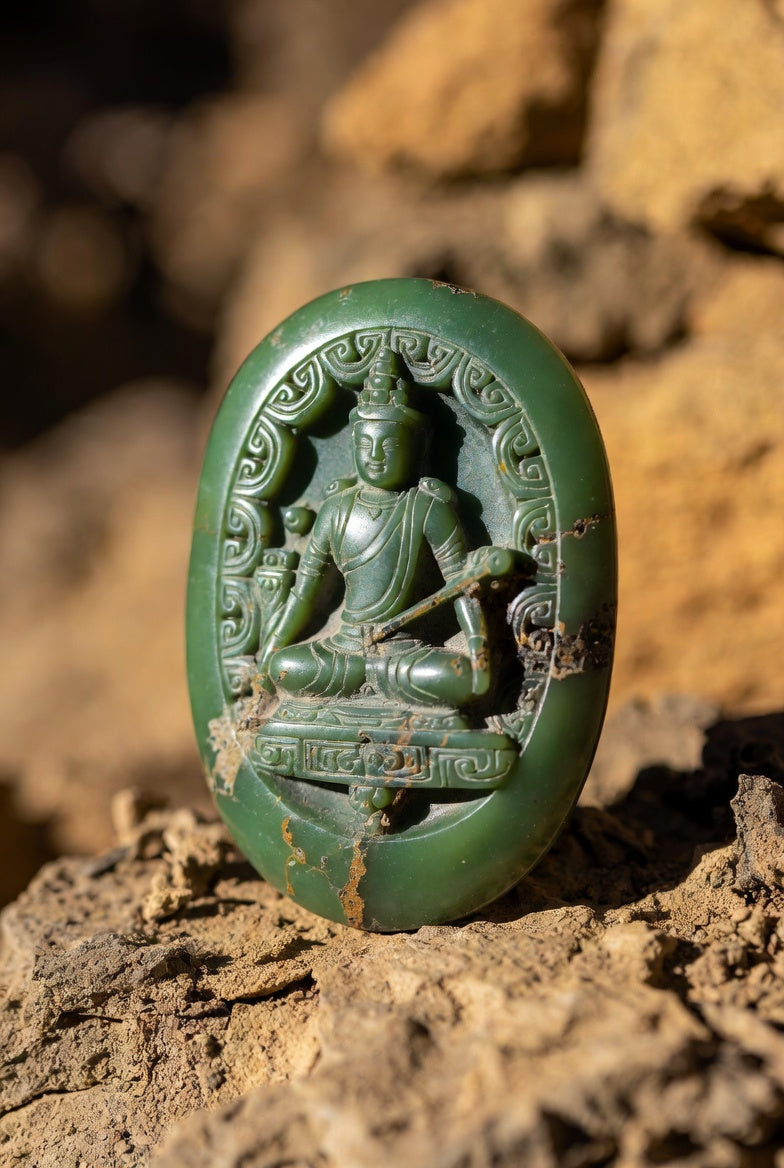
In the Tibetan Buddhist tradition, while turquoise and coral often take center stage, jade holds its own quiet, respected place. It's considered a stone of purification and protection, often used in malas or as part of ceremonial objects. The serene green of jade resonates with the energy of Green Tara, the Buddha of enlightened activity and compassion, who swiftly comes to the aid of those who call upon her. Holding a piece of jade carved in the style of a Tibetan workshop—perhaps a pendant measuring 3 to 5 centimeters—one might feel a connection to the calm, steady heart of the Himalayas, a subtle reminder of the path towards inner peace and compassionate action. It's not about mystical claims, but about connecting to a lineage of reverence and intention. This deep appreciation for its spiritual and protective qualities makes it a cherished material in our explore jade jewelry.

Understanding these foundations helps us appreciate that when you choose a piece of jade, you're not just acquiring a gemstone; you're inviting a piece of living history and cultural legacy into your life. It's an object imbued with centuries of human intention, a silent companion on your own journey towards balance and well-being. As you continue exploring jade's role in your practice, our explore jade necklace meaning benefits complete guide offers deeper context on how different styles and carvings carry distinct energetic qualities.

Why This Matters in 2026

In 2026, those of us caught in relentless productivity cycles find ourselves living at a pace that often feels unsustainable. The digital world constantly pulls at our attention, the news cycle can be overwhelming, and the pressure to 'do more' and 'be more' is ever-present. This can lead to what you might recognize as burnout, a pervasive sense of anxiety, and that nagging question, "What do I really want?" You might feel adrift, comparing your journey to curated social media feeds, leading to self-doubt and a longing for something more authentic and grounding.

This is precisely where the ancient wisdom held within a stone like green jade becomes deeply relevant. In a world clamoring for your attention, jade offers a quiet, steady counterpoint. Its association with peace, balance, and protection—documented in Chinese imperial courts as early as the Shang dynasty—speaks to a fundamental human need for stability amidst chaos. When you hold a smooth jade pendant, feeling its cool weight in your palm, that tactile sensation gently pulls you back from the frantic pace of your thoughts. It's a simple, non-intrusive way to create a mindful pause in your day.

For those navigating career pressures, relationship uncertainties, or simply seeking clarity on their path, jade can serve as a tangible anchor. Its deep green hues are often associated with growth, renewal, and vitality – qualities we all seek when feeling stagnant or overwhelmed. It's a subtle reminder that just as nature finds its balance, so too can you. It encourages a sense of self-sufficiency, helping you to tap into your inner reserves of strength rather than constantly seeking external validation.

Consider the daily onslaught of notifications, emails, and the endless scroll. These aren't just minor distractions; they contribute to a fragmented sense of self. Green jade, with its history as a protective amulet across Tibetan and Chinese traditions, can be seen as a gentle shield, not against external threats, but against the internal turmoil generated by constant overstimulation. It helps you cultivate a personal sanctuary, a quiet space within yourself where you can return to clarity and calm. It's not about escaping reality, but about finding a way to engage with it from a more centered and resilient place.

We've observed that those just beginning their spiritual exploration are looking for accessible, tangible tools. You don't need years of study or complex rituals to connect with jade. Its power lies in its simplicity and its deep-rooted cultural reverence across the Himalayan region. By choosing to wear or carry green jade, you are making a conscious choice to invite more balance and intention into your life. You are acknowledging that amidst the noise of 2026, there is still genuine value in connecting with something ancient, authentic, and truly meaningful. Explore our handcrafted jade accessories and discover what resonates with you.

A close-up image of a smooth, polished green jade pendant resting on a textured, earthy fabric, with soft, natural light highlighting its subtle variations in color and translucency.

Real Benefits / How It Works

Beyond its rich history and beautiful appearance, green jade is cherished for its perceived practical benefits, offering a gentle yet steady support for your emotional and spiritual well-being. These aren't "magic fixes" but rather subtle energies that, when consciously engaged with, can help shift your perspective and foster inner growth. For someone just starting their spiritual journey, these benefits can feel like a comforting hand reaching out, offering guidance without demanding complex understanding. In the Tibetan Buddhist tradition, practitioners have worn jade pendants close to the heart for centuries, treating the stone as a tangible anchor for intention. — explore our crystal collection for authentic pieces.

Emotional Harmony & Inner Peace

One of the most frequently cited benefits of green jade is its ability to promote emotional balance and inner peace. If you often find yourself caught in cycles of worry or feeling overwhelmed by stress, holding or wearing jade can act as a gentle reminder to breathe and center yourself. Its calming energy is believed to soothe the nervous system, helping to dissolve negative thoughts and irritability. It's like a quiet friend who encourages you to let go of what no longer serves you, fostering a sense of emotional release. This can be particularly helpful when you're grappling with work-related stress or the subtle anxieties that social media comparison can bring. Those walking a contemplative path find comfort in simply holding a smooth piece of jade during moments of tension, allowing its steady presence to bring them back to the present moment. It's a tangible anchor in the choppy waters of daily life, inviting you to find calm within. A jade bead the size of a thumbnail, worn on a mala or kept in your pocket, becomes a physical touchstone for returning to stillness.

Protection & Good Fortune

Across both Chinese and Tibetan traditions, green jade is highly regarded as a protective stone and a bringer of good fortune. This isn't about warding off curses, but rather about cultivating an energetic shield that helps you navigate challenges with greater resilience. Think of it as a subtle energetic filter, helping to deflect negative influences and attract positive opportunities. For someone feeling uncertain about their path or facing big decisions – like commitment in a relationship or a career change – wearing jade can instill a sense of confidence and an inner knowing that things will align. It encourages you to trust your intuition and to embrace positive outcomes. It's a reminder that you are capable and deserving of good things, helping to dissolve self-doubt and foster a more optimistic outlook. This protective quality also extends to safeguarding your emotional energy, preventing burnout by gently reminding you to set boundaries and preserve your inner resources. Tibetan families have passed down jade amulets through generations, each piece worn smooth by hands seeking reassurance during uncertain times.

Wisdom & Self-Discovery

Green jade is often associated with wisdom, clarity, and self-discovery. If you're in a phase of asking "What do I really want?" or feeling a bit lost in your identity, jade can be a powerful ally. It's believed to enhance your ability to see yourself clearly, encouraging introspection and a deeper understanding of your true desires and motivations. This isn't about receiving immediate answers, but about fostering an environment within yourself where clarity can emerge. It helps you shed external expectations and listen to your inner voice, guiding you towards authentic choices that align with your highest good. This stone encourages honest self-reflection, making it an excellent companion for journaling or quiet contemplation. By wearing or meditating with jade, you're inviting a gentle guide to help you uncover your innate wisdom and embark on a more purposeful path of self-discovery. Practitioners often report that wearing jade during periods of major life transitions – relocations, relationship shifts, spiritual initiations – brings a steadying quality to the process of becoming who you're meant to be. For further insights into the specific energies of this beautiful stone, consider delving into our article on green jade meaning and benefits.

How to Choose Authentic

Choosing an authentic piece of green jade is a journey in itself, one that requires a bit of discernment and a healthy dose of curiosity. With its popularity across cultures, the market is unfortunately flooded with imitations, treated stones, and outright fakes. Those on a path of self-inquiry often find this overwhelming at first. But don't worry, we're here to guide you, drawing from years of experience in the Himalayas and a deep respect for the stone itself. This isn't about being an expert gemologist, but about understanding some key indicators and knowing what questions to ask.

Understanding the Types and Treatments

As we mentioned, true jade is either Nephrite or Jadeite. Both are valuable, but Jadeite is generally rarer and often commands higher prices, especially the vibrant 'Imperial Jade.' However, many stones are sold as 'jade' that are not, such as serpentine, aventurine quartz, or even dyed glass. Beyond outright fakes, there are also treated jades:

  • Type A Jade: Natural, untreated, and unenhanced. This is the most valuable and sought-after.
  • Type B Jade: Chemically treated to remove impurities, then infused with polymer resin to improve transparency and color.
  • Type C Jade: Chemically treated and then dyed to enhance color. These treatments are often unstable and can fade over time.

When we source our materials, we are committed to providing you with Type A jade, ensuring its natural beauty and integrity. This commitment is central to our authentic jade pieces.

Key Indicators for Authenticity:

  1. Look at the Color: Natural green jade will have subtle variations in color, often with veins, swirls, or lighter/darker patches. If the color is unnaturally uniform, bright, or too vivid, it might be dyed. Look for a soft, translucent glow rather than a harsh, opaque appearance.
  2. Examine the Texture and Luster: Authentic jade has a smooth, almost waxy or greasy luster when polished, not overly glassy or plastic-like. Under magnification, you might see tiny fibrous or granular structures in nephrite, or a crystalline structure in jadeite. Fakes often have bubbles (glass) or a dull, porous surface.
  3. Feel the Weight and Coolness: Jade is a dense stone. When you hold it, it should feel heavier than expected for its size. It also retains coolness for a significant time against your skin. If it quickly warms up or feels surprisingly light, it's likely not genuine jade.
  4. The 'Clink' Test (Gentle, for experienced buyers): Gently tap two pieces of genuine jade together (or against a ceramic surface). They should produce a clear, melodious, almost bell-like tone. Fakes often sound dull or plastic. *Please use extreme caution if attempting this yourself, as stones can chip if not handled properly.*
  5. Check for Inclusions: While perfect jade exists, many authentic pieces will have minor natural inclusions, small specks, or slight imperfections. These are often signs of its natural origin, not flaws.

Where to Buy and What to Look For

The most important step in choosing authentic jade is to buy from reputable sources. We've spent years building relationships with Master Tenzin, who leads our Boudhanath workshop in Kathmandu's sacred valley, and other artisans in our atelier, ensuring that every piece in our jade stone collection is genuinely sourced and crafted with integrity. Look for:

  • Clear Disclosure: A reputable seller will clearly state if the jade is Type A, B, or C, and where it was sourced.
  • Fair Pricing: Authentic, high-quality jade is an investment piece – one you'll pass down. Be wary of prices that seem too good to be true, especially for larger or very vibrant pieces.
  • Craftsmanship: Beyond the stone itself, examine the carving and finishing. Authentic pieces from skilled artisans will show meticulous attention to detail, smooth polishing, and thoughtful design.

Whether you're looking for a simple pendant, a set of mala beads, or a carved figurine, taking the time to understand these indicators will empower you to choose a piece that is truly authentic and resonates with your intentions. As you deepen your practice, exploring the nuances of selecting the right jade becomes part of the journey itself—we recommend consulting our comprehensive jade necklace meaning and benefits guide. At Buddhabelief, each piece in this collection is sourced directly from certified artisans in Nepal and Tibet, ensuring authentic craftsmanship and traditional blessing ceremonies.

How to Actually Use It

Once you've chosen your authentic green jade, the next step is to invite its energy into your daily life. You don't need elaborate rituals or extensive knowledge of Buddhist texts. The beauty of working with jade, especially for someone new to spiritual practices, lies in its simplicity and accessibility. It's about conscious engagement, creating small moments of connection throughout your day that can add up to significant shifts in your well-being.

Daily Practices for Connection:

  1. Mindful Wear: The simplest way to integrate jade is to wear it. A pendant close to your heart, a bracelet on your wrist, or earrings can serve as a constant, gentle reminder of your intentions. As you put it on each morning, take a moment. Hold the jade in your hand, feel its coolness against your skin, and set a simple intention for your day – perhaps for peace, clarity, or resilience. Whenever you feel stressed or overwhelmed, simply touch your jade piece. Let its solid presence ground you and bring your awareness back to your breath.
  2. Meditation Aid: If you use mala beads for meditation, a green jade mala can be a powerful tool. As you move through the 108 beads, reciting a mantra or simply focusing on your breath, the jade can enhance your sense of calm and connection. Its energy is believed to deepen your meditation, helping you access a state of tranquil awareness. Even if you don't have a mala, simply holding a smooth jade pebble in your hand during your meditation practice can provide a focal point, helping to quiet the mind and foster a sense of grounding.
  3. Desk Companion / Altar Piece: Place a piece of green jade on your desk, bedside table, or a small personal altar. In your workspace, it can serve as a calming presence, helping to reduce stress and promote focus amidst deadlines. Before starting a task, touch the jade and take a deep breath, setting an intention for mindful work. On your bedside table, it can promote peaceful sleep and soothing dreams. Creating a small sacred space, even just with a stone, can be a grounding daily practice, reminding you to pause and reflect.
  4. Intention Setting: Jade is an excellent stone for anchoring intentions. Before a significant meeting, a difficult conversation, or any moment where you need inner strength, hold your jade piece. Visualize your desired outcome or feeling, and allow the jade to absorb that intention. Carry it with you as a tangible anchor for your resolve. It's not about the stone doing the work for you, but about it serving as a catalyst for your own inner power.
  5. Cleansing and Recharging: Just like you need to rest and recharge, your jade benefits from occasional cleansing. We recommend gentle methods:
    • Moonlight Bath: Place your jade under the full moon overnight to cleanse and recharge its energy.
    • Running Water: Briefly hold it under cool, running water (avoid harsh chemicals or extreme temperatures).
    • Smudging: Pass it through the smoke of a cleansing herb like palo santo or sage.

Remember, the most important aspect of using green jade is your intention. It's a tool, a gentle guide, not a substitute for your own practice. By engaging with it mindfully and consistently, you allow its wisdom—refined through centuries of Tibetan and Chinese tradition—to subtly influence your modern life, bringing more peace, balance, and clarity to your journey. We invite you to explore our full range of Tibetan and Chinese jade jewelry to find the perfect piece to accompany you.

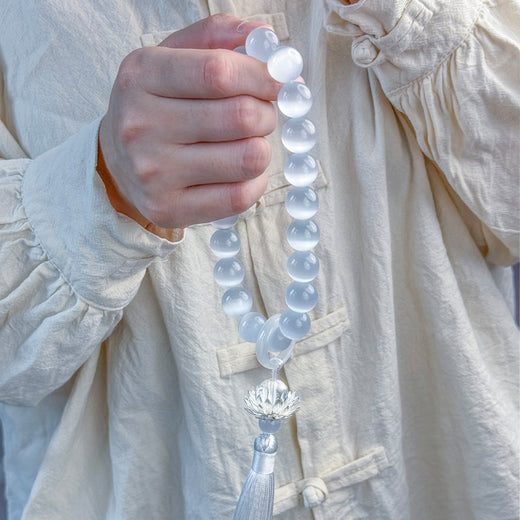
A hand gently holding a green jade mala bracelet, with other jade beads scattered on a wooden surface, suggesting a moment of quiet reflection or meditation.
Previous Next

Leave a comment

0 comments

Please note, comments need to be approved before they are published.