buddhist-jewelry
Wu Xing: Guide to the Five Sacred Elements
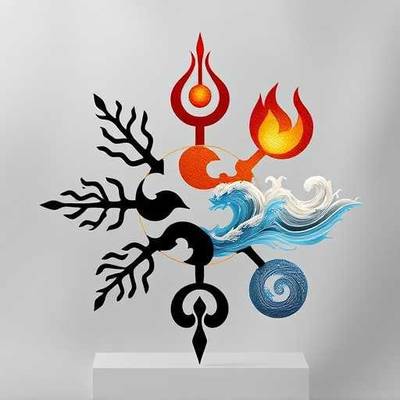
Wu Xing: The Five Elements of Chinese Philosophy & How They Shape Your Life
From the ancient Greeks to modern Western astrology, we are familiar with a world divided into four elements: Earth, Air, Fire, and Water. These elements are often seen as static building blocks, the fundamental substances that constitute reality.
But what if the universe wasn't built from static blocks, but woven from dynamic, ever-changing processes? This is the profound insight offered by the ancient Chinese system of wu xing five elements. This framework, central to Daoism and Chinese culture, sees the world not in four parts, but as a dance of five transformative phases.
It’s a system that explains everything from the changing of the seasons and the functioning of our bodies to the flow of our destiny, reminding us that balance is not a state to be achieved, but a continuous process to be lived.
This philosophy of harmony is beautifully captured in pieces from our explore yin yang jewelry, which embody the interplay of cosmic forces.
Wu Xing Five Elements is these elements are often seen as static building blocks, the fundamental substances that constitute reality.
What Is Wu Xing? The Five Phases, not only Elements
The term "Wu Xing" (五行) is most commonly translated as "Five Elements," but this translation can be misleading. While it includes five core components—Wood (木, mù), Fire (火, huǒ), Earth (土, tǔ), Metal (金, jīn), and Water (水, shuǐ)—the true essence of the concept lies in the character 行 (xíng).
This character doesn't mean "element" in a static sense; it means to move, to act, to go, or to conduct. Therefore, a more accurate translation would be the "Five Phases," "Five Movements," or "Five Processes."
Wu Xing is not a theory about what things are, but about how things change. It’s a map of the transformations of Qi (氣), the vital life force that animates everything in the universe.
These five phases are archetypal energies, describing the cyclical patterns of rising, expanding, stabilizing, contracting, and resting that we observe in nature and within ourselves. They are the language through which the cosmos communicates its rhythm.
This dynamic worldview is deeply intertwined with the foundational principles of Daoist thought, particularly the concept of Yin and Yang. The dance between Yin (the passive, receptive, feminine principle) and Yang (the active, creative, masculine principle) gives rise to Qi, and the transformations of Qi call in as the Five Phases.
You can explore a comprehensive overview of this fundamental duality in our Yin Yang Symbol Complete Guide. Wu Xing takes this concept of duality and expands it into a more detailed, five-part system that explains the intricate relationships and interactions that govern the universe.
It is the framework upon which Traditional Chinese Medicine (TCM), Feng Shui, the I Ching, Chinese astrology (Bazi), and even martial arts are built.
The Five Elements Decoded — Wood, Fire, Earth, Metal, Water
Each of the Five Phases represents a specific type of energy and a stage in a cyclical process. Understanding their individual characteristics is the first step to grasping the elegance of the entire system.
Each phase has a vast network of correspondences, linking the macrocosm of the universe with the microcosm of the human body and mind.
木 Wood (Mù) — The Phase of Growth and Vitality
Wood is the energy of springtime, of new beginnings, and of upward, expansive growth. Think of a young sprout pushing its way through the soil, reaching for the sunlight with unstoppable force. This is Wood energy: assertive, flexible, and driven by a powerful life force.
It represents the "Lesser Yang" phase, where energy is rising and expanding after the deep stillness of winter.
- Season: Spring
- Direction: East (the direction of the sunrise)
- Climate: Wind
- Color: Green, Cyan
- Yin Organ: Liver
- Yang Organ: Gallbladder
- Emotion: Anger (imbalanced), Vision/Planning (balanced)
- Sense: Sight
- Body Tissue: Sinews and Tendons
In the body, the Wood element governs the Liver and Gallbladder. The Liver is seen as the "General" of the body, responsible for the smooth flow of Qi, blood, and emotions. It stores blood and is responsible for planning and making decisions, much like a general planning a campaign.
When Wood energy is balanced, a person is decisive, clear-sighted, and able to adapt to change with grace and flexibility, like a bamboo stalk bending in the wind. They have a clear vision for the future and the drive to bring it into being.
An imbalance in the Wood element can call in in several ways. Excess Wood energy can lead to frustration, irritability, and explosive anger—the feeling of being "stuck" and unable to move forward. This can result in tension headaches, tight muscles, and high blood pressure.
Conversely, a deficiency in Wood energy can lead to indecisiveness, lack of direction, timidity, and a feeling of being unmotivated or lost. Physically, it might call in as brittle nails, dry eyes, or menstrual problems.
火 Fire (Huǒ) — The Phase of Peak Expression and Joy
Fire represents the peak of Yang energy. It is the phase of summer, maximum expansion, and radiant warmth. Think of the midday sun at the height of summer, a blazing bonfire, or the passion of a new romance.
Fire is about consciousness, connection, love, and joy. It governs our ability to relate to others, to communicate, and to experience the fullness of life.
- Season: Summer
- Direction: South
- Climate: Heat
- Color: Red
- Yin Organ: Heart, Pericardium
- Yang Organ: Small Intestine, San Jiao (Triple Burner)
- Emotion: Joy (imbalanced), Love/Compassion (balanced)
- Sense: Speech, Touch
- Body Tissue: Blood Vessels
The Fire element is associated with the Heart, which in TCM is the "Emperor" of all organs. It houses the Shen (神), our spirit or consciousness. A balanced Heart means a peaceful spirit, clear thinking, restful sleep, and the capacity for deep, meaningful relationships.
It allows us to feel and express joy appropriately, to laugh, and to connect with others from a place of warmth and sincerity. The Small Intestine, its Yang partner, is responsible for separating the "pure" from the "impure" in our food, a function that metaphorically extends to our thoughts and judgments.
When Fire is in excess, it can call in as agitation, anxiety, insomnia, and mania. The joy becomes hysterical or overwhelming. Physically, this can lead to palpitations, a flushed face, and a feeling of restlessness.
A deficiency of Fire energy, on the other hand, leads to a lack of warmth and vitality. A person might feel emotionally cold, withdrawn, and unable to connect with others. They may suffer from depression, poor circulation, a pale complexion, and a general lack of enthusiasm for life.
土 Earth (Tǔ) — The Phase of Stability and Nourishment
Earth is the central axis around which the other elements pivot. It represents the transition between seasons, often called "Late Summer" or the "doyo" period—the 18 days between each season. Earth is the energy of stability, nourishment, and groundedness.
Think of the rich, fertile soil that provides sustenance for all life, or the feeling of being centered and balanced. It is the motherly, nurturing force that digests, transforms, and transports nutrients.
- Season: Late Summer
- Direction: Center
- Climate: Dampness
- Color: Yellow, Brown
- Yin Organ: Spleen
- Yang Organ: Stomach
- Emotion: Worry/Overthinking (imbalanced), Empathy/Contentment (balanced)
- Sense: Taste
- Body Tissue: Muscles
The Earth element governs the Spleen and Stomach, the body's digestive center. In TCM, the Spleen is not only a physical organ but the primary force for transforming food and drink into Qi and Blood.
It is the foundation of our "post-natal" energy. When the Earth element is strong, we have good digestion, strong muscles, stable energy levels, and clear, logical thinking. We feel grounded, secure, and able to care for ourselves and others.
An imbalance in the Earth element often manifests as worry, obsessive thinking, and a tendency to "ruminate" on problems without resolution. This is the mental equivalent of poor digestion. Excess Earth can lead to heaviness, sluggishness, and weight gain.
A deficiency can cause poor appetite, fatigue, loose stools, and a weak immune system. Emotionally, it can lead to neediness, a lack of boundaries, and a feeling of being ungrounded or "spaced out."

金 Metal (Jīn) — The Phase of Refinement and Letting Go
Metal represents the energy of autumn, a time of harvest, contraction, and letting go. As Yang energy begins to wane and Yin energy starts to rise, Metal brings structure, order, and refinement. Think of a goldsmith refining ore into a precious object, or of leaves falling from the trees in autumn, returning their nutrients to the earth.
Metal energy is about acknowledging what is valuable, discarding what is no longer needed, and maintaining clear boundaries.
- Season: Autumn
- Direction: West (the direction of the sunset)
- Climate: Dryness
- Color: White, Metallic
- Yin Organ: Lungs
- Yang Organ: Large Intestine
- Emotion: Grief/Sadness (imbalanced), Courage/Righteousness (balanced)
- Sense: Smell
- Body Tissue: Skin and Body Hair
The Metal element governs the Lungs and Large Intestine. The Lungs are responsible for taking in Qi from the air and are our first line of defense against external pathogens (the "Wei Qi" or defensive Qi).
The Large Intestine is responsible for eliminating physical waste. Together, they manage the processes of intake and release. A balanced Metal element gives a person a strong sense of self-worth, integrity, and the ability to set healthy boundaries.
They are organized, self-disciplined, and appreciate quality and beauty.
When Metal is imbalanced, the primary emotion is grief or sadness that cannot be resolved. It's a feeling of loss and an inability to let go of the past. Excess Metal can lead to rigidity, excessive criticism (of self and others), and emotional coldness.
A deficiency can result in a weak immune system, frequent colds, skin problems, and a lack of self-esteem. The person may be disorganized, sloppy, and have difficulty moving on from past hurts.
水 Water (Shuǐ) — The Phase of Stillness and Potential
Water is the phase of maximum Yin. It represents winter, the time of deep rest, storage, and quiet contemplation. Think of the deep, dark ocean, a frozen lake, or a seed lying dormant in the winter soil, holding all the potential for new life.
Water energy is about our deepest reserves, our willpower, our ancestral inheritance (Jing), and the mysteries of the unknown. It is the source from which all life springs and to which it returns.
- Season: Winter
- Direction: North
- Climate: Cold
- Color: Black, Dark Blue
- Yin Organ: Kidneys
- Yang Organ: Bladder
- Emotion: Fear (imbalanced), Wisdom/Willpower (balanced)
- Sense: Hearing
- Body Tissue: Bones and Marrow
The Water element governs the Kidneys and the Bladder. In TCM, the Kidneys are considered the "Root of Life." They store our Jing (精), our constitutional essence that determines our vitality and longevity. They govern birth, growth, and reproduction, and are the foundation of Yin and Yang for all other organs.
When Water is balanced, we have strong willpower, courage, and a deep sense of inner wisdom. We are able to rest deeply and conserve our energy for when it is needed most.
An imbalance in the Water element is dominated by fear. This can be a deep, existential fear or specific phobias. Excess Water can lead to being withdrawn, isolated, and rigid with fear. A deficiency of Water energy, often seen as a depletion of Kidney Jing, is associated with the aging process.
It can call in as lower back pain, weak knees, hearing loss, premature graying of hair, sexual dysfunction, and a general lack of drive. This is often described as "burning the candle at both ends."
The Generating Cycle — How Elements Nourish Each Other
The Five Phases are not isolated; their true power lies in their relationships. The first and most fundamental relationship is the Generating Cycle, also known as the Sheng (生) Cycle or the Mother-Child Cycle.
This cycle describes how each element nourishes, creates, and supports the one that follows it, in a continuous, harmonious flow of creative energy.
Imagine a walk through the seasons:
- Water nourishes Wood: Just as rain and rivers allow trees and plants to grow, the deep reserves of Water provide the potential for Wood's upward, expansive growth. The mother (Water) gives birth to the child (Wood).
- Wood feeds Fire: Wood, as fuel, creates and sustains Fire. The creative energy of Wood finds its ultimate expression in the radiant warmth and light of Fire.
- Fire creates Earth: When a fire burns out, it leaves behind ash, which enriches the soil. The peak expression of Fire settles and condenses to become the stable, nurturing ground of Earth.
- Earth bears Metal: Deep within the Earth, minerals, ores, and precious metals are formed and mined. The stability and nourishment of Earth condense and refine to produce Metal.
- Metal carries Water: Metal, in the form of a vessel, can hold and carry Water. Also, think of how dew condenses on a cool metal surface in the morning. The structure of Metal allows for the collection and containment of Water.
This cycle is the foundation of health and harmony. In Chinese medicine, if an element is weak (deficient), a practitioner will often treat its "mother" element to provide nourishment. For example, if a person has weak Wood energy (indecisiveness, tight tendons), a practitioner might work on strengthening their Water element (Kidneys) to ensure the Wood has a deep wellspring to draw from.
The Generating Cycle is the path of support, creation, and healthy development.

The Controlling Cycle — How Elements Balance Each Other
While the Generating Cycle describes creation and support, the Controlling Cycle, or Ke (克) Cycle, describes balance, regulation, and control. This cycle ensures that no single element becomes too powerful and overwhelms the system.
It is sometimes called the "Grandmother-Grandchild" relationship, as the grandmother element keeps the grandchild in check.
This cycle is not about destruction, but about healthy limitation and maintaining dynamic equilibrium. Without it, the Generating Cycle would lead to runaway growth and chaos.
- Wood controls Earth: The roots of a tree hold the soil together, preventing erosion. Wood's ability to penetrate and structure keeps Earth's tendency to become stagnant in check.
- Earth controls Water: The banks of a river (Earth) contain and direct the flow of Water, preventing floods. Earth's stability provides boundaries for Water's formlessness.
- Water controls Fire: Water has the obvious ability to extinguish Fire, preventing it from burning out of control. Water's coolness balances Fire's intense heat.
- Fire controls Metal: Fire can melt and forge Metal, shaping it and making it useful. Fire's transformative heat prevents Metal from becoming too rigid and brittle.
- Metal controls Wood: An axe (Metal) can chop down a tree, pruning it and preventing it from becoming overgrown. Metal's sharpness and precision bring structure to Wood's expansive growth.
In a healthy system, this cycle operates subtly, keeping everything in balance. Imbalances in this cycle can lead to pathology. For example, if the Wood element is too strong (excess anger, stress), it can "over-control" or "attack" the Earth element, leading to digestive issues (a common effect of stress).
Conversely, if the Earth element is too weak, it can be "insulted" by Wood, meaning the normal controlling relationship is reversed or overwhelmed. Understanding these cycles is key to diagnosing and treating imbalances in all systems governed by Wu Xing.
Your Personal Element — Birth Year and Chinese Astrology
One of the most fascinating applications of Wu Xing is in Chinese astrology, particularly in systems like Bazi (八字), or the Four Pillars of Destiny. While a full Bazi chart is incredibly complex, requiring the year, month, day, and hour of birth, a simplified and popular method allows you to identify your primary elemental energy based on the last digit of your birth year.
This element represents the "Heavenly Stem" of your birth year and provides a general archetype for your personality, strengths, and challenges. Find the last digit of your year of birth below:
- 0 or 1: Metal
- 2 or 3: Water
- 4 or 5: Wood
- 6 or 7: Fire
- 8 or 9: Earth
For example, someone born in 1986 has a Fire element. Someone born in 1991 has a Metal element.
What Your Element Says About You
Metal Person (Years ending in 0 or 1): You are disciplined, organized, and have a strong sense of justice. You appreciate structure, logic, and beauty. You are resilient and resolute, but can sometimes be perceived as rigid, overly critical, or emotionally distant.
Your challenge is to balance your need for order with compassion and flexibility.
Water Person (Years ending in 2 or 3): You are adaptable, intuitive, and introspective. You are a deep thinker and communicator, able to navigate complex social and emotional currents. You are resourceful and possess strong willpower, but can sometimes become withdrawn, fearful, or indecisive.
Your challenge is to channel your deep wisdom into decisive action without being overcome by fear.
Wood Person (Years ending in 4 or 5): You are a natural leader, visionary, and pioneer. You are ambitious, competitive, and driven to grow and explore. You are generous and sociable, but can become impatient, frustrated, or aggressive when your plans are thwarted.
Your challenge is to temper your forward momentum with patience and flexibility.
Fire Person (Years ending in 6 or 7): You are charismatic, passionate, and expressive. You love to connect with others and are often the life of the party. You are creative, enthusiastic, and inspiring, but can sometimes be overly dramatic, restless, or prone to burnout.
Your challenge is to manage your boundless energy and find inner peace amidst the excitement.
Earth Person (Years ending in 8 or 9): You are grounded, reliable, and nurturing. You are a natural peacemaker who values harmony, stability, and community. You are patient, practical, and supportive, but can sometimes become stubborn, worried, or overly concerned with the problems of others.
Your challenge is to care for others without losing sight of your own needs and boundaries.
Working With Your Element Through Jewelry and Symbols
Understanding the Five Phases isn't just an intellectual exercise; it's a practical tool for creating more balance and harmony in your life. One of the most ancient and personal ways to work with these energies is through the use of jewelry and symbolic objects.
By consciously choosing pieces that represent a specific element, you can either strengthen an element you feel is deficient or help balance one that is in excess.
The goal is always balance. For example, if you are a Wood person feeling stuck and frustrated (excess Wood), you might choose to work with the Fire element (your "child" in the generating cycle) to help express your energy, or the Metal element (your "controller") to bring more structure and discipline.
Here are some ways to incorporate elemental energies through jewelry:
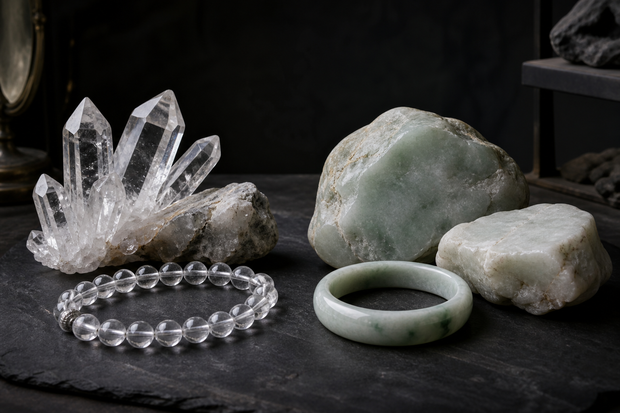
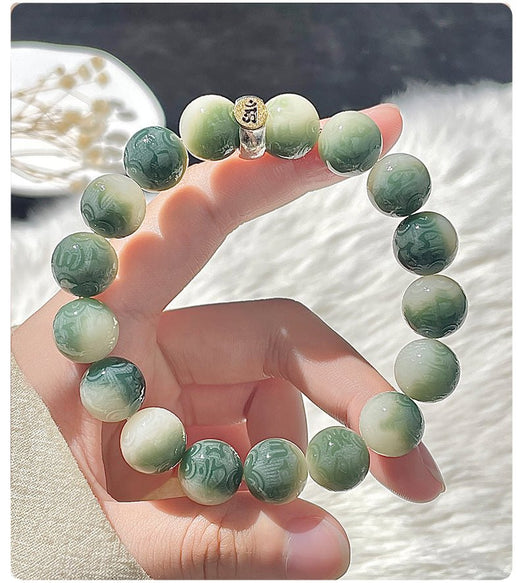
- To Strengthen Wood: Choose pieces with green stones like jade or aventurine. Wear wooden beads or jewelry featuring botanical motifs like the Tree of Life. The color green and symbols of growth will resonate with Wood's vital energy.
- To Strengthen Fire: Adorn yourself with red stones like carnelian, garnet, or red jasper. Look for symbols of the sun, stars, or mythical creatures like the Phoenix. The color red and pointed, triangular shapes evoke Fire's radiant power.
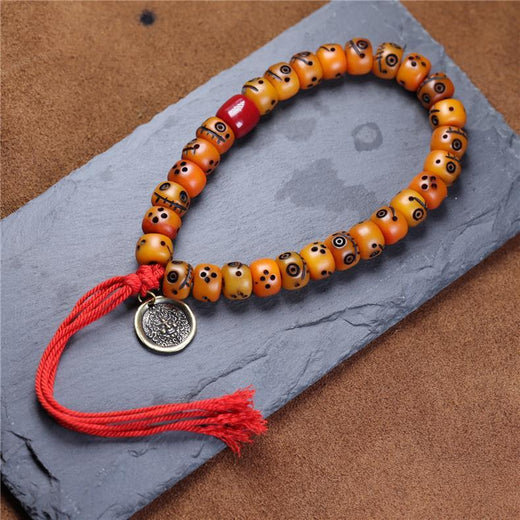
- To Strengthen Earth: Wear stones in yellow, brown, and orange hues, such as tiger's eye, yellow jasper, or citrine. Ceramic beads and square-shaped pendants can help you feel more grounded and stable, connecting you to Earth's nurturing force.
- To Strengthen Metal: The most direct way is to wear jewelry made of metal itself—silver, gold, bronze, or steel. White and clear stones like clear quartz or selenite also carry Metal's energy. Circular shapes, like those found in many Yin Yang pendants, resonate with the wholeness and perfection of Metal.
- To Strengthen Water: Choose dark blue or black stones like lapis lazuli, sodalite, or black obsidian. Jewelry with flowing, wavy designs or symbols of water creatures can help you connect with your intuition and inner depths.
Ultimately, the goal of working with the Five Phases is to achieve a state of dynamic equilibrium, a concept perfectly symbolized by the Taijitu. Wearing a piece of jewelry that reminds you of this balance can be a powerful daily practice.
Explore our Taoist Eight Trigram amulet.
Frequently Asked Questions about Wu Xing
What is the difference between Wu Xing and the four Greek elements?
The biggest difference is dynamism versus stasis. The four Greek elements (Earth, Air, Fire, Water) were traditionally seen as static, fundamental substances that things are made of. Wu Xing, on the other hand, describes five dynamic processes or phases of transformation.
The Chinese character "Xing" (行) means "to move." Wood is not only the substance of a tree, but the process of upward growth. Fire is not only a flame, but the process of radiant expansion.
This focus on cyclical transformation and interrelationship is unique to the Wu Xing system.
What is the fifth season in Wu Xing?
The fifth season is "Late Summer." While the other four phases correspond directly to Spring (Wood), Summer (Fire), Autumn (Metal), and Winter (Water), the Earth element represents the center and the transition point. In some models, Late Summer is a distinct season between Summer and Autumn, a time of harvest and abundance.
In another common model, Earth represents the last 18 days of *each* of the four seasons, acting as a buffer and transition period that allows the energy to shift smoothly from one phase to the next.
How is Wu Xing used in Traditional Chinese Medicine (TCM)?
Wu Xing is the foundational diagnostic and treatment framework in TCM. Each element corresponds to a pair of Yin/Yang organs, an emotion, a tissue, a sense organ, and more. A practitioner can diagnose an imbalance by observing a patient's emotional state, complexion, pulse, and symptoms.
For example, chronic anger (Wood emotion) might injure the Liver (Wood organ). Treatment might involve acupuncture points along the Liver meridian, prescribing herbs that soothe the Liver, and dietary advice to balance the Wood element.
They also use the generating and controlling cycles to treat imbalances. For instance, to treat an overactive Liver (Wood), they might strengthen the Lungs (Metal, which controls Wood) or the Heart (Fire, which drains Wood).
Can my personal element change?
Your birth element, determined by your date of birth, is fixed and represents your core constitutional nature. However, the balance of the five elements within you is constantly changing. Your lifestyle, diet, emotional state, age, and environment all influence which elements are dominant or deficient at any given time.
The goal of practices like Qigong, acupuncture, and Feng Shui is not to change your core element, but to bring all five phases within you into a state of harmonious balance.
Is one element better than the others?
Absolutely not. The system is entirely non-hierarchical. Each element is essential for the functioning of the whole, and each has its own unique strengths and potential weaknesses. A world without Water's stillness would be chaotic, just as a world without Fire's passion would be lifeless.
Health and success, from a Daoist perspective, come from having all five elements present and in a balanced, harmonious relationship with one another.
How does Wu Xing relate to Yin and Yang?
Wu Xing is an expansion of the Yin-Yang theory. The cycle of the five phases represents the dynamic transformation of Yin and Yang throughout the year. Wood represents Lesser Yang (energy beginning to rise).
Fire represents Greater Yang (peak energy). Metal represents Lesser Yin (energy beginning to descend). Water represents Greater Yin (peak stillness). Earth represents the central balance point, the pivot around which Yin and Yang transform.
The entire system is a more detailed map of the patterns created by the ceaseless dance of Yin and Yang.
How is Wu Xing used in Feng Shui?
In Feng Shui, Wu Xing is used to analyze and harmonize the energy (Qi) of a space. Different directions, colors, shapes, and materials are associated with each of the five elements. For example, the East direction is associated with Wood.
To enhance this area of your home or office (often linked to health and family), you might add green plants or wooden furniture. If an area has an excess of a certain element, the controlling cycle is used to balance it.
For example, if a kitchen (Fire element) is in the Northwest sector (Metal element), the Fire could "melt" the Metal, causing issues. A Feng Shui consultant might add an Earth element (like a ceramic pot) to mediate, because Fire creates Earth, and Earth creates Metal, thus harmonizing the conflict.
This is similar to how the Bagua map organizes space according to energetic principles.
The Dance of Life
The Wu Xing Five Elements offer more than a quaint philosophical system; they provide a profound and practical lens through which to view the world. It is a language of change, a map of relationships, and a guide to living in harmony with the natural rhythms of the universe.
By understanding the cycles of generation and control, the qualities of Wood, Fire, Earth, Metal, and Water, we can better understand the seasons of our own lives—our health, our emotions, and our relationships.
This traditional teachings teaches us that we are not separate from nature, but a microcosm of it. The same forces that turn winter to spring and day to night are at play within our own bodies and spirits.
By learning to recognize these energies, we can consciously cultivate balance, transforming our lives from a state of conflict into a graceful dance. To carry a daily reminder of this cosmic harmony, explore the symbols of balance within our collection of Yin Yang jewelry.
Keep reading