buddhist-jewelry
Traditional Tibetan Clothing: Complete Guide to Chuba, Pangden & Sacred Dress (2026)
You close your laptop after a long day, the screen's blue light still humming behind your eyes. You pick up your phone and scroll. Perfect homes, perfect relationships, another fast-fashion trend that will be gone in three months.
There's a subtle ache, a feeling of being disconnected from anything real or lasting. You might wonder, "What if what I chose to wear could be more than fabric? What if it could be an anchor?" This is where the world of Tibetan clothing begins—not as costume, but as a conversation with centuries of wisdom.
Exploring our traditional Tibetan clothing collection is a first step toward understanding this rich, wearable heritage.
The Foundation of Tibetan Dress: more than Cloth
Walking through the Barkhor circuit in Lhasa, you see traditional Tibetan clothing everywhere—not in glass cases, but worn by pilgrims, merchants, and families moving through their daily lives. The vibrant colors and layered construction catch your eye immediately.
A common misconception, especially for those new to the culture, is to see these garments as historical costumes, something reserved for festivals or museum displays. But that view misses the living essence of what these clothes are.
They are not relics; they are a language, a statement of identity, and a piece of practical art that has evolved over centuries to suit one of the world's most extreme environments.
At the heart of it all is the chuba (ཆུ་པ). This is the quintessential Tibetan garment, a long, spacious robe worn by both men and women. Its design solves real problems in real terrain.
Made from handwoven wool (nambu), sheepskin, or brocade, its long sleeves can be rolled up in the heat of the day or worn long in the biting mountain wind. The voluminous waist, secured with a long sash (kerag), creates a large pouch—the original, all-purpose pocket, used to carry everything from a tsampa bowl to a small child.
This isn't just a robe; it's a portable shelter, a statement of one's home region (through its specific cut and trim), and a canvas for personal and communal identity.
This idea of clothing as a story extends to every piece. A woman's multi-colored, striped apron, the pangden (པང་གདན་), immediately signifies she is married. The felt or brocade boots, the somba, are designed for rugged terrain but also decorated with intricate patterns that vary by valley and family lineage.
Nothing is purely decorative; everything has a purpose and a meaning. Understanding this shifts your perception. You begin to see not a costume, but a sophisticated system of cultural expression, a way of life woven into every thread.
It's a tradition we feel honored to support through the artisans in our Kathmandu atelier who continue this legacy.
Why This Enduring Tradition Matters in 2026

You might be asking yourself how a centuries-old style of dress from the Himalayas could possibly be relevant to your life, especially as we look towards a future of even more technology and speed.
The answer lies precisely in that contrast. The principles embodied in Tibetan clothing offer a direct counterweight to some of the specific anxieties of our modern experience.
Think about your closet. How many items were purchased on impulse, worn for a season, and then forgotten? This cycle of fast fashion contributes to a sense of disposability and constant craving for the next new thing.
It can leave you feeling perpetually dissatisfied. Tibetan clothing is the antithesis of this. A well-made chuba from a weaver in the Lhasa region is an investment piece—one you'll pass down to your children.
It's designed for a lifetime, not a trend cycle. Embracing this philosophy of 'slow fashion' is a quiet rebellion. It's about choosing one meaningful, high-quality item over a dozen fleeting ones. It's a tangible way to practice sustainability and mindfulness in your consumption, reducing the mental clutter that comes from endless choice.
Then there's the question of identity. In a world of curated online profiles and digital avatars, it's easy to feel like your sense of self is fragmented and performative. Who are you when you're not online?
A piece of traditional clothing, chosen with intention, can be a grounding force. It connects you to something rooted in the Tibetan plateau since at least the 7th century, authentic, and real. It's a physical reminder of values like resilience, community, and respect for heritage.
When you wear a handwoven sash or a beautifully crafted jacket, you're not only wearing an accessory; you're carrying a story. This act can be deeply affirming, a way of expressing your inner values on the outside, in a way that feels more substantial than a social media bio.
Finally, consider the daily routine. The morning rush, the quick coffee, the immediate get into emails and notifications. The simple, deliberate act of tying a chuba or wrapping a sash can become a moment of ritual.
It forces you to slow down, to be present in your body. It's a two-minute meditation, a physical transition from the state of sleep to the state of wakeful intention. This small, embodied practice can set the tone for your entire day, creating a pocket of calm before the chaos begins.
It's a way to bring a sense of the sacred into the everyday, no monastery or meditation cushion required.
The Meaning Woven In: How These Garments Work
Beyond their beauty and practicality, these garments function on a symbolic level. They are designed to interact with the body and the environment in a way that promotes a sense of well-being and connection.
Each layer tells a part of the story, from the inner garments close to the heart to the outer robes that face the world.
The Chuba: A Garment of Practicality and Presence
The chuba is more than a robe; it's a personal ecosystem. Its loose, flowing design isn't just for comfort; it allows for a full range of movement, if you are working in the fields or sitting in meditation.
The way it drapes encourages a certain grounded posture. In the high-altitude climate of the Tibetan plateau—where temperatures can drop to -20°C in winter—its versatility is essential. During the day, a nomad might slip their right arm out of the sleeve to regulate body temperature, letting the empty sleeve hang down their back.
At night, the voluminous robe can serve as a warm blanket. This adaptability speaks to a core Buddhist principle: finding the middle way, adapting to changing conditions with grace and intelligence. For you, this translates into a piece that isn't restrictive.
It moves with you, a constant, gentle reminder to remain flexible and present in your own life.
The Pangden and Wonju: Symbols of Community and Heart
Beneath the chuba, women wear a blouse called a wonju (འོན་འཇུ), often made of silk or cotton. This is the inner layer, the one closest to the skin. Symbolically, it represents the personal, the inner world.
Over the chuba, a married woman wears the pangden, the colorful, striped apron. Woven from wool and dyed with vibrant natural colors—indigo from plants, madder root for deep reds—the pangden is a public declaration of her role within the family and community.
Its horizontal stripes are a hallmark of Tibetan weaving. The combination is beautiful: the private self (wonju) is protected by the communal role (chuba), which is then adorned with the symbol of family commitment (pangden).
It's a visual representation of a balanced life, where the individual is nested within the collective. These authentic Tibetan garments carry deep societal meaning in their very construction.
Monastic Robes: The Color of Renunciation and Wisdom
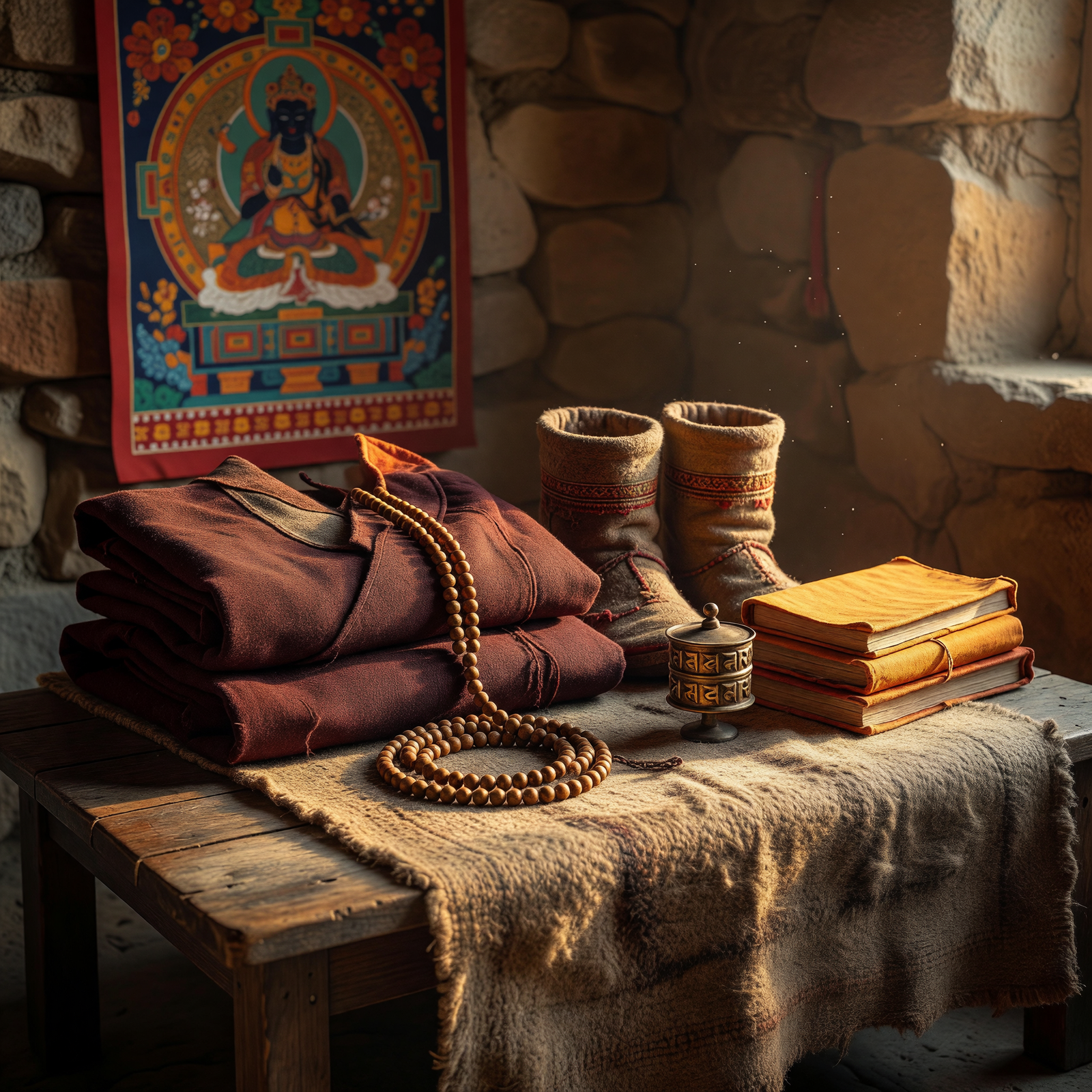
You will also see the iconic maroon and saffron robes of monks and nuns. These are distinct from lay clothing and hold a sacred significance. We don't offer these, but understanding them provides context for the entire culture of dress.
The maroon color, a blend of red and brown, symbolizes a connection to the earth and a life of discipline and mindfulness. Saffron or orange is often associated with wisdom and enlightenment. These robes, called kasaya, are not chosen for fashion; they are a vow.
Their simple, patched-together design is a deliberate reminder of the Buddha's own humble robes from the 5th century BCE, a rejection of vanity and material attachment. Seeing them reminds us that for some, clothing is the ultimate expression of a spiritual path, a complete dedication to a life of inner work.
How To Spot the Real Thing Pieces with Intention

When you decide to bring a piece of this tradition into your life, choosing with awareness is part of the practice. The market is flooded with mass-produced imitations, but an authentic garment carries the energy of its maker and materials. Here's what to look for.
First, consider the materials. True Tibetan garments are made from natural fibers suited to the Himalayan climate. Look for handwoven sheep's wool (nambu), known for its warmth and durability—a single chuba can last thirty years with proper care.
For more formal pieces, you'll find silk brocade, often with symbolic patterns like dragons, clouds, or lotus flowers woven into the fabric. The difference is tactile; you can feel the slight, perfect imperfections of a handwoven textile versus the flat uniformity of a synthetic fabric.
These materials are not only beautiful but also sustainable and long-lasting.
Second, pay attention to the craftsmanship. An authentic piece is not assembled on a factory line. It is created by artisans like Master Tenzin, who leads our Boudhanath workshop. He and his team have learned their skills through long apprenticeships, often within their own families—some lineages stretching back five generations.
Look for signs of hand-stitching, especially in the finishing of collars and cuffs. Notice the quality of the lining and the precision of the cut. These details are the signature of a maker who puts care and intention into their work.
Supporting these artisans means you are helping to keep a precious cultural heritage alive. Our full Buddhabelief's Tibetan clothing range is a a sign of their masterful skill.
Finally, understand the different types of garments available. You don't have to start with a full chuba. You might begin with a kerag, the woven sash, which can be used as a beautiful, unique belt with jeans or a dress.
A Tibetan-style jacket, with its distinctive stand-up collar and frog closures, can be a stunning statement piece. Or perhaps a simple, elegant blouse (wonju) to wear for your meditation practice. Each piece in our handwoven Himalayan dress pieces is chosen for its authenticity and its ability to be integrated into a modern wardrobe with grace and respect.
How to Actually Wear and Integrate These Garments
Bringing Tibetan clothing into your life isn't about dressing in costume. It's about mindful integration. The goal is to let these pieces enhance your life and express your values, not to perform a culture that isn't your own. This is a practice of appreciation, not appropriation.
Start small and with intention. A wonderful first step is to incorporate an accessory. A handwoven sash (kerag)—traditionally dyed with indigo and madder root in Bhutan and Tibet—can be tied around the waist of a simple, modern dress or tunic, adding a touch of color, texture, and story.
It's a conversation starter and a personal reminder of your connection to this tradition. Similarly, a piece of Tibetan jewelry, like an amber necklace or a silver gau box, pairs beautifully with both traditional and contemporary styles.
Consider a statement outer layer. A Tibetan-style jacket in wool or brocade can be worn over a simple black turtleneck and trousers for a look that is both elegant and deeply rooted in intention.
It becomes the focal point of your outfit, a piece that signals a respect for craftsmanship and heritage. This is particularly effective for moments when you want to feel more grounded and centered, like a presentation at work or a significant family gathering.
You can also create a space for these garments in your spiritual practice. You might not wear a full chuba to the office, but you could have a simple, comfortable one that you wear only for your morning meditation or journaling.
The act of putting it on can be a signal to your mind and body that it's time to shift gears, to leave the to-do lists behind and enter a space of quiet reflection.
This creates a powerful ritual, associating the physical feeling of the garment with a state of inner peace. This is a core part of the journey detailed in our sacred garments guide.
Common Questions About Traditional Tibetan Clothing
As you explore this world, questions will naturally arise. Those on a path of genuine cultural engagement naturally wonder about these details. Here are some of the most common ones we hear from practitioners and respectful wearers.
Is it okay for a non-Tibetan to wear these clothes?
This is a thoughtful and important question. The answer is yes, with the right intention. The key difference between appreciation and appropriation lies in your approach. Appropriation is taking a culturally significant item out of context, often for a costume or a fleeting trend, without understanding or respecting its meaning.
Appreciation, on the other hand, is wearing these garments with a genuine interest in and respect for the culture. It means learning the story behind the piece, supporting authentic artisans rather than fast-fashion factories, and wearing it with dignity.
When you wear a chuba because you admire its craftsmanship, practicality, and the values it represents, you are honoring the tradition, not misusing it.
How should I care for these authentic garments?
These pieces are an investment, and they are made to last with proper care. For garments made of wool (nambu) or silk brocade, we strongly advise against machine washing. Professional dry cleaning is the safest option.
For minor spots, you can gently spot-clean with cold water and a mild detergent. Always air dry your garments away from direct sunlight, as the sun can fade the natural dyes derived from indigo, madder root, and saffron.
When storing, it's best to fold them carefully rather than hanging them for long periods, which can stretch the fabric. A cedar block or lavender sachet can help protect the natural fibers from moths.
Treating your garment with this level of care is another way of showing respect for the materials and the artisans who made it.
What is the main difference between men's and women's chubas?
While the basic form of the chuba is similar for both men and women, there are a few key distinctions. The primary difference is in the way they are worn and fastened. Women's chubas are typically sleeveless and worn over a blouse (wonju), while men's chubas are often long-sleeved.
Additionally, the fold and sash are often styled differently. Traditionally, men's chubas are larger and have more volume at the waist to create the pouch for carrying items like prayer beads or a knife.
The cut and decorations can also vary by region—Bhutanese chubas differ noticeably from those worn in Lhasa or Amdo—with some styles being more specific to one gender than the other. However, the overall principle of a versatile, all-purpose robe remains consistent for everyone.
What do the different colors and symbols mean?
Color and symbolism are a rich part of Tibetan visual language. While meanings can vary by region and context, there are some general associations. Blue often represents the sky or celestial space. Green symbolizes the earth and water, the natural world.
Red is associated with sacred spaces, power, and the life force itself. White signifies purity and the serene mind. Yellow or gold represents wisdom, prosperity, and the earth's richness. You'll also see common Buddhist symbols woven into brocades, such as the endless knot (interdependence), the lotus flower (purity and enlightenment), and the dragon (power and good fortune).
Choosing a garment with a specific color or symbol can be a way to set an intention for yourself.
Are these clothes only for special occasions?
Not at all. While highly ornate, silk brocade chubas are typically reserved for special occasions like Losar (Tibetan New Year) or weddings, simpler chubas made from wool are everyday wear for many Tibetans, especially in rural areas and high-altitude regions where the insulation is essential.
The beauty of this tradition is its adaptability. For your own life, you can decide how to incorporate these pieces. A simple wool jacket might become your go-to for a cool autumn day, while a more decorative sash might be something you wear for a celebratory dinner.
The key is to find a balance that feels authentic to you and your lifestyle, allowing the pieces to be a living part of your wardrobe rather than items that are kept locked away.
How is a chuba actually tied and worn?
Tying a chuba is a practice in itself. You begin by putting on the robe, which will seem very long. You then pull it up from the waist until the hem is at your desired length (usually around the ankles).
Holding the excess fabric at your waist, you create a large fold. For women, the fabric is typically folded from both sides to create a neat pleat at the back. For men, it's often a single large fold.
You then take a long sash, the kerag, and wrap it tightly around your waist several times to secure the fold. This creates the distinctive bloused effect and the large pouch at the front.
It may take a little practice, but the process quickly becomes a simple, mindful ritual.
Your Journey into a Woven Heritage
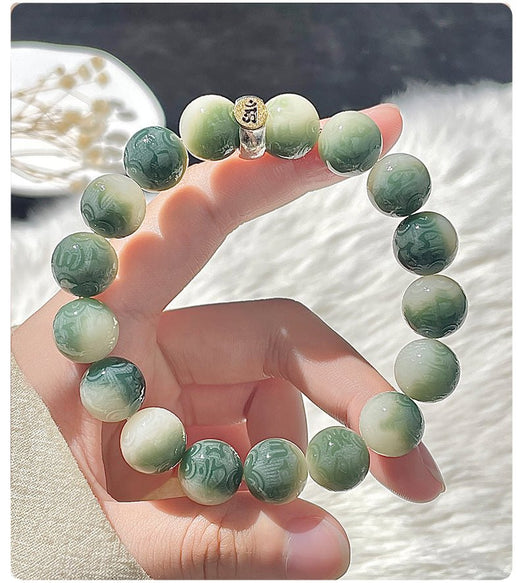
You can explore handcrafted Tibetan jewelry as part of your practice.
As we move deeper into 2026, the quiet call for things that are real, lasting, and meaningful will only grow louder. The digital world offers endless connection but can leave us feeling deeply disconnected from ourselves and the physical world.
A garment woven by human hands in Bhaktapur or the Kathmandu Valley, carrying centuries of story in its threads, is a powerful anchor in this shifting landscape. It's a reminder that beauty, function, and spirit can be one and the same.
Choosing to wear a piece of Tibetan clothing is not about adopting a new identity, but about enriching the one you already have. It's about making a conscious choice to value craftsmanship over disposability, story over trend, and intention over impulse.
This is a small, personal step towards a more mindful and grounded way of being in the world.
Your journey doesn't require a plane ticket to the Himalayas. It can begin with a single, thoughtful choice. We invite you to explore our sacred Tibetan dress collection and find the piece that resonates with your story, the one you'll still be wearing, and cherishing, for years to come.
Keep reading